
Uganda Gorilla Safaris from Kigali
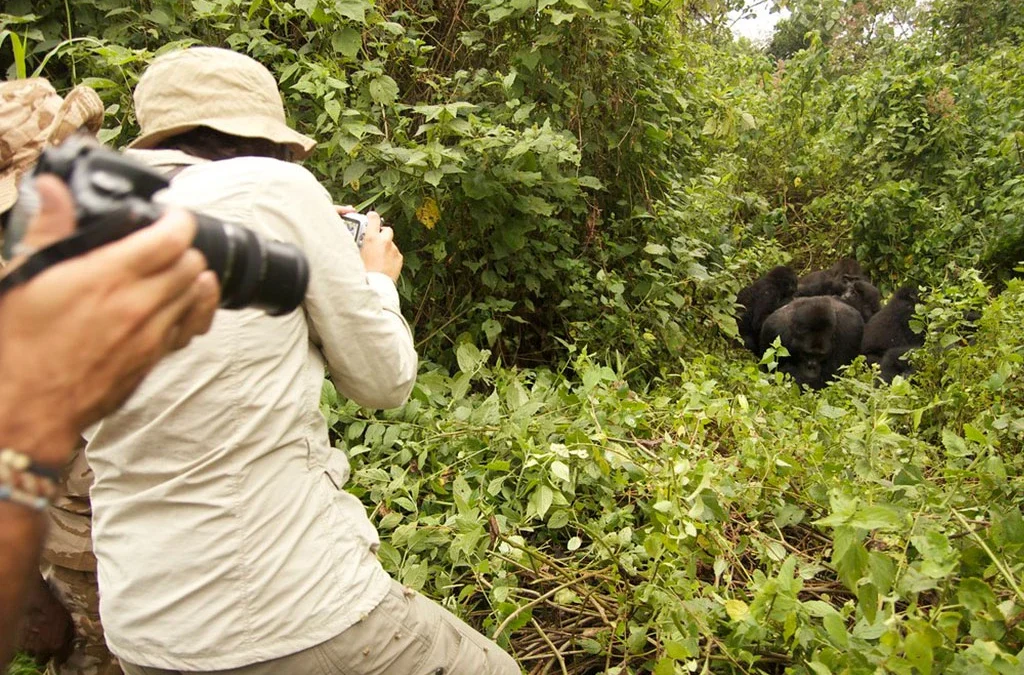
Uganda Gorilla Safaris from Kigali: Ultimate Tour Packages & Costs
Uganda Gorilla Safaris from Kigali offer one of the most practical ways to see mountain gorillas in Bwindi Impenetrable National Park or Mgahinga Gorilla National Park while starting and ending the trip in Rwanda. With a planned road transfer from Kigali, travelers can cross into Uganda and reach Bwindi in roughly 4 to 6 hours, depending on the trekking sector and border crossing used. Packages are typically customizable and start from around $1,150 per person, with the final cost shaped by group size, number of travel days, season, accommodation level and chosen activities.
The appeal is largely geographical. Kigali sits considerably closer to southwestern Uganda than Entebbe does, which makes the Kigali–Bwindi route especially useful for anyone already visiting Rwanda or flying into Kigali International Airport. Rather than a long day’s drive from Entebbe, the journey crosses through Cyanika or Katuna/Gatuna and continues to the selected Bwindi sector. Our 6 dedicated itineraries commonly cover this route: short gorilla trips, gorilla habituation, golden monkeys, wildlife, and chimpanzee trekking.
Uganda Gorilla Safari Packages from Kigali and Starting Costs
The packages below are starting points rather than fixed prices. Costs change according to the number of travelers, travel dates, accommodation category, permit category, route, vehicle arrangements and any extra activities added — so each itinerary can be adjusted around budget, time and interests. Click on any itinerary of your choice to see the trip travel idea and get in touch with one of our safari experts who knows both Rwanda and Uganda.
| Uganda Gorilla Safari from Kigali | Duration | Starting Cost |
|---|---|---|
| Bwindi Gorilla Safari through Kigali | 2 Days | From $1,150 pp |
| Gorilla Trekking in Uganda via Rwanda | 3 Days | From $1,450 pp |
| Gorilla Habituation Safari through Kigali | 3 Days | From $2,450 pp |
| Gorilla and Golden Monkey Safari from Kigali | 4 Days | From $1,700 pp |
| Gorilla Trekking and Wildlife Safari from Rwanda | 5 Days | From $2,250 pp |
| Uganda Gorilla and Chimp Safari through Kigali | 5 Days | From $2,250 pp |
Important: The prices shown are planning figures. The final cost is calculated once the group size, number of safari days, travel period, accommodation level, permit category and chosen activities are known. A private safari for two is naturally priced differently from a larger group sharing a vehicle.
Why Choose Uganda Gorilla Safaris from Kigali?

The Kigali route makes particular sense for travelers combining Rwanda and Uganda. Kigali International Airport is a convenient arrival point, and the gorilla region in southwestern Uganda is reached entirely by road rather than requiring a domestic flight. The route also lets travelers experience the shift between Rwanda’s hills and Uganda’s forested highlands along the way.
For anyone whose main goal is mountain gorilla trekking, this overland connection is often shorter than starting from Entebbe. The Kigali-to-Bwindi journey covers approximately 230–290 kilometers depending on the sector and route, with typical driving times of four to six hours once border procedures and stops are factored in.
Flexibility is another advantage. Travelers can spend time in Rwanda before crossing into Uganda, or pair the gorilla trek with other experiences in either country. A short itinerary can focus almost entirely on the trek, while a longer one can add golden monkeys, wildlife, chimpanzees, a Batwa cultural visit or scenic lakes.
- Short trips: Two or three days work well when gorilla trekking is the priority and time in East Africa is limited.
- Primate enthusiasts: Extend the trip to include golden monkeys or chimpanzees for a broader primate experience.
- Wildlife travelers: Add Queen Elizabeth National Park or another wildlife destination after Bwindi for game drives and further safari activities.
How Far Is Kigali from Bwindi for Gorilla Trekking?
Travel time depends heavily on the Bwindi sector chosen. Rushaga and Nkuringo work well via the southern route through Cyanika, while Buhoma and other northern areas are usually reached through Katuna/Gatuna. Road conditions, immigration processing and the exact lodge location all affect the final journey time.
Kigali to Bwindi is roughly 230–290 kilometers, with four to six hours commonly needed. The drive itself is part of the experience — moving from Kigali’s urban setting through Rwanda’s rolling hills and across the border into southwestern Uganda’s forested terrain.
Kilometers alone don’t tell the full story. A safari vehicle typically stops for immigration, refreshments, photographs, lunch and scenery, and the final stretch into the forest is often slower than the main highways since Bwindi itself is mountainous rainforest.
Crossing from Rwanda into Uganda
For anyone planning Uganda Gorilla Safaris from Kigali, the border crossing is a key part of the logistics. Travelers on this route normally cross the Rwanda–Uganda border at Cyanika or Katuna/Gatuna, depending on the itinerary. The right crossing is best determined by the final trekking sector and lodge rather than by whichever border looks closest on a map.
Passport, visa and any relevant vaccination documentation should be prepared ahead of time, and requirements can vary by nationality, so travelers should verify current entry rules before departure. It’s also worth carrying travel documents and permit confirmation for the border crossing itself.
For travelers combining Rwanda and Uganda, the East Africa Tourist Visa may be relevant depending on nationality and itinerary, covering eligible travel between Rwanda, Uganda and Kenya under applicable conditions. Current eligibility and entry requirements should always be confirmed before travel.
Uganda Gorilla Permit Costs
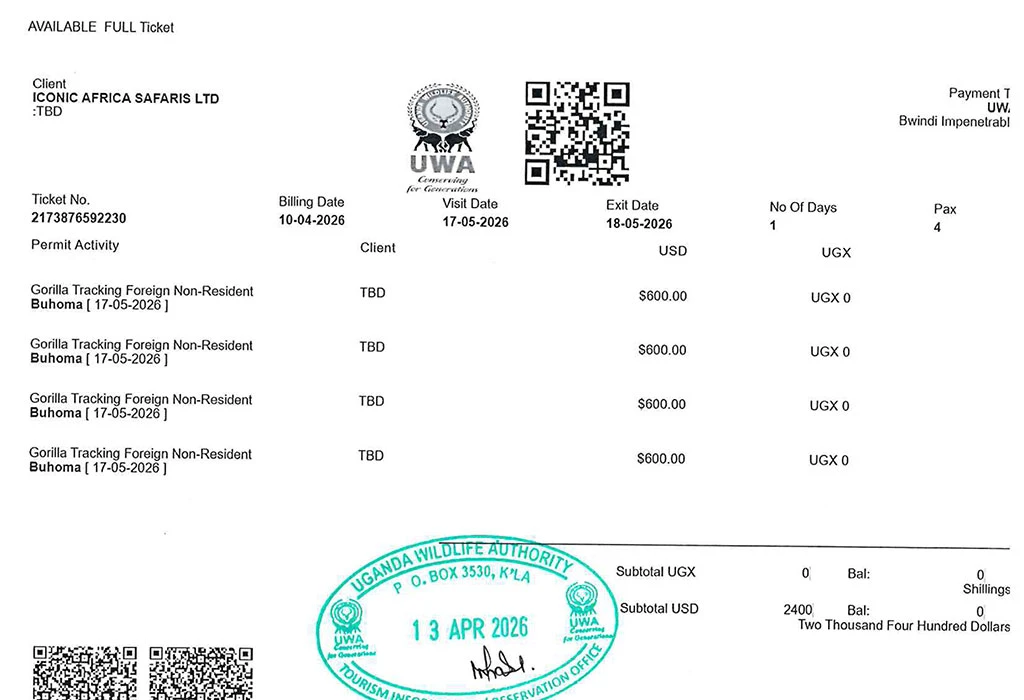
One of our May 2026 discounted gorilla permits — which were reserved for an Iconic Africa Safaris clients.
The gorilla permit is one of the most significant components of the overall cost of Uganda Gorilla Safaris from Kigali. It’s separate from accommodation, transport, meals and other safari services, and the price depends on visitor category and travel period.
For the 2026/27 tariff, Uganda’s standard gorilla trekking permit is listed at $800 for foreign non-residents, $700 for foreign residents, $500 for Rest of Africa visitors and UGX 300,000 for EAC citizens. The revised tariff takes effect from 1 January 2027 and keeps these standard rates in place.
Standard Gorilla Trekking Permit Rates
| Visitor category | Normal rate | Discounted low-season rate |
|---|---|---|
| Foreign Non-Resident | $800 | $600 |
| Foreign Resident | $700 | $500 |
| Rest of Africa | $500 | Subject to applicable UWA tariff |
| East African Community | UGX 300,000 | Subject to applicable UWA tariff |
The discounted rate applies during the low-season months of April, May and November for eligible categories — an attractive window for travelers wanting to pair lower permit costs with better accommodation value.
That said, the discounted permit isn’t simply a cheaper version of the same trip. Weather is wetter during these months and trails can get muddy. For travelers who are prepared for rain, though, low season can mean a lush forest, fewer visitors and better accommodation rates.
Gorilla Habituation Permit Rates from 1 January 2027
Gorilla habituation differs from standard trekking. Instead of the usual one-hour viewing window after locating a gorilla family, habituation offers a much longer experience with a semi-habituated group, under applicable park rules.
From 1 January 2027, the revised tariff lists:
| Visitor category | Gorilla Habituation from 1 Jan 2027 |
|---|---|
| Foreign Non-Resident | $1,800 |
| Foreign Resident | $1,600 |
| Rest of Africa | $1,000 |
| East African Community | UGX 750,000 |
The $1,800 foreign non-resident rate is an important figure to build into any 2027 budget. For travelers interested in gorilla photography, behavior and a longer forest encounter, habituation can be added to a Kigali-based itinerary — but it should be planned as its own experience rather than as an extension of standard trekking, since the permit category and format differ.
Insider tip: Confirm the exact permit category before pricing the whole trip. Two quotes that look different at first glance may simply reflect different permit rates, visitor categories, seasons or gorilla experience types rather than a difference in accommodation quality. Building a quote around exact travel dates, group size and accommodation preference avoids a misleadingly low headline price.
Gorilla Trekking Age Limit in Uganda
The minimum age for gorilla trekking in Uganda is 15 years, per Uganda Wildlife Authority tracking guidelines (chimpanzee tracking is 12 years).
This matters for families: a child under 15 cannot join the trek. The itinerary instead needs a suitable alternative for younger travelers while the eligible adults are in the forest — supervised lodge activities, an age-appropriate nature walk, a Batwa cultural experience, birdwatching, a community visit, or something similar, depending on the child’s age, the lodge and local guides available.
- Under 15: Does not participate in gorilla trekking.
- 15 and above: Meets the minimum age requirement, subject to normal park rules and permit availability.
- Family groups: Adults trek while younger children stay at the lodge with a planned alternative activity.
This is a park regulation, not something to plan around informally, and it’s one of the first things to factor into any family itinerary for Uganda Gorilla Safaris from Kigali.
Insider tip: Families should decide the non-trekking day’s activity while the itinerary is being built, not after arriving in Bwindi. A lodge with the right surroundings, paired with a cultural or nature activity on trekking day, helps the trip feel designed for every family member rather than built only around the adults.
What Does a Uganda Gorilla Safari from Kigali Cost?
There’s no single price that fits every trip. The permit is only one part of the total. Transport, accommodation, meals, guide services, border transfers, activities, park fees and trip length all shape the final quote.
Group size matters: two travelers sharing a private 4×4 have different per-person transport costs than six travelers sharing the same vehicle. Lodge choice matters too — a luxury forest lodge costs more per person than a budget or mid-range option.
Season plays a role as well. During the popular dry periods, demand for permits and accommodation is stronger. In April, May and November, the discounted permit for eligible categories — often paired with lower seasonal lodge rates — can meaningfully reduce the total.
What’s Included in Uganda Gorilla Safaris from Kigali?
Exact inclusions depend on the chosen itinerary, but a typical package covers the gorilla permit, accommodation, meals, road transportation, professional driver-guide services and the activities listed on the itinerary.
A standard two-day Kigali-to-Bwindi package, for example, usually includes gorilla permits and park fees, a local English-speaking guide/driver, itinerary activities and excursions, accommodation and meals, 4×4 land transfers, and government taxes.
International flights are normally separate, as are personal expenses such as gratuities and any accommodation outside the agreed itinerary — worth checking closely when comparing quotes, since two prices can differ simply because they include different services.
Choosing Your Bwindi Gorilla Trekking Sector from Kigali
Bwindi Impenetrable National Park is divided into four trekking sectors, each with its own gorilla families, terrain, access route and atmosphere. The sector you’re assigned affects driving time from Kigali, how early you need to be at the briefing point, how physically demanding the trek is likely to be, and even which lodges make sense to book. The main sectors are Buhoma, Ruhija, Rushaga and Nkuringo.
Buhoma
Buhoma is Bwindi’s oldest and most developed trekking sector, located in the north of the park. It has the widest range of accommodation, from budget guesthouses to upscale lodges, and the most established tourism infrastructure in the park, including craft markets and community walks nearby. Because it’s reached via Katuna/Gatuna rather than Cyanika, it’s a longer drive from Kigali than the southern sectors, making it a better fit for travelers with a bit more time or those combining Bwindi with other parts of western Uganda. The terrain here tends to be gentler than in Nkuringo, which also makes it a popular choice for first-time trekkers.
Ruhija
Ruhija sits at Bwindi’s highest elevation, in the central-eastern part of the park, and is best known among birders — it’s one of the top birding spots in Uganda, with species like the African green broadbill found here and almost nowhere else. Gorilla families in this sector often involve steeper, more forested terrain than Buhoma, but the sector sees fewer visitors, giving treks a quieter, more remote feel. It works well for travelers who want to pair gorilla trekking with a serious birdwatching add-on, or simply prefer a less-trafficked part of the park.
Rushaga
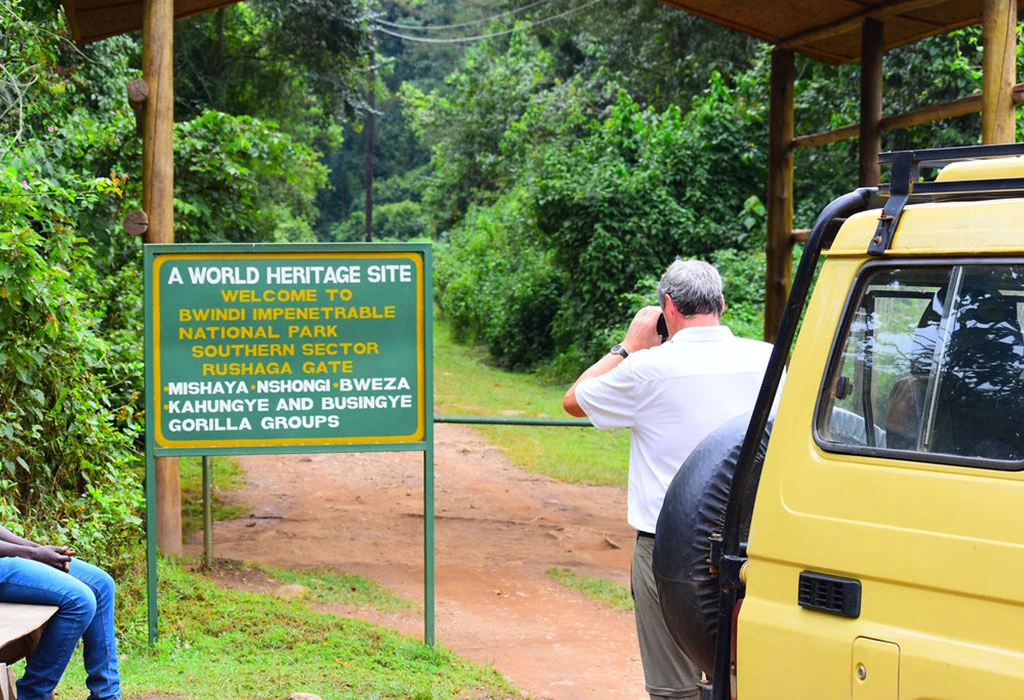
Rushaga, in the far south of Bwindi, is the most practical sector for Uganda Gorilla Safaris from Kigali because it’s reached directly through the Cyanika border crossing, cutting driving time compared to the northern sectors. It also has the highest number of habituated gorilla families of any sector, which means more permits are available here on a given day — useful when trying to secure trekking permits on short notice. Rushaga is also the only sector offering the Gorilla Habituation Experience, where visitors join researchers and trackers for up to four hours with a gorilla family that isn’t yet fully habituated to tourism, rather than the standard one-hour visit.
Nkuringo
Nkuringo, also in the south near Cyanika, is known for some of the most dramatic scenery in Bwindi, with trailheads offering views across the forest toward the Virunga volcanoes in the distance. It’s also considered the most physically demanding sector: the walk down into the forest and, more importantly, the climb back out can be steep and strenuous, so it suits fitter travelers who don’t mind a harder trek in exchange for standout views and a more rugged, off-the-beaten-path feel.
For Uganda Gorilla Safaris from Kigali, sector choice should be paired with lodge location — a cheaper lodge far from the morning briefing point can end up less convenient than a slightly pricier one close to the correct sector.
Insider tip: Choose the trekking sector before the lodge, not the other way around. Since trekkers report to park headquarters early in the morning, matching the route, sector and accommodation together cuts unnecessary early driving and makes trekking day more comfortable — particularly just after crossing from Kigali.
Best Time for Uganda Gorilla Safaris from Kigali
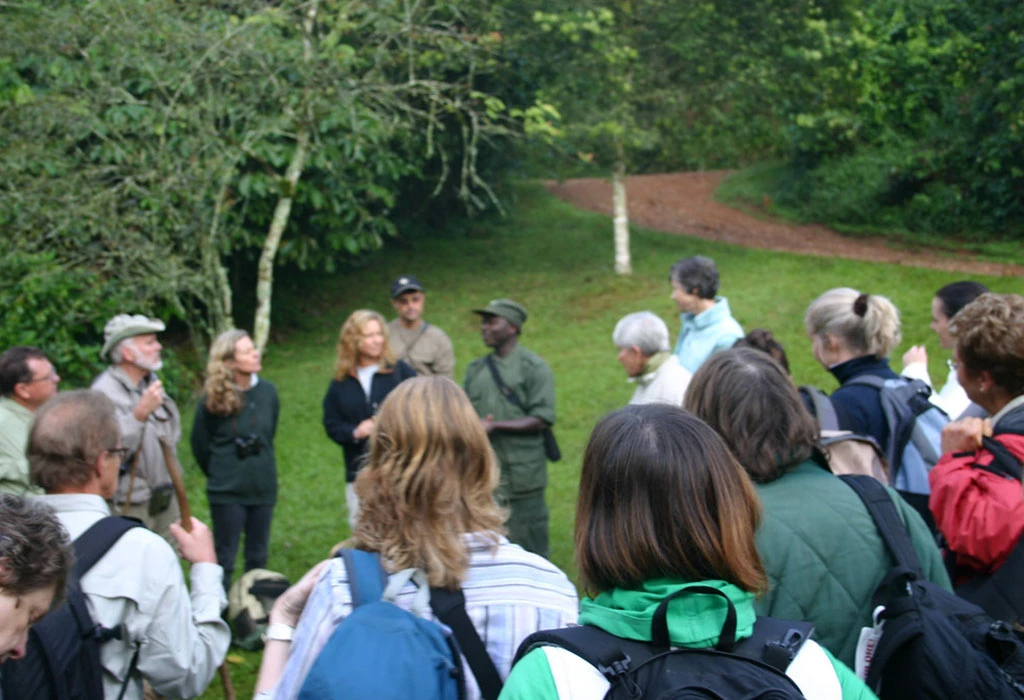
Group of travelers gathered at the gorilla briefing point in Bwindi, early morning light settling over the forest as rangers prepare them for the trek ahead.
Gorilla trekking is possible year-round since the gorillas remain in Bwindi regardless of season. What changes is weather, trail conditions, visitor demand, accommodation pricing and the overall forest experience.
The commonly preferred drier periods are June to September and December to February, offering firmer trails and more reliable trekking, though rain can still occur even in these months since Bwindi is a rainforest.
The wetter periods — March to May and October to November — bring muddier trails and more frequent rain, but also exceptionally green scenery, fewer travelers at times, and better accommodation value. Weather should be weighed against personal priorities rather than treated as a strict good-season/bad-season split.
Month-by-Month Uganda Gorilla Trekking Weather
| Month | Weather & Trail Conditions | Planning Note |
|---|---|---|
| January | Generally dry, firm trails | Strong choice for trekking |
| February | Generally dry, good conditions | Good visibility, comfortable |
| March | Rains begin, increasingly muddy | Quieter travel period |
| April | Long rains, wet and slippery | Discounted permit period |
| May | Rain gradually eases | Good value for flexible travelers |
| June | Drier, generally firm | Popular trekking month |
| July | Drier, generally good | High demand; book early |
| August | Drier, generally good | Popular travel period |
| September | Transitional, generally favorable | Good balance of conditions |
| October | Short rains, variable | Prepare for wet trails |
| November | Short rains, wet but manageable | Discounted permit period |
| December | Generally drier but variable | Holiday demand can be high |
Bwindi’s mountain rainforest microclimate means this table is a planning guide, not a guarantee — rain can appear in the dry season, and clear mornings can occur in wetter months. Broadly, June–August and December–February remain the relatively drier windows, with March–May and October–November generally wetter.
Dry Season Considerations
June through September, and December through February, are popular because trails are typically easier to navigate, and many travelers combine the December–February window with Christmas, New Year or other East African holiday plans. The main consideration is demand: with fixed travel dates, booking permits and accommodation early is worthwhile since gorilla trekking places are limited.
Rainy Season Considerations
Traveling in the wetter months calls for a different mindset — rain is part of the rainforest environment, not an anomaly, and trails can be muddy and slippery. The reward is a deeply green forest with misty scenery and fewer visitors at times. April, May and November are particularly relevant for cost-conscious travelers thanks to the discounted permit. Proper gear — waterproof clothing, grippy hiking boots, gardening gloves, long trousers and a daypack with rain cover — should be considered essential.
How Long Should Uganda Gorilla Safaris from Kigali Take?
- Two days works when time is extremely limited: pickup in Kigali, transfer to Bwindi, an overnight stay, and gorilla trekking the next day before heading back toward Kigali.
- Three days gives a more comfortable rhythm, especially after an international flight — a full night near Bwindi before trekking, with room for a cultural activity depending on the itinerary.
- Four days adds flexibility to combine gorilla trekking with golden monkeys, a Batwa cultural experience, Lake Bunyonyi or other local activities.
- Five days or longer suits travelers who want to pair gorillas with wildlife or chimpanzee trekking, turning a single-purpose primate trip into a broader Uganda safari.
2-Day Bwindi Gorilla Safari through Kigali
Designed for very limited time. The trip starts in Kigali, crosses into Uganda, and reaches Bwindi for an overnight stay before trekking. The next morning starts with a park briefing, followed by the trek itself — duration varies considerably depending on where the assigned gorilla family is — before the return journey to Kigali. This suits travelers who already have Kigali on a longer Rwanda itinerary and want to add a Uganda gorilla experience without a full week’s commitment.
3-Day Gorilla Trekking in Uganda via Rwanda
Day one transfers from Kigali to Bwindi (roughly five hours under normal conditions); day two is dedicated to gorilla trekking, with a possible Batwa experience depending on time and energy; day three returns toward Kigali. For many travelers, three days strikes a practical balance between minimizing time away from Kigali and allowing enough time in the forest.
3-Day Gorilla Habituation Safari through Kigali
Built for travelers who want more time with the gorillas than a standard trek allows, using the specialized habituation permit and its own cost structure. It particularly suits wildlife photographers and primate enthusiasts. From 1 January 2027, the foreign non-resident habituation permit rises to $1,800, an important figure for anyone planning a 2027 trip. Because it’s a specialized experience, the itinerary should be built around exact permit availability, trekking sector and lodge location rather than treated as a standard trek with extra hours.
4-Day Gorilla and Golden Monkey Safari from Kigali
Combines gorillas with golden monkey trekking in the Virunga landscape, depending on the confirmed itinerary and park arrangements — a good fit for travelers with a strong interest in primates who want more than one forest experience, with the extra day easing the pressure of a very short itinerary.

5-Day Gorilla Trekking and Wildlife Safari from Rwanda
Connects the gorilla experience with Uganda’s wildlife landscapes, potentially including Queen Elizabeth National Park for game drives or a boat excursion. The advantage is variety — moving from montane forest into savannah to look for elephants, buffaloes, antelopes, hippos, lions and more.
5-Day Uganda Gorilla and Chimp Safari through Kigali
Pairs gorilla trekking with chimpanzee trekking, giving enough time to move between southwestern Uganda’s forest environments without compressing both experiences into an impractical schedule. Chimpanzee trekking has a minimum age of 12, versus 15 for gorillas — a useful distinction for families planning a broader primate safari.
What to Pack for Uganda Gorilla Safaris from Kigali
Bwindi’s rainforest environment calls for practical clothing over fashion-focused safari gear:
- Sturdy hiking boots: Good ankle support and grip; break them in before the trip.
- Waterproof rain jacket: Rain can happen even in traditionally dry months.
- Long trousers and long-sleeved shirts: Protection from vegetation, insects and scratches.
- Gardening gloves: Useful for gripping vegetation or steadying yourself on muddy trail sections.
- Face mask: Respiratory illness is a real concern around habituated gorillas; park guidance may require precautions during close encounters.
- Daypack with rain cover: Keeps water, snacks, camera gear and personal items protected.
- Walking stick: Extra stability on steep, slippery terrain.
- Camera and spare battery: Forest conditions can be humid and dark.
- Insect repellent: Useful around the lodge and during other outdoor activities.
- Personal medication: Regular medication plus basic blister/first-aid supplies.
Fitness and Preparation for Uganda Gorilla Safaris from Kigali
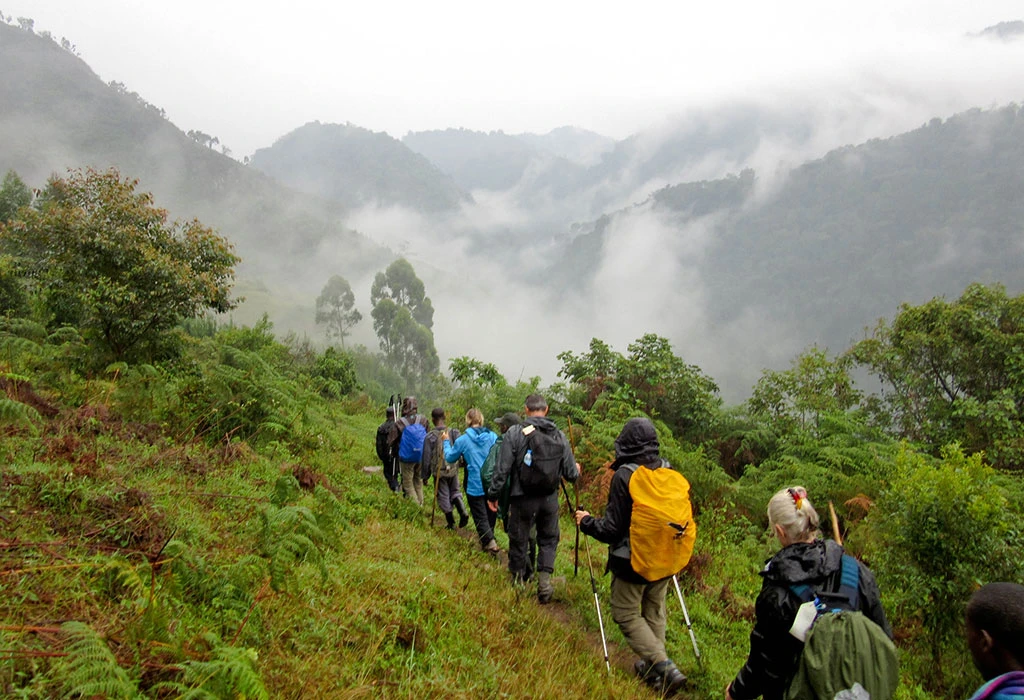
Trekking duration isn’t predictable — it depends on where the gorilla family is located and how the animals are moving. Some treks last around 30 minutes; others run six to eight hours or longer.
A few weeks of preparation helps: regular walking, hill climbing, stair exercises and moderate cardio can make uneven, steep terrain more comfortable. Pace matters more than speed — a steady rhythm, good hydration, appropriate footwear and a porter’s support all make a real difference.
Why a porter helps: Beyond carrying a backpack, a porter provides practical support with balance on steep, muddy sections and helps carry water, cameras and gear. Even fit travelers often find forest terrain different from typical hiking trails. Hiring a porter is both a practical trekking decision and a direct way to support communities around Bwindi.
Responsible Gorilla Trekking
Whatever the itinerary, Uganda Gorilla Safaris from Kigali follow the same in-forest etiquette. Mountain gorillas are highly sensitive to human disturbance and disease. Visitors should follow ranger instructions, keep the required distance, and avoid anything that could raise health risks for the gorillas — never touch a gorilla even if it approaches, avoid sudden movements, follow photography guidance, and listen to the ranger throughout.
Respect extends to the forest itself: no littering, no removing plants or wildlife souvenirs, and staying on established trails.
Uganda Gorilla Safaris from Kigali by Travel Style
- Couples: Structure Uganda Gorilla Safaris from Kigali around the trek and add romantic accommodation, scenic stops and extra experiences — three days keeps the focus on the forest, while four or five days leaves room for Lake Bunyonyi, culture or wildlife.
- Families: Plan around the 15-year age minimum, arranging suitable alternatives for younger children in advance. Teens who meet the age requirement can combine trekking with wildlife, golden monkeys or cultural activities.
- Solo travelers: Private vehicle costs concentrate on one person unless a shared arrangement is available. Accommodation category and trip length have an outsized effect on total cost — a short two- or three-day trip keeps things focused, while longer routes open up wildlife and other experiences.
How to Reduce the Cost of Uganda Gorilla Safaris from Kigali
The biggest levers are accommodation category, travel season, group size and itinerary length — the permit itself is fixed by the park authority, so flexibility comes from everything else. Traveling as a couple or small group spreads vehicle and guide costs, and choosing mid-range accommodation over luxury can meaningfully cut the total without changing the core gorilla experience. Traveling in the low-season window can drop the standard foreign non-resident permit from $800 to $600, though travelers should be prepared for wetter, muddier conditions.
Building a Luxury Uganda Gorilla Safari from Kigali

Luxury travelers keep the same core gorilla experience while upgrading everything around it — high-end accommodation, private 4×4 transport, curated meals, private transfers and added experiences. The main benefit is control over comfort and pace rather than minimizing time and cost. The permit itself stays a fixed, regulated cost regardless of luxury level; the difference comes entirely from accommodation, transport and services.
Uganda Gorilla Safaris from Kigali vs. Starting from Entebbe
The choice largely depends on the rest of the trip. If Rwanda is already part of the itinerary, Kigali offers a logical entry point for the road journey into southwestern Uganda. If Uganda is the only destination and the international flight lands in Entebbe, starting there may be simpler — though the road journey to Bwindi is considerably longer, which is exactly why Kigali is attractive for reducing overland travel time.
Best Border Route for Uganda Gorilla Safaris from Kigali
The best crossing depends on the trekking sector: Cyanika suits southern Bwindi routes around Kisoro, Rushaga and Nkuringo, while Katuna/Gatuna works well for northern Bwindi. There’s no universal answer — the sector and lodge should determine the route, not the other way around.
Booking Your Uganda Gorilla Safari from Kigali
Start with preferred travel dates, number of travelers, nationality or visitor category, accommodation level and the type of gorilla experience wanted. From there, the trip can be structured around the relevant permit, accommodation and transport requirements. For peak periods, earlier planning matters since permits are limited and preferred accommodation can sell out.
Iconic Africa Safaris offers three simple, reliable ways to secure your next unforgettable Ugandan adventure today. Simply complete our quick online booking form to start planning your dream safari experience right away. Our friendly team also welcomes direct emails at info@iconicafricasafaris.com to discuss your specific travel plans and preferences. For more assistance, tap the green WhatsApp icon in your screen’s bottom right corner anytime.
Our driver-guides are the trip managers guests trust most — trained professionals, some former park rangers, all skilled interpreters of wildlife and culture. They stay with travellers from the first airport pickup to the final wave-off, keeping each day running smoothly and safely.
Frequently Asked Questions
How much do Uganda Gorilla Safaris from Kigali cost?
Travelers typically spend around $1,150 per person on a short two-day gorilla package from Kigali. Additionally, choosing a three-day option pushes the starting price up to about $1,450 per person. However, the final amount ultimately depends on group size, trip length, season, and accommodation. Moreover, the chosen permit category and selected activities also influence the overall package price.
How long does it take from Kigali to Bwindi?
The journey generally takes travelers between four and six hours to complete each trip fully. Several factors influence this timing, including the specific Bwindi sector, border crossing, and road conditions along the way. Additionally, the total travel distance spans roughly 230 to 290 kilometers depending on the final destination.
Can I do a 2-day trip from Kigali?
Yes, travelers can absolutely complete a two-day gorilla trip starting from Kigali. On day one, travelers transfer from Kigali to Bwindi for an overnight stay. Then, on day two, travelers trek to see the gorillas before returning home.
What is the Uganda gorilla permit cost?
Foreign non-residents currently pay $800 for a standard Uganda gorilla trekking permit each season. However, travelers receive a discounted $600 rate during the April, May, and November low season. Other visitor categories carry separate rates, so travelers should always check the relevant permit table.
How much will gorilla habituation cost from 2027?
Starting 1 January 2027, foreign non-residents will pay $1,800 for the gorilla habituation permit. Meanwhile, foreign residents will pay $1,600, and Rest of Africa visitors will pay $1,000. Additionally, East African Community citizens will pay UGX 750,000 under the same updated tariff.
What age can children start gorilla trekking in Uganda?
Uganda requires travelers to reach 15 years old before joining any gorilla trek. Consequently, younger children cannot participate in the trekking activity itself. However, families can still include alternative activities within the broader trip itinerary.
Can a child under 15 come along on the trip?
Yes, a child under 15 can absolutely travel along with the rest of the family. However, that child cannot join the actual gorilla trek in the forest. Instead, the itinerary should include a cultural experience, nature activity, or lodge-based program for them.
Is this trip possible year-round?
Yes, travelers can visit the gorillas throughout the entire year without exception. Rainfall, trail conditions, demand, and accommodation pricing change from month to month, though. Generally, June through September and December through February offer relatively drier travel conditions.
What are the best months for Uganda Gorilla Safaris from Kigali?
Travelers generally prefer June through September and December through February for drier trekking conditions. Meanwhile, travelers prioritizing lower permit pricing often choose April, May, or November instead. However, those months typically bring wetter and muddier forest conditions overall.
Is April a good month to go Uganda Gorilla Safaris from Kigali?
Yes, April suits travelers who feel comfortable with rain and muddy forest trails. Since April falls within the discounted permit period, travelers can also save money. Additionally, the forest turns exceptionally green, so good waterproof gear becomes especially important.
Which Bwindi sector is closest to Kigali?
The closest sector actually depends on the specific route and lodge selected. For instance, travelers typically reach Rushaga and Nkuringo easily through the Cyanika border crossing. Meanwhile, travelers usually access Buhoma and other northern areas through Katuna or Gatuna. Ultimately, the lodge and permit sector should determine the best route.
Can I combine gorilla trekking with chimpanzee trekking?
Yes, travelers can combine gorilla trekking with chimpanzee trekking on a longer itinerary. For example, a five-day trip comfortably accommodates both primate experiences within one journey. This combination particularly benefits travelers who prioritize primate-focused safari experiences overall.
Can I combine gorillas and golden monkeys?
Yes, travelers can combine gorilla trekking with golden monkey trekking within a single itinerary. Typically, travelers need a four-day trip to comfortably fit both experiences together. However, permit availability, accommodation, and travel dates ultimately shape the final itinerary.
What should I wear for Uganda Gorilla Safaris from Kigali?
Travelers should wear sturdy hiking boots, long trousers, and a long-sleeved shirt overall. Additionally, travelers should pack a waterproof jacket and gardening gloves for muddy terrain. Furthermore, a daypack, water bottle, rain cover, insect repellent, and face mask complete the list.
Do I need a porter for Uganda Gorilla Safaris?
Yes, travelers should strongly consider hiring a porter for the gorilla trek. Bwindi’s terrain often becomes steep, muddy, and physically demanding throughout the hike. Additionally, hiring a porter directly supports local communities living around the park.
Is the gorilla permit included in the safari price?
Yes, most quotations include the gorilla permit as part of the overall package. However, travelers should always confirm exact inclusions before finalizing their personalized quote. This step prevents confusion or unexpected costs once the trip begins.
Can the Uganda Gorilla Safaris itinerary be customized?
Yes, travelers can customize nearly every element of their gorilla safari itinerary. Specifically, travelers can adjust group size, number of days, dates, and accommodation category. Additionally, travelers can expand a short gorilla-only trip into a broader Uganda adventure. This broader itinerary might include wildlife, chimpanzees, golden monkeys, or cultural activities.
Can I start Uganda Safaris in Kigali and end in Uganda?
Yes, travelers can absolutely build their route around personal flight plans and preferences. For instance, travelers can start in Kigali and continue directly into Uganda. Alternatively, travelers can return to Kigali or end their journey in Entebbe.
Is Kigali a good starting point for Bwindi gorilla trekking?
Yes, Kigali works especially well for travelers already visiting Rwanda beforehand. Compared to Entebbe, the road connection to southwestern Uganda runs noticeably shorter. Consequently, travelers save valuable time by starting their gorilla safari from Kigali.
Who organizes these trips?
Iconic Africa Safaris organizes customized Uganda gorilla safaris departing directly from Kigali each season. Specifically, the company arranges gorilla trekking, habituation, golden monkey, wildlife, and chimpanzee combinations. Ultimately, they build every itinerary around each traveler’s dates, group size, and preferences.