
How Much Does a Mid-Range Safari in Uganda Cost?
How Much Does a Mid-Range Safari in Uganda Cost?
A Mid-Range Safari in Uganda Cost generally ranges from $300 to $600 per person per day, although the final cost varies depending on the safari route, accommodation, season, number of travelers, activities, transport arrangements, and whether gorilla trekking is included. A wildlife-only safari can fit comfortably within this range, while a gorilla safari normally costs more because the gorilla trekking permit is a major part of the overall safari cost.
For travelers planning a comfortable Ugandan adventure without paying luxury prices, a mid-range safari offers an excellent balance between comfort, wildlife experiences, private transport, and carefully selected lodges. The Mid-Range Safari in Uganda Cost can therefore be viewed as a planning range rather than one fixed price. Your final quotation should reflect the exact places you visit, the number of nights, accommodation standard, activities, and travel dates.
For example, Iconic Africa Safaris offers a 3-day Uganda gorilla safari from $1,600 per person sharing, while a 5-day gorillas and wildlife safari starts from $1,960 per person sharing. These examples help show why a gorilla-inclusive trip can cost more than a conventional wildlife safari. The permit, long-distance transport, accommodation near the forest, and private safari arrangements all influence the final cost.
Mid-Range Safari in Uganda Cost at a Glance
The Mid-Range Safari in Uganda Cost depends heavily on what is included in your itinerary. A shorter wildlife trip may stay within the general daily range, while a gorilla trekking itinerary can have a higher overall cost because of the permit. Two travelers sharing accommodation and a private safari vehicle can also receive better value than a solo traveler because transport and guide costs are spread across the traveling party.
| Safari option | Typical duration | Starting cost or planning range |
|---|---|---|
| Mid-range wildlife safari | 3–5 days | About $300–$600 per person per day |
| Mid-range gorilla safari | 3 days | From $1,600 per person sharing |
| Gorillas and wildlife safari | 5 days | From $1,960 per person sharing |
| Longer Uganda safari | 7–10 days | Depends on route and accommodation |
The prices above should be treated as planning information rather than a universal Uganda safari tariff. Every itinerary is different, and two trips with the same number of days can have different costs. A safari covering several parks may require more fuel and driving time, while a gorilla trip requires a trekking permit and accommodation close to the forest. The best quotation is therefore based on your specific route and travel dates.
What Does a Mid-Range Safari in Uganda Mean?
A mid-range safari sits between basic budget travel and high-end luxury travel. It is designed for travelers who want comfortable accommodation, private transport, good meals, experienced guiding, and reliable organization without choosing the most expensive lodges available. The Mid-Range Safari in Uganda Cost reflects this balance, giving travelers a comfortable base while keeping the overall safari more accessible than a luxury experience.
Mid-range accommodation in Uganda can include comfortable lodges, tented camps, and safari properties located near national parks or forest destinations. The exact standard varies between properties, so travelers should look beyond the word “mid-range” and check the actual lodge being proposed. Location, room quality, meals, views, facilities, service, and distance from the activity can all influence how much value you receive.
A good mid-range safari should also provide a comfortable safari vehicle rather than treating transport as an afterthought. Long drives are part of many Uganda safari routes, particularly when connecting Entebbe with western Uganda. A well-maintained four-wheel-drive vehicle, experienced driver-guide, comfortable seating, and sensible daily planning can make a major difference to the quality of the entire trip.
Travelers considering different destinations can also explore Uganda National Parks to understand how the choice of park affects the route and overall safari experience.
Why the Mid-Range Safari in Uganda Cost Varies
There is no single price that applies to every Ugandan safari because travelers choose different routes, accommodation, activities, and travel seasons. A trip focused on one national park can have a different cost from an itinerary connecting several destinations. The number of travelers also matters because private transport and guiding costs are distributed differently between solo travelers, couples, families, and larger groups.
The following factors are especially important when calculating the Mid-Range Safari in Uganda Cost:
- Number of travelers: Two people sharing accommodation and a private safari vehicle can usually receive better per-person value than one person traveling alone. Accommodation is shared, while many transport and guide costs apply to the vehicle rather than individually. Families and small groups can also benefit from spreading some safari expenses across several travelers, although larger groups may require different vehicle arrangements depending on their size.
- Safari duration: The number of days affects accommodation, meals, fuel, guide services, park access, and the number of activities included. A longer safari naturally costs more overall, but the average daily cost does not always increase at the same rate. Some fixed transport expenses are spread across more days, making a longer itinerary useful for travelers who want to explore several Ugandan destinations.
- Accommodation: Lodge choice is one of the clearest factors affecting your final safari quotation. Mid-range properties provide different levels of comfort, location, meals, views, and facilities. Staying closer to a trekking trail or park entrance can sometimes make the itinerary more convenient, while a property farther away may offer a different experience. The best option depends on your priorities and route.
Travelers comparing accommodation can also review how to choose the right safari lodge in Uganda before selecting a property.
- Activities: Gorilla trekking, chimpanzee tracking, game drives, boat cruises, nature walks, cultural experiences, and other activities all affect the overall safari cost. Some activities require special permits or fees, while others may be included within park arrangements. Your quotation should clearly explain which experiences are included so that you can compare packages fairly rather than comparing only the headline safari cost.
- Travel season: Safari demand changes throughout the year, and accommodation availability can influence quotations. Wet-season travel may provide opportunities for travelers seeking lower accommodation costs, while popular travel periods can create stronger demand for lodges and permits. Gorilla trekking remains possible throughout the year, although forest conditions can change with rainfall. Planning early allows your operator to find suitable accommodation and permits.
- Safari route: Uganda is geographically diverse, and the distance between destinations can influence transport costs. A safari combining Entebbe, Queen Elizabeth National Park, Bwindi, and another destination involves more driving than a short safari based around one area. Your route should therefore be designed around the experiences you want rather than simply adding destinations. Efficient routing can reduce unnecessary driving and improve the overall safari experience.
Travelers can also read about how to travel between Uganda national parks when deciding which destinations to combine.
How Much Does a 3-Day Mid-Range Gorilla Safari Cost?
A three-day mid-range gorilla safari in Uganda can start from $1,600 per person sharing with Iconic Africa Safaris. For two travelers sharing accommodation and transport, this represents a combined safari cost of $3,200. The price reflects much more than accommodation and driving because gorilla trekking requires a special permit, and the trip also needs to position travelers close enough to the forest for an early trekking start.
The short duration does not mean the experience is simple. A three-day gorilla safari normally involves traveling from Entebbe or Kampala toward southwestern Uganda, staying near the selected trekking sector, completing the gorilla trek, and returning toward the departure point. The journey therefore combines long-distance road transport with forest trekking, making route planning and accommodation location important parts of the overall safari cost.
Uganda Wildlife Authority confirms that gorilla tracking takes place in Bwindi Impenetrable National Park and Mgahinga Gorilla National Park. The authority also explains that gorilla trekking can last several hours and requires moderate fitness, while visitors receive a designated period with the habituated gorilla family. This is why travelers should consider both the financial and physical aspects when planning a short gorilla safari.
Travelers with limited time can also consider Uganda Gorilla Safaris through Kigali because Kigali provides an alternative route to southwestern Uganda.
What Does the 3-Day Gorilla Safari Include?
A well-planned mid-range gorilla package should make the inclusions easy to understand before you confirm your booking. Travelers should know whether the price covers the gorilla permit, accommodation, meals, private transportation, fuel, driver-guide services, and other planned activities. Clear inclusions also make it easier to compare two safari quotations because a cheaper package may simply include fewer services.
For an Iconic Africa Safaris package, the quotation can be organized around the major services needed for the journey. The final inclusions depend on the selected itinerary and accommodation, but travelers should expect the operator to explain the accommodation category, transport arrangement, meals, gorilla permit, guiding services, and planned transfers before booking. This approach keeps the Mid-Range Safari in Uganda Cost transparent.
The gorilla permit is particularly important because it is not simply another optional activity. It gives the traveler access to a regulated gorilla trekking experience within Uganda’s protected areas. Uganda Wildlife Authority states that its gorilla tracking tariff includes the guide fee, park entrance fees for the day, and community development contribution. This helps explain why gorilla trips have a different cost structure from ordinary wildlife safaris.
Travelers interested in a broader primate itinerary can also explore Uganda primates and wildlife safaris.
Gorilla Trekking Permit Cost in Uganda
Gorilla trekking permits form a significant part of the total cost for international travelers. Uganda Wildlife Authority’s published tariff lists different permit rates according to traveler status, including foreign non-residents, foreign residents, rest-of-Africa travelers, and East African Community citizens. The published tariff also states that gorilla tracking takes place in Bwindi Impenetrable National Park and Mgahinga Gorilla National Park.
| Traveler category | Gorilla tracking cost | Gorilla habituation cost |
|---|---|---|
| Foreign non-resident | $800 | $1,500 |
| Foreign resident | $700 | $1,000 |
| Rest of Africa | $500 | $1,000 |
| East African Community citizen | UGX 300,000 | UGX 750,000 |
The permit rates above come from Uganda Wildlife Authority’s published conservation tariff covering the applicable tariff period. Travelers should confirm the current rate and availability when booking because conservation tariffs and booking arrangements can change. Foreign non-resident gorilla and chimpanzee permits are also subject to UWA purchase guidelines, which direct foreign non-resident clients to licensed tour operators.
Travelers who want to understand accommodation choices around the forest can also read about where to stay in Buhoma Sector.
Discounted Gorilla Trekking Costs in April, May and November
Travelers interested in reducing the overall Mid-Range Safari in Uganda Cost can ask about available low-season gorilla trekking offers for April, May, and November. For the discounted pricing structure requested for this package planning guide, the foreign non-resident and foreign-resident rates are presented below. Availability, eligibility, dates, and applicable permit conditions should always be confirmed before payment because promotional or seasonal arrangements can change.
| Low-season period | Foreign non-resident | Foreign resident | Notes |
|---|---|---|---|
| April | $600 | $500 | Discounted rate subject to availability |
| May | $600 | $500 | Discounted rate subject to availability |
| November | $600 | $500 | Discounted rate subject to availability |
These lower-season rates can make a meaningful difference to travelers who have flexible dates. April, May, and November can bring wetter conditions, so visitors should prepare for rain, muddy trails, and changing forest conditions. The benefit is that travelers may find opportunities to reduce the overall cost of their gorilla experience. Always confirm the exact permit terms and accommodation availability before building your final safari budget.
Travelers can also compare this with the cost of a Uganda safari before choosing their preferred travel period.
Why Gorilla Safaris Cost More Than Wildlife Safaris
First-time Uganda travelers often ask why a 3-day gorilla safari costs more than a longer wildlife safari. The main reason is the special gorilla trekking permit, which does not apply to a normal game drive. Transport to southwestern Uganda and accommodation near the forest also increase the package cost, particularly when the itinerary serves two travelers with private transport and carefully selected mid-range accommodation.
Wildlife safaris follow a different cost structure because travelers usually enjoy game drives, boat cruises, park visits, and related experiences. Operators distribute these costs across the itinerary, while the gorilla permit applies directly to the trekking experience. As a result, a short gorilla itinerary can cost more than a longer wildlife itinerary even when the gorilla trip includes fewer nights.
This distinction matters when travelers compare safari quotations online. A traveler may find a three-day wildlife package with a lower advertised cost and assume that a gorilla safari should cost the same. That comparison does not provide an accurate picture unless both packages include similar activities, accommodation, transport, park fees, meals, and permits. Always compare the complete inclusions rather than the headline cost alone.
For a broader comparison, travelers can explore how much a safari costs in Uganda.
How Much Does a 5-Day Gorilla and Wildlife Safari Cost?
A 5-day gorilla and wildlife safari with Iconic Africa Safaris starts from $1,960 per person sharing. For two travelers sharing accommodation and transport, the combined starting cost is $3,920. This type of trip gives travelers more time to combine Uganda’s wildlife experience with gorilla trekking, creating a broader itinerary than a short gorilla-only journey.
For the 5-day itinerary, travelers drive from Entebbe to Queen Elizabeth National Park before continuing with the wider safari route. This makes Queen Elizabeth an important part of the journey rather than simply adding it as an afterthought. The park provides opportunities for game drives and other experiences before travelers continue toward southwestern Uganda and the gorilla trekking destination.
A 5-day route provides a more balanced experience because travelers do not spend almost the entire trip on long-distance road transfers. Time in Queen Elizabeth National Park gives travelers an opportunity to experience open savannah landscapes, wildlife, and the changing scenery of western Uganda. The later forest experience creates a strong contrast, making the journey feel like a broader Ugandan safari rather than a single-purpose trek.
Travelers considering Queen Elizabeth can also compare it with Murchison Falls through choosing between Queen Elizabeth and Murchison Falls for wildlife.
Example 5-Day Gorilla and Wildlife Safari Route
This 5-day Uganda safari combines wildlife viewing in Queen Elizabeth National Park with gorilla trekking in Bwindi. The route begins in Entebbe and travels westward, allowing travelers to experience Uganda’s changing landscapes along the way. Rather than rushing between destinations, the itinerary gives enough time for game viewing, comfortable lodge stays, forest trekking, and the return journey to Entebbe.
Day 1: Entebbe to Queen Elizabeth National Park
The safari begins with an early pickup from Entebbe, followed by a scenic drive toward western Uganda and Queen Elizabeth National Park. The journey passes through changing countryside, local communities, farms, and rolling landscapes before reaching the park area. Depending on the arrival time and road conditions, travelers may enjoy an afternoon activity or relax at the lodge after the long journey.
Overnight: Mid-range lodge in or around Queen Elizabeth National Park
Meals: Breakfast, lunch and dinner
Main activity: Scenic transfer to western Uganda
Day 2: Queen Elizabeth National Park Wildlife Experience
Day two focuses on wildlife in Queen Elizabeth National Park. An early morning game drive provides the best opportunity to explore the savannah while wildlife is active. Travelers may encounter elephants, buffaloes, antelopes, lions, warthogs, and numerous bird species. The day’s activities depend on the chosen route, season, wildlife movements, and travelers’ interests, allowing the driver-guide to create a practical game-viewing experience.
Overnight: Mid-range lodge in or around Queen Elizabeth National Park
Meals: Breakfast, lunch and dinner
Main activity: Game drive
Day 3: Queen Elizabeth National Park to Bwindi
After breakfast, the journey continues from Queen Elizabeth National Park toward the Bwindi area. The landscape gradually changes from open savannah to rolling hills, cultivated countryside, and forested mountains. The exact destination depends on the gorilla trekking sector allocated for the permit. Since Buhoma, Ruhija, Rushaga, and Nkuringo have different approaches, accommodation should always be selected according to the trekking sector.
Overnight: Mid-range lodge near the selected Bwindi sector
Meals: Breakfast, lunch and dinner
Main activity: Scenic transfer toward Bwindi
Day 4: Gorilla Trekking in Bwindi
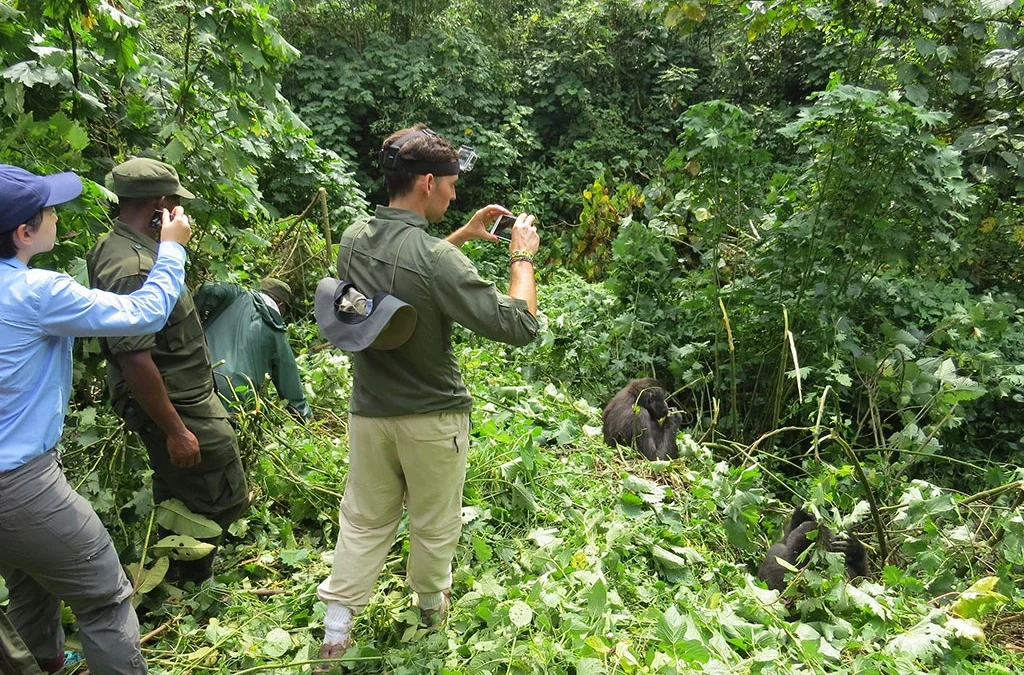
This is the main highlight of the safari. Travelers wake early, have breakfast, and proceed to the gorilla trekking briefing point. After receiving instructions from the trekking team, the hike begins through Bwindi’s dense mountain forest. Trekking duration varies because gorillas move freely through their natural habitat. Travelers should expect steep slopes, thick vegetation, muddy trails, and changing weather conditions.
Overnight: Mid-range lodge near Bwindi
Meals: Breakfast, lunch and dinner
Main activity: Gorilla trekking
What to carry for the trek:
- Sturdy hiking footwear: Proper shoes with good grip are essential because Bwindi’s forest trails can become slippery, muddy, and uneven, particularly after rainfall. Comfortable footwear also provides better support during steep sections of the trek. Travelers should avoid using brand-new shoes for the first time on the trekking day because familiar footwear reduces the risk of discomfort, blisters, and avoidable problems during a long forest walk.
- Waterproof clothing: Rain can occur in the mountain forest even when conditions appear dry at the lodge. A lightweight waterproof jacket helps protect travelers from sudden showers, while trousers made from quick-drying material remain practical when vegetation is wet. A small waterproof cover for personal belongings is also useful because cameras, phones, documents, and other items should remain protected throughout the trek.
- Drinking water and snacks: Gorilla trekking requires physical effort, and the walking time varies depending on where the gorilla family is located. Carrying enough drinking water helps travelers remain comfortable throughout the hike. A few light energy-giving snacks can also be useful during longer treks. Travelers should follow the guidance of their trekking team regarding food, waste, and responsible behavior inside the forest.
- A small daypack: A lightweight backpack provides enough space for water, rain protection, snacks, personal items, and camera equipment without creating unnecessary weight. Travelers should avoid carrying oversized luggage into the forest because the trek involves uneven terrain and steep sections. A small, comfortable daypack keeps essential items accessible while leaving both hands available when navigating challenging sections of the trail.
Day 5: Bwindi to Entebbe
After breakfast, travelers begin the return journey toward Entebbe or another agreed departure point. The driving time depends on the selected Bwindi sector, road conditions, and onward travel arrangements. Travelers with late international flights should allow sufficient time for the road journey and airport procedures. Those with additional nights or connecting destinations can also arrange a different drop-off location.
Meals: Breakfast and lunch
Main activity: Return journey
5-Day Route at a Glance
| Day | Destination | Main Experience |
|---|---|---|
| Day 1 | Entebbe → Queen Elizabeth | Scenic journey to western Uganda |
| Day 2 | Queen Elizabeth | Game drive and wildlife viewing |
| Day 3 | Queen Elizabeth → Bwindi | Scenic transfer toward gorilla sector |
| Day 4 | Bwindi | Gorilla trekking |
| Day 5 | Bwindi → Entebbe | Return journey |
Travelers who want a longer combination can also consider the 10-day Uganda safari from Murchison Falls to Bwindi.
Comparing the Two Safari Examples
The two example packages show how the Mid-Range Safari in Uganda Cost changes according to the experience included. The three-day option is designed for travelers whose main priority is gorilla trekking and who have limited time. The five-day option adds wildlife viewing in Queen Elizabeth National Park, creating a broader experience for travelers who want both primates and classic African safari scenery.
| Feature | 3-Day Gorilla Safari | 5-Day Gorillas & Wildlife |
|---|---|---|
| Main experience | Gorilla trekking | Wildlife and gorilla trekking |
| Starting cost | From $1,600 pp sharing | From $1,960 pp sharing |
| Wildlife viewing | Mountain Gorillas | Elephants, Buffaloes, Lions, Leopards, Antelopes, Hippos, Crocodiles |
| Accommodation | Mid-range | Mid-range |
| Transport | Private safari vehicle | Private safari vehicle |
| Best for | Short trips | Broader Uganda experience |
The three-day option is especially suitable for travelers who have limited holiday time or who are combining Uganda with another destination. It keeps the itinerary focused on the gorilla experience. The five-day option works better for travelers who want to see more of Uganda before trekking. Choosing between them depends on whether your priority is time efficiency or a wider combination of wildlife and primate experiences.
Travelers looking for an even broader itinerary can explore the 11-day Uganda gorilla tracking and wildlife safari.
Why Queen Elizabeth National Park Works Well in a Five-Day Safari
Queen Elizabeth National Park is a strong addition to a gorilla itinerary because it introduces a different type of landscape and wildlife experience. The park’s savannah environment contrasts sharply with the dense mountain forest of Bwindi. This means travelers can experience open-country game viewing before entering the forest for gorilla trekking, giving the five-day itinerary a broader range of activities and scenery.
Starting the five-day route from Entebbe and driving toward Queen Elizabeth National Park also creates a logical westward journey. Rather than treating each destination as a separate trip, the route connects them into one continuous safari. Good route planning matters because Uganda’s attractions are spread across the country, and reducing unnecessary backtracking helps travelers spend more of their holiday experiencing wildlife rather than sitting in the vehicle.
The route can also be tailored according to the traveler’s preferred Queen Elizabeth experience. Some travelers want more time for game drives, while others may prefer a boat cruise or a relaxed lodge stay. The final Mid-Range Safari in Uganda Cost will therefore depend on the selected activities, accommodation, route, and number of nights included within the package.
Travelers interested in combining wildlife and primates can also explore the 9-day Uganda primates and wildlife safari.
What Is Included in a Mid-Range Uganda Safari?
A mid-range safari quotation should clearly identify what the traveler is paying for. This is especially important when comparing several tour operators because one company may advertise a lower cost but exclude permits, park fees, meals, transfers, or accommodation. A professional quotation should show the main inclusions and exclusions so that travelers can understand the real cost before making a booking decision.
Common inclusions can include private four-wheel-drive transport, an experienced driver-guide, accommodation, meals according to the itinerary, fuel, selected park fees, planned activities, and gorilla or chimpanzee permits where applicable. Airport transfers may also be included depending on the package. The exact details should always be confirmed in writing because every safari itinerary is different.
- Private safari transport: Private transport gives travelers more control over their route, departure time, photography stops, and daily pace. Instead of sharing a vehicle with strangers, you can travel with your companion or family while your driver-guide focuses on the itinerary. This is particularly useful on longer Ugandan routes where comfort and flexibility can significantly affect how enjoyable the journey feels.
- Professional driver-guide: The driver-guide is much more than someone who drives the vehicle. A skilled guide interprets wildlife, explains landscapes, understands park roads, monitors the day’s timing, and helps travelers respond to changing conditions. The guide can also help coordinate lodge arrivals, activity schedules, and communication with local teams, giving travelers one experienced person to rely on throughout the safari.
- Accommodation: Mid-range accommodation should provide a comfortable place to rest after game drives or trekking. The exact lodge depends on the route and availability. Near gorilla destinations, location is especially important because an early morning transfer can add unnecessary stress. A good operator should select accommodation that matches the trekking sector, budget, comfort expectations, and timing of the overall itinerary.
- Meals: Most safari packages include meals according to the selected accommodation plan. Breakfast is particularly important on activity days because travelers may leave early for game drives or gorilla trekking. Travelers with allergies, dietary restrictions, or specific food preferences should communicate these requirements during booking so the operator can discuss suitable lodge options before the final safari arrangement is confirmed.
- Park and activity fees: These can include national park access, selected game drives, boat activities, and special permits where applicable. Gorilla trekking has a separate permit structure administered through Uganda Wildlife Authority. The current UWA tariff states that the gorilla tracking fee includes the guide fee, park entrance fees for the day, and community development contribution.
Travelers can also review birding experiences in Uganda, Rwanda and Kenya when considering activities beyond game drives and gorilla trekking.
What Is Usually Not Included?
Understanding exclusions is just as important as understanding inclusions. International flights, visas, travel insurance, personal shopping, alcoholic beverages, tips, laundry, and optional activities may be excluded unless specifically stated in your quotation. Travelers should read the final itinerary carefully and ask questions about anything unclear. This prevents unexpected expenses and makes it easier to compare the Mid-Range Safari in Uganda Cost between operators.
Travel insurance deserves particular attention because it protects the traveler against situations that are outside the tour operator’s control. Medical emergencies, flight changes, lost luggage, and trip interruptions can create unexpected expenses. The safari operator can organize transport and activities, but travelers should arrange suitable personal insurance before departure and check that the policy covers the activities included in their trip.
International airfare is also normally separate because travelers arrive from many different countries and may choose different airlines, routes, and cabin classes. Some visitors arrive through Entebbe, while others may connect their Uganda safari with Rwanda, Kenya, Tanzania, or another destination. Keeping international flights separate allows the safari quotation to focus on the land arrangements that the tour operator directly manages.
Is a Mid-Range Safari in Uganda Worth the Cost?
For many travelers, a mid-range safari offers one of the best balances between comfort and value. You do not have to choose the cheapest accommodation to experience Uganda’s wildlife, and you do not need a luxury budget to enjoy private guiding and comfortable lodges. The Mid-Range Safari in Uganda Cost gives travelers an opportunity to spend more of their budget on experiences while maintaining a comfortable standard.
The value becomes especially clear when the itinerary combines different environments. A traveler may begin in the busy surroundings of Entebbe, continue through savannah landscapes, experience wildlife in Queen Elizabeth National Park, and then enter the mountain forest for gorilla trekking. Each destination offers something different, and the journey connects these experiences into one carefully planned safari.
A mid-range safari can also provide better flexibility than a fixed group tour. With private transport, travelers can discuss the day’s plans with their guide, make reasonable adjustments, spend longer at interesting wildlife sightings, and choose suitable stops during long journeys. This flexibility is particularly valuable for couples and families who want the safari to match their own pace rather than following a rigid group schedule.
Mid-Range Versus Budget Uganda Safari
Budget safaris are designed around keeping costs as low as possible, while mid-range safaris focus on balancing price and comfort. A budget itinerary may use simpler accommodation, shared transport, or fewer additional services. A mid-range itinerary normally provides more comfortable lodging and a private safari vehicle, making it suitable for travelers who want a reliable experience without moving into luxury pricing.
The right choice depends on how much comfort matters to you. If your main goal is spending as little as possible and you are comfortable with basic accommodation or shared arrangements, budget travel can work. If you want a comfortable room, dependable private transport, and greater flexibility, the mid-range category is usually more appropriate. Neither option is automatically better; they serve different traveler priorities.
Mid-Range Versus Luxury Uganda Safari
Luxury safaris move beyond the mid-range category through premium lodges, upgraded rooms, highly personalized services, exclusive experiences, and additional comforts. Travelers choosing luxury may place greater value on lodge design, location, fine dining, private services, and high-end amenities. These extras can substantially increase the total cost without necessarily changing the core wildlife experience, which is why mid-range remains attractive to many travelers.
The Mid-Range Safari in Uganda Cost can therefore provide strong value for travelers who want to spend more on activities and exploration rather than luxury accommodation. A comfortable lodge, private vehicle, experienced guide, good meals, and excellent wildlife experiences can provide everything many travelers need. The decision should come down to your priorities rather than choosing a category simply because it sounds more impressive.
How Much Does a Uganda Safari Cost for Two People?
Traveling as two people sharing accommodation and private transport is a common arrangement for Uganda safaris. Your accommodation cost is shared between the two travelers, while the private vehicle and driver-guide are also used by both people. This can make the per-person cost more attractive than traveling alone, particularly on a safari where transport is a significant part of the overall arrangement.
For the three-day gorilla example, the starting cost is $1,600 per person sharing, making the combined starting safari cost $3,200 for two travelers. For the five-day gorilla and wildlife example, the starting cost is $1,960 per person sharing, giving a combined starting safari cost of $3,920 for two travelers. These are useful planning examples rather than fixed prices for every travel date.
| Example | Per-person starting cost | Two travelers sharing |
|---|---|---|
| 3-day gorilla safari | From $1,600 | From $3,200 |
| 5-day gorillas and wildlife | From $1,960 | From $3,920 |
| General mid-range planning | About $300–$600 per day | Depends on itinerary |
The biggest advantage of traveling as a pair is that many safari costs can be shared. Accommodation is normally based on room sharing, while private transport and guide services are organized around the vehicle. Travelers should still request a detailed quotation because the final per-person cost depends on the exact accommodation, permits, route, activities, and travel dates.
How Many Days Should You Spend on a Uganda Safari?
The ideal number of days depends on your interests and available holiday time. A three-day gorilla safari can work well for travelers whose priority is seeing mountain gorillas and who want a compact itinerary. A five-day gorilla and wildlife safari provides more variety by adding Queen Elizabeth National Park. Longer trips can combine several parks and primate destinations for travelers with more time.
A short safari is useful when Uganda is one part of a larger East African journey. For example, travelers may combine Uganda with Rwanda, Kenya, Tanzania, or a beach holiday. In such cases, a three-day gorilla itinerary can provide a focused Ugandan experience without taking too much time from the rest of the trip.
Travelers with more time can create a richer itinerary by combining gorillas with chimpanzees, wildlife, birding, boat cruises, cultural experiences, or hiking. Longer trips also reduce the pressure to drive long distances on consecutive days. Instead of rushing between destinations, travelers can slow down and spend more time experiencing each park and lodge.
Best Destinations for a Mid-Range Uganda Safari
Uganda provides several destinations that can fit into a mid-range safari, depending on the traveler’s interests. Queen Elizabeth National Park is a strong choice for wildlife, Bwindi and Mgahinga are important for gorilla trekking, Kibale is known for chimpanzee experiences, Murchison Falls provides classic wildlife viewing and dramatic scenery, while Lake Mburo can work well for shorter itineraries and travelers seeking a different type of safari.
Bwindi is particularly important for gorilla-focused trips because it is one of Uganda’s main mountain gorilla destinations. UWA describes Bwindi as home to roughly half of the world’s mountain gorilla population and identifies four major trekking sectors: Buhoma, Ruhija, Rushaga, and Nkuringo. The choice of sector can influence driving time, accommodation, and the overall safari route.
Mgahinga Gorilla National Park offers another gorilla trekking option in southwestern Uganda. It sits within the Virunga landscape and provides a different forest and mountain setting. UWA notes that the park can be reached by road from Kampala through Kabale, while flights from Entebbe can also serve the region. Your choice between Bwindi and Mgahinga should be based on permit availability, trekking preferences, route, and accommodation.
Travelers wanting a detailed look at one of Bwindi’s major areas can explore the Buhoma Sector.
Queen Elizabeth National Park on a Mid-Range Safari
Queen Elizabeth National Park is particularly useful for travelers who want to combine wildlife with gorilla trekking. The park can be positioned naturally between Entebbe and southwestern Uganda, making it a practical stop on a five-day route. A well-planned itinerary can allow time for a game drive before continuing toward Bwindi, creating a more complete safari experience without requiring a separate wildlife holiday.
The park offers a variety of wildlife experiences, and the landscape changes as travelers move through its different areas. Game drives can provide opportunities to search for elephants, buffaloes, antelopes, lions, and other species. Travelers should remember that wildlife sightings are never guaranteed because animals move freely through the protected area, but experienced guides know how to read tracks, habitats, and recent sightings.
The five-day route beginning with a drive from Entebbe to Queen Elizabeth National Park can therefore be an excellent choice for travelers who want more than gorillas. It creates a clear progression from Uganda’s central region into western wildlife country and eventually toward the mountain forests. The result is a varied itinerary that combines road travel, game viewing, lodge time, and gorilla trekking.
For travelers considering a longer route, the ultimate 10-day Uganda wildlife safari itinerary provides another example of combining several destinations.
Bwindi and Gorilla Trekking
Bwindi Impenetrable National Park provides one of Uganda’s most important wildlife experiences. The forest is mountainous, thick, and biologically rich, so gorilla trekking is very different from a vehicle-based game drive. Travelers enter the forest on foot with trained guides and trackers, following the movements of a habituated gorilla family. The terrain can be challenging, making preparation important.
Gorilla trekking should not be treated as a quick wildlife activity that lasts a predictable number of hours. UWA notes that tracking may last between two and seven hours, depending on the circumstances, and travelers receive a designated observation period once they reach the gorilla family. This variation is another reason why travelers should keep the itinerary flexible around the trekking day.
The cost of the gorilla permit supports a regulated tourism system and conservation work, making the permit more than simply an entrance ticket. Travelers should understand that gorilla tourism contributes to the management of protected areas and surrounding communities. When you book a gorilla safari, you are therefore paying for a controlled wildlife experience that helps support conservation as well as the logistics of reaching the gorillas.
Travelers interested in gorilla trekking preparation can also review gorilla trekking in Uganda from London.
What Makes a Good Mid-Range Safari Operator?
Choosing the right operator can matter just as much as choosing the right lodge. A good operator should communicate clearly, provide a detailed itinerary, explain inclusions and exclusions, handle permits properly, use suitable safari vehicles, and provide an experienced driver-guide. The company should also remain available before and during the journey, especially when travelers are moving through remote parts of the country.
A professional quotation should never leave you guessing about what the price covers. If a package says “mid-range safari,” ask for the actual lodge names or accommodation category, the vehicle type, meal arrangement, included activities, permit status, and transfer details. Comparing these elements will give you a much more accurate picture of the Mid-Range Safari in Uganda Cost than comparing advertised starting prices.
Travelers should also verify that the tour operator is properly established and licensed. Uganda Wildlife Authority’s advisory states that foreign non-resident gorilla and chimpanzee tracking permits are sold exclusively through tour operators licensed by the Uganda Tourism Board. This makes operator verification an important step before sending payment for a gorilla-inclusive itinerary.
Why Choose Iconic Africa Safaris?
Iconic Africa Safaris focuses on tailor-made Uganda safari experiences that combine practical planning with personal service. The aim is to help travelers choose the right route, accommodation, activities, and travel pace instead of simply selling one standard package. This approach is especially useful when comparing different versions of the Mid-Range Safari in Uganda Cost, because every traveler’s priorities are different.
Our driver-guides are the trip managers guests trust most — trained professionals, some former park rangers, all skilled interpreters of wildlife and culture. They stay with travelers from the first airport pickup to the final wave-off, keeping each day running smoothly and safely. Their role goes beyond driving because they help interpret wildlife, manage timing, navigate routes, and make the safari easier from beginning to end.
A strong driver-guide can make a major difference during a Uganda safari. Long journeys become more comfortable when the guide understands the road, wildlife, weather, lodge locations, and activity schedules. During game drives, the guide can help identify animals and explain their behavior. During transfers, the guide helps travelers understand the communities, landscapes, farms, towns, and changing environments they pass along the route.
For a wider combination of wildlife and primates, travelers can also explore the 16-day Uganda, Rwanda and Congo adventure.
Insider Tip: Compare Inclusions, Not Just Cost
When comparing safari quotations, never choose an operator simply because the starting cost looks lower. Ask whether the quoted price includes the same accommodation standard, transport, activities, permits, meals, park fees, and guide services. A quotation that looks cheaper at first can become more expensive after missing items are added. The strongest comparison is therefore based on the complete travel experience rather than the headline cost.
How to Reduce Your Uganda Safari Cost
Reducing your safari cost does not always mean choosing the cheapest lodge or removing important activities. Better planning can often produce greater value without sacrificing the main experience. Traveling as two people sharing, choosing a sensible route, booking suitable accommodation, and avoiding unnecessary backtracking can all help. Flexible travel dates may also provide more accommodation choices and access to lower-season opportunities.
- Travel with a companion: Two people sharing accommodation and private transport can make the safari more cost-effective than solo travel. The travelers share the room while using the same vehicle and driver-guide. This arrangement is especially useful for couples, friends, or family members who want a private experience without carrying the entire transport cost alone. It also provides a comfortable balance between privacy and value.
- Choose a sensible route: Avoid adding destinations simply because they appear attractive on a map. Long-distance backtracking can consume valuable safari time and increase transport costs. A route such as Entebbe to Queen Elizabeth and onward toward Bwindi can create a logical western Uganda journey. Your operator should design the itinerary around geography so that the time spent traveling supports the experience rather than working against it.
- Book early: Gorilla permits and suitable accommodation are important components of the itinerary, particularly during popular travel periods. Early planning gives the operator more options when selecting the trekking date, sector, and lodge. It can also reduce the stress of trying to construct a safari after your preferred dates have become difficult to accommodate. Early booking is especially useful for travelers with fixed international flight schedules.
- Travel during flexible periods: If your schedule allows flexibility, ask your operator about different travel months and available seasonal offers. The overall cost can vary according to lodge demand, permit arrangements, and accommodation availability. Travelers should still choose dates that suit their weather preferences and trekking expectations. Saving money is valuable, but the best safari is one where the travel conditions match your expectations.
How to Get the Best Value From a Mid-Range Safari
The best value does not necessarily mean the lowest cost. Value means receiving a strong experience for the money you spend. A well-designed mid-range safari should use comfortable accommodation, efficient routing, private transport, experienced guiding, and meaningful activities. It should also avoid unnecessary driving and accommodation changes that add cost without improving the experience.
For example, a five-day gorilla and wildlife safari can provide more variety than a short gorilla-only trip because it combines Queen Elizabeth National Park with the forest experience. The additional days add wildlife viewing and scenery rather than simply extending the same activity. This is one reason travelers should compare itineraries based on experiences rather than looking only at the number of days.
Another way to improve value is to choose accommodation based on location rather than luxury features alone. A lodge with a convenient position near your trekking sector can save transfer time and make the morning of your gorilla trek easier. Similarly, a lodge positioned sensibly within a wildlife itinerary can reduce unnecessary driving. Good route design often provides more practical value than upgrading every room.
Travelers comparing a wider range of itineraries can also explore the Ultimate Uganda safari itinerary.
When Should You Book a Mid-Range Uganda Safari?
Booking early is particularly useful when your itinerary includes gorilla trekking because permits are limited and linked to specific trekking dates. Your accommodation and transport must also fit around the permit date. Waiting until the last moment can restrict the available choices, particularly when travelers want a particular gorilla sector or a specific lodge. Early planning therefore provides greater flexibility.
Travelers who are flexible about accommodation and trekking sectors may have more options, but this should not be assumed. Popular dates can fill quickly, and the best route is not always available at the preferred time. A professional safari operator can check the practical combination of permits, accommodation, transport, and activities before presenting the final itinerary.
The booking process should also give you enough time to understand the quotation. Ask questions about the accommodation, payment terms, cancellation conditions, permit arrangements, travel insurance, meals, and included activities. A transparent booking process helps ensure that the final Mid-Range Safari in Uganda Cost matches what you expected when you first requested the safari.
What Should You Pack for a Mid-Range Uganda Safari?
Packing for a Uganda safari should take account of both wildlife viewing and forest trekking. Travelers should bring comfortable clothing, sturdy walking shoes, a waterproof jacket, sun protection, insect protection, personal medication, a reusable water bottle, and suitable luggage. Gorilla trekking requires more practical preparation because forest trails can be muddy, steep, and wet, while game drives can involve long periods outdoors.
Neutral-colored clothing is generally practical for safari activities because it is comfortable in natural surroundings and does not attract unnecessary attention. A lightweight jacket can be useful during early morning game drives, while breathable clothing helps during warmer periods. Travelers should also carry a small daypack for the gorilla trek with water, snacks, rain protection, and other personal essentials.
Good footwear matters more for gorilla trekking than for a normal game drive. The forest can become slippery after rain, and travelers may need to walk across uneven ground for several hours. Sturdy shoes with good grip are therefore more useful than fashionable footwear. Travelers should also consider hiring a porter where available, both for practical support and to contribute directly to local livelihoods.
Is Uganda Good for a Mid-Range Safari?
Uganda is particularly well suited to travelers who want to combine several different wildlife experiences within one country. Instead of focusing only on traditional savannah game drives, visitors can combine gorilla trekking, chimpanzee tracking, wildlife viewing, boat experiences, birding, forest walks, and cultural activities. This variety makes Uganda attractive to travelers who want a safari that goes beyond the usual Big Five-focused itinerary.
The country’s landscapes also change dramatically between destinations. Travelers can move from urban Entebbe through cultivated countryside, open savannah, wetlands, crater landscapes, and eventually mountain forests. These transitions make road travel part of the experience rather than simply a transfer between airports and lodges. A carefully planned mid-range itinerary allows travelers to experience these changes without requiring luxury accommodation throughout the trip.
Uganda also provides strong options for travelers who want a private safari without moving into the highest price categories. A private vehicle and professional guide allow travelers to explore at their own pace, while mid-range accommodation keeps the overall budget more manageable. This balance is one of the main reasons the Mid-Range Safari in Uganda Cost remains attractive to couples and small groups.
Frequently Asked Questions About Mid-Range Safari in Uganda Cost
How much does a mid-range safari in Uganda cost?
A Mid-Range Safari in Uganda Cost generally ranges from about $300 to $600 per person per day, although the actual cost varies according to the route, accommodation, activities, season, number of travelers, and transport. Gorilla safaris usually cost more because the gorilla permit forms a major part of the package. Request a quotation based on your preferred travel dates and itinerary to get your exact safari cost.
How much does a three-day gorilla safari in Uganda cost?
A three-day mid-range gorilla safari with Iconic Africa Safaris starts from $1,600 per person sharing. For two travelers sharing accommodation and private transport, the combined starting cost is $3,200. The package centers on the gorilla trekking experience and includes the major arrangements required for the journey. The final cost varies according to the trekking sector, lodge, travel dates, transport arrangements, and other selected services.
How much does a five-day gorilla and wildlife safari cost?
A five-day gorilla and wildlife safari with Iconic Africa Safaris starts from $1,960 per person sharing. For two travelers, the combined starting cost is $3,920. The itinerary includes wildlife viewing in Queen Elizabeth National Park and gorilla trekking in southwestern Uganda. The journey begins with a drive from Entebbe toward Queen Elizabeth before continuing toward the gorilla destination, creating a broader experience than a short gorilla-only safari.
Is gorilla trekking included in the safari cost?
A safari package includes gorilla trekking when the itinerary specifically features the experience. The gorilla permit forms a major part of the cost and should appear clearly in the quotation. Uganda Wildlife Authority administers gorilla permits for Bwindi and Mgahinga, with rates varying according to traveler status. Travelers should confirm that their quotation includes the permit before making their final booking decision.
Why does a gorilla safari cost more than a wildlife safari?
Gorilla safaris normally cost more because they require a special gorilla trekking permit alongside accommodation, transport, guiding, meals, and other safari arrangements. Wildlife safaris based mainly on game drives follow a different cost structure. The gorilla permit specifically covers the trekking experience, while the remaining package costs cover travel to the forest, accommodation, transport, guiding, and other supporting services.
Is $1,600 enough for a mid-range gorilla safari in Uganda?
A starting cost of $1,600 per person sharing covers a 3-day mid-range gorilla safari with Iconic Africa Safaris, depending on the selected itinerary and travel arrangements. Starting prices vary according to accommodation, trekking sector, travel season, and availability. Request a complete quotation that clearly explains every inclusion before deciding whether the package fits your budget and travel requirements.
Can two people share the cost of a Uganda safari?
Yes. Two travelers share accommodation and a private safari vehicle, which often makes the per-person cost more attractive. The exact saving depends on the safari route, accommodation, permits, and other services. Couples, friends, and family members commonly use this arrangement. For example, Iconic Africa Safaris’ three-day gorilla safari starts from $1,600 per person sharing, while the five-day option starts from $1,960 per person sharing.
Is April a good month for a cheaper gorilla safari?
April offers opportunities for travelers seeking discounted gorilla trekking, particularly when suitable low-season permit arrangements apply. The month often brings more rainfall, so travelers should prepare for wetter forest trails and changing road conditions. Flexible travelers can benefit from a lower overall safari cost. Always confirm the applicable permit rate, accommodation availability, and travel conditions before booking your gorilla safari.
Is May a good month for a lower-cost Uganda safari?
May offers opportunities for travelers with flexible dates who want to explore lower-season safari arrangements. Rain can occur more frequently, particularly in forest areas, so travelers should carry appropriate clothing and footwear. The lower-season period can attract budget-conscious travelers, but the final value depends on the entire itinerary. Compare accommodation, permits, transport, activities, and weather rather than considering one cost alone.
Is November a good month for a Uganda safari?
November suits travelers who prefer a flexible travel period and want to explore available lower-season arrangements. Rain can occur, so travelers should prepare waterproof clothing and expect changing conditions. Gorilla trekking continues during this period, although trails can become muddy. Travelers who prioritize a lower safari cost while experiencing gorillas and wildlife should discuss November travel options with their safari operator.
What is the best way to compare Uganda safari costs?
Compare complete itineraries rather than advertised starting costs. Check accommodation, transport, meals, park fees, permits, activities, guide services, airport transfers, and exclusions. Two packages may look similar online but deliver very different experiences after you examine their inclusions. A detailed quotation gives you a clearer understanding of the actual Mid-Range Safari in Uganda Cost and helps you avoid unexpected expenses.
Is a mid-range Uganda safari suitable for couples?
A mid-range safari suits couples who want private transport, comfortable accommodation, and flexibility without paying luxury prices. Two people share a room and safari vehicle, helping them receive good value from a private itinerary. Couples also tailor their route around preferred activities, including gorilla trekking, wildlife viewing, boat cruises, cultural experiences, and relaxed lodge stays. This approach gives couples greater control over their safari experience.
Can I combine gorilla trekking with wildlife viewing?
Yes. Combining gorilla trekking with wildlife viewing provides one of the best ways to experience Uganda’s variety. A five-day itinerary includes Queen Elizabeth National Park before continuing toward southwestern Uganda for gorilla trekking. Travelers experience open savannah landscapes and game drives before entering the mountain forest. This combination creates a broader safari experience than an itinerary focused exclusively on gorilla trekking.
Why start the five-day safari from Entebbe?
Starting from Entebbe connects travelers directly from their international arrival point to the western Uganda safari route. The five-day itinerary then drives toward Queen Elizabeth National Park before continuing toward the gorilla trekking destination. This route avoids unnecessary return journeys and creates a practical westward journey. Arrival schedules, road conditions, accommodation, and the selected trekking sector determine the exact timing.
Does the safari cost include a private vehicle?
Private transport forms a major component of a tailor-made mid-range safari. The quotation should clearly state the exact vehicle arrangement before booking. A private four-wheel-drive safari vehicle gives travelers greater flexibility and allows the driver-guide to manage the itinerary around their needs. This arrangement proves particularly valuable on long routes connecting Entebbe, Queen Elizabeth National Park, and southwestern Uganda.
Does the safari cost include meals?
Safari packages commonly include meals according to the accommodation plan. The exact arrangement varies between properties and itineraries, so travelers should check whether the package includes breakfast, lunch, dinner, or packed meals. Travelers should also communicate special dietary requirements during the planning stage. This allows the safari operator to select suitable accommodation and arrange appropriate meals before confirming the safari.
Does the safari cost include travel insurance?
Travel insurance normally remains separate from the safari quotation unless the package specifically states otherwise. Travelers should arrange suitable insurance before departure and confirm that the policy covers all activities included in their itinerary. Gorilla trekking and long-distance safari travel require appropriate coverage. Insurance protects travelers against medical emergencies, trip interruptions, lost luggage, and other unexpected situations outside the operator’s control.
Ready to Book Your Ugandan Safari with Iconic Africa Safaris?
Iconic Africa Safaris offers three simple, reliable ways to secure your next unforgettable Ugandan adventure today. Simply complete our quick online booking form to start planning your dream safari experience right away. Our friendly team also welcomes direct emails at info@iconicafricasafaris.com to discuss your specific travel plans and preferences. For instant assistance, tap the green WhatsApp icon in your screen’s bottom right corner anytime.
Our driver-guides are the trip managers guests trust most — trained professionals, some former park rangers, all skilled interpreters of wildlife and culture. They stay with travellers from the first airport pickup to the final wave-off, keeping each day running smoothly and safely. Their experience helps guests understand Uganda’s wildlife, landscapes, communities, and conservation story while enjoying a comfortable and well-organized safari from start to finish.