
What is the cost of Uganda Safari
Cost of Uganda Safari: The Complete 2026-2028 Pricing Guide
Many travelers researching a Uganda safari trip ask one simple question early in their planning: what does it actually cost? The cost of a Uganda safari depends on several key factors that most travelers can genuinely control themselves. These factors include the travel season, group size, accommodation quality, chosen activities, transport type, and required park permits. A backpacker sharing budget campsites pays far less than a couple booking a fully private luxury safari experience. This wide pricing range means nearly every travel budget can find a suitable Uganda safari option available today.
Timing genuinely changes the cost of a Uganda safari more than most first-time travelers actually expect. Uganda officially designates April, May, and November as its low or “green” season months each year. Rain increases noticeably during these months, crowds thin out considerably, and lodges frequently drop their standard published rates. Tour operators also run seasonal promotional offers, which can make gorilla trekking packages noticeably more affordable during these particular periods. However, the Uganda Wildlife Authority sets and periodically revises gorilla permit prices completely independently of lodge rates. Travelers should always verify current permit rates directly through a licensed operator or the official UWA website.
Here at Iconic Africa Safaris, we offer travelers a genuinely useful real-world benchmark for early-stage budget planning. Our 3-Day Gorilla Trekking Experience starts from $1,300 per person during the discounted low season window. This particular rate covers transportation, accommodation, meals, bottled drinking water, and required permits where applicable throughout. It clearly demonstrates exactly what a well-organized, all-inclusive short gorilla safari can realistically cost most travelers. This guide breaks down every major element shaping the cost of a Uganda safari for you. You will find detailed information on permits, accommodation tiers, group size, and proven savings strategies below today.
Uganda Safari Cost at a Glance
This table offers travelers a quick snapshot before we explore the finer pricing details further below. It shows exactly what different travel styles typically cost per person, on each travel day. These figures deliberately exclude gorilla or chimpanzee permits, which this guide covers separately later on in detail.
| Travel Style | Typical Cost Per Person/Day | What You Get |
|---|---|---|
| Budget/Camping | $120 – $180 | Shared camping or basic guesthouses, group transport, set meals |
| Mid-Range | $250 – $400 | Comfortable en-suite lodges, private 4×4 vehicle, full board meals |
| Luxury | $500 – $900+ | High-end lodges/camps, private guide-driver, premium dining, extras |
These figures reflect the general cost of a Uganda safari when permits remain entirely excluded from all calculations. Adding gorilla trekking, chimpanzee tracking, or extended park stays naturally raises your total travel budget accordingly. Understanding each individual cost component genuinely helps you build a realistic, workable travel budget from scratch today.

3 Days & 2 nights

4 Days & 3 nights

5 Days & 4 nights
What Determines the Cost of a Uganda Safari?
Several interconnected factors shape the final cost of a Uganda safari for every single traveler. Understanding these factors helps you identify precisely where you hold flexibility and where prices remain genuinely fixed.
- Travel season: High season spans June through September and again December through February, bringing peak lodge rates. Low season, covering April, May, and November, often brings discounted accommodation and occasionally reduced gorilla permit pricing.
- Group size: Joining a scheduled group safari spreads vehicle, fuel, and guide costs across fellow travelers simultaneously. Private safaris carry the entire cost alone, which noticeably raises the per-person price for solo travelers.
- Accommodation standard: Budget campsites, mid-range lodges, and luxury camps occupy genuinely different price points across the market. Accommodation typically represents the single largest variable within any Uganda safari budget once permits get counted.
- Activities and permits: Gorilla trekking, chimpanzee tracking, game drives, boat cruises, and nature walks each carry separate park fees. These individual activity costs add up remarkably quickly, depending on how many experiences you choose.
- Transport type: Uganda’s national parks sit far apart, so choosing between domestic flights and overland road travel genuinely matters. This choice significantly affects both your total cost and the overall duration of your entire trip.
Insider Tip: Book your gorilla permits 3 to 6 months ahead to reliably secure your preferred trekking date. This added flexibility can meaningfully lower your overall cost of a Uganda safari well before departure.
Uganda Safari Cost Breakdown by Component
Understanding exactly where your money actually goes requires separating the cost of a Uganda safari into distinct components. Here are the core cost components that together ultimately determine your final overall trip budget.
- Park entrance fees: Uganda’s national parks charge daily entry fees, typically running $40 to $45 per person, per day. Tour operators generally include this park entrance fee directly within your total quoted safari cost package.
- Gorilla and chimpanzee permits: These permits represent the single biggest expense line item in most Uganda safari travel itineraries by far. Gorilla permits cost $800 in high season or $600 in low season, covering April, May, and November. Chimpanzee permits cost $250 in high season, dropping to $200 during those same discounted low-season months already. Tour operators typically bundle both permit types directly into your total quoted safari package cost already.
- Accommodation: Prices range from $30 to $60 nightly for basic camping up through luxury camps exceeding $1,000. Some budget lodges priced between $60 and $100 nightly still offer wifi, hot showers, and basic private rooms. Location, season, and overall property exclusivity all genuinely influence exactly where your final accommodation costs ultimately land.
- Transport and fuel: Safari vehicles, driver-guides, and fuel for long park-to-park drives usually appear bundled neatly into package prices already. These costs represent a genuinely substantial hidden expense when travelers attempt arranging transport entirely on their own.
- Meals and drinking water: Most reputable packages include full board meals and bottled drinking water throughout the entire itinerary. This inclusion matters greatly in remote park areas, where reliable outside food options remain genuinely quite limited.
Insider Tip: Request a full itemized cost breakdown rather than simply accepting a single bundled figure from any operator. This approach makes comparing quotes between different companies considerably easier and far more transparent overall. You will clearly see exactly where the cost of a Uganda safari genuinely goes.
The Biggest Factor in Your Budget – Gorilla Trekking Permit
Gorilla trekking remains the undisputed highlight of most Uganda trips for very good reason indeed. Gorilla trekking permits also represent the single largest expense driving the overall cost of a Uganda safari. The Uganda Wildlife Authority issues these permits exclusively, usually through licensed tour operators acting directly on your behalf.
| Permit Type | High Season Price | Low Season Price (Apr/May/Nov) |
|---|---|---|
| Standard Gorilla Trekking Permit | $800 per person | $600 per person |
| Gorilla Habituation Experience | $1,500 – $1,800 per person | Not typically discounted |
| Chimpanzee Tracking Permit | Approx. $200 per person | Usually unchanged |
A standard gorilla permit includes one full hour with a habituated family and complete park entry access. It also covers professional ranger-guide services and dedicated security personnel throughout your entire trekking experience today. The gorilla habituation experience extends this rare encounter to roughly four hours with a semi-habituated family instead. This particular option costs considerably more ($1800) and limits daily visitor numbers substantially compared to standard trekking permits.
UWA periodically revises its published tariff structure, meaning pricing can genuinely shift without much extensive prior notice given. Always confirm current gorilla permit prices with your chosen operator before finalizing any future trip booking. This particular step matters especially when you plan travel more than a few months ahead.
Insider Tip: Low-season discounted permits for April, May, and November usually cannot be rescheduled once fully booked. These real savings genuinely only make sense when your travel dates remain completely firm and entirely unchangeable.
Sample Uganda Safari Cost Examples
Real, concrete numbers make budgeting genuinely easier for travelers actively comparing several different trip options available. Below are illustrative per-person estimates for common itinerary lengths, assuming standard double occupancy arrangements throughout. These figures include gorilla permits where relevant and represent reasonable planning ranges, not guaranteed fixed quotes.
| Itinerary | Budget Style | Mid-Range Style | Luxury Style |
|---|---|---|---|
| 3-Day Gorilla Trekking | $1,300 – $1,600 | $1,700 – $2,200 | $2,500 – $3,500 |
| 5-Day Uganda Safari (gorillas + wildlife park) | $1,900 – $2,400 | $2,600 – $3,400 | $4,000 – $5,500 |
| 7-Day Classic Uganda Safari | $2,500 – $3,200 | $3,600 – $4,800 | $6,000 – $8,000+ |
The cost of a Uganda safari scales fairly predictably alongside both trip length and chosen comfort level. However, the gorilla permit itself stays a near-fixed cost regardless of which particular comfort tier you select. UWA sets this specific price uniformly for every traveler, completely independent of accommodation or transport choices made.
Insider Tip: Combine gorilla trekking with a nearby wildlife park, such as Queen Elizabeth, whenever your schedule genuinely allows. This particular approach proves considerably more cost-efficient than treating each activity as an entirely separate trip. You effectively share transport and guide costs across more activities within one continuous itinerary.
Best Time to Visit for a Lower Uganda Safari Cost
Timing remains one of the very few factors that travelers can genuinely control themselves entirely. Uganda experiences two distinct rainy seasons and two drier seasons throughout its annual, predictable weather cycle. Pricing tends to closely follow these established weather patterns across most reputable tour operators nationwide.
- Low season (April, May, November): These months bring fewer tourists, noticeably lusher scenery, and typically the most affordable lodge rates. Travelers may also access discounted gorilla permits, making this window ideal for budget-conscious visitors willing to pack rain gear.
- Shoulder season (March, late September, early December): This transitional period offers a comfortable middle ground featuring moderate rainfall and reasonable accommodation. It suits travelers wanting genuine savings without facing the very heaviest annual rainfall totals elsewhere.
- High season (June–September, December–February): Dry trails and peak wildlife visibility define this period, alongside the year’s absolute highest travel demand. Lodge prices and availability reach their most competitive, and consequently most expensive, levels here.
Insider Tip: Target the very start or end of the rainy season, such as early April specifically. Trails remain genuinely manageable, rates stay discounted, and gorilla groups often stay lower down in the forest. This particular combination frequently produces shorter, considerably easier treks for travelers visiting during these transitional weeks.
What’s Included and Excluded in a Uganda Safari Price
Comparing quotes across different operators often genuinely confuses travelers who assume all packages cover completely identical services. Request a fully written breakdown before comparing the cost of a Uganda safari between different competing companies.
Typically included:
- Ground transportation runs consistently in a safari-equipped 4×4 vehicle accompanied by a professional driver-guide throughout your entire itinerary.
- Accommodation covers the specified number of nights, ranging from budget campsites through luxury lodges depending on your chosen package tier.
- Full board meals, including breakfast, lunch, and dinner, plus bottled drinking water accompany you consistently during the entire safari.
- Park entrance fees and specific activity permits named clearly within your itinerary, such as gorilla trekking permits, get included automatically.
- An English-speaking guide handles daily logistics, wildlife spotting, and important cultural context throughout every single day of your trip.
Typically excluded:
- International flights to and from Uganda, plus applicable visa fees, require separate arrangement well before your departure date.
- Tips and gratuities for guides, drivers, and lodge staff remain genuinely customary but rarely appear within quoted package prices.
- Alcoholic beverages, laundry services, spa treatments, and other personal expenses accumulate separately at lodges throughout your entire trip.
- Travel insurance stays strongly recommended given the physically demanding nature of activities like gorilla trekking across mountainous terrain.
- Optional extras, including photography permits, additional wildlife activities, or extensions into neighboring countries, cost extra beyond your base package.
Insider Tip: Ask specifically whether “meals” genuinely means full board, covering all three daily meals, or merely half board instead. This seemingly small wording difference can significantly shift your out-of-pocket lunch expenses across an entire multi-day trip.
Group Size vs. Private Safaris: How It Affects Cost
Travelers frequently underestimate just how strongly group size actually influences the overall cost of a Uganda safari. A private safari for two people means covering the entire vehicle, fuel, and guide cost completely alone. A group of six or eight instead splits that identical fixed cost across far more travelers overall.
| Group Size | Vehicle & Guide Cost Impact | Typical Per-Person Effect |
|---|---|---|
| Solo traveler | Full cost, plus single supplement | Highest per-person cost |
| Couple (2 people) | Full cost split two ways | High per-person cost |
| Small group (4–6 people) | Cost split across more travelers | Moderate, often best value |
| Large group (8+ people) | Cost spread widely | Lowest per-person cost, less flexibility |
Private safaris genuinely offer real advantages, including a fully custom pace and flexible daily stops throughout. However, these particular benefits arrive at a noticeable price premium compared to shared group departures generally. If lowering the cost of a Uganda safari remains your top priority, choose smaller groups instead. A small scheduled group strikes a genuinely strong balance between affordability and a personalized travel experience overall.
Accommodation Standards and their Effect on Uganda Safari Cost
Accommodation often ranks as the genuine second-largest expense after permits within most travelers’ overall budgets. It also offers travelers the most room to customize their overall Uganda safari cost quite directly.
- Budget camps and guesthouses ($30–$60/night): These simple, clean facilities offer shared or basic private bathrooms for genuinely cost-conscious travelers. They suit visitors prioritizing wildlife experiences over lodge luxury and comfortable with rustic overnight accommodations throughout.
- Mid-range lodges ($100–$250/night): Expect en-suite rooms, reliable hot water, genuinely good food, and locations conveniently near park entrances. These properties represent the best overall value-to-comfort ratio available for most travelers on moderate travel budgets.
- Luxury lodges and tented camps ($400–$1,200+/night): These premium properties feature exceptional locations, gourmet dining, spa services, and outstanding guiding throughout. They specifically target travelers seeking a five-star wilderness experience and generally less concerned about price sensitivity.
Insider Tip: Many mid-range lodges near Bwindi Impenetrable National Park offer forest views genuinely comparable to luxury camps. Researching location carefully pays off considerably more than chasing brand reputation when controlling your overall Uganda safari cost.
Uganda Safari Cost vs. Rwanda: A Quick Comparison
Travelers frequently compare the cost of a Uganda safari against neighboring Rwanda specifically for gorilla trekking. Both countries offer mountain gorilla encounters located within the very same shared Virunga ecosystem region.
| Factor | Uganda | Rwanda |
|---|---|---|
| Gorilla Permit (high season) | $800 | $1,500 |
| Gorilla Permit (low season) | $600 (Apr/May/Nov) | Rarely discounted |
| General Accommodation Costs | Generally lower | Generally higher |
| Park Accessibility | Longer overland drives | Shorter drives from Kigali |
| Overall Trip Cost | More budget-friendly | Premium pricing |
Uganda consistently delivers a genuinely lower cost of a Uganda safari compared to its neighboring country overall. Lower gorilla permit prices and generally moderate accommodation costs together drive this meaningful, noticeable price difference nationwide. Rwanda offers shorter driving distances but charges considerably more money for an essentially identical gorilla encounter.
Insider Tip: Choose Uganda specifically if budget ranks as your absolute top priority and longer road transfers don’t bother you. You get essentially the exact same gorilla experience at roughly half of Rwanda’s permit cost overall.
Cost of Getting to Uganda: Flights and Visas
Entry costs genuinely deserve inclusion within any honest cost of a Uganda safari calculation upfront always. Most tour operator quotes exclude these particular expenses entirely, so budget for them separately well in advance.
- International flights: Most travelers fly into Entebbe International Airport, with round-trip fares from Europe or North America ranging quite widely. Expect seven hundred to fifteen hundred dollars, depending heavily on season, chosen airline, and advance booking timing.
- Uganda visa fees: A single-entry tourist visa costs around $50 and typically gets obtained fully online before departure. The East Africa Tourist Visa, covering Uganda, Kenya, and Rwanda together, costs roughly one hundred dollars.
- Yellow fever vaccination and travel health costs: Uganda requires proof of yellow fever vaccination for entry into the country. Malaria prophylaxis and comprehensive travel insurance together typically add another one hundred to two hundred fifty dollars.
Domestic Transport: Road Transfers vs. Domestic Flights
Uganda’s national parks spread across a genuinely large, sometimes rugged landscape spanning considerable overall distances between them. How exactly you move between parks genuinely affects both your total budget and available overall trip time.
- Overland road transfers: This remains the most common and genuinely budget-friendly option, using a safari-equipped 4×4 vehicle throughout. Road transfers between major parks take four to eight hours but typically incur no extra per-kilometer charges.
- Domestic flights: Small aircraft connect Entebbe to airstrips near Bwindi, Queen Elizabeth, and Murchison Falls quite quickly indeed. Domestic flights typically cost $150 to $350 per leg, adding real convenience at a genuine noticeable premium.
- Combination itineraries: Many travelers choose to fly for longer legs, such as Entebbe to Bwindi, while driving shorter, scenic connections nearby. This particular approach balances time savings against overall cost control throughout a longer, multi-park itinerary.
Insider Tip: Flying at least one leg genuinely saves an entire travel day when your itinerary includes both Bwindi and Murchison Falls together. This particular choice suits travelers short on time, even though it noticeably raises overall trip costs.
Tipping and Incidental Costs to Budget For
Gratuities remain genuinely customary throughout Uganda’s tourism industry but almost never appear within quoted package prices themselves. They deserve a firm, dedicated place in your realistic Uganda safari cost planning process from the start.
- Driver-guides: A common guideline suggests ten to twenty dollars per person, per day, for your dedicated driver-guide. This amount reflects their role coordinating logistics, wildlife spotting, and daily comfort throughout your entire trip.
- Gorilla trekking rangers and porters: Rangers typically receive ten to fifteen dollars per person, per trek, for their expert guidance. Hiring a local porter costs around fifteen to twenty dollars daily and directly supports vital community income.
- Lodge staff: Housekeeping, waitstaff, and other lodge personnel usually receive tips collectively, often through a shared communal tip box provided. Five to ten dollars per person, per night, represents a genuinely reasonable guideline across most properties.
- Incidentals: Bottled beverages beyond drinking water, souvenirs, spa treatments, and laundry services constitute personal expenses that vary widely by traveler. Budget an additional ten to thirty dollars daily for reasonable, comfortable flexibility throughout your entire trip.
Insider Tip: Carry small denomination US dollars printed after 2013, or local Ugandan shillings, specifically reserved for tipping purposes throughout. Many remote lodges and trailheads genuinely lack card facilities or any nearby ATMs entirely across the region.
Can You Do a Uganda Safari on a Tight Budget?
Yes, a genuinely low-cost Uganda safari remains entirely achievable, though it requires realistic expectations from every traveler involved. You must prioritize wildlife time over comfort and accept considerably more independent planning responsibility along the way. Budget travelers can camp comfortably in national park campsites for ten to twenty-five dollars nightly. Public or shared shuttle transport between towns also cuts costs compared to private vehicles quite significantly. Self-driving with a rented vehicle and cooking your own meals saves considerable money too overall. Gorilla permits remain a genuinely fixed cost regardless of your chosen budget level or preferred travel style. Biggest savings therefore come specifically from stripping back accommodation and transport rather than skipping permits entirely.
Uganda Safari Cost Compared to Kenya and Tanzania
Travelers weighing multiple East African destinations often genuinely ask how Uganda compares against these established regional alternatives. This particular comparison helps clarify precisely where the cost of a Uganda safari fits regionally overall.
| Factor | Uganda | Kenya | Tanzania |
|---|---|---|---|
| Signature Experience | Gorilla & chimpanzee trekking | Big cat & Great Migration viewing | Serengeti migration & Ngorongoro Crater |
| Typical Daily Cost (mid-range) | $250 – $400 | $300 – $500 | $350 – $550 |
| Key Extra Fee | Gorilla permit ($600–$800) | Conservancy/park fees | Park & crater fees |
| Overall Value Positioning | Strong value for primate trekking | Best for classic Big Five safaris | Premium migration experiences |
Uganda offers genuinely strong value primarily due to its comparatively lower gorilla permit pricing versus neighboring Rwanda. General park and accommodation costs also stay moderate relative to Kenya’s and Tanzania’s larger, busier circuits. Travelers prioritizing primate trekking over classic savanna game viewing typically find genuinely excellent value here overall. The overall cost of a Uganda safari rewards this specific type of traveler particularly well indeed.
Major Safari Experiences in Uganda
Uganda packs primate trekking, savanna game viewing, waterfalls, mountain hiking, and rare birdlife into one compact country. Choosing which experiences to include ultimately shapes the final cost of a Uganda safari significantly. Each individual activity adds its own travel time, logistics requirements, and permit costs to your itinerary. Here is a breakdown of the major experiences that travelers typically build their trips around.
1. Gorilla Trekking in Bwindi & Mgahinga + Batwa Cultural Experience or Sabyinyo Hiking
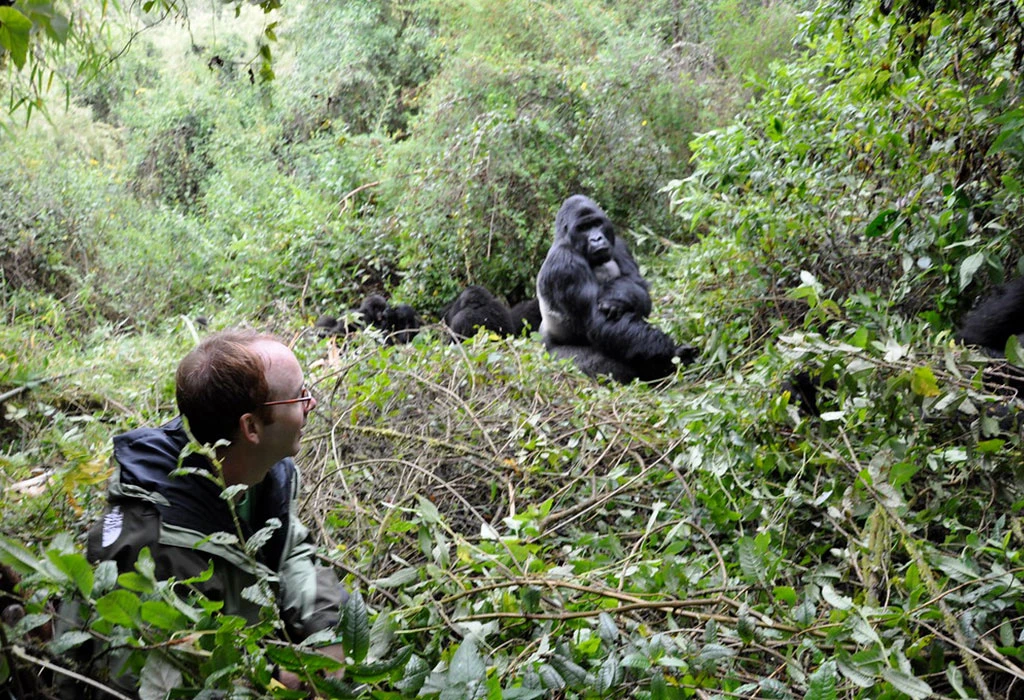
This remains Uganda’s flagship wildlife experience for most international visitors traveling to the country. Trekkers hike into dense rainforest for one to six hours, depending on gorilla family location. They then spend one full hour observing a habituated mountain gorilla family from a close distance. Bwindi Impenetrable National Park offers travelers four separate trekking sectors to choose between depending on preference. Mgahinga Gorilla National Park has one habituated family and sits right near the Virunga volcanoes themselves. Many travelers choose to pair gorilla trekking with the Batwa Cultural Experience for added cultural depth. This particular visit connects travelers with Uganda’s indigenous forest-dwelling people and their traditional forest survival skills. Others instead choose a Sabyinyo volcano hike, which rewards climbers with views spanning three separate countries.
2. Chimpanzee Trekking in Kibale, Kyambura, Budongo, or Kalinzu + Bigodi Nature Walk
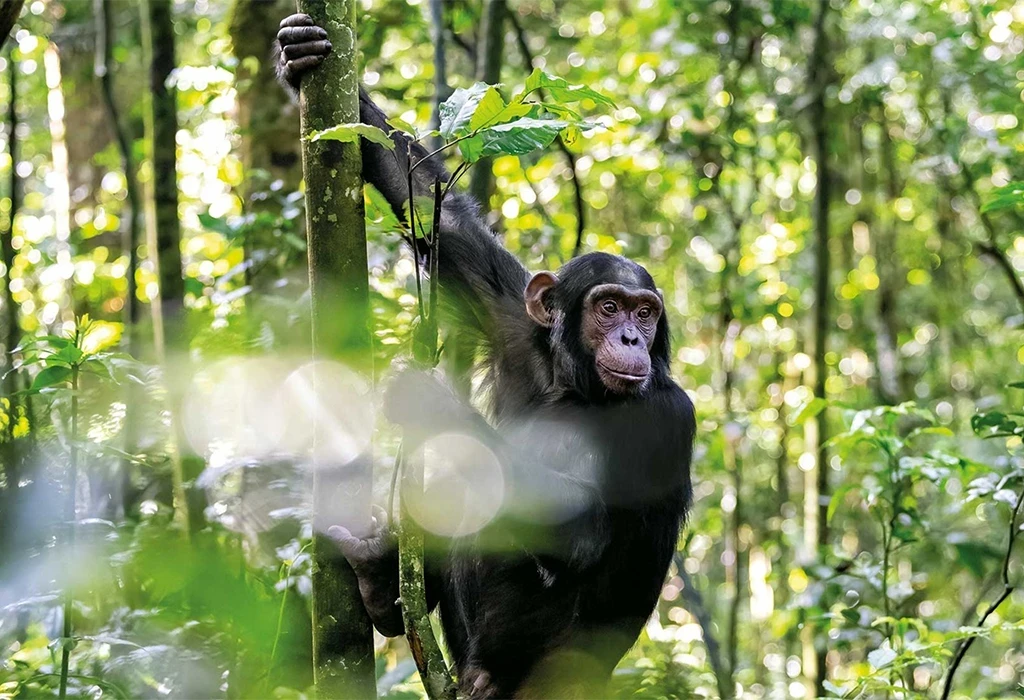
Chimp trekking offers Uganda’s other major primate encounter, and it genuinely feels more physically accessible overall. Trails generally stay flatter, treks run noticeably shorter, and travelers still watch chimp troops forage and vocalize closely. Kibale Forest earns its strong reputation as Uganda’s top chimp destination through consistently high habituation success rates. Kyambura Gorge sits inside Queen Elizabeth National Park and offers a genuinely dramatic, river-carved rainforest setting nearby. Budongo and Kalinzu forests provide quieter, less-visited alternatives for travelers specifically wanting fewer crowds around them. The nearby Bigodi Nature Walk highlights wetland birdlife and several resident monkey species just outside Kibale.
3. Murchison Falls: Big Four Game Viewing + Hike to the Top + Boat Cruise to the Base
Murchison Falls National Park centers around one of Uganda’s most powerful natural spectacles by far. Here, the mighty Nile River forces itself through a narrow gorge before plunging dramatically downward into mist. Game drives across the park’s savanna and woodland regularly reward visitors with confident lion and elephant sightings. Buffalo and leopard also roam this genuinely diverse landscape alongside large herds of other grazing wildlife species. A hike to the top places you right beside the thundering, gorge-crossing water itself directly. A separate boat cruise then carries visitors toward the base, revealing hippos, crocodiles, and abundant riverside birdlife.
4. Game Viewing in Queen Elizabeth National Park (Big Four+), Tree-Climbing Lions of Ishasha, Kazinga Channel Boat Cruise
Queen Elizabeth stands out clearly as Uganda’s most biodiverse national park by a considerable margin. It spans savanna, wetlands, crater lakes, and forest across one genuinely varied and dramatic landscape. Game viewing across the park’s main sectors regularly delivers confident lion, elephant, buffalo, and leopard sightings. Large herds of Uganda kob also graze openly across the wide grassland areas here daily. The remote Ishasha sector hosts Africa’s rare tree-climbing lions, found in only a handful of locations. The Kazinga Channel links two major lakes and hosts an extremely dense hippo population along its banks.
5. Golden Monkey Trekking in Mgahinga
Golden monkey trekking offers travelers a shorter, lighter alternative to the full gorilla trekking experience. This particular activity takes place within the same Mgahinga Gorilla National Park boundaries as gorillas. Golden monkeys represent an endangered, strikingly colored primate species found only within the Virunga volcanic region. Treks typically demand noticeably less physical effort and less overall time than standard gorilla treks require. Many travelers add this activity while already visiting the southwestern corner of Uganda anyway. It rounds out a primate-focused itinerary nicely without dramatically increasing your overall trip cost significantly.
6. Rwenzori Mountains Hiking

Travelers commonly nickname the Rwenzori range the “Mountains of the Moon” for good reason. This dramatic mountain range forms Africa’s highest chain after Kilimanjaro and Mount Kenya combined together. Multi-day treks pass through montane forest, dense bamboo zones, and eventually striking moorland dotted with giant lobelias. Serious mountaineers then continue further toward glacial, rocky terrain located near the range’s highest peaks. Shorter two- to three-day treks suit travelers wanting a genuine taste without committing to a full expedition.
7. Nature Walks in Lake Mburo National Park + Horse Riding
Lake Mburo ranks as Uganda’s smallest savanna park, yet it offers genuinely unique on-foot access options. Rangers permit walking safaris and horseback riding here specifically because no elephants or lions roam nearby. Guided nature walks bring visitors close to zebra, impala, eland, and warthog in complete safety. Horseback riding among grazing zebra and antelope remains a genuine rarity across most East African parks. Lake Mburo also sits conveniently along the road route connecting Kampala and Bwindi together nicely. Many travelers use this park specifically to break up a longer overland journey comfortably along the way.
8. Shoebill Stork Tracking
The shoebill stork ranks among Africa’s strangest and most genuinely sought-after bird species by far. This prehistoric-looking bird stands nearly five feet tall and features a distinctive clog-shaped bill. Shoebills remain elusive, swamp-dwelling birds, so sightings generally require specific locations and considerable patience overall. Mabamba Bay Wetland near Lake Victoria offers the best-known viewing spot close to Entebbe airport. The Nile Delta area within Murchison Falls National Park provides another genuinely reliable shoebill viewing location too. Guides typically use quiet dugout canoes or small boats to move through dense papyrus swamp.
Frequently Asked Questions About Uganda Safari Cost
How much does a Uganda safari cost?
The cost of a Uganda safari typically ranges from $150 to $200 daily for basic budget trips. Luxury experiences can exceed $500 to $900 per day, excluding international flights entirely from that figure. A well-organized 3-day gorilla trekking package, like our own offering here at Iconic Africa Safaris starting from $1,300, provides a realistic benchmark. Longer itineraries combining gorillas with wildlife parks generally range from $2,000 to $6,000 per person, depending on comfort level, group size, and chosen travel season.
Is Uganda cheaper than Rwanda for a safari?
Yes, Uganda generally proves considerably more affordable than Rwanda for gorilla trekking and broader safari travel overall. Uganda charges $800 for standard gorilla permits in high season, dropping down to $600 during low season. Rwanda charges a flat $1,500 rate regardless of season for a genuinely comparable gorilla trekking access. Accommodation and park fees in Uganda also trend noticeably lower on average across most available properties. While Rwanda offers shorter drives from Kigali, Uganda delivers comparable gorilla encounters at significantly reduced overall cost.
What is included in a Uganda safari price?
Most reputable packages include ground transportation, accommodation matching your chosen tier, and full board meals throughout your trip. Bottled drinking water, professional guiding, park entrance fees, and required activity permits typically round out most inclusions. Excluded items usually include international flights, visa fees, tips, alcoholic drinks, and comprehensive travel insurance coverage. Always request an itemized breakdown from your operator before finalizing any final booking decision at all. This clarity genuinely ensures you understand precisely what the quoted cost of a Uganda safari covers.
When is the cheapest time to visit Uganda for a safari?
April, May, and November represent Uganda’s low or green season, generally the cheapest travel window available annually. Lodges frequently discount their standard rates, and tour operators run attractive seasonal promotions during these specific months. Gorilla permits have occasionally dropped in price during this same low-season window too, historically. Rain increases and trails can turn muddier, but many travelers accept this reasonable trade-off quite happily. Always confirm current permit pricing directly with your operator, since seasonal discounts genuinely aren’t guaranteed every single year.
How can I reduce the cost of my Uganda safari?
Traveling during low season significantly reduces your overall Uganda safari cost through discounted lodges and gorilla permits. Joining a small scheduled group instead of booking privately also meaningfully lowers your total per-person expenses considerably. Choosing mid-range rather than luxury accommodation frees up valuable budget for permits and core activities instead. Booking well in advance secures noticeably better rates and stronger permit availability across most licensed tour operators. Finally, always compare itemized quotes from multiple companies rather than simply accepting the first bundled price offered.
Do gorilla permit prices ever change?
Yes, the Uganda Wildlife Authority periodically revises its published tariff structure with relatively little advance notice given typically. Standard permits have historically cost around $800 during high season and $600 during low season months. Booking rules and discount policies can also shift between announced tariff review periods quite unexpectedly at times. Travelers should always verify current rates directly with UWA or a licensed tour operator well beforehand. This particular step matters especially when booking many months ahead of your actual planned travel dates.
What is the average cost per day for a Uganda safari?
Excluding permits, most travelers spend between $150 and $400 per person, per day, on average overall. Budget campers manage comfortably on $120 to $180 daily, while mid-range travelers typically spend $250 to $400. Luxury travelers spend $500 or more daily, sometimes exceeding $900 for the most premium properties available. Once permits enter the overall equation, short 3-day itineraries often average $430 to $550 daily. This happens specifically because permit costs spread across fewer days, raising the daily average considerably on shorter trips.
Are Uganda safaris good value for money?
Yes, particularly for travelers genuinely prioritizing gorilla and chimpanzee trekking over classic savanna game drives elsewhere. Uganda’s gorilla permits cost roughly half of Rwanda’s price for a genuinely comparable overall wildlife experience. General accommodation and park fees also stay moderate compared to other major East African safari destinations nearby. The cost of a Uganda safari buys access to diverse ecosystems within one genuinely single country overall. Savanna, rainforest, wetlands, and crater lakes all sit within easy reach, reducing costly multi-country travel logistics entirely.
Ready to Book Your Ugandan Safari with Iconic Africa Safaris?
Iconic Africa Safaris offers three simple, reliable ways to secure your next unforgettable Ugandan adventure today. Simply complete our quick online booking form to start planning your dream safari experience right away. Our friendly team also welcomes direct emails at info@iconicafricasafaris.com to discuss your specific travel plans and preferences. For instant assistance, tap the green WhatsApp icon in your screen’s bottom right corner anytime.