
The Cost of 3-Day Gorilla Habituation in Bwindi
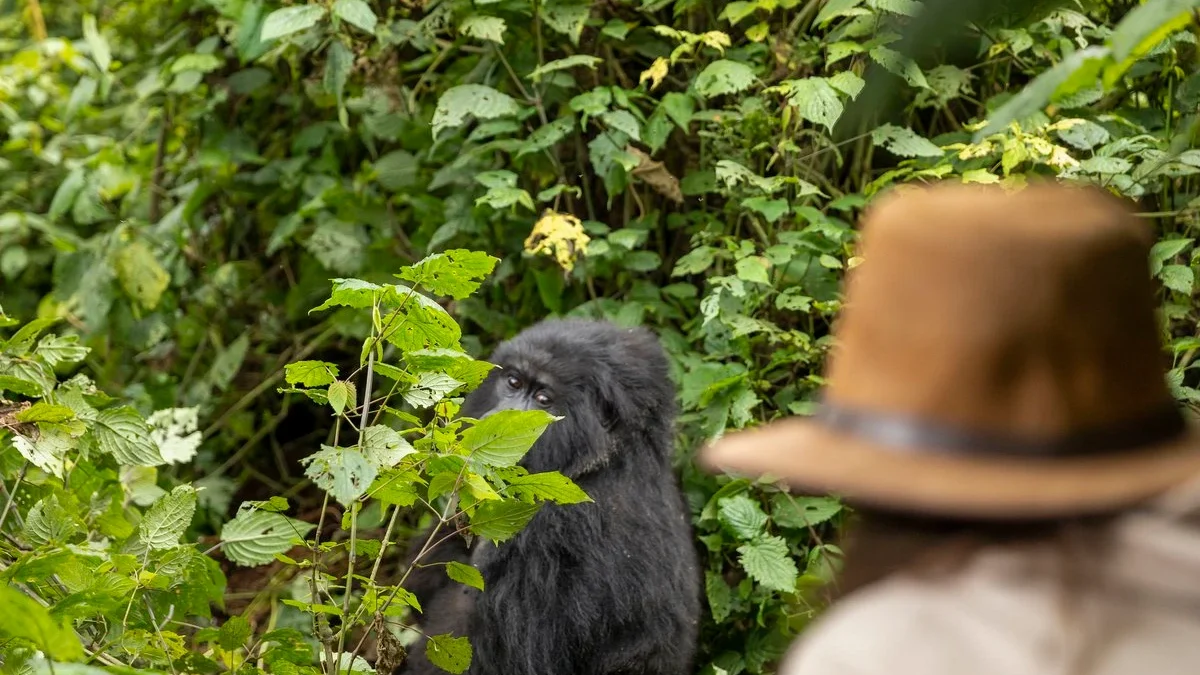
Gorilla habituation in Bwindi happens in just one place: the Rushaga sector, in the southern reaches of the forest. This is where two semi-habituated families – the Bikingi and Bukungu (also spelled Bukinga) groups – are slowly being accustomed to human presence. The Bikingi group formed after the Mishaya family broke apart, while Bukungu is a newer addition, still early in its training.
The experience is built around closeness and time. While a standard trek gives you one hour with a fully habituated family, habituation lets you spend up to four hours face-to-face with the gorillas, shadowing the researchers and trackers who are teaching them to tolerate visitors.
At a glance:
- Activity duration: up to 4 hours with the gorillas, compared to 1 hour for standard trekking.
- Permit cost: $1,800 per person for foreign non-residents (up from $1,500) and $1,500 for foreign residents (up from $1,000), with effect from 1st July 2026.
- Group size: strictly limited to a maximum of 4 tourists per group.
- Requirements: participants must be at least 15 years old and in good health, to avoid transmitting illnesses to the gorillas.
A Day in Rushaga
You wake in the dark, and the first thing you notice is the cold. Rushaga sits high in the southern hills of Bwindi, and at that hour the air is thin and damp – often around 11°C, with mist still pooling in the valleys below your lodge. A hot breakfast is waiting – eggs, toast, fruit, and plenty of coffee or tea – and most lodges pack you a lunch box and fill a flask, because you won’t see food again for many hours.
This is also when you do your final kit check: long trousers tucked into socks, long sleeves, waterproof boots already a little broken in, gaiters, and a rain jacket no matter how clear the sky looks. Add garden gloves for grabbing vegetation and nettles, insect repellent, and at least two litres of water in the daypack. A camera with a zoom lens earns its place here far more than a phone.
6:00 am – Briefing at the Rushaga ranger post
You drive the short distance to the Uganda Wildlife Authority briefing point at Rushaga. Where a standard one-hour trek can put eight people in front of a single gorilla family, the habituation experience is deliberately tiny: a maximum of four visitors join one family for the whole day, so the group around you stays small and quiet.
At registration you present your passport, habituation permit, and payment receipts. One thing worth knowing in advance — payment must be cleared beforehand through a licensed operator (Iconic Africa Safaris). Cash is no longer accepted at the gate.
What the Full 3-Day Safari Costs
The total cost of the 3-day safari depends on two things: the number of people in your private group, and the level of accommodation you choose. The larger your group, the lower the cost per person, since transport and shared rooms are split further.
As a guide, two people sharing transport and a double or twin room in a mid-range lodge pay $2,800 per person. This price includes:
- Transportation
- Accommodation and meals
- Gorilla habituation permit
- Bottled drinking water
- En-route lunch
- Government taxes
The travel plan
Day 1: Arrival and Transfer to Bwindi
Your adventure begins the moment you land. We pick you from Kigali International Airport or your Kigali hotel for a scenic 4–5 hour drive, or from Entebbe International Airport or your Entebbe hotel for a longer 9–10 hour journey through Uganda’s rolling countryside. Either route delivers you to the edge of Bwindi Impenetrable Forest, where a warm welcome and a hot meal await.
Accommodation: Ichumbi Gorilla Lodge
Meals: lunch and dinner
Day 2: Gorilla Habituation Experience
This day is the heart of the trip: a 4-hour encounter in the Rushaga sector, shadowing researchers and trackers as they work with a semi-habituated gorilla family. You’ll spend hours observing these remarkable animals up close in their natural home – an experience few travellers ever have. Return to the lodge tired and exhilarated.
Meals: breakfast, lunch and dinner
Day 3: Return Journey
After a relaxed breakfast, we drive you back to Kigali or Entebbe in good time for your onward travel, your memories of Bwindi’s gorillas firmly in hand.
The Best Time for this Adventure
The ideal windows are the drier months – June to late September, and December to February. That said, the experience runs year-round, and even in the so-known to be rainy months you can still be rewarded with clear skies on a good day.
What to Pack for this Adventure
Packing for a habituation day really comes down to three things: staying dry, protecting your skin from the forest, and keeping your hands free for the climb. You’ll be out for the better part of a day in steep, wet, nettle-filled terrain, so every item has to earn its place. Here’s what to bring.
On your body
- Long-sleeved shirts and long trousers in neutral colours – they guard against nettles, thorns, and biting insects. Tuck the trousers into your socks.
- Waterproof, broken-in hiking boots with good ankle support and grip. Never bring brand-new boots; the mud and slopes will punish blisters.
- Gaiters, to keep mud, ants, and water out of your boots.
- A warm layer for the cold early start – a fleece or light jumper you can peel off once you start sweating.
In your daypack
- A waterproof rain jacket, packed every single day regardless of the sky. Rain in Bwindi arrives fast.
- Garden gloves for grabbing vines, branches, and nettles as you climb.
- At least two litres of water, plus the lunch box and flask your lodge packs.
- Insect repellent with DEET, and a small first-aid kit with plasters and any personal medication.
- A dry bag or plastic bags to protect your camera, phone, and documents from rain and sweat.
- Energy snacks — nuts, dried fruit, or bars — to keep you going through a long day.
For the encounter
- A camera with a zoom lens, which earns its place far more than a phone. Bring spare batteries and memory cards.
- A face mask to wear when you’re close to the gorillas. These are sometimes sold in nearby, but bring your own as backup.
Documents and small essentials
- Passport, habituation permit, and yellow-fever certificate.
- Sunscreen, a hat, and sunglasses.
- Cash for tipping your porter (USD 15–20), guide, and trackers (optional).
One last tip: hire a porter at the briefing point. They carry your bag, steady you on the steep sections, and your fee goes straight into the local community – so you can pack what you need without worrying about hauling it all yourself.
Booking Gorilla Habituation in Bwindi
Getting started is simple. Reach us through the booking form, email info@iconicafricasafaris.com, or tap the WhatsApp button in the bottom-right corner of your screen for an instant chat. Just tell us your travel dates, the number of people in your private group, your preferred level of accommodation (Budget, Mid-Range, or Luxury). One of our local consultants will then craft a personalised, fully costed itinerary around your preferences.
Whether you want to do habituation alone or extend your adventure to other destinations — a game safari in Queen Elizabeth National Park, or chimpanzee tracking in Kibale – we’re just a message away, 24 hours a day.
Habituation permits are limited and sell out fast, so if you’re travelling in peak season, we recommend booking 3–6 months in advance to guarantee your spot.
How to Get to Rushaga
From Entebbe International Airport (Uganda)
The drive is roughly 480–520 km and takes about 9–10 hours. You’ll head through Kampala, then southwest via Mbarara and Kabale (or via Ntungamo). From Kabale, continue toward Kisoro and turn off to Rushaga. Many travellers break the journey with an overnight stop in Mbarara or Kabale. Alternatively, take a scheduled or charter flight from Entebbe (or Kajjansi) to Kisoro Airstrip – about 1.5 hours – followed by a 1–1.5 hour drive to Rushaga.
From Kigali International Airport (Rwanda)
This is the faster and more popular route: about 5–6 hours by road, or roughly 220–230 km. Drive south and west from Kigali toward the Cyanika or Katuna/Gatuna border crossing. After clearing immigration into Uganda, continue to Kisoro, then on to Rushaga in about 1–1.5 hours. Carry your passport, gorilla permit, and yellow-fever certificate.
Why Choose Iconic Africa Safaris?
- Experienced driver-guides. We assign you a seasoned guide who knows the land intimately, with years of experience operating in the region and a deep understanding of gorilla trekking — the kind of guide who makes the experience stay with you forever.
- Experienced tour consultants. Our office consultants understand that no two travellers are alike. They’ll listen patiently to your requests and preferences, then shape an itinerary that fits you precisely.
- A comfortable 4×4 Land Cruiser. You’ll travel in a sturdy, well-maintained Land Cruiser built for Uganda’s rough roads — high clearance, reliable on the mountainous final stretches, and comfortable enough to make the long transfers part of the adventure rather than something to endure.