
Gorilla Trekking in 2027- Guide to Rwanda vs Uganda
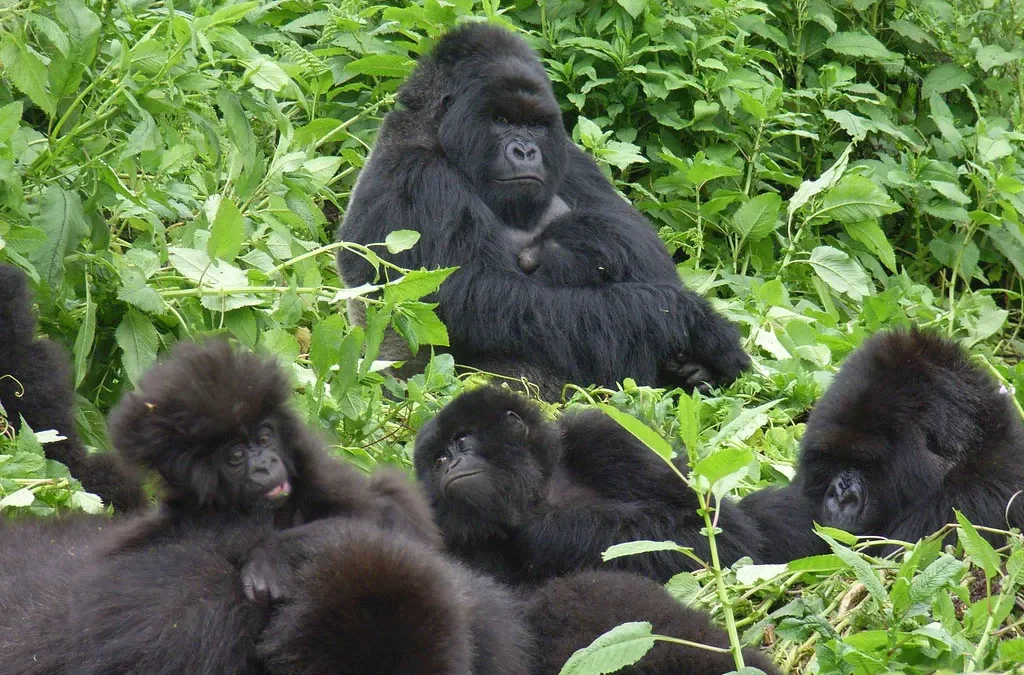
Standing three feet from a 400-pound silverback in his own forest is not something you forget. It rearranges your idea of what a holiday can be. But before you book flights, you need to answer one question: Rwanda or Uganda? Both countries sit inside the Virunga region, both protect mountain gorillas with real dedication, and both deliver an hour you will talk about for years. Yet the permit prices, the terrain, the drive times, and even the low-season deals differ sharply between them. This guide breaks down every practical detail for your Gorilla Trekking in 2027, so you can choose the country, the park, and the season that actually fits your budget and your body.
Bwindi & Mgahinga vs Volcanoes: Where the Gorillas Live
Location and Landscape
Uganda’s gorillas live in two parks in the country’s far southwest, near the borders with Rwanda and the Democratic Republic of Congo. Bwindi Impenetrable National Park covers 321 square kilometres of ancient rainforest, split into 4 trekking sectors: Buhoma, Ruhija, Rushaga, and Nkuringo. Mgahinga Gorilla National Park sits further south, on the slopes of 3 dormant volcanoes (Mount Gahinga (3,474m), Mount Muhavura (4,127m), and Mount Sabinyo (3,645m)) shared with Rwanda and Congo. Rwanda’s gorillas, meanwhile, live entirely in one park: Volcanoes National Park, in the Virunga Mountains near Musanze. It borders both Uganda’s Mgahinga and Congo’s Virunga National Park, so the gorilla families sometimes wander between countries.
Vegetation and Terrain
Bwindi earns its name honestly. The forest is thick, tangled, and genuinely impenetrable in places, with vines, moss-covered trees, and steep valleys that test your legs. Expect mud, narrow trails, and altitude that ranges from 1,160 to 2,607 metres. This is rainforest in the truest sense, humid and dense, with visibility often dropping to a few metres once you leave the trailhead.
Mgahinga offers a sharply different picture, even though it sits just a short drive from Bwindi. The park is dominated by 3 dormant volcanoes: Muhabura at 4,127 metres, Sabyinyo at 3,669 metres, and Gahinga at 3,474 metres. Trekking here moves through distinct vegetation bands, starting in montane woodland, rising into dense bamboo forest, and thinning out into Afro-alpine growth near the higher slopes. Mgahinga’s forest is less dense than Bwindi’s, which makes spotting the gorillas through the trees noticeably easier. The terrain still climbs steeply in places, since much of the park sits between 2,227 and 4,127 metres, but the going generally feels more open underfoot.
Volcanoes National Park feels different again. The terrain is volcanic, with more open bamboo forest and gentler slopes near the trailheads, though the higher gorilla groups still demand a serious climb. Trekkers enjoy shorter average walking times compared to Bwindi’s dense undergrowth, which makes Volcanoes a gentler pick for less experienced hikers.
Gorilla families within two countries
- Uganda: Over 19 habituated families spread across Bwindi’s 4 sectors (Rushaga, Nkuringo, Buhoma and Ruhija), plus 1 family (the Nyakagezi group) in Mgahinga. This gives Uganda the widest spread of trekking options in the region.
- Rwanda: 12 habituated families in Volcanoes National Park, with 8 visitors allowed per family, per day.
More families in Uganda generally means easier last-minute availability, especially outside peak months.
Understanding Permit Costs for Gorilla Trekking in 2027
Standard Permit Prices
- Uganda: $800 per person for foreign non-residents, $700 for foreign residents, in high season.
- Rwanda: $1,500 per person, for foreign non-residents, $500 for foreign residents in Rwanda.
Uganda’s permit costs roughly half of Rwanda’s, which is the single biggest factor pulling budget-conscious travellers toward Bwindi and Mgahinga.
Gorilla Habituation Experience
Uganda also offers something Rwanda does not sell to tourists: the Gorilla Habituation Experience. Instead of a standard 1-hour visit, you spend up to 4 hours with rangers and researchers as they work to habituate a wild gorilla family to human presence. This currently costs around $1,800 (Permit) per person and is only available in Bwindi’s Rushaga sector, limited to small groups of 4 people daily.
Low-Season Discounts: A Uganda Exclusive
Here is where Uganda pulls ahead for value-focused travellers. In March 2026, the Uganda Wildlife Authority introduced official low-season discounted permits for April, May and November, dropping the price to $600 for foreign non-residents and $500 for foreign residents. These months are expected of rain, but the forest turns lush and green, trails are quieter, and lodges often drop their rates too.
Rwanda offers no equivalent seasonal discount on the core gorilla permit. The Rwanda Development Board does offer a 30% combo discount, bringing the fee to roughly $1,050, but only if you also visit Akagera or Nyungwe National Park during the low season. There is no standalone discount for gorilla trekking alone in Rwanda.
Insider tip: If you want the gorillas but not the peak-season crowds or peak-season prices, Uganda in April, May, or November is genuinely the smartest move on the continent right now.
Getting There: Distances and Drive Times
From Kigali to the Trekking Parks
Kigali International Airport is the more convenient gateway if speed matters to you. Volcanoes National Park sits just 2 to 2.5 hours away by road, over well-paved highways through rolling hills. If you choose Uganda instead but fly into Kigali, the drive to Bwindi or Mgahinga takes considerably longer, around 4 to 5 hours through the border crossing at Cyanika or Katuna.
From Entebbe Airport to Uganda’s Parks
If you fly directly into Uganda, Entebbe International Airport is your starting point. The drive from Entebbe to Bwindi Impenetrable National Park takes 8 to 10 hours by road, covering roughly 500 kilometres of varied terrain and small towns. Many travellers break this into a 2-day journey, stopping at Lake Mburo National Park along the way. For those short on time, domestic charter flights cut the journey to about 1 hour, landing at Kihihi or Kisoro airstrip near the park.
Insider tip: If your schedule is tight, fly Entebbe to Kisoro rather than driving. It saves an entire day you can spend inside the forest instead of on the road.
Accommodation: Luxury, Mid-Range and Budget
Luxury Lodges
Rwanda has invested heavily in high-end hospitality around Volcanoes National Park. Properties like Bisate Lodge, Singita Kwitonda and One&Only Gorilla Nest offer designer villas, private chefs, and views of the volcanoes from your bed, typically running $1,000 to $1,800 per night. Uganda has been closing the gap fast, with lodges such as Bwindi Lodge, Sanctuary Gorilla Forest Camp and Gorilla Heights Lodge offering comparable luxury for $400 to $700 per night, making Uganda’s top tier noticeably more affordable.
Mid-Range Options
Both countries handle the mid-range well. In Rwanda, expect $200 to $400 per night for comfortable lodges near Kinigi. In Uganda, similar comfort around Buhoma or Ruhija costs $150 to $300 per night, again landing on the cheaper side.
Budget Options
Uganda wins decisively here. Simple guesthouses and community-run camps or lodges near Bwindi start from $40 to $80 per night, complete with hearty meals and warm hospitality. Rwanda’s budget options are scarcer and less developed, generally starting around $100 to $150 per night near Musanze, since the country has leaned heavily into premium tourism rather than backpacker infrastructure.
When to Book Your Gorilla Trekking in 2027
Peak season in both countries runs from June to September and again from December to February, when dry trails and clear skies draw the biggest crowds. Permits for these months sell out 6 to 10 months in advance, especially in popular sectors like Rushaga and Buhoma. If you are looking for Gorilla Trekking in 2027 peak-season slot, start booking by mid-2026 to early 2027.
For low-season savings in Uganda, plan April, May, or November. Book at least 3 months ahead, since these discounted non-rescheduled permits are becoming more popular each year as word spreads. Rwanda’s permits, regardless of season, should also be secured 3 to 6 months out, since only 96 to 112 are issued daily across the entire park.
How to Book Gorilla Trekking in 2027 with Iconic Africa Safaris
Ready to lock it in? Reach us through the booking form, email info@iconicafricasafaris.com, or tap the WhatsApp button in the bottom right corner of your screen for an instant chat. Tell us your travel dates and the exact number of days you’d like. One of our local consultants then crafts a personalized, fully costed itinerary around your wishes. We’re just a message away, 24 hours a day.
We organize everything, including permits, lodge bookings, flights between destinations apart from those from your home country, and 4×4 Land Cruiser transfers from your lodge to game drives or the gorilla trekking point. All you need to do is show up ready for the honeymoon of a lifetime.