
The Cost of 20-Day Uganda, Kenya & Tanzania Safari
The Cost of 20-Day Uganda Kenya Tanzania Safari: Complete Price Guide
For 2 people sharing mid-range accommodation, the cost of 20-Day Uganda Kenya Tanzania safari starts from $8,200 per person. Budget travelers pay less, while travelers who prefer luxury lodges and tented camps will pay more. The exact price depends on your group size, accommodation category, season of travel, and how many optional activities you add.
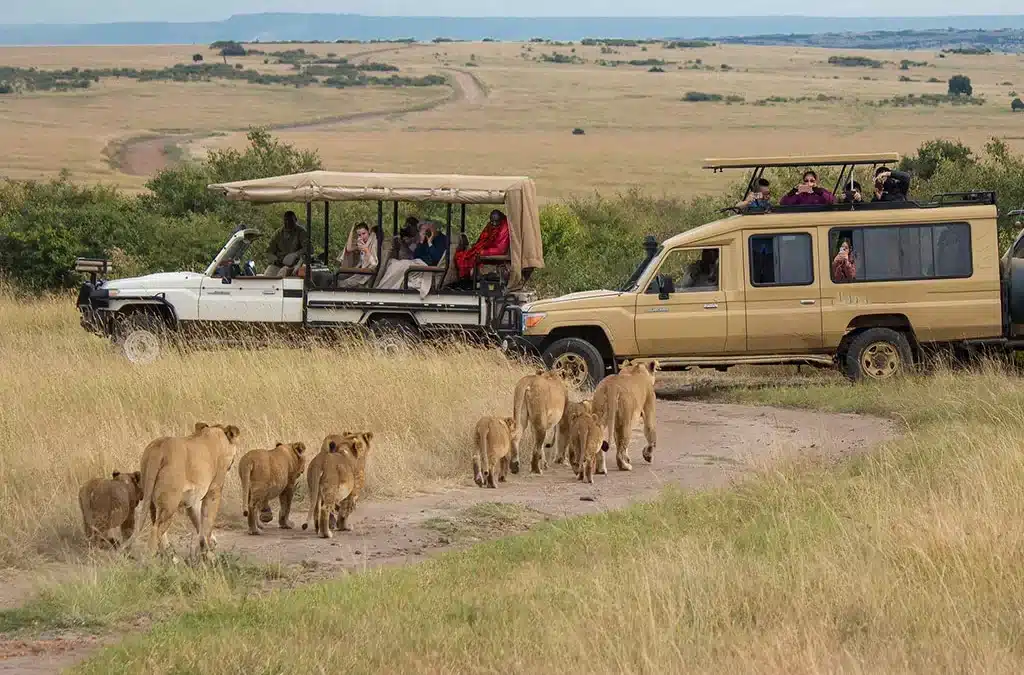
A 20-Day Uganda Kenya Tanzania safari is the ultimate East African adventure. It combines gorilla trekking in the misty forests of Uganda, big-cat game drives across Kenya’s Masai Mara, and the endless plains of the Serengeti and Ngorongoro Crater in Tanzania. Many travelers extend the trip with a few days on Zanzibar’s beaches to relax after three weeks on the road.
If you are planning this trip, your first question is almost always the same: how much does a 20-day Uganda Kenya Tanzania safari actually cost? This guide answers that question in detail, with a full day-by-day itinerary, transparent pricing tables, park fees, permit costs, accommodation options, and everything else you need to plan and budget for this trip with confidence.
Quick Overview: What This Safari Includes
Before diving into the itinerary and costs, here is a snapshot of what a 20-day Uganda Kenya Tanzania safari typically covers.
- Duration: 20 days and 19 nights, starting in Entebbe, Uganda and ending in Zanzibar, Tanzania.
- Countries visited: Uganda, Kenya, and Tanzania (including Zanzibar Island).
- Main destinations: Murchison Falls National Park, Kibale Forest National Park, Bwindi Impenetrable Forest National Park, Lake Nakuru National Park, Masai Mara National Reserve, Serengeti National Park, Ngorongoro Crater, and Stone Town in Zanzibar.
- Core experiences: Gorilla trekking, chimpanzee trekking, rhino tracking, Nile boat cruise, Great Migration game drives, crater floor safari, Maasai cultural visit, and beach relaxation.
- Who it is best for: Wildlife enthusiasts, honeymooners, photographers, retirees with time to spare, and repeat visitors to Africa who want to see more than one country in a single trip. It suits couples, families with older children, friend groups, and solo travelers joining a group departure.
- Starting price: From $8,200 per person for 2 people sharing mid-range accommodation. Budget travelers can complete the same route from around $7,000 per person, while luxury travelers should budget from $11,500 per person and above.
What Determines the Cost of a Uganda Kenya Tanzania Safari
Several factors push the price of this trip up or down. Understanding them helps you budget accurately and decide where to spend more and where to save.
- Accommodation category. Budget lodges, mid-range lodges, and luxury lodges have very different nightly rates, and this is the single biggest driver of your total cost.
- Group size. Vehicle hire, driver-guide fees, and some park costs are shared among the group, so larger groups pay less per person.
- Gorilla and chimpanzee permits. These government-controlled fees are fixed but significant, and they do not change with your accommodation choice.
- Season of travel. Peak season (June to October and December to February) carries higher lodge rates than the rainy low season.
- Internal flights. This itinerary includes a flight from Entebbe to Nairobi and a flight from northern Tanzania to Zanzibar, both of which add to the base cost.
- Number of travelers on the vehicle. A private safari costs more per person than a small-group joining safari with 4 to 6 travelers.
- Optional extras. Hot air balloon rides over the Serengeti or Masai Mara, spa treatments in Zanzibar, and premium wine at dinner are not usually included and add to your final bill.
How a 20-Day Trip Compares to Shorter Safari Options
Not every traveler has three weeks free, so it helps to see how this full itinerary compares to shorter alternatives covering fewer countries or parks.
| Trip Length | Countries Covered | Typical Starting Price (Per Person, Mid-Range, 2 Sharing) | Best For |
|---|---|---|---|
| 7–9 days | Uganda only | $2,800–$3,600 | Gorilla and chimp trekking on a tighter schedule |
| 12–14 days | Uganda and Kenya | $4,800–$6,200 | Primates plus the Mara, without Tanzania |
| 17 days | Uganda, Kenya, and Tanzania | $7,200–$7,900 | A shorter version of this full three-country route |
| 20 days | Uganda, Kenya, and Tanzania, plus Zanzibar | $8,200 and up | The complete experience with a beach finish |
If you are short on time but still want to combine countries, our 17 Days Uganda, Kenya and Tanzania Safari covers most of the same highlights in a slightly tighter schedule, without the Zanzibar extension.
Day-by-Day Itinerary for the 20-Day Uganda Kenya Tanzania Safari
Below is the complete route this safari follows, day by day, with driving times, activities, meal plans, and accommodation options at every stage. Distances and drive times are approximate and can shift with road and weather conditions.
Day 1: Arrival in Entebbe – Transfer to Murchison Falls National Park via Ziwa Rhino Sanctuary
Your safari begins the moment you land at Entebbe International Airport, where an Iconic Africa Safaris driver-guide will meet you for a short welcome briefing. From here, you head north on a scenic 4 to 5-hour drive toward Murchison Falls National Park, Uganda’s largest protected area.
Midway through the drive, you stop at Ziwa Rhino Sanctuary for a guided rhino tracking walk. Ziwa is the only place in Uganda where southern white rhinos live in the wild, and walking up close to them on foot, accompanied by armed rangers, is a memorable start to the trip. You then continue north, passing farmland, trading centers, and rolling countryside, before arriving at your lodge in the late afternoon.
- Driving time: Approximately 5 to 6 hours total, including the rhino tracking stop.
- Activities: Rhino tracking on foot at Ziwa Rhino Sanctuary.
- Meal plan: Half board (dinner and breakfast).
- Accommodation options:
- Budget: Hornbill Bush Lodge (standard rooms)
- Mid-range: Tilenga Safari Lodge or Pakuba Safari Lodge
- Luxury: Chobe Safari Lodge riverside cottages or Paraa Safari Lodge premier rooms
- Practical note: Carry cash in small denominations for the sanctuary entrance and tips. Wear closed shoes and light long sleeves, as the walk passes through tall grass.
Day 2: Morning Game Drive and Nile Boat Cruise
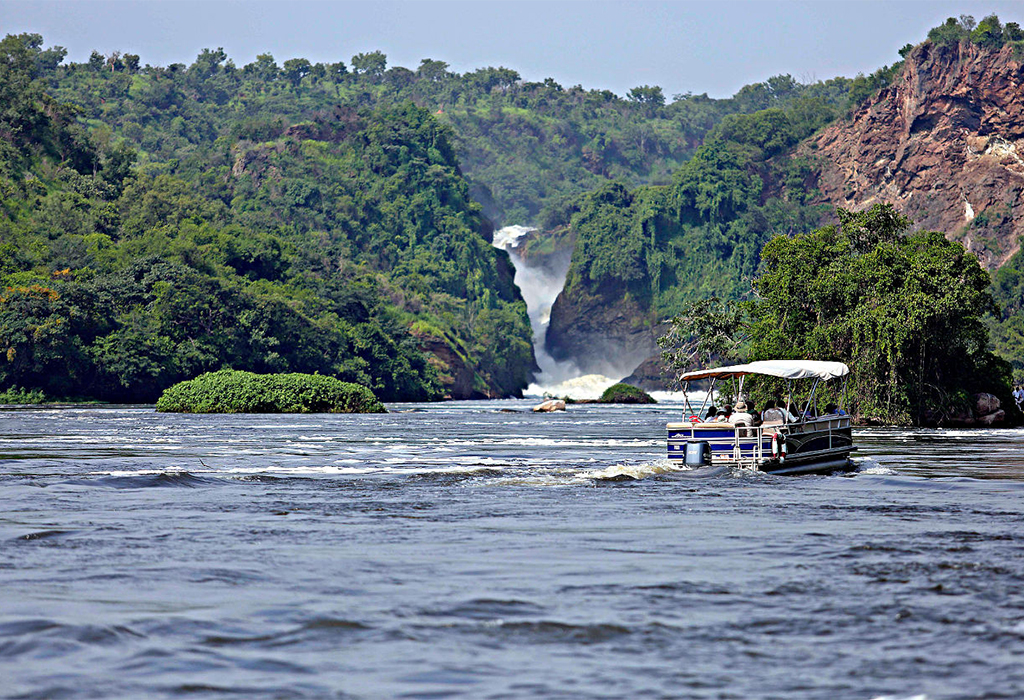
An early breakfast is followed by a 3 to 4-hour game drive across the northern Nile Delta sector of Murchison Falls National Park. This section of the park holds elephants, buffaloes, lions, and leopards, and combined with the rhinos seen the day before, you effectively complete the Big Five in under 24 hours. Giraffes, Uganda kob, and hundreds of bird species round out the sightings.
After lunch and a short rest, you board a launch cruise on the River Nile toward the base of Murchison Falls. The boat passes pods of hippos, basking crocodiles, and elephants drinking at the water’s edge, before reaching a viewpoint where the entire Nile squeezes through a 7-meter gorge and thunders downward.
- Driving/activity time: Game drive 3 to 4 hours; boat cruise approximately 3 hours round trip.
- Meal plan: Full board.
- Accommodation: Same lodge as Day 1.
- Practical note: Bring a hat, sunscreen, and a zoom lens or binoculars for the boat cruise, since animals are often viewed from mid-river.
Day 3: Transfer to Kibale Forest National Park
After breakfast, you leave Murchison Falls and drive south-west toward Kibale Forest National Park, known worldwide as the primate capital of Africa. The drive passes tea estates, crater lakes, and the Rwenzori foothills on a clear day.
You arrive in the early afternoon, check into your lodge, and have the rest of the day free to relax before the chimpanzee trek.
- Driving time: Approximately 5 to 6 hours.
- Meal plan: Full board.
- Accommodation options:
- Budget: Chimpanzee Forest Lodge
- Mid-range: Turaco Treetops
- Luxury: Chimpundu Lodge or Primate Lodge Kibale (forest cabins)
- Practical note: Roads through this stretch can be dusty in the dry season, so keep your camera equipment sealed in a dust-proof bag.
Day 4: Chimpanzee Trekking and Bigodi Wetland Nature Walk
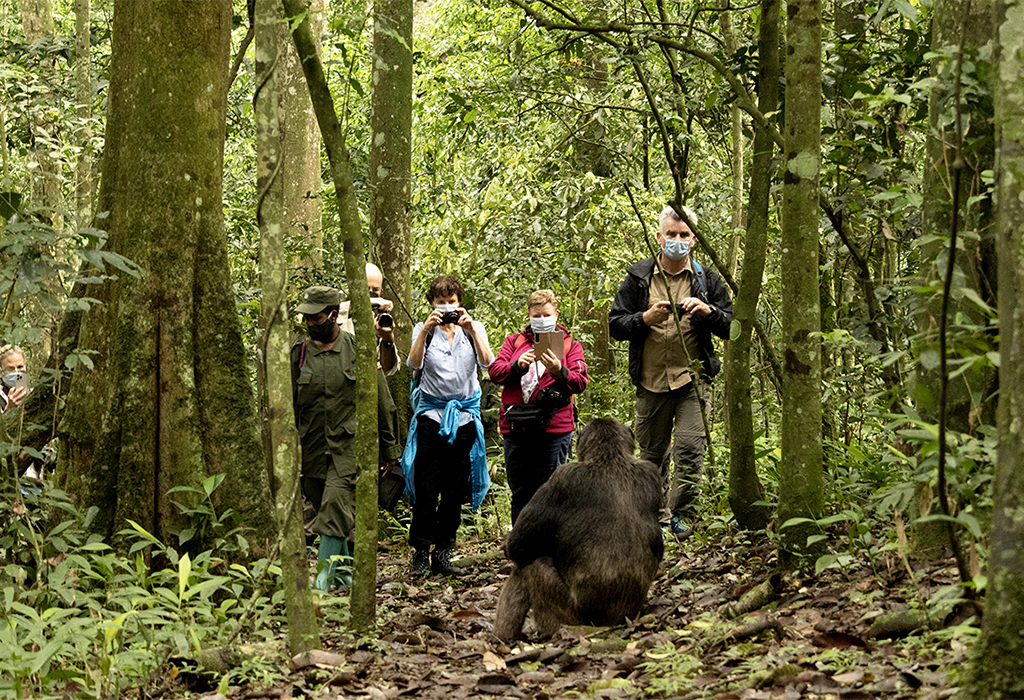
You report to Kanyanchu park headquarters at 7:00 AM for a briefing before setting out at 8:00 AM to track chimpanzees. The trek usually lasts 2 to 4 hours through dense forest, and once you find a chimpanzee family, you get a full hour to observe them feeding, grooming, and calling from the canopy.
In the afternoon, a guided walk through Bigodi Wetland Sanctuary adds red colobus monkeys, black-and-white colobus, L’Hoest’s monkeys, and colorful birdlife including the great blue turaco.
- Activity time: Chimp trek 2 to 4 hours; wetland walk 2 to 3 hours.
- Meal plan: Full board.
- Accommodation: Same lodge as Day 3.
- Practical note: Chimpanzee permits should be booked months in advance during peak season, since daily numbers are limited by the Uganda Wildlife Authority.
Day 5: Transfer to Bwindi Impenetrable Forest National Park
This day you drive south to Bwindi Impenetrable Forest National Park, home to roughly half of the world’s remaining mountain gorillas. The route winds through the Kigezi highlands, often called the “Switzerland of Africa” for its terraced hillsides.
You arrive in the afternoon with time to settle in before the following day’s gorilla trek.
- Driving time: Approximately 6 to 7 hours.
- Meal plan: Full board.
- Accommodation options:
- Budget: Gorilla Valley Lodge
- Mid-range: Ichumbi Gorilla Lodge
- Luxury: Gorilla Safari Lodge
- Practical note: Bwindi Impenetrable National Park has four gorilla trekking sectors: Rushaga, Buhoma, Ruhija, and Nkuringo. The lodges listed in this itinerary are located in the Rushaga sector, which has the highest number of habituated gorilla families and is the only sector offering the Gorilla Habituation Experience. Your accommodation may change depending on the sector where your gorilla permit is allocated, as permits are issued based on gorilla family availability by the Uganda Wildlife Authority.
Day 6: Gorilla Trekking in Bwindi and Optional Evening Batwa Cultural Experience
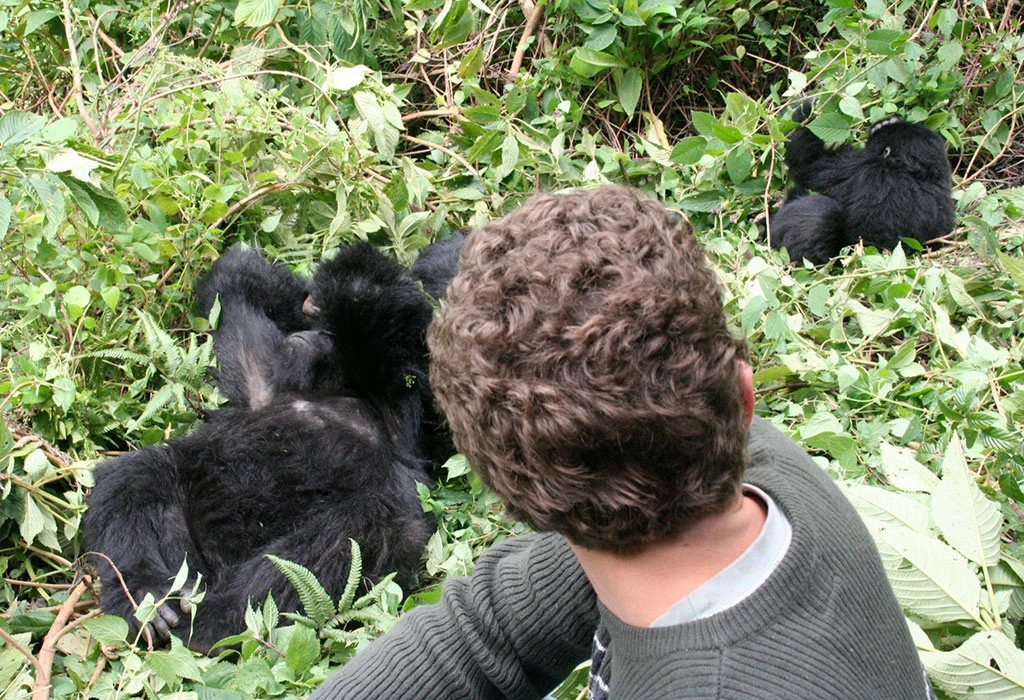
This is the day most people are ever counting down to. After an early breakfast, you report for a 7:00 AM ranger briefing before setting off into the forest with trackers who have often located the gorilla family’s rough position earlier that morning. The hike can range from a gentle one-hour walk to a demanding five-hour climb, depending on where the gorillas are feeding.
Once located, you spend a strictly regulated one hour with the gorilla family, watching them feed, rest, and interact at close range. It is widely described as one of the most moving wildlife encounters on Earth.
Later in the late afternoon you can opt for Batwa Cultural Experience. Your exploration of Bwindi extends beyond its natural wonders, offering a window into the lives of the indigenous communities that call this forest home. Embark on a guided cultural trail with the Batwa Pygmies, who share their ancestral traditions, dances, and stories with you. This intimate interaction offers insights into their unique way of life, their deep connection with the forest, and their enduring cultural heritage. It’s a humbling experience that highlights the intricate relationship between humanity and the natural world.
- Activity time: 2 to 6 hours round trip, including the one-hour viewing.
- Meal plan: Full board.
- Accommodation: Same lodge as Day 5.
- Practical note: Porters are available at the trailhead for a small fee. Hiring one is a good way to support the local community and get help on the steeper sections.
Day 7: Bwindi – Entebbe – Flight to Nairobi, Kenya
You retrace the route back to Entebbe, stopping at the Equator line for photos and lunch. In the evening, you board a scheduled flight from Entebbe to Nairobi. On arrival, a driver-guide transfers you to your hotel for dinner and rest.
- Driving time: Approximately 7 to 8 hours to Entebbe.
- Flight time: Roughly 1 hour 40 minutes, Entebbe to Nairobi.
- Meal plan: Full board.
- Accommodation options:
- Budget: Discovery Lodge Nairobi
- Mid-range: Best Western Plus Meridian
- Luxury: Hemingways Nairobi or Tribe Hotel
- Practical note: This is a long travel day. Pack a change of clothes in your hand luggage in case checked bags are delayed.
Day 8: Drive to Lake Nakuru National Park
After breakfast, you head north-west through the Great Rift Valley to Lake Nakuru National Park, famous for its rhino sanctuary and, in good years, dense flocks of flamingos along the shoreline.
- Driving time: Approximately 3 to 4 hours.
- Meal plan: Full board.
- Accommodation options:
- Budget: Naishi Guest House
- Mid-range: Buraha Hotel or Lake Nakuru Lodge
- Luxury: Sarova Lion Hill Game Lodge
- Practical note: Nakuru sits at a higher altitude than the coast, so evenings can be cool. Pack a light jacket.
Day 9: Full-Day Game Drives at Lake Nakuru

A full day is spent inside the park on morning and afternoon game drives. Lake Nakuru is one of the best places in Kenya to see both black and white rhinos, along with lions, giraffes, buffaloes, and, depending on the water levels, thousands of flamingos and pelicans.
- Activity time: Full day, split into morning and afternoon drives.
- Meal plan: Full board, with a picnic lunch by the lake.
- Accommodation: Same lodge as Day 8.
- Practical note: Bring polarizing sunglasses; the light reflecting off the lake can be intense at midday.
Day 10: Transfer to Masai Mara National Reserve
You continue west to the Masai Mara National Reserve, Kenya’s most famous wildlife destination. Lunch is taken en route, and you arrive in time for an evening game drive before dinner.
- Driving time: Approximately 5 to 6 hours.
- Meal plan: Full board.
- Accommodation options:
- Budget: Mara Springs Camp
- Mid-range: Enchoro Mara Camp
- Luxury: Mara Serena Safari Lodge or Angama Mara
- Practical note: Some lodges offer a discounted flying option from Nairobi’s Wilson Airport if you would rather skip the road transfer; ask your operator to quote both.
Day 11: Full-Day Game Drive in Masai Mara
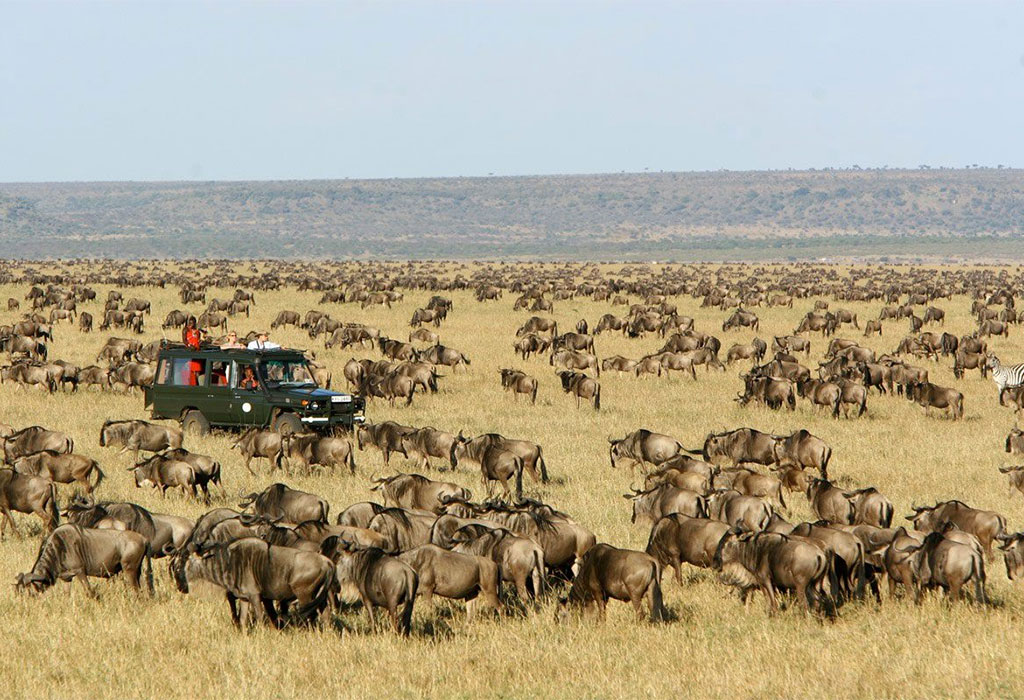
You spend the entire day exploring the Mara’s open plains, home to the Big Five along with cheetahs, hyenas, and huge herds of zebra and antelope. If you are traveling between July and October, this is prime time to witness the Great Migration, when wildebeest attempt dramatic crossings of the crocodile-infested Mara River.
- Activity time: Full day of game viewing.
- Meal plan: Full board.
- Accommodation: Same lodge as Day 10.
- Practical note: A hot air balloon safari over the Mara at sunrise is a popular optional add-on, typically booked and paid for locally.
Day 12: Cross into Tanzania – Drive to Serengeti National Park
This morning you cross the Isebania border into Tanzania and continue to the Serengeti National Park, which is ecologically one continuous system with the Masai Mara. Lunch is taken en route.
- Driving time: Approximately 6 to 8 hours including border formalities.
- Meal plan: Full board.
- Accommodation options:
- Budget: Serengeti public campsites with mobile tented setup
- Mid-range: Nyani Camp or Serengeti Halisi Camp
- Luxury: Four Seasons Safari Lodge Serengeti or Singita Sabora Tented Camp
- Practical note: Have your passport and any required visa documentation ready at hand for the border crossing, as processing can take 45 to 90 minutes.
Day 13: Full-Day Game Drive in the Serengeti

The Serengeti’s endless plains hold some of the highest predator densities in Africa. You search for lions, cheetahs, and leopards, alongside enormous herds of wildebeest, zebra, and gazelle, with a picnic lunch enjoyed out in the bush.
- Activity time: Full day of game viewing.
- Meal plan: Full board.
- Accommodation: Same lodge as Day 12.
- Practical note: The exact migration location shifts month to month; ask your guide where the herds are concentrated before choosing where to focus the day.
Day 14: Central Serengeti Game Drive and Maasai Cultural Visit
A morning game drive covers the Seronera area of the Central Serengeti, then you drive toward the Ngorongoro Conservation Area, stopping at a Maasai village along the way to learn about traditional homestead life, cattle-herding customs, and beadwork. You overnight in Karatu, the gateway town to Ngorongoro.
- Driving time: Approximately 3 to 4 hours to Karatu.
- Meal plan: Full board.
- Accommodation options:
- Budget: Eileen’s Trees Inn
- Mid-range: Ngorongoro Farm House
- Luxury: Gibb’s Farm
- Practical note: A small village entry fee is charged locally and is generally paid in cash.
Day 15: Game Drive and Transfer to Ngorongoro, via Olduvai Gorge

A morning game drive is followed by the drive up to the Ngorongoro Crater rim, stopping at Olduvai Gorge, where some of the earliest hominid fossils were discovered, giving the site its nickname, “the Cradle of Mankind.”
- Driving time: Approximately 2 to 3 hours plus the Olduvai stop.
- Meal plan: Full board.
- Accommodation options:
- Budget: Simba Campsite (crater rim)
- Mid-range: Rhino Lodge or Ngorongoro Wildlife Lodge
- Luxury: Ngorongoro Crater Lodge or The Highlands
- Practical note: Nights on the crater rim can drop close to freezing, so pack a warm layer even in the dry season.
Day 16: Ngorongoro Crater Floor Game Drive
You descend roughly 600 meters into the Ngorongoro Crater, a UNESCO World Heritage Site and one of the densest concentrations of wildlife in Africa. The crater floor holds the Big Five, along with flamingo-lined soda lakes and resident hippo pools.
- Activity time: Full day, typically 6 to 8 hours on the crater floor.
- Meal plan: Full board.
- Accommodation: Same lodge as Day 15.
- Practical note: Vehicle numbers on the crater floor are regulated, and only 4×4 vehicles with permits are allowed down, so this leg is always done with a licensed local vehicle.
Day 17: Fly to Zanzibar
After breakfast, you transfer to Kilimanjaro International Airport or Arusha Airport for a flight to Zanzibar. On arrival, you are transferred to your hotel in Stone Town to rest after more than two weeks on safari.
- Flight time: Approximately 1 hour 45 minutes to 2 hours, depending on routing.
- Meal plan: Full board.
- Accommodation options:
- Budget: Jambo Guest House
- Mid-range: Stone Town Beach Hotel
- Luxury: Park Hyatt Zanzibar or Zanzibar Serena Hotel
- Practical note: Confirm your domestic flight baggage allowance in advance, since small aircraft to Zanzibar often limit checked luggage to 15 kg.
Day 18: Stone Town Tour and Spice Plantation Visit
A guided walking tour covers Stone Town’s UNESCO-listed old town, with its carved wooden doors, winding alleys, and slave trade historical sites. In the afternoon, you visit a spice plantation to see and taste cloves, cinnamon, nutmeg, and vanilla, before heading to your beach hotel.
- Activity time: Half-day tour, half-day transfer and relaxation.
- Meal plan: Half board.
- Accommodation: Beach hotel of your chosen category.
- Practical note: Wear modest clothing for Stone Town, covering shoulders and knees, out of respect for local customs.
Day 19: Zanzibar Beach Relaxation
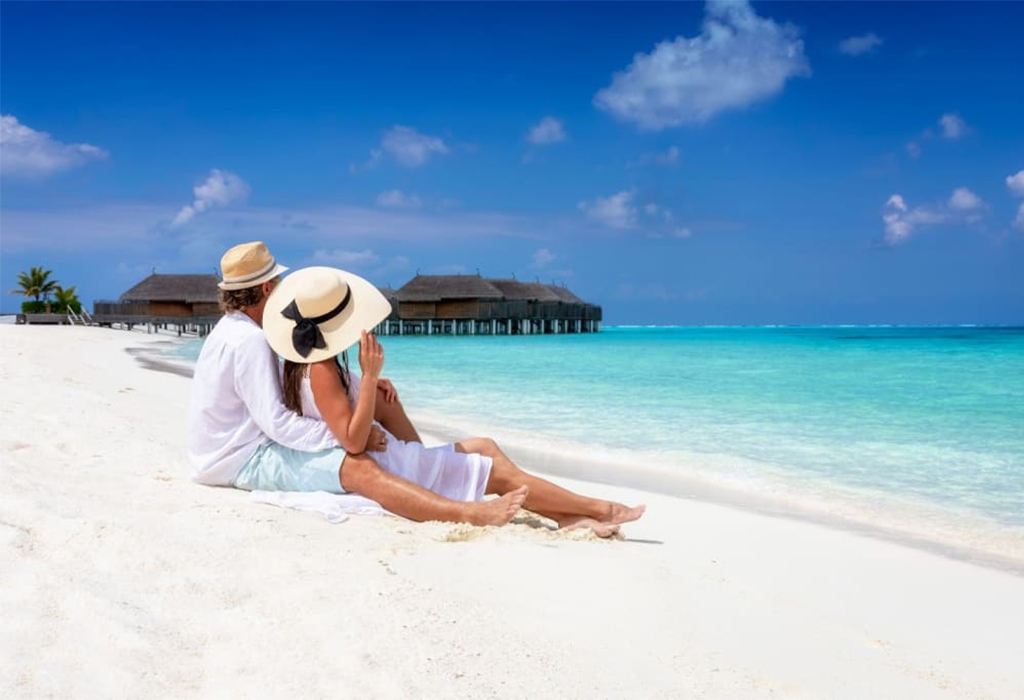
Your final full day is unstructured. Swim in the warm Indian Ocean, relax on white sand, try fresh seafood, or book an optional spa treatment, snorkeling trip, or sunset dhow cruise.
- Activity time: Free day.
- Meal plan: Full board.
- Accommodation: Same as Day 18.
- Practical note: Optional water activities such as snorkeling or diving are usually not included in the base price and are booked directly with the hotel or a local operator.
Day 20: Departure
After a final breakfast, you are transferred to Zanzibar Abeid Amani Karume International Airport for your flight home or onward.
- Meal plan: Breakfast only.
- Accommodation: Not applicable, unless a late flight requires a day room at extra cost.
- Practical note: International flights out of Zanzibar often depart in the afternoon or evening, so a half-day at leisure or a last swim is usually possible before checkout.
Money-Saving Tips Without Cutting Corners
A 20-day trip across three countries is not a cheap holiday, but there are legitimate ways to bring the cost down without sacrificing safety or the quality of your wildlife experience.
- Travel in a group of 4 or more. As the pricing table above shows, per-person costs drop meaningfully once vehicle and guide costs are shared across more travelers. Consider inviting friends or family, or ask your operator about joining a small-group departure.
- Choose the shoulder months. Traveling in late May, early June, or November often means lower lodge rates than the July–October and December–February peaks, while still avoiding the heaviest rains.
- Mix accommodation categories. Some travelers choose budget lodges for straightforward overnight stops (like Lake Nakuru) and reserve mid-range or luxury lodges for the signature stops, such as Bwindi and the Ngorongoro Crater rim.
- Book gorilla and chimpanzee permits early. Permits are non-negotiable in price, but booking early avoids the risk of a rushed, more expensive last-minute alternative date or itinerary rearrangement.
- Skip optional extras you do not value. A hot air balloon safari is memorable but expensive. If ballooning is not a priority for you, redirecting that budget toward an upgraded lodge night elsewhere may be more satisfying.
- Ask about combined permit and park fee packages. Some seasons and operators offer bundled rates on multiple park entries; always ask your operator to itemize the quote so you can see exactly what you are paying for.
What is Included and Excluded in this Uganda Kenya Tanzania Safari
Knowing exactly what your quoted price covers is essential before you compare operators or commit to a deposit.
Typically Included in the cost
- 4×4 safari vehicle with English-speaking driver-guide throughout Uganda, Kenya, and Tanzania
- All accommodation for 19 nights based on your chosen category
- Meals as specified in the itinerary (mostly full board)
- Gorilla trekking permit and chimpanzee trekking permit
- Rhino tracking permit at Ziwa Rhino Sanctuary
- International flights to Entebbe and from Zanzibar
- All national park entrance fees
- Nile boat cruise at Murchison Falls
- Domestic flights: Entebbe to Nairobi, and northern Tanzania to Zanzibar
- Bottled drinking water in the vehicle throughout the trip
- Airport transfers on arrival and departure
Typically Excluded from the cost
- International flights from and to your home country
- Visa fees for Uganda, Kenya, and Tanzania
- Travel and medical insurance
- Tips for driver-guides, porters, and lodge staff
- Alcoholic drinks and premium beverages
- Optional activities such as hot air balloon rides, spa treatments, and scuba diving
- Personal expenses such as souvenirs, laundry, and phone or internet costs
- Yellow fever vaccination costs
Cost Breakdown: Where Your Money Goes
The table below gives an approximate percentage breakdown of a typical mid-range Uganda Kenya Tanzania safari budget for 2 travelers.
| Cost Category | Approximate Share of Total Budget |
|---|---|
| Accommodation (19 nights) | 35–40% |
| Gorilla and chimpanzee permits | 15–18% |
| Domestic flights (Entebbe–Nairobi, Tanzania–Zanzibar) | 10–12% |
| Vehicle hire, fuel, and driver-guide fees | 12–15% |
| Park entrance fees | 8–10% |
| Meals not included in lodge packages, plus miscellaneous | 5–8% |
Permits and park fees are fixed by government wildlife authorities and do not change based on which tour operator you book with. The main lever you control is accommodation category, followed by group size.
Sample Pricing by Group Size and Accommodation Category
Because vehicle hire, fuel, and driver-guide costs are shared across the group, the per-person price of a 20-day Uganda Kenya Tanzania safari drops noticeably as group size grows. Prices below are approximate per-person figures in USD, based on twin-sharing accommodation.
| Group Size | Budget | Mid-Range | Luxury |
|---|---|---|---|
| 2 people | $7,010 | $8,200 | $11,500+ |
| 4 people | $6,400 | $7,450 | $10,600+ |
| 6 people | $5,950 | $6,900 | $9,900+ |
| 8+ people | $5,600 | $6,500 | $9,400+ |
Solo travelers should expect a single supplement, since vehicle and permit costs cannot be shared. Ask your operator whether joining a scheduled small-group departure is available, as this often works out cheaper than a fully private single-traveler safari.
Accommodation Recommendations by Category
Budget Accommodation
Budget lodges and campsites on this route offer clean, simple en-suite rooms or safari tents, full board meals, and a genuine bush or forest atmosphere without the frills. Expect solar-powered hot water, shared common areas, and a friendly, community-oriented feel. This category suits travelers who prioritize wildlife time over lodge luxury.
Mid-Range Accommodation
Mid-range lodges, like Tilenga Safari Lodge in Murchison Falls or Ichumbi Gorilla Lodge in Bwindi, offer comfortable en-suite rooms or tents, reliable hot water, good food, and pleasant common lounges, often with excellent views over the surrounding landscape. This is the most popular category, balancing comfort with value, and it is what the $8,200 per person starting price in this guide is based on.
Luxury Accommodation
Luxury properties such as Sanctuary Gorilla Forest Camp, Angama Mara, and Ngorongoro Crater Lodge deliver spacious suites, personalized service, gourmet dining, and often spa facilities or private plunge pools. These lodges are ideal for honeymooners, anniversary trips, or travelers who want the safari of a lifetime with minimal compromise.
Best Time to Visit for a Uganda Kenya Tanzania Safari
- June to October (dry season): The most popular window. Vegetation thins out, making wildlife easier to spot, and this period overlaps with the Great Migration river crossings in the Masai Mara (roughly July to October).
- December to February (short dry season): A second good window, with pleasant weather, calving season in the southern Serengeti, and fewer crowds than the July–October peak.
- March to May (long rains): The quietest and cheapest season. Roads can be muddy and some camps close temporarily, but birdlife is spectacular and lodge rates drop. Uganda offers discounted gorilla and chimpanzee permits during the month of April, May and November.
- November (short rains): A transitional month with brief afternoon showers, still workable for most of the itinerary.
Gorilla trekking in Bwindi is possible year-round, since the forest holds a permanent population, but the dry months make the trails easier underfoot.
Gorilla and Chimpanzee Permit Costs
Permit fees are the single largest fixed cost on this itinerary and are set directly by the Uganda Wildlife Authority.
| Permit | Cost |
|---|---|
| Uganda gorilla trekking permit | $800 per person for foreign non-residents, $700 for foreign residents, $500 for African residents (not in East Africa community) and UGX300,000 for East African Residents. Discounted Permits in months of April, May and November ($600 for foreign non-residents and $500 for foreign residents) |
| Uganda chimpanzee trekking permit | $300 per person for foreign non-residents, $200 for foreign residents, $100 for African residents (not in East Africa community) and UGX180,000 for East African Residents. Discounted Permits in months of April, May and November ($200 for foreign non-residents and $150 for foreign residents) |
| Ziwa rhino tracking permit | $50 per person |
These fees fund conservation, ranger salaries, and community development around the parks, so they are considered a direct contribution to protecting these endangered species rather than simply an entrance ticket.
Transport Options Across Uganda, Kenya and Tanzania
- 4×4 safari vehicle (road transfers): The backbone of this itinerary. A Land Cruiser with a pop-up roof gives good visibility for game drives and comfort over long road transfers.
- International flights: Used twice in this itinerary, Entebbe to Nairobi and northern Tanzania to Zanzibar, saving significant travel time.
- Optional fly-in upgrades: Some travelers choose to fly between Entebbe to Murchison Falls, Bwindi to Entebbe, Nairobi and the Masai Mara, or between Serengeti and Ngorongoro, cutting road time considerably in exchange for a higher price.
- Border crossings: The Isebania border between Kenya and Tanzania is used on Day 12. Have your visa documentation, yellow fever card, and passport ready, and expect roughly 45 to 90 minutes for formalities.
Visa and Vaccination Requirements
Visa Requirements
Most nationalities can obtain visas for Uganda, Kenya, and Tanzania online in advance or on arrival, though requirements change periodically, so check the relevant government portal before you travel.
- East Africa Tourist Visa: Uganda, Kenya, and Rwanda participate in a joint East Africa Tourist Visa, allowing multiple entries across the three countries on one visa. Tanzania is not part of this scheme and requires a separate visa.
- Uganda visa: Apply online through the official Uganda immigration portal before arrival.
- Kenya eTA: Kenya now requires travelers to apply for an Electronic Travel Authorization online before departure.
- Tanzania visa: Available online in advance or on arrival at major entry points, including the Isebania land border.
Vaccination Requirements
- Yellow fever: A yellow fever vaccination certificate is mandatory for entry into Uganda, Kenya, and Tanzania, or for anyone transiting from a country where yellow fever is present. Get vaccinated at least 10 days before departure.
- Malaria prophylaxis: All areas on this itinerary are malaria zones. Consult a travel clinic about anti-malarial tablets suited to your health profile.
- Routine vaccinations: Keep tetanus, hepatitis A and B, typhoid, and routine childhood vaccinations up to date, following advice from a licensed travel health provider or the World Health Organization guidance for East Africa.
Packing List for a 20-Day Uganda Kenya Tanzania Safari
- Neutral-colored clothing (khaki, olive, brown) for game drives and forest treks
- Long-sleeved shirts and trousers for gorilla and chimpanzee trekking, to protect against nettles and insects
- A warm fleece or jacket for cool mornings in Nakuru, the Mara, and especially the Ngorongoro Crater rim
- Waterproof hiking boots with good ankle support for Bwindi’s steep, muddy trails
- Gardening gloves for gripping vegetation during gorilla trekking
- A wide-brimmed hat and high-SPF sunscreen
- Insect repellent containing DEET
- Binoculars, ideally one pair per person
- A camera with a zoom lens, spare batteries, and memory cards
- A dry bag or rain cover for the Nile boat cruise and Zanzibar transfers
- Light, breathable clothes and swimwear for Zanzibar
- A basic first-aid kit with anti-malarial tablets, rehydration salts, and personal medication
- Your passport, visa printouts, yellow fever certificate, and travel insurance documents
Wildlife You Can Expect to See in Each Park
| Park | Signature Wildlife |
|---|---|
| Murchison Falls National Park | Elephants, lions, leopards, buffaloes, giraffes, hippos, Nile crocodiles, over 450 bird species |
| Ziwa Rhino Sanctuary | Southern white rhinos |
| Kibale Forest National Park | Chimpanzees, red colobus monkeys, L’Hoest’s monkeys, over 375 bird species |
| Bwindi Impenetrable Forest National Park | Mountain gorillas, forest elephants, over 350 bird species including African green broadbill |
| Lake Nakuru National Park | Black and white rhinos, lions, flamingos, pelicans, Rothschild’s giraffes |
| Masai Mara National Reserve | Lions, leopards, cheetahs, elephants, wildebeest and zebra migration (July–October) |
| Serengeti National Park | Lions, cheetahs, leopards, hyenas, vast wildebeest and zebra herds |
| Ngorongoro Crater | Black rhinos, lions, elephants, flamingos, one of Africa’s highest predator densities |
Photography Tips for This Safari
- Shoot early and late. The soft light of early morning and late afternoon game drives produces far better images than the harsh midday sun.
- Bring a zoom lens of at least 200mm. Gorillas, chimpanzees, and crater wildlife are often at a distance, and a longer lens captures detail without disturbing the animals.
- Protect your gear from dust. Ziplock bags, a rain cover, and a rocket blower go a long way on Uganda’s dustier roads.
- Set a fast shutter speed on the Nile cruise. Camera shake from boat movement is common; 1/1000s or faster helps freeze action shots of birds and hippos.
- Respect the one-hour gorilla and chimpanzee viewing limit. Flash photography is banned near primates, so raise your ISO instead of relying on flash.
- Capture the wide shot too. It is tempting to zoom in constantly, but wide landscape shots of the Serengeti plains or the Ngorongoro Crater floor tell the fuller story of the trip.
Sustainability and Responsible Travel Practices
A well-run Uganda Kenya Tanzania safari should give back to the communities and ecosystems it passes through. Look for these practices when choosing an operator:
- Gorilla and chimpanzee permit fees that directly fund the Uganda Wildlife Authority’s conservation and anti-poaching work
- Community-owned lodges and campsites, such as those around Bwindi, that channel tourism income to local villages
- Guided walks like the Bigodi Wetland Sanctuary and Maasai village visit, which are run by local community associations
- Refillable water bottle stations at lodges to reduce single-use plastic
- Vehicles and guides that follow park rules on off-road driving limits and wildlife viewing distances
- Support for local employment, with driver-guides, trackers, and lodge staff drawn from surrounding communities
Choosing operators who follow these standards helps ensure that tourism revenue supports the very parks and wildlife you have traveled to see.
Insider Tips for Planning This Trip
- Book gorilla permits early. Uganda issues a limited number of permits per day, and peak season dates can sell out 4 to 6 months in advance.
- Pace yourself on Day 7. The Bwindi to Entebbe to Nairobi day is long. Consider an earlier departure from Bwindi to avoid a rushed connection.
- Time your trip for the migration if that is a priority. July through October offers the best odds of witnessing a Mara River crossing, though nature never guarantees exact timing.
- Carry small denomination US dollars. Tips, village visit fees, and some park extras are easier to pay in cash than by card.
- Confirm baggage limits before booking flights. Domestic flights within Tanzania and to Zanzibar often cap checked luggage at 15 kg per person.
- Add a buffer day if your schedule allows. Weather, wildlife movement, or minor flight delays can occasionally shift the itinerary by half a day.
Health, Insurance, and Practical Safety Notes
- Travel insurance is essential, not optional. Choose a policy that covers trip cancellation, emergency medical evacuation, and adventure activities such as forest trekking. Given the remote locations involved, an evacuation clause matters more on this trip than on a typical city break.
- Altitude and fitness. Bwindi and the Ngorongoro Crater rim sit at higher elevations than the savannah parks. Most travelers adjust easily, but those with heart or respiratory conditions should consult a doctor before booking.
- Mobile connectivity. Coverage is reasonably good in towns and at most lodges, but expect patchy or no signal during game drives and forest treks. Local SIM cards are inexpensive and easy to buy in Entebbe, Nairobi, and Arusha.
- Drinking water. Bottled water is provided in the vehicle throughout the trip, and most lodges also offer refill stations, so tap water is rarely necessary.
- Emergency contacts. Keep a printed and digital copy of your operator’s 24-hour emergency contact number, your insurance provider’s helpline, and your embassy’s local contact details.
Currency, Budgeting, and Tipping Guide
Beyond the core safari cost, it helps to budget for day-to-day spending across the three countries.
| Expense Type | Typical Daily Range (Per Person, USD) |
|---|---|
| Tips for driver-guide | $15–$20 per day |
| Tips for gorilla/chimp trekking rangers and porters | $10–$20 per trek |
| Lodge staff tips (housekeeping, waitstaff) | $5–$10 per day |
| Snacks, drinks, and souvenirs | $10–$30 per day |
| Optional activities (balloon safari, spa, snorkeling) | $150–$550 per activity |
Tipping is customary but not mandatory across East Africa’s safari industry, and most lodges have a communal staff tip box as an alternative to tipping individuals directly. US dollars, Uganda shillings, Kenya shillings, and Tanzania shillings are all useful to carry in small amounts, and most upmarket lodges also accept major credit cards for settling extras.
Frequently Asked Questions
How much does a 20-day Uganda Kenya Tanzania safari cost?
For 2 people sharing mid-range accommodation, this safari starts from $8,200 per person. Budget travelers can expect to pay from around $7,010 per person, while luxury travelers should budget from roughly $11,500 per person. The final price depends on group size, lodge category, and the season you travel, with gorilla and chimpanzee permits adding a fixed cost regardless of accommodation choice.
What is the best time of year for a Uganda Kenya Tanzania safari?
June to October and December to February are generally considered the best months, offering drier trails, easier wildlife viewing, and, from July to October, a strong chance of seeing Great Migration river crossings in the Masai Mara. March to May brings rain and lower prices, while gorilla trekking in Bwindi remains possible throughout the year.
Do I need separate visas for Uganda, Kenya, and Tanzania?
Uganda and Kenya are part of the East Africa Tourist Visa scheme, so one visa can cover both countries along with Rwanda. Tanzania is not included in this scheme and requires its own separate visa, available online in advance or on arrival at major entry points such as the Isebania border crossing used on this itinerary.
How much is a gorilla trekking permit in Uganda?
A Uganda gorilla trekking permit costs approximately $800 per person, issued directly by the Uganda Wildlife Authority. This fee funds ranger patrols, habitat protection, and community programs around Bwindi Impenetrable Forest National Park. It is one of the largest single expenses on a Uganda Kenya Tanzania safari and does not change based on your chosen accommodation category.
Is a 20-day safari across three countries physically demanding?
This trip involves several long driving days, particularly between Bwindi and Entebbe, and between Kenya and Tanzania. Gorilla and chimpanzee treks require moderate fitness and can last several hours over uneven forest terrain. Most healthy adults manage comfortably, and the Zanzibar section at the end of the trip offers a relaxed, restful finish.
Is it safe to travel across Uganda, Kenya, and Tanzania on one trip?
Yes, all three countries have well-established tourism infrastructure and are visited by hundreds of thousands of international travelers each year. Traveling with a licensed operator, an experienced driver-guide, and reputable lodges significantly reduces risk. As with any international trip, check current government travel advisories and secure comprehensive travel insurance before departure.
What currency should I carry for this trip?
US dollars in good condition (dated 2013 or later, with no marks or tears) are widely accepted across all three countries for permits, tips, and larger payments. Local currency, the Uganda shilling, Kenya shilling, and Tanzania shilling, is useful for small purchases, market shopping, and some park or village fees that are only accepted in local currency.
What is the difference between budget, mid-range, and luxury safari accommodation?
Budget accommodation offers simple, clean en-suite rooms or tents with reliable basics and full board meals. Mid-range lodges add more comfort, better food, and scenic settings, while still remaining accessible in price. Luxury properties provide spacious suites, personalized service, gourmet dining, and often extras like plunge pools or spa facilities. All three categories use the same guides, vehicles, and park access on this itinerary.
Can I customize the 20-day Uganda Kenya Tanzania safari itinerary?
Yes. While this itinerary represents the most popular and efficient route, days can be added or removed, the Zanzibar extension can be shortened or dropped, and additional activities like a hot air balloon safari or an extra gorilla trek can be built in. Speak with a safari planning specialist to adjust the pace, accommodation mix, or destinations to match your interests and budget.
Why Book Your Uganda Kenya Tanzania Safari with Iconic Africa Safaris
Iconic Africa Safaris is a Kampala-based tour operator specializing in gorilla trekking, wildlife safaris, and multi-country East African journeys. Choosing a locally based operator for a trip that crosses three countries brings real advantages.
- Local expertise across borders. Our team has firsthand knowledge of routes, lodges, and border procedures across Uganda, Kenya, and Tanzania, so nothing about this itinerary is guesswork.
- Licensed and accredited. We operate under a valid Uganda Tourism Board license and work with relevant authorities including the Uganda Wildlife Authority.
- Flexible accommodation tiers. Every itinerary, including this one, is quoted across budget, mid-range, luxury, and high-end categories, so you control your own budget.
- Permit handling done for you. We secure gorilla, chimpanzee, and rhino tracking permits on your behalf well ahead of your travel dates.
- Responsible travel commitment. We prioritize community-linked lodges and guided experiences, such as the Bigodi Wetland walk and Maasai village visit, that channel income directly to local people.
- Personalized planning. Our safari planning specialists tailor the pace, accommodation mix, and optional add-ons to match your interests, fitness level, and budget.
Explore Related Safaris
If this 20-day itinerary is longer than you need, or you want to focus on a single country first, these related trips may fit better:
- Uganda Gorilla Safaris
- Kenya Wildlife Safaris
- 17 Days Uganda, Kenya and Tanzania Safari
- 12 Days Best of Kenya & Uganda Safari
- Luxury Safaris
- Budgeted Safaris
Ready to Plan Your Uganda Kenya Tanzania Safari?
A 20-day Uganda Kenya Tanzania safari is a serious investment of time and money, and it rewards travelers with an unmatched combination of gorilla trekking, the Great Migration, and Zanzibar’s beaches in a single, well-paced trip. Now that you know what the cost of a 20-day Uganda Kenya Tanzania safari really involves, from permits and park fees to accommodation tiers and group pricing, you are ready to plan with clear numbers rather than guesswork.
Get in touch with Iconic Africa Safaris for a free, no-obligation quote tailored to your travel dates, group size, and preferred accommodation category. Our safari planning specialists will build a detailed itinerary and cost breakdown for your exact trip, and secure your gorilla and chimpanzee permits before dates sell out.
Contact us today at info@iconicafricasafaris.com or through the booking form or tap on the WhatsApp icon on the right bottom side of your screen for instant messaging.