
What is the cost of 3-Day Gorilla Safari to Bwindi
What Is the Cost of 3-Day Gorilla Safari to Bwindi? Your Complete Guide
If you are searching for a straight answer, here it is. The cost of a 3-Day Gorilla Safari to Bwindi starts from $1,500 per person, based on two people sharing accommodation and transport.
This guide breaks down every single cost, from budget camps to ultra-luxury lodges, so you know exactly what you are paying for before you book. We will also walk you through Bwindi Impenetrable Forest itself, the trekking experience, permit pricing rules, and practical planning tips gathered from years of running trips into this forest. By the end, you will understand not just the price tag, but the real value behind a 3-Day Gorilla Safari to Bwindi.
Insider Tip: Prices for a 3-Day Gorilla Safari to Bwindi shift with the season, so lock your permit three to four months ahead if you want dry-season dates in June, July, August, or December.
What Is Included in a 3-Day Gorilla Safari to Bwindi
A well-packaged 3-Day Gorilla Safari to Bwindi should never leave you guessing about hidden fees. At Iconic Africa Safaris, the $1,500 starting price for a 3-Day Gorilla Safari to Bwindi covers these core items:
- One gorilla trekking permit per person, issued by the Uganda Wildlife Authority
- Return road transportation from Entebbe or Kigali to Bwindi in a 4×4 safari vehicle
- Two nights of accommodation, chosen according to your preferred comfort category
- All meals during your stay, including breakfast, lunch, and dinner
- Packed lunch and bottled drinking water during long travel days
- Services of an experienced English-speaking driver-guide
Costs not included in a standard 3-Day Gorilla Safari to Bwindi typically involve international flights, visa fees, travel insurance, tips for guides and porters, alcoholic drinks, and any optional cultural activities you add along the way. Knowing this split helps you compare quotes accurately when different companies advertise a 3-Day Gorilla Safari to Bwindi at different price points.
About Bwindi Impenetrable Forest National Park

Bwindi Impenetrable Forest sits in southwestern Uganda, tucked along the edge of the Albertine Rift Valley near the borders of Rwanda and the Democratic Republic of Congo. The park covers roughly 321 square kilometers of ancient rainforest, and its dense tangle of vines and hardwood trees earned it the nickname “impenetrable” long before tourism existed.
Elevation across the park ranges from about 1,160 to 2,607 meters above sea level, which creates cool mornings and warm afternoons throughout the year. UNESCO recognized Bwindi as a World Heritage Site in 1994, citing its exceptional biodiversity and its role as a refuge for endangered mountain gorillas. Every traveler who books a 3-Day Gorilla Safari to Bwindi walks into one of Africa’s oldest and most ecologically significant forests, estimated to be more than 25,000 years old.
Geologically, Bwindi formed part of a forest corridor that once stretched much further across the region. Isolation over thousands of years allowed unique plant and animal species to evolve here, many found nowhere else on Earth. This ecological richness is precisely why a 3-Day Gorilla Safari to Bwindi delivers so much more than a single wildlife sighting; it immerses you in a living, ancient ecosystem.
Insider Tip: Bring a light rain jacket even in the dry season, since Bwindi sits at high altitude and receives short showers almost year-round.
Mountain Gorillas of Bwindi: Population and Conservation
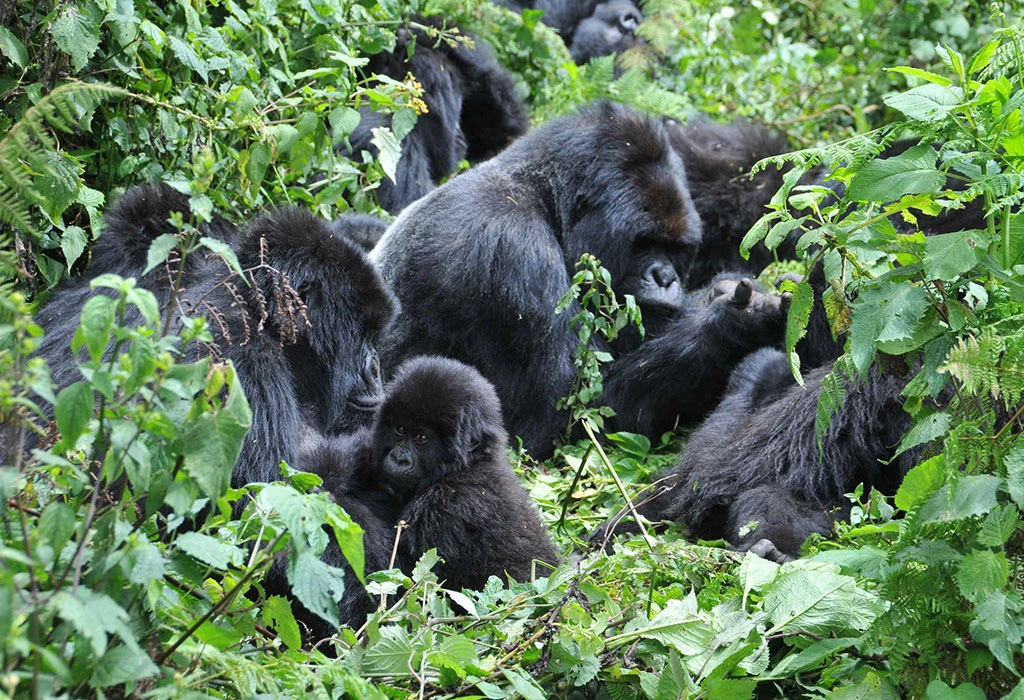
Bwindi shelters roughly half of the world’s remaining mountain gorilla population, estimated today at just over 1,000 individuals across the entire species range. The forest holds more than 20 habituated gorilla families available for trekking, spread across four different sectors.
Mountain gorillas live in close family groups led by a dominant silverback male, who can weigh up to 200 kilograms and stands as tall as 1.7 meters. Each family also includes younger blackback males, adult females, juveniles, and infants, creating complex social bonds that researchers have studied for decades. A 3-Day Gorilla Safari to Bwindi gives you a rare front-row seat to this family dynamic, often within just a few meters of the animals.
Conservation status improved from Critically Endangered to Endangered in 2018, largely because of sustained protection efforts in Bwindi and Rwanda’s Volcanoes National Park. Threats still remain, including habitat pressure from surrounding communities, disease transmission from humans, and occasional snaring meant for other animals. Every 3-Day Gorilla Safari to Bwindi you book contributes directly to the anti-poaching patrols and habitat protection that keep this recovery moving forward.
Biodiversity Beyond the Gorillas
Gorillas draw the headlines, but Bwindi’s biodiversity runs far deeper. Botanists have recorded over 1,000 flowering plant species and more than 200 tree species within the park boundaries, including several types of hardwood found in few other African forests.
Birdwatchers travel here specifically for the chance to spot some of Bwindi’s 350 recorded bird species, including 23 species found only in the Albertine Rift region. The forest also hosts around 120 mammal species, more than 200 butterfly types, and a wide range of reptiles and amphibians adapted to the humid understory.
Beyond gorillas, primate lovers can encounter chimpanzees, black-and-white colobus monkeys, vervet monkeys, and the striking L’Hoest’s monkey, which is endemic to the Albertine Rift. Many travelers extend their 3-Day Gorilla Safari to Bwindi by a day specifically to explore this wider wildlife picture through guided nature walks or birding excursions.
- Over 1,000 flowering plant species
- More than 200 tree species, several centuries old
- 350 recorded bird species, 23 of them Albertine Rift endemics
- Around 120 mammal species including forest elephants
- More than 200 butterfly species
- Chimpanzees, colobus monkeys, and L’Hoest’s monkeys
The Gorilla Trekking Experience, Step by Step
The heart of every 3-Day Gorilla Safari to Bwindi is the trekking day itself. Your morning starts early, with breakfast typically served before sunrise so you can reach the park headquarters on time.
- 7:00 AM Briefing. Rangers gather all trekkers at the park office for a safety briefing covering forest rules, gorilla etiquette, and photography guidelines. This is also when you receive your guide allocation for the day, matched to your fitness level and the gorilla family’s current location.
- The Hike. Trekking duration on a 3-Day Gorilla Safari to Bwindi ranges from one hour to eight hours, depending on where the assigned gorilla family is feeding that morning. Trails climb through steep, muddy terrain, dense vegetation, and narrow forest paths, so a reasonable fitness level makes a real difference.
- Trackers on the Ground. Professional trackers head out before dawn to locate the gorilla family, radioing updates to your guide throughout the hike. This system keeps trekking groups efficient and reduces unnecessary time in the forest, both for visitor comfort and gorilla welfare.
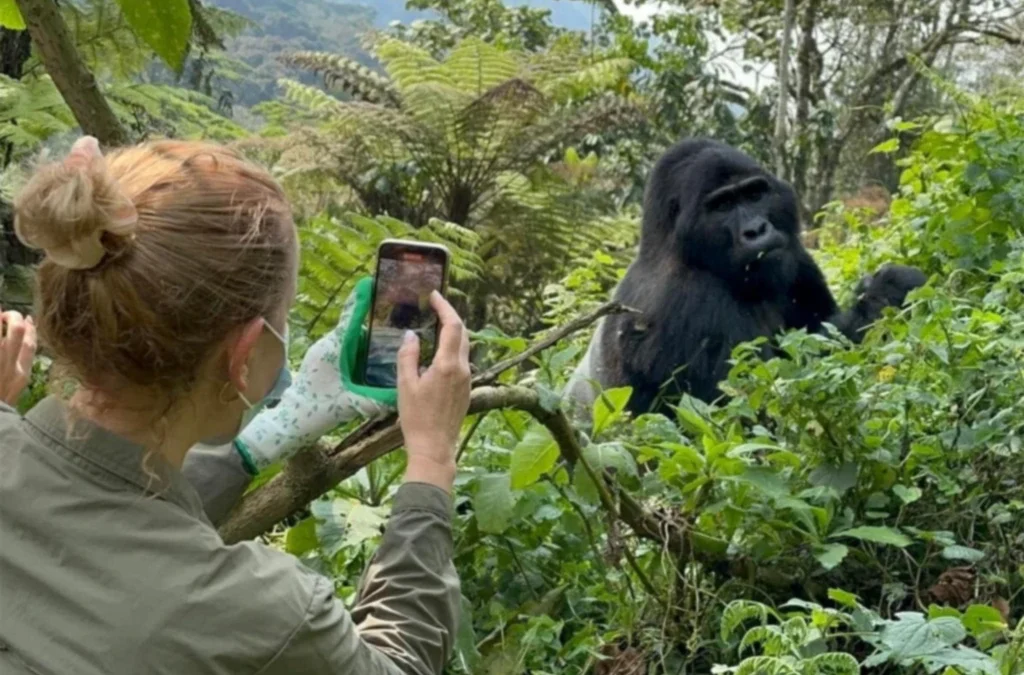
- Safety Rules. Guides enforce a minimum distance of seven meters from the gorillas, ask visitors to keep voices low, and prohibit flash photography. These rules protect both gorilla health and natural behavior, since gorillas share about 98 percent of human DNA and remain vulnerable to human diseases.
- The One-Hour Encounter. Once you find the family, you get exactly one hour in their presence, an experience many travelers describe as the highlight of their entire trip. Watching a silverback move through the undergrowth just meters away is the moment every 3-Day Gorilla Safari to Bwindi builds toward.
Insider Tip: Pack your camera settings before entering the forest, since low light under the canopy often requires a higher ISO and steady hands rather than flash.
The Four Trekking Sectors of Bwindi
Bwindi splits into four distinct trekking sectors, each with its own gorilla families, scenery, and access points. Choosing the right sector shapes your entire 3-Day Gorilla Safari to Bwindi experience.
Buhoma Sector
Buhoma sits in the north of the park and remains the most established and accessible sector, with the shortest drive from Entebbe. It offers relatively gentler trails compared to other sectors, making it a strong choice for first-time trekkers on a 3-Day Gorilla Safari to Bwindi. Buhoma also has the widest range of accommodation, from budget campsites to luxury lodges.
Ruhija Sector
Ruhija sits at Bwindi’s highest elevation, delivering cooler temperatures and sweeping views over the Virunga volcanoes on clear days. Trails here can be steep and physically demanding, so travelers should arrive reasonably fit. Many birdwatchers combine gorilla trekking with Ruhija’s excellent birding trails during their 3-Day Gorilla Safari to Bwindi.
Rushaga Sector
Rushaga, in the south, hosts the largest number of habituated gorilla families of any sector, giving it the most permit availability. It is also home to the Gorilla Habituation Experience, discussed in detail below. Rushaga’s terrain is hilly, and its remote location suits travelers who value flexibility over convenience.
Nkuringo Sector
Nkuringo offers some of the most dramatic scenery in Bwindi, with the trailhead itself sitting on a ridge overlooking the forest and distant volcanoes. Treks here are considered among the more strenuous in the park, rewarding fit travelers with unforgettable views. Nkuringo suits adventurous visitors who want their 3-Day Gorilla Safari to Bwindi paired with striking landscape photography.
Gorilla Permit Prices Explained
Permit pricing is the single biggest factor behind the cost of any 3-Day Gorilla Safari to Bwindi, so understanding the tiers matters before you book.
| Traveler Category | Permit Price |
|---|---|
| Foreign Non-Resident | $800 per person |
| Foreign Resident | $700 per person |
| Rest of Africa Citizen | $700 per person |
| East African Community Citizen | UGX 250,000 per person |
Uganda offers discounted permits during the low season months of April, May, and November, when prices for foreign non-residents drop to $600 per person and foreign resident to $500 . This discount can meaningfully lower the total cost of a 3-Day Gorilla Safari to Bwindi if your travel dates are flexible.
Every permit covers park entry fees, the guided trek itself, ranger and tracker services, and the one-hour gorilla viewing session. It does not cover transport to the park, accommodation, meals, or porter fees, which is why a properly packaged 3-Day Gorilla Safari to Bwindi bundles these separately into the full price.
Insider Tip: Book low-season permits for April, May, or November if budget matters more to you than perfect weather, since trails simply get muddier, not unsafe. You can as well be much lucky and it shines the whole day during your trek.
The Rushaga Gorilla Habituation Experience

Travelers seeking something beyond standard trekking can add the Gorilla Habituation Experience, based exclusively in the Rushaga sector. This permit costs $1,800 per person and grants four full hours with a gorilla family still going through the habituation process toward full human tolerance.
Unlike a standard 3-Day Gorilla Safari to Bwindi trek, this experience places you alongside researchers and trackers actively working to habituate the group. You witness firsthand how conservation teams build trust with wild gorillas over months and years of careful, patient contact.
The extended four-hour window also allows far more relaxed photography, since you are not rushed through a single hour. Only four permits are issued per habituation group each day, making this one of the most exclusive wildlife experiences in Africa. Travelers who want research-level access should ask their operator to upgrade a standard 3-Day Gorilla Safari to Bwindi into a habituation-focused itinerary.
Planning Your Trip: Rules, Timing and Booking
A handful of firm rules shape how every 3-Day Gorilla Safari to Bwindi gets organized. Understanding them early prevents disappointment later.
Only eight visitors may trek any single gorilla family per day, a limit set by the Uganda Wildlife Authority to protect gorilla welfare and reduce stress on the animals. This cap is exactly why permits sell out months in advance during peak season. The minimum trekking age is 15 years old, with no exceptions made for younger children regardless of fitness level.
Booking your permit three to four months ahead gives you the best shot at your preferred sector and travel dates. The Uganda Wildlife Authority manages permit allocation directly, but almost all travelers book through a licensed tour operator who handles reservations, transport, and accommodation together. Working with a trusted operator such as Iconic Africa Safaris ensures your 3-Day Gorilla Safari to Bwindi runs smoothly from permit booking through airport pickup.
- Maximum 8 trekkers per gorilla family, per day
- Minimum trekking age of 15 years, strictly enforced
- Permits should be booked 4–6 months in advance
- Uganda Wildlife Authority issues and regulates all permits
- Licensed operators handle logistics, transport, and accommodation
How Tourism Funds Conservation
Every dollar spent on a 3-Day Gorilla Safari to Bwindi feeds directly back into forest protection. Permit revenue funds ranger salaries, anti-poaching patrols, and snare-removal teams working across the park every single week.
A meaningful share of tourism revenue also flows into surrounding communities through Uganda’s revenue-sharing program, supporting local schools, health centers, and small infrastructure projects. This model gives nearby villages a direct financial stake in keeping the forest and its gorillas alive and protected.
Employment tied to tourism, from guides and trackers to lodge staff and drivers, gives local families sustainable income that reduces reliance on forest resources for survival. Choosing a responsible operator for your 3-Day Gorilla Safari to Bwindi means your travel spending strengthens this entire conservation chain, not just your own vacation memories.
Best Time for a 3-Day Gorilla Safari to Bwindi
Uganda’s weather splits broadly into two dry seasons and two rainy seasons, though gorilla trekking runs year-round regardless of month. Choosing when to travel affects trail conditions, permit demand, and even photography quality.
- Dry Seasons (June–August and December–February). These months bring firmer trails, easier hiking, and the highest permit demand of the year. A 3-Day Gorilla Safari to Bwindi booked during these windows should be reserved as early as possible, since availability tightens fast.
- Rainy Seasons (March–May and September–November). Trails turn muddier and hikes feel more physically demanding, but the forest turns lush and green, and permit prices often drop. Rainy season also means fewer crowds at viewpoints and lodges, giving travelers a quieter 3-Day Gorilla Safari to Bwindi overall.
Photography enthusiasts often prefer the soft, diffused light rainy season clouds create inside the forest canopy. Budget-conscious travelers, meanwhile, benefit most from the discounted permits available in April, May, and November.
Full Cost Breakdown: What Drives the Price
Several variables push the final price of a 3-Day Gorilla Safari to Bwindi above or below that $1,500 starting figure. Understanding each one helps you budget accurately.
- Accommodation Category. Budget camps might add as little as $50 per night, while luxury lodges can push nightly rates above $600 per person. This single factor causes the widest price swings across any 3-Day Gorilla Safari to Bwindi quote.
- Transportation Method. Road transfers from Entebbe take around 8 to 9 hours each way, while domestic flights to airstrips near Bwindi cost more but save significant travel time. Many travelers on a tighter schedule choose flights specifically to protect vacation days.
- Group Size. Private safaris cost more per person than joining a shared group, since vehicle and guide costs get divided among fewer travelers. A solo 3-Day Gorilla Safari to Bwindi typically costs noticeably more per person than the same trip shared between two or four people.
- Porter Fees and Tips. Hiring a porter costs around $15 to $20 for the day and directly supports local community income, while tips for guides, trackers, and drivers usually range from $10 to $20 per service provider daily.
- Optional Add-Ons. Cultural village visits, Batwa community experiences, and nature walks typically cost between $30 and $50 per person and can be layered onto any 3-Day Gorilla Safari to Bwindi itinerary.
- Travel Insurance and Visas. A Uganda tourist visa costs around $50 for most nationalities, while travel insurance costs vary by provider and coverage level, both paid separately from your safari package.
How to Save Money on Your Safari
Smart planning can meaningfully lower the total cost of your 3-Day Gorilla Safari to Bwindi without cutting corners on safety or experience quality.
- Travel during April, May, or November for discounted permits and lower lodge rates
- Join a shared group departure instead of booking a fully private vehicle
- Choose road transport over domestic flights if your schedule allows extra hours
- Hire a porter anyway, since the cost is small and it supports the local economy
- Book permits and accommodation three to four months ahead to avoid peak-season markups
- Ask your operator about combined Bwindi and Rwanda itineraries to share transport costs
Packing List for Bwindi

Trekking through dense rainforest demands specific gear, and packing correctly makes a real difference in comfort during your 3-Day Gorilla Safari to Bwindi.
- Waterproof hiking boots with strong ankle support
- Rain jacket, since Bwindi receives short showers throughout the year
- Long trousers and long-sleeved shirts for thorn and nettle protection
- Gardening gloves to grip vines and branches on steep trails
- Gaiters to keep mud and insects out of your boots
- Insect repellent with a strong DEET concentration
- Reusable water bottle to reduce plastic waste on the trail
- Camera equipment with extra batteries or a charged power bank
- Personal medications, including anti-malarial tablets if prescribed
- Passport and printed permit documents for park entry checks
- Energy snacks for long trekking days that stretch past four hours
- Face mask, since guides may require one near gorillas to limit disease transmission risk
Bwindi vs. Volcanoes National Park
Travelers often compare a 3-Day Gorilla Safari to Bwindi in Uganda against gorilla trekking in Rwanda’s Volcanoes National Park. Both parks protect mountain gorillas, but the experience and cost differ meaningfully.
Rwanda’s gorilla permits cost $1,500 per person, nearly double Uganda’s $800 standard rate, making Bwindi the clear choice for budget-conscious travelers. Volcanoes National Park sits closer to Kigali airport, offering shorter transfer times, while Bwindi requires a longer drive but rewards visitors with a larger, more varied forest ecosystem.
Trekking difficulty in both parks varies by gorilla family location, though Bwindi’s dense understory generally makes trails feel more physically demanding. For travelers prioritizing value, a 3-Day Gorilla Safari to Bwindi consistently delivers more affordable access to the same endangered species.
Road Transfer vs. Domestic Flight
Choosing how you reach Bwindi shapes both your budget and your schedule for a 3-Day Gorilla Safari to Bwindi. Each option carries clear trade-offs worth weighing before booking.
- Road Transfer. Driving from Entebbe takes about 8 to 9 hours, broken up by a scenic stop and a packed lunch along the way. This option costs less overall and lets you see rural Uganda up close, which many travelers enjoy as part of their 3-Day Gorilla Safari to Bwindi. However you can fly to Kigali International Airport where the transfer to Bwindi is only 4-5 hours drive.
- Domestic Flight. A short flight to an airstrip near Bwindi takes roughly 1.5 hours and costs significantly more than road transport. Travelers on a tight schedule, or those less comfortable with long drives, often choose flights to protect vacation time during a shorter 3-Day Gorilla Safari to Bwindi.
Neither option is objectively better, since the right choice depends on your budget, comfort preferences, and available travel days. Ask your operator to quote both options so you can compare the true cost difference for your specific 3-Day Gorilla Safari to Bwindi.
Budget vs. Luxury Safari
Accommodation category creates the widest cost gap within any 3-Day Gorilla Safari to Bwindi quote, so understanding what each tier delivers matters.
- Budget Safaris. Simple campsites and community-run lodges offer clean, comfortable rooms without frills, keeping nightly rates low. Meals are hearty but simple, and hot water may run on a schedule rather than around the clock. A budget 3-Day Gorilla Safari to Bwindi still includes every core service, just without extra polish.
- Luxury Safaris. High-end lodges offer private verandas, gourmet dining, spa services, and personalized guiding, often at ten times the nightly cost of budget camps. Luxury travelers on a 3-Day Gorilla Safari to Bwindi typically also add private vehicles and sometimes domestic flights for a fully premium experience.
Neither tier changes the core trekking experience itself, since every visitor follows the same rules and receives the same one-hour gorilla encounter. The difference lies entirely in comfort levels before and after each trek, not in gorilla access.
Standard Trekking vs. Gorilla Habituation
Deciding between standard trekking and the Gorilla Habituation Experience changes both your cost and your time with the gorillas.
- Standard Trekking. A standard permit costs $800 for foreign non-residents and grants exactly one hour with a fully habituated gorilla family. This is the version included in a typical 3-Day Gorilla Safari to Bwindi and suits most travelers well.
- Gorilla Habituation Experience. This upgraded permit costs $1,800 and grants four hours alongside a family still being habituated, accompanied by researchers and trackers. It is only available in Rushaga and limited to four visitors per group daily, making it far more exclusive.
Photography enthusiasts and wildlife researchers often prefer habituation for the extended access and quieter group size. Travelers focused purely on value usually find standard trekking, bundled into a regular 3-Day Gorilla Safari to Bwindi, more than satisfying.
Cultural Experiences Around Bwindi
The communities surrounding Bwindi add a rich human dimension to any 3-Day Gorilla Safari to Bwindi, especially for travelers curious about local history and daily life. The Batwa people, traditional forest dwellers displaced when Bwindi became a protected park, now share their heritage through guided cultural walks.
- A Batwa Trail experience typically costs between $30 and $50 per person and includes traditional music, storytelling, and a walk through former forest dwelling sites. Local craft markets near Buhoma and Rushaga also let travelers buy baskets, wood carvings, and textiles directly from artisans, supporting household income beyond tourism jobs alone.
- Village walks around Ruhija and Nkuringo introduce visitors to subsistence farming methods, local schools, and small health posts funded partly through park revenue-sharing programs. Adding even one cultural stop to your 3-Day Gorilla Safari to Bwindi deepens the trip beyond wildlife alone, connecting travelers directly with the people who call this region home.
Weather and Climate Details
Bwindi’s high elevation keeps temperatures cooler than much of Uganda, with daytime highs typically between 18 and 23 degrees Celsius year-round. Mornings before sunrise can feel surprisingly cold, especially in the Ruhija sector’s higher elevation zones.
Rainfall patterns follow two rough cycles, though scattered showers can occur in any month given the forest’s dense canopy and mountainous terrain. Travelers should pack layers regardless of season, since a 3-Day Gorilla Safari to Bwindi often moves through several microclimates within a single trekking day.
Humidity stays consistently high throughout the forest, which affects both comfort and camera equipment. Silica gel packets in your camera bag help prevent lens fogging, a small but useful addition for any 3-Day Gorilla Safari to Bwindi photographer.
Sample 3-Day Itineraries
Budget Itinerary
- Day 1: Comfortable road transfer from Entebbe to Bwindi, arriving in the afternoon for check-in at a budget campsite.
- Day 2: Full-day gorilla trekking with a standard permit, followed by dinner and an early rest.
- Day 3: Morning nature walk, then road transfer back to Entebbe. This budget-style 3-Day Gorilla Safari to Bwindi keeps accommodation simple to control costs.
Mid-Range Itinerary
- Day 1: Comfortable road transfer with a lunch stop, arriving at a mid-range lodge with forest views.
- Day 2: Gorilla trekking followed by an optional Batwa cultural village visit in the afternoon.
- Day 3: Relaxed breakfast, community walk, then transfer back. This balanced 3-Day Gorilla Safari to Bwindi mixes comfort with cultural depth.
Luxury Itinerary
- Day 1: Scenic domestic flight to an airstrip near Bwindi, followed by a private transfer to a luxury lodge.
- Day 2: Private gorilla trekking permit with a dedicated guide, spa treatment, and gourmet dinner in the evening.
- Day 3: Guided birding walk, leisurely breakfast, then flight departure. This premium 3-Day Gorilla Safari to Bwindi prioritizes comfort and exclusivity throughout.
Best Lodges by Trekking Sector and Budget
Buhoma Sector
- Budget: Buhoma Community Rest Camp
- Mid-Range: Engagi Lodge
- Luxury: Buhoma Lodge
- High-End Luxury: Bwindi Lodge
Ruhija Sector
- Budget: Ruhija Community Lodge
- Mid-Range: Bakiga Lodge
- High-End Luxury: Kiho Gorilla Lodge
Rushaga Sector
- Budget: Gorilla Valley Lodge
- Mid-Range: Ichumbi Gorilla Lodge
- Luxury: Gorilla Safari Lodge
Nkuringo Sector
- Budget: Nkuringo Gorilla Campsite
- Mid-Range: Clouds Mountain Gateway Lodge
- Luxury: Nkuringo Bwindi Gorilla Lodge
- High-End Luxury: Gorilla Heights Lodge
Whichever sector you choose, matching lodge category to your budget shapes the final cost of your 3-Day Gorilla Safari to Bwindi more than any other single decision.
Why Book Your 3-Day Gorilla Safari to Bwindi with Iconic Africa Safaris
Choosing the right operator changes everything about how smoothly your 3-Day Gorilla Safari to Bwindi actually unfolds on the ground. Iconic Africa Safaris handles permit booking, vehicle logistics, and lodge reservations as one coordinated package, removing the guesswork from planning.
Local consultants build each 3-Day Gorilla Safari to Bwindi around your specific budget, fitness level, and travel dates rather than pushing a fixed template. This matters because sector choice, lodge category, and transport method all interact, and a knowledgeable planner catches conflicts before they become problems on the ground.
Every itinerary also includes a dedicated driver-guide who stays with you throughout the trip, not just during transfers. That continuity gives travelers a familiar, trusted point of contact across the entire 3-Day Gorilla Safari to Bwindi, from airport pickup to final drop-off.
Reach the team through the online booking form, by email at info@iconicafricasafaris.com, or through the WhatsApp button in the bottom right corner of your screen for an instant reply. Share your preferred travel dates and desired trip length, and a local consultant will build a personalized, fully costed itinerary shaped around your specific wishes.
Health and Safety Considerations
Gorilla trekking involves genuine physical exertion, so a basic health check before travel is worth doing. Travelers with pre-existing respiratory or cardiac conditions should consult a doctor before booking a 3-Day Gorilla Safari to Bwindi.
Uganda requires a yellow fever vaccination certificate for entry, and doctors commonly recommend anti-malarial medication for the region. Because gorillas share close genetic ties with humans, anyone with a cold, flu, or other contagious illness should not join a trek that day, as park rules protect gorilla health strictly.
Trekking poles, offered free or for a small fee at most trailheads, help significantly on steep or muddy sections. Combined with a porter’s support, most reasonably fit travelers complete their 3-Day Gorilla Safari to Bwindi trek without serious difficulty, regardless of prior hiking experience.
Frequently Asked Questions
1. What is the cost of 3-Day Gorilla Safari to Bwindi?
A 3-Day Gorilla Safari to Bwindi starts from $1,500 per person, based on two travelers sharing a room and a vehicle. This price bundles your gorilla trekking permit, all ground transportation, two nights of accommodation, and every meal along the way. Solo travelers usually pay more per person, since vehicle and guide costs cannot be split between fewer people. Prices climb further with a luxury lodge or a domestic flight instead of road transport. Always ask your operator for a full breakdown so you understand what your specific quote includes.
2. How much does a gorilla trekking permit cost in Uganda?
Foreign non-residents pay $800 per person for a standard gorilla trekking permit issued by the Uganda Wildlife Authority. Foreign residents and citizens from other African countries pay a reduced rate of $700 per person for the same permit. East African Community citizens pay a much lower local rate of around UGX 250,000 per person. Discounted permits near $600 become available during the low season months of April, May, and November. This permit covers your guided trek, ranger services, and the standard one-hour gorilla viewing session inside the forest.
3. What is the Gorilla Habituation Experience, and how much does it cost?
The Gorilla Habituation Experience is an upgraded permit available only in the Rushaga sector, priced at $1,800 per person. It grants four full hours with a gorilla family still being habituated toward human contact, rather than the standard one hour. Visitors join researchers and trackers actively building trust with the group, offering a much deeper conservation perspective. Only four permits are issued per habituation group daily, making it far more exclusive than standard trekking. Photography enthusiasts and wildlife researchers often prefer this option for its relaxed pace and extended access.
4. Is Bwindi cheaper than gorilla trekking in Rwanda?
Yes, Uganda offers significantly better value than Rwanda for travelers focused on cost. A standard Bwindi permit costs $800 per person, compared to $1,500 per person for Rwanda’s Volcanoes National Park. This price gap alone often decides which country travelers choose for their gorilla trekking holiday. Rwanda does offer shorter transfer times from Kigali airport, which appeals to travelers with limited vacation days. For budget-conscious visitors, though, a 3-Day Gorilla Safari to Bwindi consistently delivers the same species at a noticeably lower total cost.
5. How fit do I need to be for gorilla trekking?
Reasonable fitness makes a real difference, since treks can last anywhere from one to eight hours depending on the gorilla family’s location that day. Trails climb through steep, muddy terrain covered in dense vegetation, so sturdy footwear and stamina both matter. Trekking poles, available free or for a small fee, help significantly on difficult sections of the climb. Hiring a porter for around $15 to $20 also eases the physical demands considerably. Most reasonably active travelers complete their trek successfully, regardless of prior hiking experience, as long as they pace themselves.
6. What is the minimum age for gorilla trekking in Bwindi?
The Uganda Wildlife Authority sets a strict minimum trekking age of 15 years, with absolutely no exceptions made. This rule exists to protect both gorilla welfare and the safety of younger children on physically demanding forest trails. Families traveling with younger kids often arrange alternative activities at their lodge, such as nature walks or cultural visits nearby. Some lodges also offer babysitting services so parents can trek while children stay safely behind. Planning around this age limit early prevents disappointment once your 3-Day Gorilla Safari to Bwindi booking is confirmed.
7. How far in advance should I book my trip?
Booking 4 to 6 months ahead gives you the best chance at your preferred sector and travel dates. This lead time matters most for dry-season months like June, July, August, and December, when demand peaks sharply. Only eight permits exist per gorilla family each day, so popular dates sell out quickly across all four sectors. Rainy season dates in April, May, and November usually have more last-minute availability and lower prices. Working with a trusted operator early ensures your permit, accommodation, and transport all align smoothly together.
8. Which trekking sector should I choose?
Buhoma suits first-time trekkers well, offering gentler trails and the widest range of accommodation options nearby. Ruhija sits at the highest elevation, rewarding hikers with cooler air and excellent birding opportunities along the way. Rushaga hosts the most habituated gorilla families and is the only sector offering the Gorilla Habituation Experience. Nkuringo delivers the most dramatic scenery but demands stronger fitness due to its steep, ridge-top terrain. Your choice should balance fitness level, scenery preference, and whether you want standard trekking or an extended habituation encounter.
9. What should I pack for gorilla trekking?
Pack waterproof hiking boots, a lightweight rain jacket, and long trousers to protect against thorns, mud, and sudden showers. Gardening gloves help you grip vines and branches, while gaiters keep insects and mud out of your boots. Insect repellent, a reusable water bottle, and camera equipment with spare batteries are all essential trekking companions. Bring personal medications, your passport, printed permit documents, and energy snacks for longer trekking days. Guides may also require a face mask near the gorillas, so pack a few to limit disease transmission risk.
10. What is the best time of year to visit Bwindi?
Dry seasons from June through August and December through February offer the firmest trails and easiest hiking conditions. These months also bring the highest permit demand, so early booking becomes especially important during this period. Rainy seasons from March through May and September through November bring muddier trails but noticeably fewer crowds overall. Discounted permits near $600 are available specifically during April, May, and November for budget-focused travelers. Photographers often prefer the soft, diffused light that rainy season clouds create beneath the forest canopy.
11. How does gorilla trekking tourism support conservation?
Permit revenue funds ranger salaries, anti-poaching patrols, and snare-removal teams that protect gorillas across the entire park each week. A meaningful share of tourism income also flows into nearby communities through Uganda’s official revenue-sharing program. These funds support local schools, health centers, and small infrastructure projects that improve daily life for residents. Tourism jobs in guiding, tracking, and hospitality give families sustainable income that reduces pressure on forest resources. Choosing a responsible operator ensures your safari spending strengthens this entire conservation chain rather than bypassing it.
12. Can children join a gorilla trekking safari?
Children under 15 cannot join gorilla treks, since the Uganda Wildlife Authority enforces this age limit without exception. Families traveling with younger children typically arrange nature walks, cultural visits, or birding excursions as alternative daytime activities. Some lodges offer supervised childcare services, allowing adults to trek in while children remain safely at the property. Teenagers aged 15 and older can trek normally, provided they meet the same fitness expectations as adult travelers. Planning family logistics early helps everyone enjoy a smooth, well-organized trip despite the age restriction on trekking.
13. Do I need a visa or vaccinations to visit Uganda?
Most nationalities require a Uganda tourist visa, which costs around $50 and can be arranged online before departure. Uganda also requires proof of yellow fever vaccination for entry, so travelers should carry their certificate at all times. Doctors commonly recommend anti-malarial medication for the region, alongside routine travel vaccinations depending on your home country. Travelers with respiratory or cardiac conditions should consult a physician before committing to strenuous forest trekking. Sorting these health and visa requirements early avoids last-minute stress before your scheduled departure date.
14. Can I combine gorilla trekking with other activities?
Yes, many travelers extend their trip with chimpanzee tracking, guided birding walks, or a cultural visit to a nearby Batwa community. Combining activities works well because Bwindi’s four sectors sit close to varied ecosystems and cultural sites worth exploring. Some travelers also pair their Uganda trip with a Rwanda extension, visiting Volcanoes National Park for a second gorilla encounter. Cultural add-ons typically cost between $30 and $50 per person and fit easily into an afternoon schedule. Ask your operator to build these extras around your core itinerary for a fuller, more well-rounded travel experience.