
How to Plan Your 12-Day Mt.Kilimanjaro and Bwindi Gorillas
Are you planning a safari that combines the raw challenge of Africa’s highest peak with an encounter that will change your life? Imagine standing at Uhuru Peak, looking down at clouds below your feet, then days later locking eyes with a mountain gorilla in its natural forest home. This 12-day journey takes you from the slopes of Mt. Kilimanjaro in Tanzania through the heart of Uganda’s wildlife regions, ending in the misty forests of Bwindi. You’ll climb alongside experienced guides, camp under stars brighter than you’ve ever seen, and experience moments that stay with you forever. The trek demands physical preparation and mental toughness, but the rewards transcend the effort. Along the way, you’ll meet porters who carry your gear with grace, spot wildlife from game drives, and cruise waters teeming with hippos and crocodiles. This guide walks you through each day, what to expect, and how to book your spot on one of Africa’s most transformative adventures. Whether you’re an experienced hiker or pushing yourself to new limits, this journey delivers an unmatched African experience that combines mountaineering achievement with wildlife encounters few people ever witness.
What Happens on Travel Days
Day 1: From Your Hotel to Machame Camp
Your adventure starts with a morning briefing at your hotel in Moshi. By 9 am, your team drives you to Machame Village where guides and porters organize all your equipment and supplies. You’ll pick up your lunch pack and buy bottled water for the first day. If the road cooperates, you’ll drive to Machame Gate; if mud blocks the way, you’ll walk the three kilometers instead—about an hour on foot. After park registration, you enter the rainforest canopy. Proper footwear, trekking poles, and gaiters become your best friends as the trail gets wet and slippery. You’ll pause for lunch halfway up the slope and roll into Machame Camp as afternoon light fades.
What should you bring on day one?
- Good hiking boots with ankle support
- Trekking poles for steep sections
- Gaiters to keep mud from your socks
- Rain jacket and extra layers
Day 2: Machame Camp to Shira 1
Wake early, eat breakfast, and pack your gear. Your first hour cuts through lush rainforest glades before the vegetation thins and you step onto open moorlands scattered with small shrubs. After two hours of moorland trekking, you rest and eat lunch before climbing onto the Shira Plateau. Here you catch your first real view of the Western Breach with its stunning glaciers. The landscape becomes exposed and wind picks up; temperatures drop below freezing at night. The porters boil water for drinking and washing before dinner arrives at your tent.
Day 3: Shira 1 to Lava Tower
After breakfast and packing, you head east on a steep path above the last vegetation zone. Five to six hours of climbing takes you to Lava Tower at 15,190 feet—a well-known landmark and bonus acclimatization point. You eat lunch here, then descend for two hours into Barranco Camp below the Western Breach. This day offers spectacular photo opportunities, especially if ice covers the walls. One of the most unforgettable sunsets of your life happens here as the sun disappears through the valley. Watch your body carefully and alert your guide to any altitude sickness symptoms.
Day 4: Barranco Camp to Karanga Camp
After spending the night under the towering Great Barranco Wall, you finally tackle this famous obstacle—and it’s far less intimidating than it looks. You’ll continue climbing until you reach just below the Heim Glacier, then head down through the Karanga Valley. This valley marks the last water-gathering spot for the porters, who collect all remaining water needed for the summit push. You settle into Karanga Camp for lunch and can spend the afternoon exploring nearby views of Mawenzi’s dramatic spires or simply resting.
Day 5: Karanga Camp to Barafu Camp
You head east after breakfast, crossing multiple ridges and valleys until you connect with the Mweka Route. Turn left and climb the ridge for an hour to reach Barafu Hut. Your tent sits pitched on a rocky ridge where wind howls relentlessly. Familiarize yourself with the camp layout before darkness falls. Keep your headlamp within reach if you need to leave your tent after dark. Organize your equipment tonight—replace headlamp batteries, charge cameras, gather everything you’ll need. Hit your sleeping bag by 7 pm to grab whatever sleep you can before the summit attempt.
Day 6: Barafu Camp to Uhuru Peak
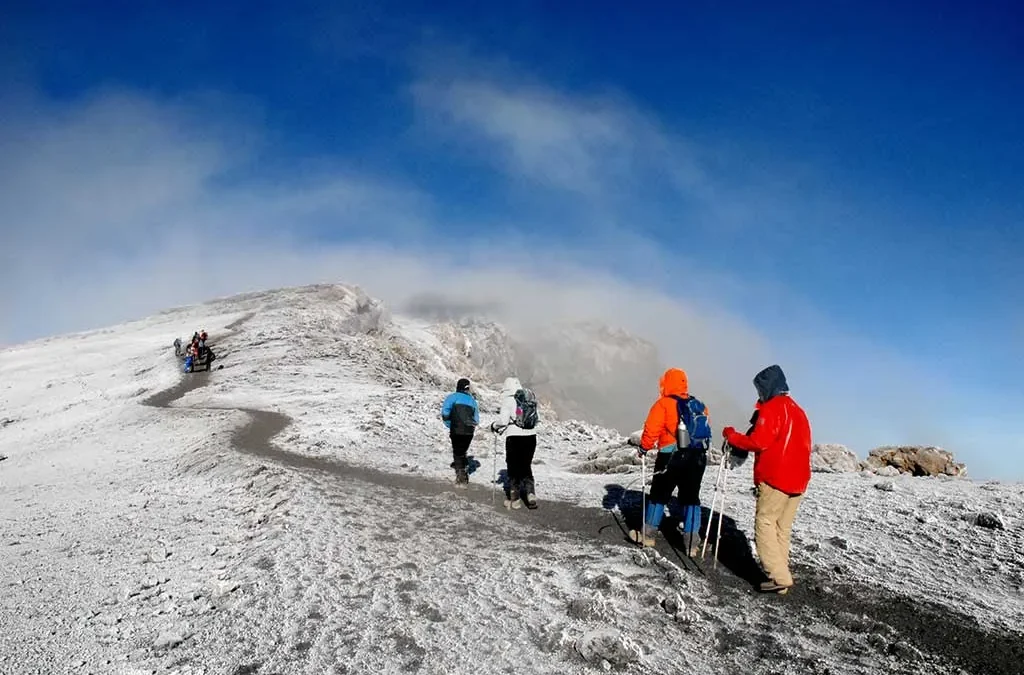
This is it. You leave Barafu in darkness, climbing six hours through thick scree and following switchbacks between the Ratzel and Rebmann glaciers until you reach Stella Point at 18,650 feet. You’ve just completed what most climbers consider the toughest section. Depending on your pace, sunrise might greet you here in all its glory. Fatigue hits hard, but cold demands you keep moving. At Stella Point, you’ve joined the last section of the Marangu Route. Hike the rim for another one to two hours until you stand on Uhuru Peak—the Roof of Africa. Take photos with the famous sign, but begin your descent soon to rest at Barafu Camp.
Day 7: Descent and Flight to Uganda
Wake up, eat breakfast, and descend through a scenic three-hour hike to Mweka Gate. Don’t tip your staff until everyone and all gear reach the gate. After park registration, you’ll receive your summit certificate—green if you reached Stella Point, gold if you summited. If mud blocks vehicles, you’ll hike one more hour to Mweka Village, three kilometers away. Enjoy a hot lunch there before being driven to Kilimanjaro International Airport for your flight to Entebbe, Uganda, where your next adventure begins.
Kilimanjaro accommodation details:
- Budget camping throughout days 1-7
- All meals included
- Drinking water provided (other beverages cost extra)
Day 8: Entebbe to Queen Elizabeth National Park
An Iconic Africa Safaris driver picks you up from your Entebbe hotel and settles you into a comfortable 4×4 Land Cruiser. The six to seven-hour drive to Queen Elizabeth National Park takes you through scenic landscapes with planned stops for lunch and photos. You’ll visit the Equator at Kayabwe where you can stand with one foot in each hemisphere. The journey moves through the heart of Uganda, offering glimpses of local life and stunning countryside before you reach the lodge.
Accommodation: Irungu Safari Lodge (Budget), Kikorongo Safari Lodge (Mid-Range)
Meals: All meals included
Day 9: Early Morning Game Drive and Kazinga Channel Cruise
Your alarm goes off before dawn. After breakfast, you head out at 6 am for a game drive when wildlife is most active. Animals such as herds of elephants, buffaloes, antelopes, prides of lions and occasional leopard move freely in the cool morning light, and your chances of seeing them are excellent. You’ll return to the lodge for lunch and rest in the afternoon heat. Later, you board a boat for a cruise on the Kazinga Channel, which connects Lake George and Lake Edward. This waterway holds some of the world’s highest hippo concentrations—you’ll spot them everywhere. Nile crocodiles line the banks while elephants and buffaloes wade in to drink. Pink-backed pelicans, African spoonbills, and pied kingfishers provide a constant show for your camera.
Accommodation: Irungu Safari Lodge (Budget), Kikorongo Safari Lodge (Mid-Range)
Meals: All meals included
Day 10: Ishasha Sector Drive and Travel to Bwindi
After breakfast, you check out and drive to the Ishasha Sector of Queen Elizabeth National Park, famous for its rare tree-climbing lions. These remarkable animals rest lazily in the branches of giant fig trees, watching herds of Uganda kobs, topis, and impalas graze below—a sight found in very few African locations. Following this game drive, you head directly to Bwindi Impenetrable Forest National Park, stopping for lunch along the way. You arrive in the late afternoon, check in to your lodge, and settle in for a quiet evening before the experience of a lifetime.
Accommodation: Gorilla Valley Lodge (Budget) or Ichumbi Gorilla Lodge (Mid-range)
Meals: All meals included
Day 11: Gorilla Trekking and Optional Evening Activities
This is the day you’ve waited for. You rise between 5:30 and 6:30 am, eat a filling breakfast, and head to park headquarters for the 7:30 am gorilla briefing. Trekkers split into small groups of eight people assigned to different gorilla families, matched by fitness level and age. Before departing, consider hiring a local porter for fifteen to twenty dollars—they carry your bag, help on steep terrain, and your payment directly supports the surrounding community. At 8 am, you enter the dense forest with armed rangers who clear the path and keep you safe. The trek can last anywhere from one to six hours depending on where that day’s gorilla family roams. When rangers signal silence and you finally see them, the world stops. For one full, precious hour, you watch them live—the silverback protecting his family, mothers nursing infants, young gorillas tumbling through the undergrowth. After this encounter, you descend to receive your Gorilla Trekking Certificate, then return to your lodge for lunch and well-deserved rest. If energy remains, experience the Batwa Pygmies Cultural Experience where this forest community shares ancient traditions and survival skills. Alternatively, walk through nearby villages and collect beautiful handmade crafts as lasting souvenirs.
Accommodation: Gorilla Valley Lodge (Budget) or Ichumbi Gorilla Lodge (Mid-range)
Meals: All meals included
Day 12: Return to Entebbe
The final day involves a long but rewarding nine to ten-hour drive back to Entebbe or Kampala. You’ll make planned stops for lunch, stretching, and photography. The highlight stop lands at the Uganda Equator monument in Kayabwe, just after Mbarara City, where you can photograph yourself standing between the Northern and Southern Hemispheres. You’ll arrive in Entebbe or Kampala in the evening, ready for your departure flight or an overnight stay before continuing onward.
Meals: Breakfast and lunch included
Accommodation: None unless arranged
When Should You Book this Trip?
The ideal months for gorilla trekking fall during Uganda’s dry seasons: June through late September and December through February. During these months, trails dry out, forest visibility improves, and hiking feels more comfortable. These are peak travel periods, so book gorilla permits and lodges well in advance – 3 to 6 months ahead – to guarantee your preferred dates and lock in pricing.
If budget matters most, consider the low season months of April, May, and November. Gorilla trekking permits drop from $800 to $600 for foreign non-residents. Lodges offer discounts during this shoulder season. While these months bring rainfall, you can still encounter sunny days with good visibility. The crowds thin out, giving you a more intimate experience.
How Do You Book Your Spot?
Contact Iconic Africa Safaris through the booking form, or send email (info@iconicafricasafaris.com), or tap the WhatsApp button on the right bottom corner on your screen for instant chat. Tell us your travel dates, group size accommodation level (budget, mid-range, or luxury) and number of days (if you need adjustments). One of the local consultants will engage you and craft a personalized costed itinerary matched to your requests and preferences.
How Do You Reach Bwindi from Entebbe?
The drive from Entebbe International Airport covers roughly 480 to 520 kilometers and takes about 9 to 10 hours. Your route heads through Kampala, then southwest via Mbarara, Ntungamo, and Kabale. Alternatively, take a scheduled or charter flight from Entebbe to Kisoro Airstrip (about 90 minutes) or Kihihi, then drive another one to one and a half hours to Bwindi. Either way, you’ll arrive in one of Africa’s most remarkable places, ready to write the final chapter of your safari story.