
Planning a gorilla trekking holiday for your family in Uganda and Rwanda
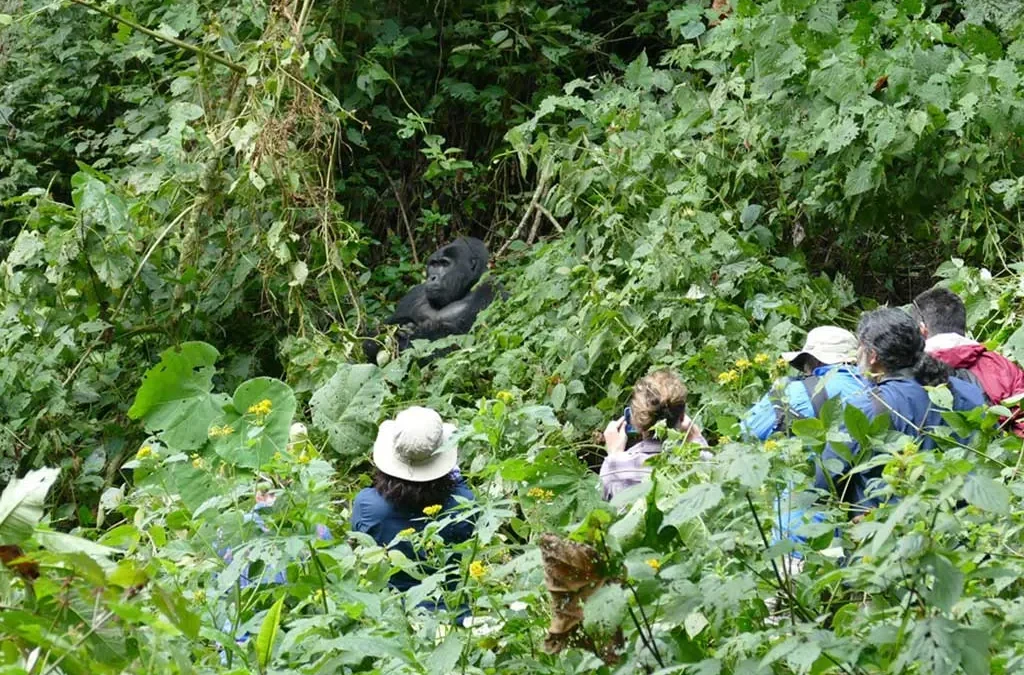
If you’re planning a gorilla trekking holiday with your family in Uganda and Rwanda, the first step is to book the gorilla permits. Keep in mind that the age limit for these treks is 15 years and above. Once you have secured the permits, you can start planning the duration of your safari. In Uganda, the minimum number of days for a gorilla safari is 3, while in Rwanda, a 2-day trek is possible.
Consider incorporating other activities into your itinerary, such as chimpanzee trekking, game drives, or birding safaris, to make the most of your African adventure. By combining these experiences with gorilla trekking, you’ll create lasting memories with your family. It’s fascinating to observe the dynamics of gorilla families, as they closely resemble human families, with a dominant silverback leading the group. During your visit, you may even notice similarities between family members in the gorilla group and your own family.
To ensure that your family can trek together, it’s recommended to book the gorilla trekking permits for everyone in advance. While it’s not always guaranteed, this increases the likelihood of being assigned the same gorilla family to trek with, taking into account factors such as physical fitness and age during the allocation process.
Identify where to go for Gorilla Trekking
Uganda:
Bwindi Impenetrable National Park
Bwindi Impenetrable National Park, renowned for its gorilla populations, offers a diverse selection of 18 gorilla families that visitors can be assigned to. These families are spread across four distinct areas, each offering different types of accommodation. The Buhoma area in the north, Ruhija area in the east, Rushaga area, and Nkuringo area in the south are the designated regions for securing gorilla permits in the Bwindi forest.
Aside from the magnificent gorillas, this national park is also home to nine other primate species. Chimpanzees, black and white colobus monkeys, vervet monkeys, grey-cheeked mangabeys, red-tailed monkeys, olive baboons, L’Hoest’s monkeys, and others inhabit this rich biosphere reserve.
Bird enthusiasts will find Bwindi Impenetrable National Park a haven, with its wide range of avian species. Over 350 bird species, including Albertine Rift endemics, can be spotted here. The Ruhija area, particularly Mubwindi swamp, is a paradise for birders. Keep an eye out for captivating species like Mountain Masked Apalises, Red-faced Woodland Warblers, African Hill Babblers, Rwenzori Turacos, Handsome Francolins, and many more.
Mgahinga National Park
Mgahinga National Park, despite being the smallest national park in Uganda, covering approximately 33.7 square kilometers, is home to a population of mountain gorillas. The Nyakagezi family is the only gorilla family available for tourist viewing within the park. However, it’s worth noting that this particular gorilla family has a history of occasionally moving to Rwanda, which has made securing permits for their viewing a challenge. Permits were allocated based on the presence of the Nyakagezi gorilla family.
In addition to gorillas, Mgahinga National Park boasts a variety of bird species. Currently, there have been over 115 recorded bird species in the park. Although it has not received much attention from ornithologists, it is expected that the bird species list will expand as more research is conducted. For primatologists, Mgahinga National Park also houses other primate species, including golden monkeys, grey-cheeked mangabeys, black and white colobus monkeys, red-tailed monkeys, olive baboons, and more.
The park’s picturesque backdrop showcases three distinct mountains: Mount Gahinga, Mount Muhavura, and Mount Sabyinyo. If you’re up for a challenge, you can test your fitness level by embarking on an 8-hour return trek to one of these majestic mountains.
Rwanda:
Volcanoes National Park
Volcanoes National Park, located in the Northwestern part of Rwanda, is the exclusive destination for gorilla trekking in the country. Within the park, there are 12 gorilla families available for tourism. The Rwanda Development Board is responsible for the sale and regulation of gorilla permits in Volcanoes National Park. The park’s striking topography is characterized by the presence of five volcanoes: Mount Karisimbi, Mount Bisoke, Mount Gahinga, Mount Muhavura, and Mount Sabyinyo, forming a breathtaking backdrop.
In addition to gorillas, Volcanoes National Park is home to various primate species, including golden monkeys, blue monkeys, grey-cheeked mangabeys, red-tailed monkeys, black and white colobus monkeys, olive baboons, and more.Bird enthusiasts visiting Volcanoes National Park during gorilla trekking excursions have the opportunity to spot a diverse range of bird species, including several Albertine Rift endemics. Some notable bird species found in the park include the Alpine Chat, Malachite Sunbird, Montane Double-collared Sunbird, Rwenzori Turaco, Handsome Francolin, and many others.