
Bwindi Luxury Gorilla Safari: Road vs Fly-In | 4-Day Packages
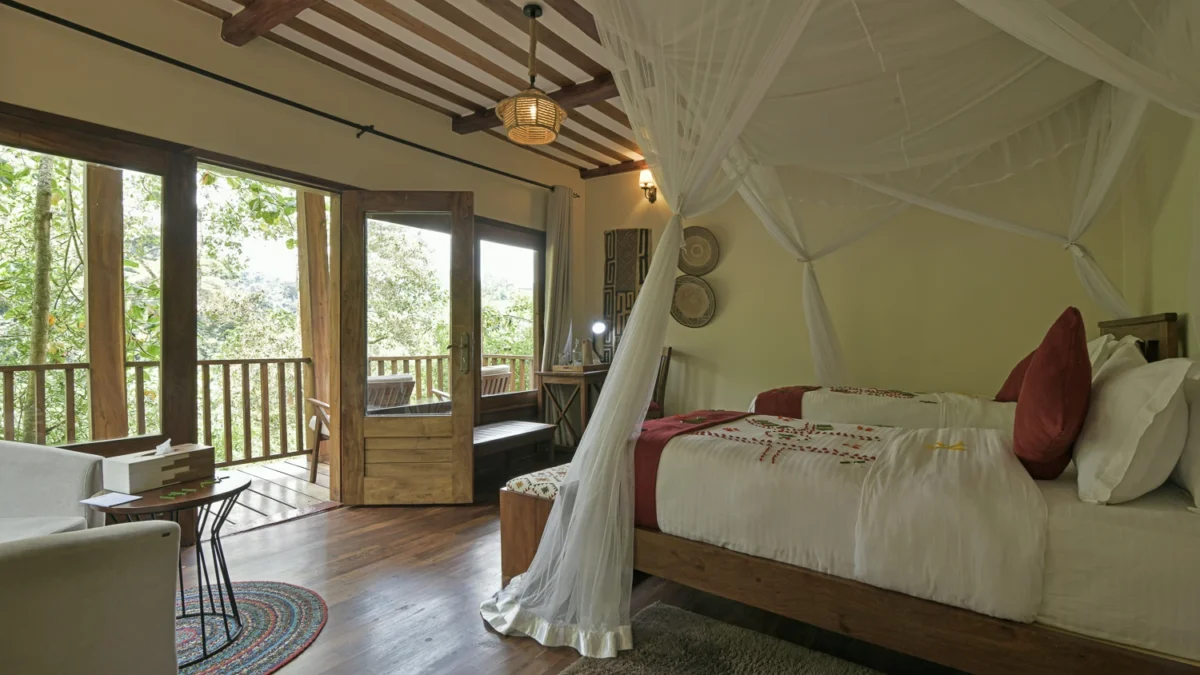
Luxury Gorilla Safari to Bwindi: Best 4-Day Road and Fly-In Packages
A Luxury Gorilla Safari to Bwindi puts you face to face with endangered mountain gorillas in Uganda, then returns you each evening to a comfortable lodge, a good meal and a quiet bed. With Iconic Africa Safaris, the four-day experience starts at $2,870 per person sharing by road or $3,670 per person sharing when you fly from Entebbe.
Both packages cover your gorilla trekking permit, lodge accommodation, meals, in-house drinks at the lodge, bottled drinking water and all the transport the route requires. The fly-in version adds return domestic flights between Entebbe and either Kisoro or Kihihi airfield, depending on the lodge and the flight schedule.
The trip is built for couples, honeymooners, photographers and wildlife enthusiasts who want comfort without losing the thrill of walking into an African rainforest. You can begin in Kigali or Entebbe, pick from four lodges across three trekking sectors, and still have room in the schedule for local culture and scenery.
Four days is a sensible length. It lets you arrive and settle before the trek, recover afterwards and see something of southwestern Uganda instead of treating the gorillas as a box to tick. If you have more time, the same journey stretches easily to the lakes, to Mgahinga or to Queen Elizabeth National Park.
How Much Does a Luxury Gorilla Safari to Bwindi Cost?
Your final price depends on four things: how you travel, which lodge you choose, the dates you pick and the room category. Iconic Africa Safaris offers two starting points, a private road journey and a fly-in arrangement from Entebbe.
| Road Safari | Fly-In Safari | |
|---|---|---|
| Starting price | $2,870 per person sharing | $3,670 per person sharing |
| Starting point | Kigali or Entebbe | Entebbe |
| Transport | Private road transport and transfers | Return domestic flights plus airstrip transfers |
Four-Day Road Safari: From $2,870 Per Person
The road version of the Luxury Gorilla Safari to Bwindi starts at $2,870 per person sharing and can begin in either Kigali or Entebbe. It suits travellers who like the idea of a private overland journey and want the freedom to enjoy the scenery along the way.
From Kigali, the drive to southern Bwindi usually takes four to five hours, though the border crossing, road conditions and your lodge’s exact location can all change that. From Entebbe the trip is far longer and can take most of a day, so an early start matters.
Four-Day Fly-In Safari: From $3,670 Per Person
The fly-in package starts at $3,670 per person sharing. You leave Entebbe on a scheduled domestic flight to Kisoro or Kihihi, then continue by road to your lodge. The principal services match the road option, with the flights added.
The difference works out at $800 per person, or $1,600 for two people sharing. For travelers with limited leave, that is often money well spent, because it removes the longest stretch of driving and gives you more of your holiday at the lodge itself.
What the Price Includes
- One mountain gorilla trekking permit per traveller
- Accommodation at your selected luxury lodge
- Meals throughout, according to the confirmed arrangement
- In-house drinks at the lodge, subject to the agreed inclusions
- Bottled drinking water for the whole trip
- Private road transport and transfers (road package), or return domestic flights plus airstrip transfers (fly-in package)
- Coordination of the gorilla trek and any other included activities
What You Should Budget Separately
International flights, travel insurance, gratuities, laundry, premium beverages, additional excursions and optional extensions are normally outside the starting price. The words “in-house drinks” refer to what the lodge serves as part of its own offering, so imported spirits or drinks bought elsewhere may not be covered. Ask for the exact lodge, room category and every inclusion and exclusion to be written into your quotation.
Why Choose a Luxury Gorilla Safari to Bwindi?
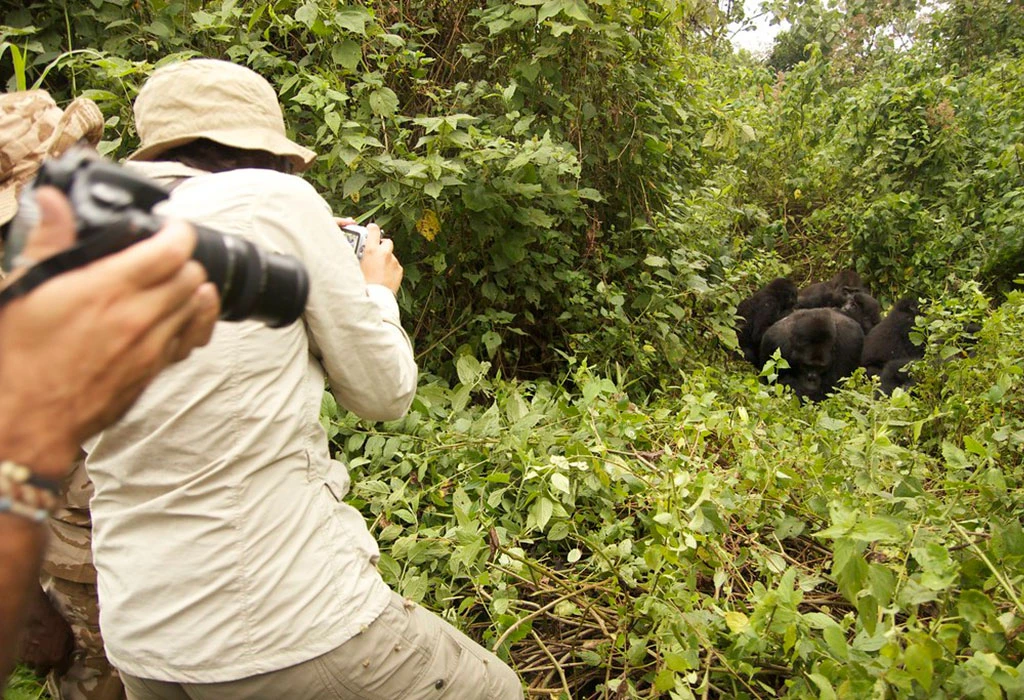
Bwindi Impenetrable National Park sits in southwestern Uganda and ranks among the most rewarding places in Africa to see mountain gorillas. It is an ancient rainforest of steep ridges, deep valleys and dense vegetation, home to a wide variety of forest wildlife besides the gorillas themselves.
The experience has little in common with a game drive. There is no vehicle to watch from. You walk with authorised guides and trackers in search of a habituated gorilla family, and the terrain can be steep, muddy or uneven. How long you walk depends entirely on where the gorillas spent the night and how they have moved since.
Once the group is found, standard trekking allows one hour in their company, subject to park rules and your guide’s instructions. You might watch a silverback settle into the leaves, a mother tending her infant or juveniles tumbling over one another. Along the way you also learn how rangers, trackers and local communities protect the animals and their habitat.
That is where the luxury element earns its keep. After a demanding morning in the forest, a hot shower, a prepared meal and a comfortable room make a real difference, and a private transfer removes the logistics from your shoulders. A Luxury Gorilla Safari to Bwindi also leaves time to meet the communities around the park, browse local crafts and understand how tourism supports livelihoods there. The result is a trip with some depth, not simply a sighting.
How Gorilla Trekking Works: Permits, Families and Etiquette
Every Luxury Gorilla Safari to Bwindi is organised around the permit, so it helps to understand what that piece of paper represents. Bwindi shelters roughly half of the world’s mountain gorillas, and the park is a UNESCO World Heritage Site. Only gorilla families that have been habituated, meaning gradually accustomed over a long period to the presence of people, are visited by tourists. Each of those families is limited to a small group of visitors per day, normally eight, which is why permits are scarce and why they should be secured before anything else.
Permits and Sectors
Your permit is tied to a date and to a trekking sector. Rushaga, Nkuringo and Buhoma each have their own families and their own briefing points, so a permit for one sector cannot simply be used in another. That is the reason this guide keeps returning to the order of booking: permit first, lodge second, transport last.
On Trekking Morning
On trekking morning, rangers allocate visitors to families, often taking fitness and walking pace into account, so say honestly how you feel about steep ground. Trackers who have already located the gorillas guide you towards them, and armed rangers walk with the group as a precaution against forest animals. Porters are available to carry your daypack and to give you a steadying hand on difficult slopes. Hiring one costs a modest fee that you should confirm in advance, and it puts income directly into the community, so many guests treat it as part of the experience rather than an indulgence.
Etiquette Near the Gorillas
The behaviour expected near the gorillas protects both sides. Visitors keep a distance of about seven metres, speak quietly, avoid flash photography and do not eat or drink in the animals’ presence. Anyone who feels unwell, particularly with a cough or cold, should tell the guide before the trek, because gorillas are vulnerable to human respiratory illness and park staff may restrict participation. If a gorilla approaches, you stay calm, step back slowly and follow your guide’s lead rather than reacting on your own.
Best Luxury Lodges for Gorilla Trekking in Bwindi
The lodge shapes your Luxury Gorilla Safari to Bwindi more than almost any other choice, so it deserves careful thought. Bwindi is mountainous, and driving between its sectors can take hours, which means your accommodation should sit in the same sector as your permit. Settling the permit sector first, and the lodge second, avoids long and tiring transfers on trekking morning.
| Lodge | Sector |
|---|---|
| Gorilla Leisure Lodge | Rushaga |
| Four Gorillas Lodge | Rushaga |
| Nkuringo Gorilla Lodge | Nkuringo |
| Buhoma Lodge | Buhoma |
Gorilla Leisure Lodge, Rushaga Sector
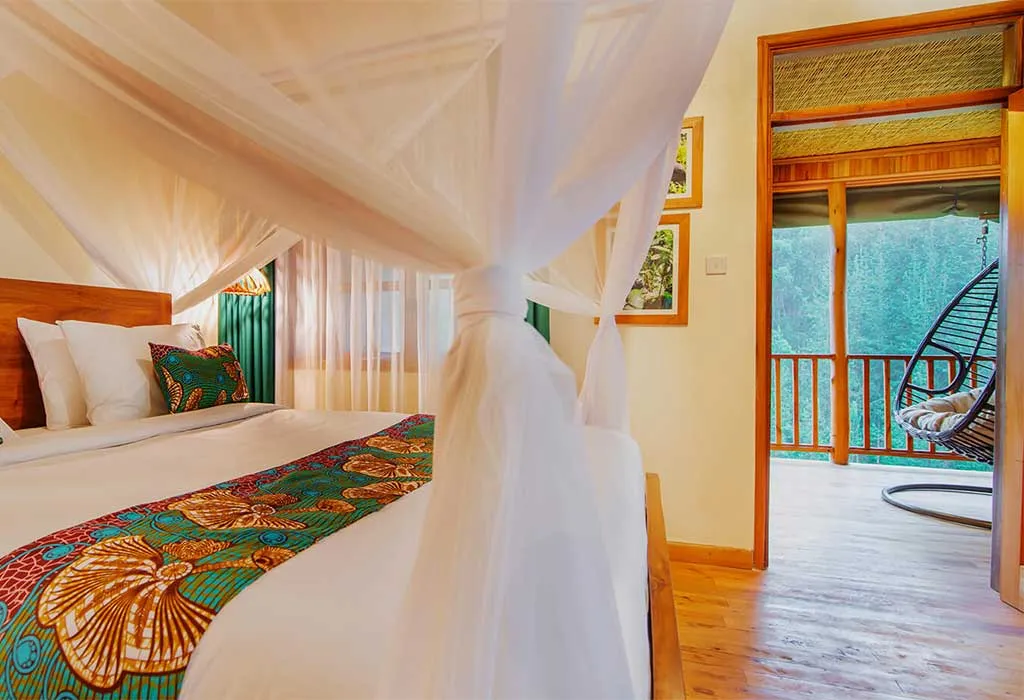
Gorilla Leisure Lodge
Gorilla Leisure Lodge offers a comfortable base among the hills and forest of southern Bwindi. Its peaceful setting appeals to guests who value scenery and quiet, and it works well for couples, honeymooners and anyone wanting a calm forest retreat.
Staying in Rushaga means a shorter run to the briefing point on trekking day. Before you confirm, ask about available room categories, current facilities, meal arrangements and the travel time to your assigned trailhead.
Four Gorillas Lodge, Rushaga Sector
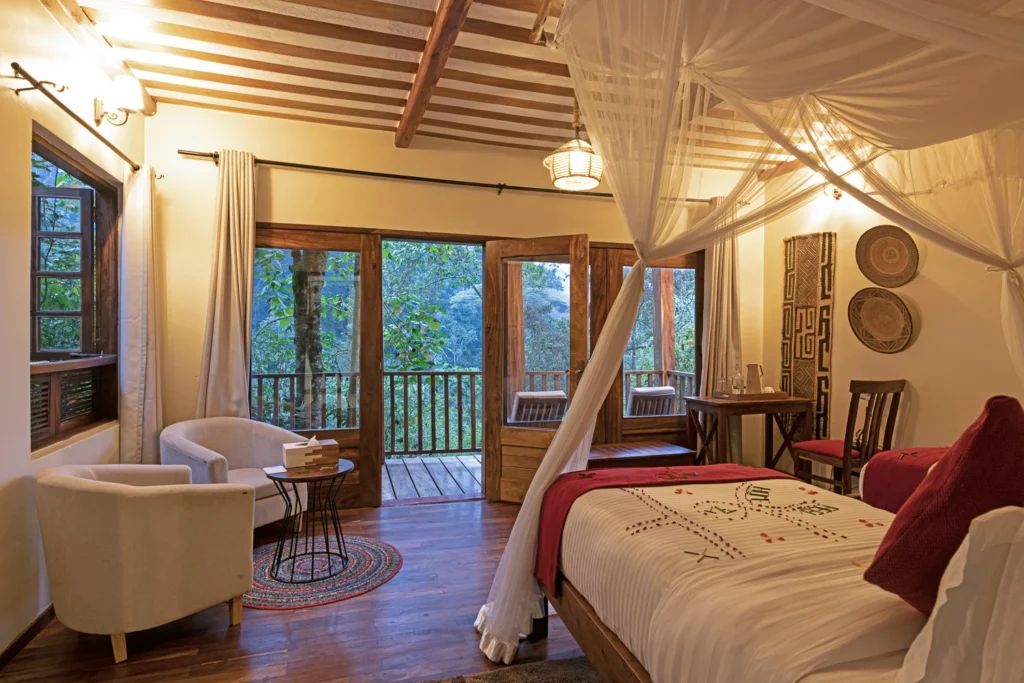
Four Gorillas Lodge
Four Gorillas Lodge is the second Rushaga option, suited to travellers who want a comfortable stay in the landscapes of southwestern Uganda while keeping close to their trekking area. It makes particular sense when your permit is for Rushaga.
If you are torn between the two Rushaga properties, the deciding factors are usually room category, availability, inclusions and the precise distance to the briefing point. Iconic Africa Safaris can compare both against your dates and budget.
Nkuringo Gorilla Lodge, Nkuringo Sector

Nkuringo Gorilla Lodge
Nkuringo is known for dramatic highland scenery, forested slopes and sweeping views across the surrounding country. Staying here suits couples and scenery lovers who enjoy a remote feel.
The same rugged terrain demands honesty about fitness. Visitors with mobility limitations or a dislike of steep walking should discuss the area carefully before choosing it. If Nkuringo is your pick, build the permit and transport around that sector from the start.
Buhoma Lodge, Buhoma Sector

Buhoma Lodge
Buhoma Lodge sits in northern Bwindi, an established trekking area that also offers community experiences and other forest activities. It is a good base for guests who want to combine gorilla trekking with a relaxed stay.
Choosing between Buhoma and the southern sectors for your Luxury Gorilla Safari to Bwindi should never rest on the lodge alone. Your departure airport, flight connections, planned extensions and the overall shape of the trip all influence which side of the park makes more practical sense. Travellers arriving from Kigali, for instance, will generally find the southern sectors closer.
Choosing Your Sector
Rushaga fits those who prefer Gorilla Leisure Lodge or Four Gorillas Lodge, Nkuringo belongs with Nkuringo Gorilla Lodge, and Buhoma is the natural home of Buhoma Lodge. No single sector is best for everyone. Let lodge availability, permit availability, trekking preferences and your arrival and departure routes decide.
4-Day Luxury Gorilla Safari Itinerary
The itinerary below shows how a Luxury Gorilla Safari to Bwindi unfolds over four days. It works as a road safari from Kigali or Entebbe, or as a fly-in safari from Entebbe. Departure times and transfers vary with your lodge, airstrip and dates.
Day 1: Journey to Bwindi and Settle In
Your safari opens with a pickup in Kigali or Entebbe, depending on your plan.
- From Kigali: You travel through southwestern Rwanda to the Uganda border and on to your lodge. Allow four to five hours to southern Bwindi, with border procedures and road conditions deciding the final figure.
- From Entebbe by road: Expect a long transfer across Uganda that takes much of the day.
- Fly-in travellers: You are driven to Entebbe International Airport for the scheduled domestic flight to Kisoro or Kihihi, followed by a road transfer to the lodge.
Whichever route you take, the afternoon and evening are deliberately unhurried. Settle into your room, enjoy dinner, check your clothing and boots, and confirm the morning departure time with your guide. A long journey is no time for a packed schedule, and the next day will ask a lot of you.
Day 2: Gorilla Trekking and an Optional Batwa Experience
After an early breakfast you travel to the briefing point, where park staff explain the rules, assign visitors to gorilla families and outline how to protect the animals and their habitat.
Then you enter the forest with guides and trackers. The path may follow narrow trails, climb steep slopes and cross muddy stretches, and the length of the trek is anything from a short walk to several hours. Keep the day flexible.
When the gorillas are found, you spend your hour with them under park rules, watching behaviour that no photograph quite captures. Afterwards you head back to the lodge for a meal and a rest.
If energy allows, the late afternoon can include a Batwa cultural experience, which introduces the community’s forest heritage, traditional knowledge and history. Its programme depends on what is available locally and on when you finish trekking, so treat it as a flexible option rather than a fixed appointment.
Day 3: A Slower Day in Bwindi
Day 3 is the calm after the climb, and it is one of the quiet pleasures of a Luxury Gorilla Safari to Bwindi. Start with breakfast at the lodge, then decide how much you want to do. Some guests stay put and read on the veranda, others walk the grounds and watch the forest.
For something more, arrange a guided community visit to see daily life around Bwindi: farming, local livelihoods, cultural traditions and the part tourism plays in supporting people who live beside the park. You can also visit craft makers and buy handmade baskets, woven items and other souvenirs directly from the artisans.
Depending on your location and interests, birdwatching or a guided nature walk may also be possible. Confirm any extra costs and transport before the day begins.
Day 4: Return to Kigali or Fly Back to Entebbe
After breakfast, your return follows the original booking.
- Road travellers: You are driven privately to Kigali or Entebbe. Those heading to Kigali may be able to add a city tour, possibly including the Kigali Genocide Memorial, which commemorates and teaches about the 1994 genocide against the Tutsi. If you wish to go, raise it early so the plan can account for the drive, the border crossing and any international flight.
- Fly-in travellers: You are driven to Kisoro or Kihihi for the scheduled flight back to Entebbe. Domestic flights follow set schedules and can be disrupted by weather or operational changes, so avoid booking an international departure too soon after your expected landing without checking the connection. If you would like to see more of Kigali or add another Ugandan destination, an extra night is nearly always more comfortable than a rushed finish.
Driving or Flying: Which Suits You?
This is the biggest planning decision for a Luxury Gorilla Safari to Bwindi, and the answer depends on where you start and how you like to travel.
The Case for the Road
Road travel gives you a private transfer and the chance to watch the landscape change between city and forest. It is especially practical from Kigali, where the journey to southern Bwindi is much shorter than the haul from Entebbe. It also keeps the starting price lower. The cost is time: starting in Entebbe makes for a long day each way, so the return transfer needs careful planning too.
The Case for the Air
Flying from Entebbe cuts the time you spend on the road and suits visitors with limited annual leave, couples marking a special occasion and anyone who would rather be at the lodge than in the vehicle. The flight does not remove every road journey, though. You still drive from the airstrip to your lodge, so confirm that distance before booking.
Our Recommendation
Starting in Kigali, the road safari is usually the more practical choice. Starting in Entebbe with a goal of maximising time in the forest, the fly-in deserves serious thought. Your arrival time, lodge, permit sector, flight availability and onward plans should settle the question.
Who is this Safari Best For?
A Luxury Gorilla Safari to Bwindi works for many kinds of traveller.
- Honeymooners and anniversary couples value the private setting and the unhurried third day.
- Photographers appreciate the extra time to adapt to forest light and revisit their images in the evening.
- Solo travellers can share a permit family with other visitors while still enjoying the comfort of a private vehicle and a good lodge.
- Families with teenagers aged 15 and above can trek together.
- Older travellers in good health often do very well when the pace and the sector are chosen with care.
It is a less natural fit for anyone who wants constant activity, since the pace here is deliberate, or for travellers who cannot manage several hours of uneven walking. In those cases it is better to talk through alternatives openly than to discover the limits on the trail.
Photographing Mountain Gorillas
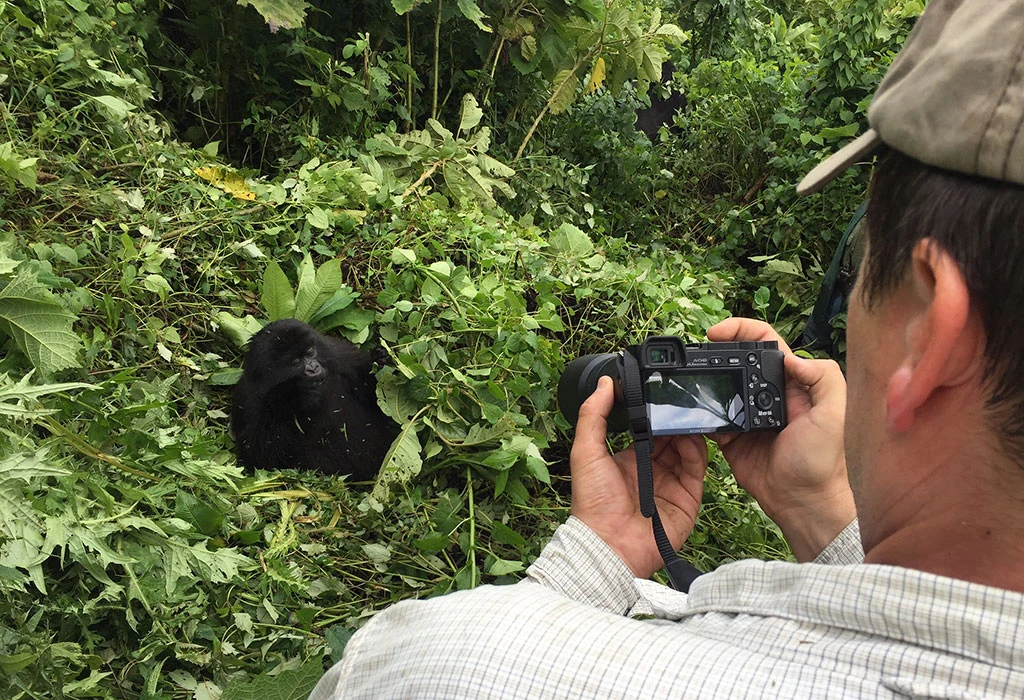
The forest is dim even at midday, and gorillas are dark animals moving through deep shade, which makes photography harder than most people expect. A camera that handles high sensitivity settings well will help, as will a lens with a wide aperture. Flash is not permitted, so rely on natural light, steady your elbows against your body and take plenty of frames to catch moments of stillness.
Protect your equipment from rain and damp with a waterproof cover or a simple plastic bag, and carry spare batteries and memory cards in a sealed pouch. It is also worth deciding in advance how much of the hour you want to spend behind the lens. Many guests find that putting the camera down for a few minutes and simply watching is the part they remember most.
Travelling Responsibly in Bwindi
Gorilla tourism works only because the money it generates stays connected to conservation. Permit fees support the national park authority and the protection of the animals, and a share of revenue goes to communities living along the boundary. The choices you make on the ground extend that effect. Buying crafts directly from makers, employing a porter, choosing lodges that employ and train local staff and following park rules precisely all help the forest and the people who depend on it.
Responsible travel also means keeping a respectful attitude during cultural visits. Ask before taking photographs of people, treat any Batwa or community experience as a conversation rather than a performance, and be realistic about the fact that tourism is one part of a complex local economy.
Starting in Kigali: Crossing Between Rwanda and Uganda
Many travellers choose Kigali as their gateway because the overland route to southern Bwindi is the shortest of the road options. The journey crosses an international border, so carry your passport in an accessible bag rather than in your luggage, and keep any visa or e-visa paperwork where you can reach it. Border queues vary through the day, and an early departure from Kigali usually makes for a smoother crossing and an easier arrival at the lodge before dark.
Your driver guide handles the logistics of the vehicle and the route, but you remain responsible for your own travel documents. Check the current entry rules for both countries before departure, and if you plan to return to Kigali at the end of the trip, confirm that any visa you hold allows re-entry. Travelling this way also gives you a glimpse of the terraced hills that separate the two countries, a landscape worth a few photographs from the car window.
An Evening at the Lodge

One of the real luxuries of a trip like this is how the day ends. After the trek you return to a hot shower, dry clothes and a table where the meal has been planned around your arrival. Many lodges light fires in the evening, since the highlands cool quickly after sunset, and a drink beside the flames while the forest goes quiet is a fitting way to close the day. Staff will often dry muddy boots overnight, though it is sensible to ask when you check in. Sleeping at altitude in a forest with no traffic noise is its own reward, and most guests report that they rest deeply before the early start the following day.
Optional Extensions After Your Gorilla Safari
Four days make a rewarding introduction to a Luxury Gorilla Safari to Bwindi, but travellers with extra time can add lakes, more primates, savannah wildlife or cultural activities. None of the following is part of the starting prices unless your quotation says so.
Lake Bunyonyi or Lake Mutanda
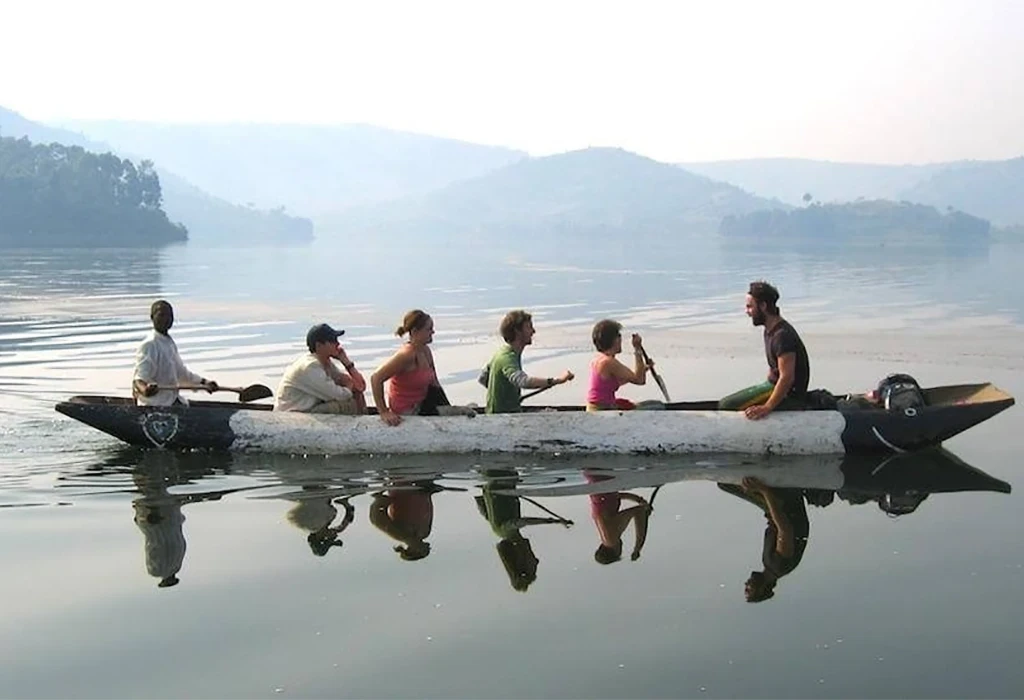
Both lakes are good places to unwind after trekking. Lake Bunyonyi is known for its islands, green hills and tranquil mood, with canoeing, photography and lakeside relaxation depending on where you stay. Lake Mutanda looks out over a volcanic landscape and fits neatly with a southern Bwindi or Mgahinga itinerary, appealing to anyone who wants a quiet lakeside stay. One or two nights is usually enough, and the transfer time depends on where your Bwindi lodge is.
Golden Monkey Trekking in Mgahinga

Mgahinga Gorilla National Park protects part of the Virunga mountain ecosystem and offers the chance to encounter golden monkeys. The forest setting and the species are different from your gorilla trek, which makes it a good addition for primate lovers and photographers. It needs its own permit and extra transport, so check availability before finalising the itinerary.
Game Drives and a Boat Cruise in Queen Elizabeth National Park

For savannah wildlife, extend to Queen Elizabeth National Park. Game drives search for elephants, buffaloes, antelopes and more across varied habitats, and the Ishasha area is known for tree-climbing lions, although sightings are never guaranteed. A boat cruise along the Kazinga Channel adds hippos, waterbirds and animals gathering at the water’s edge. Allow two or three extra nights to enjoy both without rushing, and plan the route around your starting sector.
Coffee Experience at One Peter’s Family Farm, Kisoro

At One Peter’s family farm you can learn how coffee is grown and produced in southwestern Uganda. Depending on the day, the visit may touch on cultivation, harvesting, processing and preparation, and it offers an easy way to meet local people and understand how coffee supports household livelihoods. A half-day is usually enough.
Hiking Mount Sabyinyo

Adventurous travellers can tackle Mount Sabyinyo in the Virunga Mountains, a peak linked to the border region shared by Uganda, Rwanda and the Democratic Republic of Congo. Its summit area is often described as a point where three countries meet. Expect steep slopes, rough ground, mud and a long day outdoors, so good fitness is important. Permits, authorised guides, suitable weather and enough time are all essential, and it should never be squeezed into the departure day of a four-day trip. Raise your interest early so overnight arrangements can be built in.
When to Book Your Luxury Gorilla Safari to Bwindi
Gorilla trekking runs throughout the year, so a Luxury Gorilla Safari to Bwindi can be planned in any month, but weather shapes the experience. Drier periods (June-Mid September) tend to be popular because trails are easier underfoot, and they draw more visitors, so lodges and permits fill earlier. Wetter periods turn the forest lush and green, though paths become slippery and call for extra care. Bwindi is a montane rainforest, so showers can arrive even in the drier months.
The best dates depend on your priorities. Some people build the trip around a honeymoon or anniversary, others around international flights, school holidays or a wider East African itinerary.
How Far Ahead Should You Plan?
Book as early as you practically can if you want a particular lodge, room category or trekking date (4-6 months). Permits are limited, and their availability has to line up with accommodation and transport.
A sensible order of work is to confirm your dates and arrival airport, choose between road and fly-in, check permit availability, settle your sector and lodge, and only then finalise transport and extra activities. Following that sequence protects you from booking a lodge that does not match your permit, or a domestic flight that does not fit the plan.
What to Pack and How to Prepare
Even on a Luxury Gorilla Safari to Bwindi, the forest sets the dress code. Pack sturdy hiking boots with good grip, long trousers, long-sleeved tops and a lightweight waterproof jacket. Gardening-style gloves protect your hands when you grab vegetation for balance, and a small daypack carries water, snacks and personal items.
Add insect repellent, sunscreen, a camera with spare batteries and any personal medication. A walking stick helps on slippery slopes, and a face mask is worth carrying in case park or health guidance asks for one. Your guide can describe the conditions expected on the day, and park instructions on distance from the gorillas, photography, group conduct and health precautions must be followed.
Insider tip: A luxury lodge does not make the trek easy. Steep slopes, thick vegetation and changing weather can make the walking demanding. If fitness or mobility is a concern, talk to your safari planner before booking so you can make an informed choice.
Fitness, Health and Practical Preparation
Preparation pays off more than any piece of equipment. In the weeks before departure, walk uphill regularly, ideally in the boots you will wear in Bwindi so they are broken in and comfortable. Stairs, hill walks and long outings on uneven ground build the stamina that steep forest trails demand. You do not need to be an athlete, but the fitter you are, the more attention you can give to the gorillas rather than your breathing.
Speak to a doctor or travel clinic well ahead of the trip about vaccinations and malaria prevention. Requirements, including yellow fever documentation, change over time, so confirm the current rules for Uganda and, if you are starting or finishing in Kigali, for Rwanda as well. Entry and visa arrangements for both countries should be checked on official sources close to travel, and your passport needs enough validity and blank pages to satisfy border officials.
Comprehensive travel insurance deserves special attention on a trip like this. Look for cover that includes medical care, evacuation and cancellation, since permits and domestic flights can carry strict change conditions.
Tipping is customary in Uganda and is separate from the package price. Guides, trackers, porters, drivers and lodge staff all contribute to your experience, and many travellers carry small denominations in US dollars or Ugandan shillings for this purpose. Your safari planner can suggest sensible amounts for each group of people.
Finally, mobile coverage in the hills around Bwindi is patchy. Download maps, music and books before you leave, tell family about the connectivity gap and enjoy the rare chance to be genuinely unreachable for a day or two.
Why Book A Luxury Gorilla Safari to Bwindi with Iconic Africa Safaris?
A Luxury Gorilla Safari to Bwindi succeeds when permits, accommodation, transport and activities work together, not just when each is good on its own. Iconic Africa Safaris arranges private safaris in Uganda and across East Africa, helping travellers choose lodges, coordinate permits and organise transport around their preferences.
For a Luxury Gorilla Safari to Bwindi, you can compare the road and fly-in packages, choose among the four lodges and decide whether a cultural experience or another destination belongs in the plan. The process starts from your dates, departure airport, accommodation preference and available time, so the quotation reflects the services you need rather than a generic package.
Before you confirm, review the permit details, accommodation category, transport arrangements, meal plan, in-house drinks policy and every exclusion. A clear quotation is the best protection against surprises on the road.
Ready to Book Your Ugandan Luxury Safari with Iconic Africa Safaris?
Iconic Africa Safaris offers three simple, reliable ways to secure your next unforgettable Ugandan adventure today.
- Online booking form: Simply complete our quick online booking form to start planning your dream safari experience right away.
- Email: Our friendly team also welcomes direct emails at info@iconicafricasafaris.com to discuss your specific travel plans and preferences.
- WhatsApp: For WhatsApp messages and calls, tap the green WhatsApp icon in your screen’s bottom right corner anytime.
Your experience on the ground matters just as much as your itinerary. Our experienced driver guides understand Uganda’s wildlife and cultural heritage and help you appreciate the places you explore. They accompany you throughout your safari, from the initial airport pickup to your final drop off, coordinating daily travel and activities while sharing local knowledge that adds depth to every destination. With thoughtful planning and personal guidance, your safari becomes more than a holiday; it becomes a collection of lasting memories.
Frequently Asked Questions About a Luxury Gorilla Safari to Bwindi
How much does a Luxury Gorilla Safari to Bwindi cost?
The road package starts at $2,870 per person sharing, while the fly-in package from Entebbe starts at $3,670. Your final price depends on your dates, your lodge’s availability, your room category and the inclusions you confirm. The starting price covers your gorilla permit, lodge accommodation, meals, in-house drinks, bottled water and all required transport. International flights, insurance, gratuities and laundry cost extra, so we write every inclusion and exclusion into your quotation.
Are drinks included?
The package includes in-house drinks at your selected lodge, according to the terms we agree with you. The phrase in-house drinks covers only what the lodge serves as part of its own offering during your stay. Imported spirits and drinks that you buy elsewhere may not fall under the package, so please check first. Ask us for written detail on every covered beverage, and we will confirm it in your quotation.
Are international flights included?
No, we do not include international flights in the starting price unless your quotation states otherwise. The fly-in package covers only the domestic return flights between Entebbe and either Kisoro or Kihihi airfield. You book your own international flights to Entebbe or Kigali, and you should buy comprehensive travel insurance. Share your arrival time with us, and we will match your transfers or domestic flight to it.
Can I start my safari in Kigali?
Yes, you can start your four-day safari in Kigali when you choose our private road package. Our driver guide takes you to your chosen Bwindi sector, and southern Bwindi usually takes four to five hours. The border crossing, road conditions and your lodge’s exact location can all change that travel time, so leave early. Carry your passport and any visa paperwork in an accessible bag rather than in your luggage.
Is flying from Entebbe worth the extra cost?
Yes, flying is worth the extra cost if you want to avoid the long overland journey. The fly-in package costs $800 more per person than the road package, or $1,600 for two sharing. You spend less time in a vehicle and more of your holiday at the lodge itself. Flying suits travellers with limited leave, although you still drive from the airstrip to your lodge.
Which airstrip should I use?
Either Kisoro or Kihihi may suit you, depending on your lodge, trekking sector and the flight schedule. We confirm the right airstrip for you after we check your permit sector and lodge choice. You then continue by road from the airstrip to your lodge, so we confirm that distance beforehand. Domestic flights follow set schedules, and weather can disrupt them, so please confirm everything before you book.
Which lodge is best?
The best lodge depends on your permit sector, your budget and the room category available on your dates. Gorilla Leisure Lodge and Four Gorillas Lodge sit in Rushaga, while Nkuringo Gorilla Lodge serves Nkuringo. Buhoma Lodge sits in northern Bwindi, and your lodge should always match the sector of your permit. We compare your preferred lodges against your dates and budget, then recommend the most practical option.
How long does gorilla trekking take?
The trek can last anywhere from a short walk to several hours, depending on the family’s location. Trackers who have already located the gorillas guide you towards them along steep, muddy or uneven terrain. Once you reach the family, you spend one hour with them, subject to park regulations and guide instructions. Keep the day flexible, and tell your guide honestly how you feel about steep ground before the trek begins.
What is the minimum age for gorilla trekking in Uganda?
The standard minimum age for gorilla trekking in Uganda is 15, and park rules enforce it. We arrange alternative activities for travellers below 15, so younger family members still enjoy the trip. Families with teenagers aged 15 and above can trek together, so tell us everyone’s ages when you enquire. Confirm the current requirements with us before booking, and we will plan activities for every age.
What happens if it rains on trekking day?
Trekking goes ahead in most weather, because rain is normal in a montane rainforest like Bwindi. Wear a lightweight waterproof jacket and gardening-style gloves, and use a walking stick for better grip. Expect muddy, slippery trails, and protect your camera with a waterproof cover or a plastic bag. Your guides decide whether conditions are safe, and you should follow their instructions throughout the trek.
Can I hire a porter?
Yes, you can hire a porter to carry your daypack and help on steep or slippery sections. Arrange your porter through your lodge or safari planner, and confirm the modest fee in advance of trekking morning. Hiring a porter puts income directly into the community, so many guests treat it as part of the experience. Tip your porter at the end of the trek to thank them for their steady help on the trail.
Can I visit the Batwa community after trekking?
Often, yes, we can arrange an optional Batwa cultural experience for the late afternoon after trekking. The experience introduces you to the community’s forest heritage, traditional knowledge and history, which adds depth to your safari. Your finish time on trekking day and the local programme decide whether the visit fits your schedule. Treat it as a flexible option rather than a fixed appointment, and ask questions respectfully during the visit.
Can I add Lake Bunyonyi, Lake Mutanda or golden monkey trekking?
Yes to all three, and we can build each option into your itinerary after the gorilla trek. The lakes usually mean extra accommodation and transport costs, and one or two nights is normally enough. Golden monkey trekking in Mgahinga needs its own permit, extra transport and additional time in your schedule. Tell us your interests early, and we will check availability before we finalise your itinerary and quotation.
Can I visit the Kigali Genocide Memorial on Day 4?
Possibly, you can visit the Kigali Genocide Memorial on Day 4 if you return to Kigali by road. The memorial commemorates the victims and teaches visitors about the 1994 genocide against the Tutsi in Rwanda. Your departure time, the border crossing and onward travel decide whether the visit fits your plan. Raise your interest early, so we can account for the drive, the border crossing and any international flight.
Is four days enough?
Yes, four days comfortably covers arrival, trekking, a relaxed community day and departure in Bwindi on this safari. You arrive and settle before the trek, then recover afterwards and see something of southwestern Uganda. If you also want golden monkeys, Queen Elizabeth National Park, a lake stay or a mountain hike, plan longer. We extend the same journey easily, and an extra night is nearly always more comfortable than a rushed finish.