
How Much Does Gorilla Trekking Cost in Uganda?
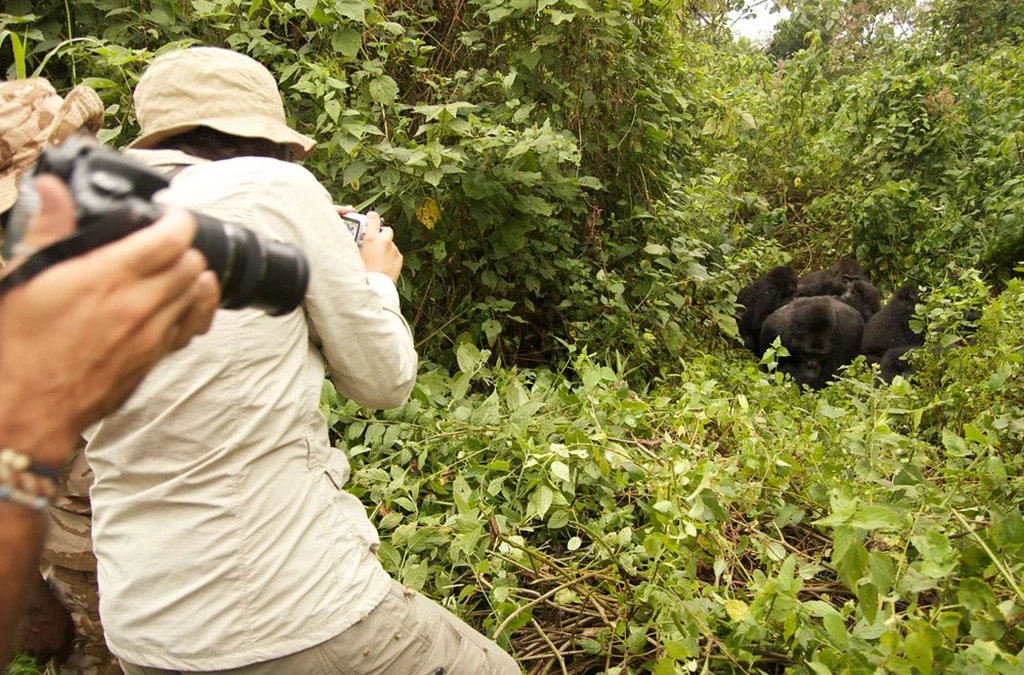
Uganda Gorilla Trekking Cost: Complete Price Guide
Uganda gorilla trekking cost is about much more than the price of a permit. Your final price is shaped by how many days you travel, the standard of your accommodation, the type of transport, how many people share the vehicle, the season, and any extra activities you add.
For a foreign non-resident, the standard gorilla permit costs US$800 per person. In the low season months of April, May and November, eligible foreign non-residents can currently get a permit for US$600. The permit is only one part of the journey, though. A 3-day Uganda gorilla safari can start from around US$1,300 – 1,600 per person for a budget-style trip, while mid-range and luxury safaris are priced according to the lodge, route and transport you prefer.
This guide shows where your money goes, what a safari package normally includes, how to keep costs sensible, and how to plan a budget that matches the kind of experience you want.
Uganda Gorilla Trekking Cost at a Glance
Use this table as a starting point for planning.
| Safari option | Approximate cost per person |
|---|---|
| 3-Day Budget Gorilla Safari | From $1,300 |
| 3-Day Mid-Range Gorilla Safari | From $1,600 |
| 3-Day Luxury Gorilla Safari | From $2,500 |
| 4-Day Gorilla & Golden Monkey Safari | From $1,700 |
| 5-Day Gorilla & Wildlife Safari | From $1,900 |
| Longer Gorilla & Wildlife Safari | $2,000 to $5,000+ |
| Standard Gorilla Permit | $800 |
| Low-Season Gorilla Permit | $600 |
| Gorilla Habituation Experience | $1,800 from January 2027 |
These prices are a guide, not fixed rates. Your final price depends on your travel dates, accommodation, group size, route, vehicle and activities.
Uganda Gorilla Permit Cost
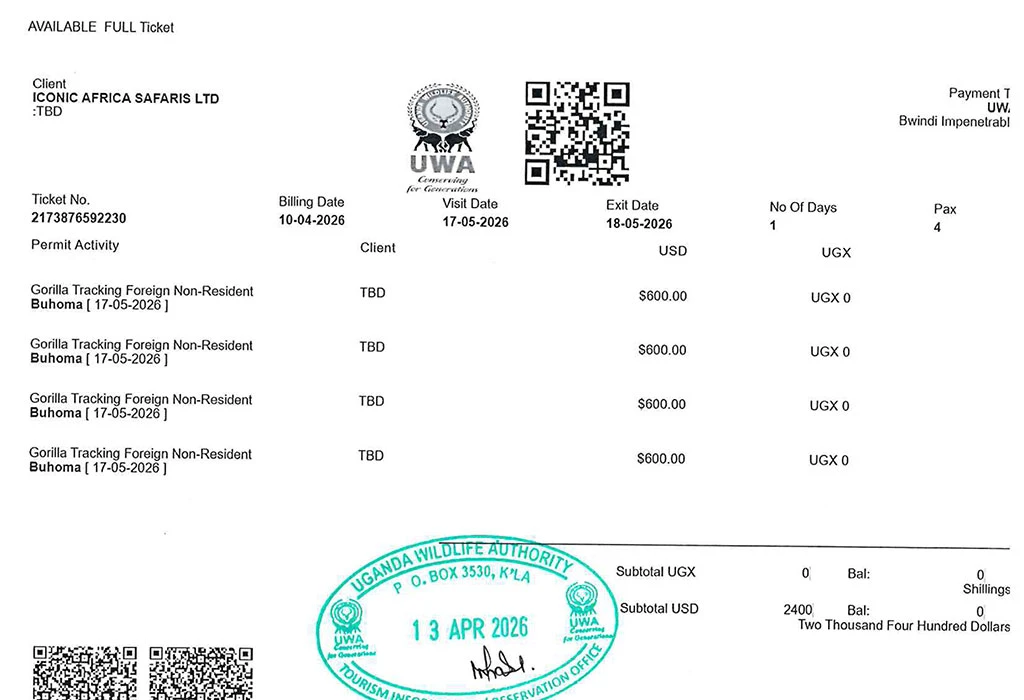
One of our May 2026 discounted gorilla permits — which were reserved for an Iconic Africa Safaris clients.
The gorilla permit is your ticket to the regulated trekking experience, and for most international travelers it is the largest fixed cost. The current standard rates are:
| Traveler category | Standard permit |
|---|---|
| Foreign non-resident | US$800 |
| Foreign resident | US$700 |
| Rest of Africa | US$500 |
| East African citizen | UGX300,000 |
These rates apply in both Bwindi Impenetrable National Park and Mgahinga Gorilla National Park, the two parks for gorilla trekking in Uganda.
Permit Prices in April, May and November
During these three months, the discounted rates are US$600 for foreign non-residents and US$500 for foreign residents. That is a saving of US$200 per person, or US$400 for a couple.
The trade-off is weather. These months tend to be wetter, so the trails can be muddy, though rain does not cancel treks. Discounted permits also come with specific booking conditions and cannot be rescheduled once issued, so confirm your dates carefully before buying.
What the Permit Includes
The permit covers the regulated gorilla tracking experience, not the whole safari. A trek can take roughly 2 to 7 hours, depending on where the gorillas are that day, and once the family is found you get one hour to observe them.
Accommodation, transport and international flights are separate, so you will need to arrange how to reach the trekking area and where to sleep the night before.
Where Your Money Goes
Beyond the permit, your budget covers the logistics of getting you to the forest and back comfortably.
- Accommodation. Options around Bwindi and Mgahinga range from simple budget properties to comfortable mid-range lodges and high-end safari lodges. Think about location as well as room quality, because a cheaper lodge that adds a long drive on trekking morning may not be the better value.
- Safari vehicle. Most private safaris use a 4×4, which is helpful because some roads to Bwindi and Mgahinga are steep, winding and rough. Different Bwindi sectors are reached by different routes: Nkuringo and Rushaga from the Kisoro side, and Buhoma by another route. The vehicle cost is normally shared among the travelers on your booking.
- Driver-guide and fuel. Your guide does far more than drive. They help with route planning, timing, lodge transfers and local knowledge, and on a private itinerary they stay with you for the whole road journey.
- Meals and water. Most packages include breakfast, lunch and dinner, with a packed lunch on long driving days. Safari vehicles usually carry drinking water, which is especially welcome on the long drive from Entebbe or Kampala. Check the exact inclusions, since some quotations leave out particular meals or drinks.
- Porter. Hiring a porter is optional, but many trekkers do. Porters carry your backpack and lend a steadying hand on steep or slippery sections, and the fee supports people living around the park. If you are unsure about your fitness, a porter can make the trek far more comfortable.
- Tips. Tips are normally separate from the package price. You may wish to thank your driver-guide, trekking staff, porter and lodge staff according to the service you receive.
Costs for a 3-Day Safari, Two Travelers and Solo Travelers
A 3-day safari is the most popular short itinerary. It gives you enough time to travel to southwestern Uganda, sleep near the forest, trek, and start the journey home.
| Expense | Budget | Mid-range | Luxury |
|---|---|---|---|
| Gorilla permit | $600 to $800 | $800 | $800 |
| Accommodation | Lower | Moderate | High |
| Transport | Shared cost | Private 4×4 | Private 4×4 |
| Meals | Included/selected | Usually included | Usually included |
| Guide | Included | Included | Included |
| Porter | Optional | Optional | Optional |
| Estimated package | From $1,300 | From $1,600 | From $2,500 |
For many travelers, the mid-range option is the best balance. You get a proper safari vehicle and a good lodge near the trekking area without paying the premium attached to the most exclusive properties. Luxury prices vary widely depending on the lodge, private arrangements, premium meals and added activities.
- Two travelers. Traveling as a pair improves the value of a private safari, because the vehicle, driver-guide and fuel are shared while each person pays for their own permit and accommodation. That is why quotations are often written as “per person based on two people sharing.” At roughly US$1,600 per person, two travelers would budget about US$3,200 for a mid-range trip.
- Solo travelers. Trekking alone is entirely possible, but it costs more per person because a private vehicle and guide are still needed for one traveler. If you want to bring the cost down, ask about joining a small group safari where one is available.
Gorilla Trekking Cost by Sector
Bwindi has four main trekking sectors: Buhoma, Ruhija, Rushaga and Nkuringo. Mgahinga is a separate park with its own trekking area. The permit price is the same wherever you trek, so the sector you choose does not change what you pay for the permit. It changes everything around it: the driving route, how long you spend on the road, the lodges available nearby, and what else you can fit into the trip. Those factors are what move your total cost up or down.
| Sector | Where it is | Permit (foreign non-resident) | What shapes your cost | Best suited to |
|---|---|---|---|---|
| Buhoma | Northern Bwindi | US$800 | A good range of accommodation across budgets, and a convenient approach from the north | First-time visitors and travelers who want plenty of lodge choice |
| Ruhija | Eastern Bwindi | US$800 | Works well when combined with other southwestern Uganda attractions, which can make the route more efficient | Birders and travelers building a longer itinerary |
| Rushaga | Southern Bwindi | US$800 | Reached through the Kisoro side, and convenient if you are arriving from Rwanda | Travelers wanting trekking or habituation, and those entering from Rwanda |
| Nkuringo | Southern Bwindi | US$800 | A more demanding journey, so allow for transport time and effort | Travelers who value dramatic mountain scenery |
| Mgahinga | Virunga Mountains | US$800 | Reached through Kisoro, with only about eight permits issued per day | Travelers adding golden monkey tracking or exploring the volcanic landscape |
The permit rates for foreign residents, travelers from the rest of Africa and East African citizens also stay the same across sectors, as do the discounted April, May and November permits.
How Your Sector Affects the Total Cost
- Transport. The further your sector is from your starting point, the more driving days and fuel your safari needs. A sector that suits your route can save a meaningful amount of time, which in turn keeps a short itinerary realistic.
- Accommodation. Some sectors offer a wider spread of lodges, from simple budget stays to high-end properties, while others have fewer options. More choice usually makes it easier to find a lodge that fits your budget, and staying close to your trekking starting point avoids long transfers on trekking morning.
- Itinerary fit. Your sector also decides what combines naturally with your trek. Rushaga and Mgahinga pair well with the Kisoro region and Lake Mutanda, Ruhija works for birding and wider southwestern Uganda routes, and Buhoma suits travelers approaching from the north.
- Permit availability. Permits are limited in every sector, so the sector you prefer may not have space on your dates. Being flexible about the sector can sometimes protect both your dates and your budget.
Buhoma
Buhoma is the original and best-known sector, with a good range of accommodation and easy access for itineraries approaching from the north. Its variety of lodges makes it a comfortable choice for first-time visitors on almost any budget.
Ruhija
Ruhija sits in eastern Bwindi and suits travelers who want to combine gorillas with other southwestern Uganda attractions. It is also known for birding, which makes it appealing if you want more from the forest than the gorilla trek alone.
Rushaga
Rushaga is in southern Bwindi and is a key sector for both trekking and habituation. It works especially well for travelers arriving through Kisoro or from Rwanda, and it is the natural base if you are considering the habituation experience.
Nkuringo
Nkuringo, also in the south, is known for its mountainous setting. The journey can be more demanding, but the scenery is part of the experience, and travelers who enjoy a more dramatic landscape often find it worth the extra effort.
Gorilla Trekking in Mgahinga Gorilla National Park

Mgahinga lies in the Virunga Mountains and offers a smaller-scale alternative to Bwindi. The park currently issues about eight gorilla trekking permits per day. It is a particularly good choice if you want to combine gorillas with golden monkey tracking or explore the volcanic landscape around Kisoro.
Gorilla Habituation Experience Cost
Habituation is different from ordinary trekking. Instead of one hour with the gorillas, you spend much longer with a group that is still being accustomed to human presence.
From January 1, 2027, the foreign non-resident habituation permit rises to US$1,800, and the foreign resident rate becomes US$1,600. The rest of Africa rate is US$1,000, and East African citizens pay UGX750,000. For most first-time visitors, standard trekking offers the better balance of cost and experience, while habituation suits travelers who specifically want an extended encounter.
Uganda vs Rwanda Gorilla Trekking Cost
Travelers often ask whether to trek in Uganda or Rwanda. The biggest difference is the permit: Uganda’s standard foreign non-resident permit is US$800, while Rwanda’s is US$1,500.
Uganda also lets you pair gorillas with destinations such as Queen Elizabeth National Park, Kibale Forest, Lake Bunyonyi, Murchison Falls, Jinja and Entebbe. Rwanda can be more convenient if you want a shorter route from Kigali to Volcanoes National Park. The right choice depends on your priorities, whether that is price, travel time, wildlife, accommodation or your wider East African itinerary.
Is Gorilla Trekking Worth the Cost?

For many travelers, yes. Gorilla tourism is a tightly controlled wildlife experience that involves conservation work, ranger protection, monitoring and careful management of visitor numbers. Your fee supports that system and the communities around the parks.
20% of annual park revenue is shared with communities surrounding protected areas, and in June 2025 more than UGX2.197 billion was distributed to communities around the Bwindi-Mgahinga Conservation Area. You are not simply paying for a forest walk. You are paying for access to one of the world’s best-managed wildlife encounters while helping protect the gorillas and their habitat.
How to Make Gorilla Trekking More Affordable
You do not need the cheapest safari to keep your budget under control. Focus on the costs you can actually adjust:
- Travel with a companion, so the vehicle and guide costs are split.
- Choose April, May or November, when the permit is US$200 cheaper per person.
- Pick a good mid-range lodge rather than the most expensive one in the region.
- Match your lodge to your trekking sector, avoiding long transfers on trekking morning.
- Keep the trip focused. A 3-day itinerary costs less than a 7-day one because you pay for fewer nights, meals and vehicle days.
- Add wildlife only if you have the time and budget, such as Queen Elizabeth National Park if you are already spending time in Uganda.
Sample Itineraries
3-Day Gorilla Safari
- Day 1: Entebbe or Kampala to Bwindi. Your driver-guide picks you up and you head to southwestern Uganda. The journey can take much of the day, and you arrive at your lodge ready for an early start.
- Day 2: Gorilla trekking. After breakfast, you go to the briefing point and set off with trained trackers and rangers. How long you walk depends on where the gorillas are. Once you find them, you spend your observation hour watching them in their natural forest home, then return to the lodge to rest.
- Day 3: Return journey. After breakfast, you travel back toward Kampala or Entebbe, or extend toward Queen Elizabeth National Park, Lake Bunyonyi or another destination.
4-Day Gorilla and Golden Monkey Safari
A four-day trip is ideal if you want a less rushed experience. A typical plan is Entebbe or Kampala to Kisoro on Day 1, gorilla trekking on Day 2, golden monkey tracking or a cultural experience on Day 3, and the return journey on Day 4. The extra time also lets you enjoy Lake Mutanda or the volcanic landscape.
5-Day Gorilla and Wildlife Safari
With five days, you can pair Bwindi with Queen Elizabeth National Park: mountain gorillas in the forest, then savanna wildlife, game drives and boat-based viewing. A sample route is Entebbe, Queen Elizabeth National Park, Bwindi and back to Entebbe, or the reverse, depending on permit availability.
What Is Included in a Safari Package?
A well-prepared quotation should state every inclusion clearly. A typical package may include:
- Gorilla trekking permit
- Accommodation
- Breakfast, lunch and dinner
- Private 4×4 safari vehicle with a professional driver-guide
- Fuel and drinking water
- Park fees listed in the itinerary
- Airport or hotel transfers
- Activities specifically listed in the itinerary
At Iconic Africa Safaris, quotations are built around your exact itinerary, accommodation category and number of travelers, rather than offering one price for everyone.
What Is Not Included
Unless a quotation says otherwise, budget separately for international flights, your Uganda visa, travel insurance, tips, porter fees, alcoholic drinks, laundry, souvenirs, additional activities, extra nights and other personal expenses.
Always compare inclusions and exclusions before comparing prices. A US$1,400 package and a US$1,600 package are not necessarily different in value if the cheaper one leaves out items the other includes.
Age Limit and Fitness
The minimum age for standard gorilla trekking in Uganda is 15 years, which is worth knowing when planning a family safari. Families with younger children can enjoy wildlife viewing, cultural activities and boat trips instead.
Trekking requires moderate fitness. You may walk through steep slopes, thick vegetation, muddy trails and wet conditions, and the distance depends on where the gorillas are on your day. It is worth preparing physically before you travel.
What to Pack for Gorilla Trekking
- Waterproof hiking boots
- Long trousers and a long-sleeved shirt
- Lightweight waterproof jacket
- Small backpack and drinking water
- Insect repellent, sunscreen and a hat
- Gardening or trekking gloves
- Walking poles
- Camera, extra batteries or a power bank, and waterproof protection for electronics
- Binoculars
- Face mask
- Personal medication
A face mask is useful because you will be close to endangered mountain gorillas, and following the rangers’ health instructions is important.
When to Book Your Gorilla Safari in Uganda
Book as early as you can if your dates are fixed. Permits are limited, and the number of visitors allowed to track each habituated group is regulated, so availability can shape your whole itinerary. Early booking matters most for Christmas and New Year, December, Easter, July and August, popular trekking sectors and large private groups. Once your permit date is secured, accommodation and transport can be arranged around it.
Ready to Book Your Uganda Gorilla Safari with Iconic Africa Safaris?
Iconic Africa Safaris offers three simple, reliable ways to secure your next unforgettable Ugandan adventure today. Simply complete our quick online booking form to start planning your dream safari experience right away. Our friendly team also welcomes direct emails at info@iconicafricasafaris.com to discuss your specific travel plans and preferences. For WhatsApp messages and calls, tap the green WhatsApp icon in your screen’s bottom right corner anytime.
Our driver-guides are the trip managers guests trust most — trained professionals, all skilled interpreters of wildlife and culture. They stay with travellers from the first airport pickup to the final wave-off, keeping each day running smoothly and safely.
Frequently Asked Questions
How much is a gorilla permit in Uganda?
The standard gorilla permit costs US$800 for foreign non-residents, US$700 for foreign residents, US$500 for travelers from the rest of Africa and UGX300,000 for East African citizens. The same rates apply in Bwindi and Mgahinga, so you pay the same price whichever park or sector you choose. In April, May and November, foreign non-residents can currently get the permit for US$600 and foreign residents for US$500.
How much is gorilla trekking in Uganda in 2026?
The total depends on how you travel, because the permit is only part of the cost. A complete 3-day safari can start at around US$1,300 per person for a budget-style trip, while a comfortable mid-range safari starts from about US$1,600. Luxury safaris are priced higher and depend mainly on the lodge you choose. Longer itineraries that add golden monkeys or other wildlife cost more because they include extra nights, meals and vehicle days.
Is gorilla trekking cheaper in Uganda or Rwanda?
On permit cost alone, Uganda is generally the cheaper choice: US$800 for a foreign non-resident, compared with US$1,500 in Rwanda. Over a whole trip, the gap can be even more noticeable if you choose the low-season permit in Uganda. Rwanda may suit you better if you want a shorter route from Kigali to Volcanoes National Park, so the best choice depends on your priorities as well as your budget.
What is the cheapest month for gorilla trekking in Uganda?
April, May and November are the most affordable months. During this period, eligible foreign non-residents can currently get the permit for US$600 instead of US$800, a saving of US$200 per person. These months are usually wetter, so expect some rain and muddy trails, and remember that discounted permits cannot be rescheduled once issued.
Can I trek gorillas without a tour operator?
International visitors should arrange permits and safari logistics through a licensed operator or another authorized channel. Permits are limited and sell out for busy dates, and reaching the trekking areas also means arranging a suitable vehicle, accommodation near your sector and a reliable route. A licensed operator handles these details together, so your permit date, lodge and transport all line up.
How many days do I need for Uganda gorilla trekking?
Three days is the practical minimum when you start from Entebbe or Kampala. It gives you one day to travel to the forest, one day to trek, and one day to return. If you would like a more relaxed pace, four or five days work better, because they leave room for golden monkey tracking, Queen Elizabeth National Park, Lake Bunyonyi or simply more time to enjoy the scenery.
Is a porter necessary?
No, a porter is optional. Many travelers choose one anyway, because porters carry your backpack and offer a helping hand on steep, slippery or muddy sections of the trail. If you are unsure about your fitness, hiring a porter can make the trek more comfortable, and the fee also supports people living around the park.
Does the permit include accommodation or transport?
No. The permit covers the gorilla trekking experience only. Your accommodation, vehicle, driver-guide, meals and transfers are arranged separately, which is why a safari package costs more than the permit itself. When you compare quotations, check that accommodation and transport are clearly listed so you know exactly what you are paying for.
How long does gorilla trekking take?
A trek usually lasts between 2 and 7 hours, depending on where the gorilla family is on the day. Once you find the gorillas, you spend one hour with them. Some days the family is close to the starting point and the walk is short, while on others you may trek further through steep, dense or muddy forest, so it helps to prepare physically before you travel.
Can children go gorilla trekking?
The minimum age for gorilla trekking in Uganda is 15 years, so younger children cannot take part. Families traveling with younger children can still enjoy Uganda through wildlife viewing, cultural activities, boat trips and other nature experiences. It is best to plan these activities in advance so the whole family has something memorable to look forward to.
Is gorilla trekking worth US$800?
For travelers who want to see mountain gorillas in the wild, most find that it is. The experience is tightly managed to protect the gorillas, and your fee supports conservation work and the communities living around the parks. Many visitors describe the hour spent with a gorilla family as one of the most memorable wildlife encounters in Africa, which is why the price feels justified for those who make the trip.
Final Takeaway
The cost of gorilla trekking in Uganda is best understood as the permit plus the logistics around it. Budget US$800 for the standard permit, or US$600 in April, May and November, then add accommodation, transport, meals and any extras. For three days, a realistic starting point is about US$1,300 per person, with a comfortable mid-range trip from around US$1,600.
The best-value trip is not necessarily the cheapest one. A well-planned itinerary puts you in the right sector, matches your accommodation to your budget and avoids unnecessary driving. If you are already traveling in Uganda, adding gorillas to a wildlife safari makes the journey a far more complete East African experience.