
Kigali to Bwindi: The Ultimate Journey to Uganda’s Gorillas
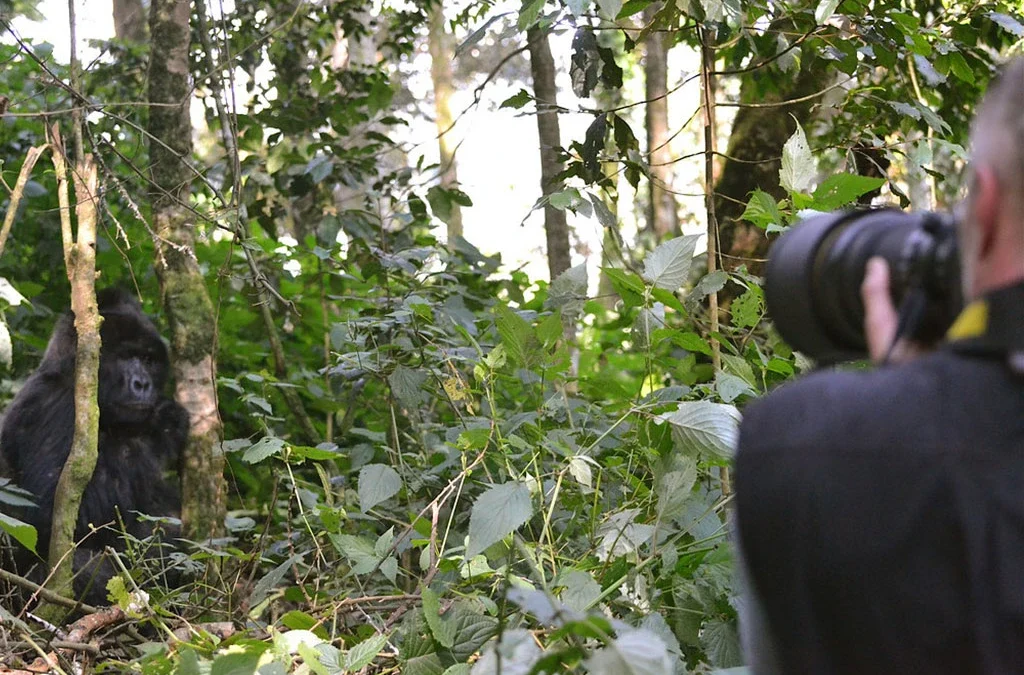
Kigali to Bwindi: The Shorter Road to Uganda’s Mountain Gorillas
For travelers arriving in Rwanda, Kigali to Bwindi is one of the most practical ways to reach Uganda’s mountain gorillas without first backtracking toward Entebbe or Kampala. Kigali International Airport sits within easy road reach of southwestern Uganda, and the journey becomes especially convenient when your gorilla permit is for Rushaga or Nkuringo, the two southern sectors of Bwindi Impenetrable National Park. Depending on the sector, border crossing and road conditions, most travelers cover the distance in half a day rather than needing a full day on the road.
What makes this route worth planning around isn’t just the shorter distance — it’s the way it stitches two East African countries into one continuous safari. You leave Kigali on Rwanda’s well-maintained highland roads, cross into Uganda’s volcanic landscapes, and wind through villages, farmland and forest edges before arriving at the misty slopes of Bwindi. It’s a natural extension for anyone who’s already spending time in Rwanda and wants to continue straight into a Uganda gorilla trek.
This guide walks through the journey in practical detail: which border to use, how long the drive really takes, which Bwindi sector suits your plans, what to expect at the Rwanda–Uganda border, current gorilla permit prices, where to stay, what to pack, when to go, and how to structure a two- or three-day gorilla safari.
Why Travel from Kigali to Bwindi for Gorilla Trekking?

Kigali to Bwindi isn’t a fallback option — it’s a deliberate cross-border safari route that makes excellent sense for travelers whose international flights connect conveniently through Rwanda.
Bwindi sits in southwestern Uganda, close to the Rwandan border, and Uganda Wildlife Authority (UWA) organizes gorilla trekking across four sectors: Buhoma, Ruhija, Rushaga and Nkuringo. Treks require moderate fitness and can run anywhere from two to seven hours before visitors are given a regulated hour to observe a habituated gorilla family.
The southern sectors matter most for this route. The Cyanika border gives direct access toward Kisoro and southern Bwindi, making Rushaga and Nkuringo the natural choices for anyone traveling from Kigali. The northern sectors — Buhoma in particular — are better reached via the Gatuna/Katuna crossing and Kabale.
In other words, the real planning question isn’t “how far is Bwindi from Kigali?” It’s:
Which Bwindi sector is my gorilla permit for?
That single detail determines your border crossing, road route, lodge choice and realistic transfer time — so it should be the first thing you lock in.
Kigali to Bwindi Distance and Driving Time
There’s no single Kigali to Bwindi distance, because Bwindi is a large forest with four trekking sectors spread across different corners of the park. Someone heading to Rushaga follows a different route than someone heading to Buhoma.
For the southern sectors, the Cyanika route through Musanze and Kisoro is the most direct. On a good day, Kigali to Rushaga takes roughly four to five hours; Nkuringo can add another hour or so. The northern sectors, reached via Gatuna/Katuna and Kabale, generally take longer.
| Destination | Main border route | Typical road journey |
|---|---|---|
| Rushaga | Cyanika | About 4–5 hours |
| Nkuringo | Cyanika | About 4–5.5 hours |
| Ruhija | Gatuna/Katuna | About 5–6.5 hours |
| Buhoma | Gatuna/Katuna | About 5–7 hours |
These are planning ranges, not guaranteed arrival times. Border queues, road works, rain and the exact location of your lodge can all add time, so a well-built Kigali to Bwindi itinerary always carries a buffer rather than promising an exact arrival hour.
The southern route also happens to be genuinely scenic. Leaving Kigali, the land climbs toward Rwanda’s volcanic highlands before the road meets the border at Cyanika. On the Ugandan side, the drive continues through Kisoro and into the forested mountains ringing Bwindi.
Kigali to Bwindi Route: Choosing the Right Border Crossing
Two crossings matter for this journey: Cyanika and Gatuna/Katuna. They aren’t interchangeable — the right one depends entirely on your trekking sector.
1. Cyanika Border: Best for Southern Bwindi
Cyanika connects Rwanda’s Musanze area with Uganda’s Kisoro region, giving direct access to Rushaga and Nkuringo.
The typical route runs:
Kigali → Musanze → Cyanika Border → Kisoro → Bwindi
For a Rushaga trek, this is about as convenient as crossing into Uganda gets — roughly four hours in good conditions, plus time for border formalities. The scenery earns its keep too: Rwanda’s cultivated hills give way to the volcanic slopes around Musanze, and the Ugandan side opens into the rugged highlands around Kisoro.
If your permit is for Rushaga or Nkuringo, Cyanika should be your default choice.
2. Gatuna/Katuna Border: Northern Bwindi Access
The second route runs through Gatuna on the Rwandan side and Katuna on the Ugandan side:
Kigali → Gatuna/Katuna → Kabale → Ruhija or Buhoma
This is the route for permits allocated to Ruhija or Buhoma. Kigali to the border area itself takes a couple of hours; the onward drive to northern Bwindi via Kabale adds meaningfully more.
Gatuna/Katuna is also a major commercial crossing, so expect more truck traffic than at the quieter Cyanika post — another reason not to build your schedule around a razor-thin border connection.
Cyanika vs Gatuna/Katuna at a Glance
| Cyanika | Gatuna/Katuna |
|---|---|
| Best for Rushaga and Nkuringo | Best for Buhoma and Ruhija |
| Routes through Musanze and Kisoro | Routes through Kabale |
| Direct access to southern Bwindi | Access point for northern Bwindi |
| Ideal for a short Kigali gorilla trip | Better suited to longer Uganda itineraries |
The rule of thumb: book the gorilla permit first, then build the road route around it.
What Happens at the Rwanda–Uganda Border?
Because this route crosses an international border, treat immigration as part of the trip planning — not an afterthought.
You’ll clear Rwandan immigration on exit and Ugandan immigration on entry, so have your passport, visa and supporting documents ready before you reach the crossing.
If you need a Ugandan visa, arrange it in advance online. Uganda’s standard tourist visa runs around US$50, while the East African Tourist Visa — which covers Uganda, Kenya and Rwanda, is valid for 90 days, and permits multiple entries across all three countries — costs about US$100. The country where you first enter should be the one issuing the visa.
You’ll also want your yellow-fever vaccination certificate on hand, since it’s a standard supporting document for these visa categories.
Requirements can vary by nationality and change over time, so it’s worth double-checking current rules before you travel.
What Documents Should You Carry?
Keep these together in an easily accessible bag rather than buried in your main luggage:
- Valid passport
- Ugandan visa or visa authorization (where required)
- East African Tourist Visa documentation, if using that visa
- Yellow-fever vaccination certificate
- Gorilla permit confirmation
- Safari itinerary and accommodation confirmations
- Travel insurance
- Copies of key documents
- Emergency contact details
- Some small cash for incidentals
Rwanda has its own entry rules too: citizens of all countries can get a visa on arrival, with certain nationalities and East African citizens exempted or given special arrangements. For a Kigali-starting trip, the key is having the right paperwork for both sides of the crossing.
Gorilla Trekking in Bwindi: What Makes the Experience Different?
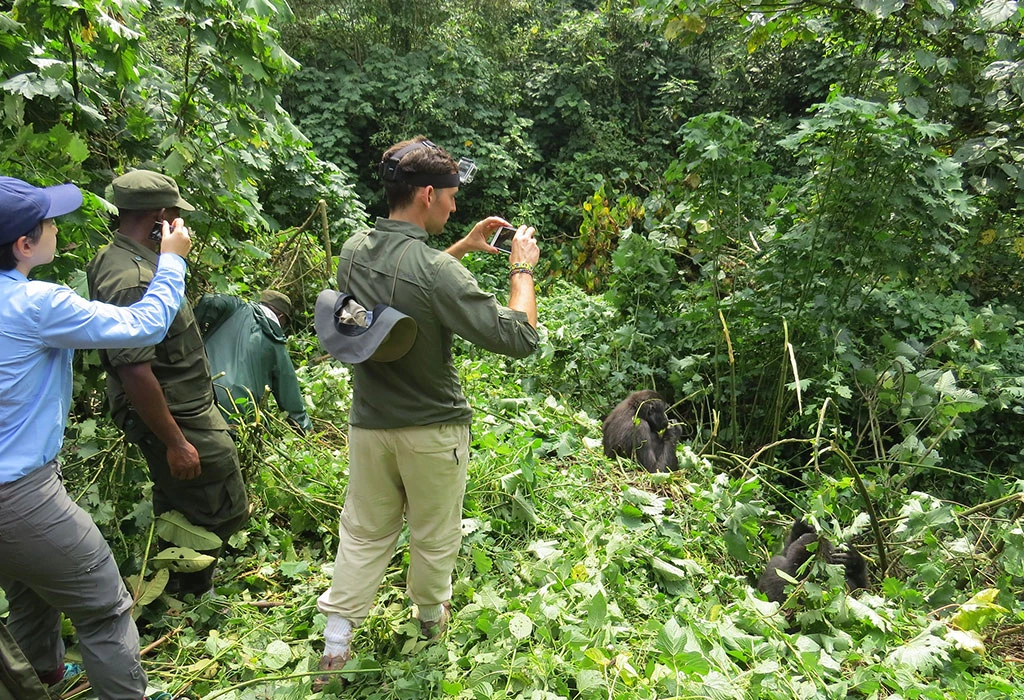
Bwindi isn’t a drive-through savanna safari — the gorilla experience happens on foot, inside a genuinely ancient mountain rainforest.
UWA runs trekking across four sectors — Buhoma, Ruhija, Rushaga and Nkuringo — and treks can last anywhere from two to seven hours depending on where the gorilla family happens to be that day, followed by one regulated hour of observation once you find them.
That variability is exactly why preparation matters. Trails can be steep and muddy, vegetation dense, and the walking sustained at altitude. Some days deliver a manageable forest walk; others call for several hours of demanding hiking. No operator can honestly promise you a short trek — the gorillas set the terms.
Choosing Between Bwindi’s Four Gorilla Sectors
Rushaga
Rushaga is the most practical sector for a Kigali to Bwindi trip, thanks to its direct link via Cyanika. Located in southern Bwindi, it’s become an important hub for both standard trekking and gorilla habituation experiences — a good fit if you want to minimize road time without compromising the gorilla experience itself.
Nkuringo
Also in southern Bwindi and reachable via Cyanika–Kisoro, Nkuringo trades a bit more road time for spectacular highland scenery and a more rugged mountain setting. It suits travelers who don’t mind a steeper final approach in exchange for the views.
Buhoma
Bwindi’s original, most-developed sector, Buhoma is reached more naturally via Gatuna/Katuna and Kabale from Kigali. It pairs well with other forest activities and southern Uganda stops, but expect a noticeably longer transfer than a Rushaga-based itinerary.
Ruhija
On Bwindi’s eastern edge and also approached via Kabale, Ruhija appeals to travelers who want to combine gorilla trekking with birding and forest walks. As with every sector, your permit decides where you start.
| Sector | Kigali access | Main route | Best planning use |
|---|---|---|---|
| Rushaga | Very convenient | Cyanika–Kisoro | Short Kigali gorilla safari |
| Nkuringo | Convenient | Cyanika–Kisoro | Gorilla trek plus mountain scenery |
| Ruhija | Longer | Gatuna–Kabale | Gorilla and forest/birding combination |
| Buhoma | Longer | Gatuna–Kabale | Northern Bwindi and wider Uganda safari |
Uganda Gorilla Permit Cost from Kigali
Reaching Uganda’s gorillas via Kigali means you skip the need to fly into Entebbe altogether — one of the biggest draws of this route.
For 2026–2027, UWA’s revised tariff structure (effective 1 January 2027) sets standard gorilla tracking at US$800 for foreign non-residents, US$700 for foreign residents, US$500 for other African residents, and UGX 300,000 for East African citizens. Gorilla habituation permits are priced at US$1,800, US$1,600, US$1,000 and UGX 750,000 respectively.
UWA has also introduced discounted low-season permits for April, May and November — US$600 for foreign non-residents and US$500 for foreign residents — though these cannot be rescheduled once booked. Note too that the old seven-day unpaid reservation window was suspended from March 2026: permits are now secured only once paid in full.
| Traveler category | Standard gorilla tracking | Low season (Apr/May/Nov) |
|---|---|---|
| Foreign non-resident | US$800 | US$600 |
| Foreign resident | US$700 | US$500 |
| Rest of Africa | US$500 | Not Applicable |
| East African citizen | UGX 300,000 | Not Applicable |
Permit prices sit separately from transport, accommodation, meals, visas and other safari costs.
How Much Does a Kigali to Bwindi Gorilla Safari Cost?
There’s no single number here, since the total depends on group size, accommodation level, vehicle arrangement and trip length — but a rough per-person estimate for a 2–3 day private safari (permit included) looks something like this:
| Travel style | Approx. cost per person (2–3 days, permit included) | What’s typically included |
|---|---|---|
| Budget | US$1,000 – 1,400 | Shared vehicle, simple lodges/guesthouses, standard permit |
| Mid-range | US$1,500 – 2,200 | Private 4×4 with driver-guide, comfortable forest lodges, full board |
| Luxury | US$2,500 – 4,000+ | Private vehicle, premium lodges, extras like habituation experiences |
These are planning estimates rather than fixed quotes — exact pricing shifts with season, group size and the specific lodges and operator you choose. A useful way to budget is to break it into categories:
| Main cost | What affects the price |
|---|---|
| Gorilla permit | Nationality/residency and trekking season |
| Transport | Private vehicle, route and number of days |
| Accommodation | Budget, mid-range or luxury |
| Meals | Lodge plan and itinerary |
| Border/visa costs | Nationality and visa type |
| Activities | Community, forest and cultural experiences |
| Flights | International and regional arrangements |
For travelers already in Kigali, this route is efficient precisely because it removes the need for a separate domestic flight into southwestern Uganda.
Best Time for Kigali to Bwindi Gorilla Trekking
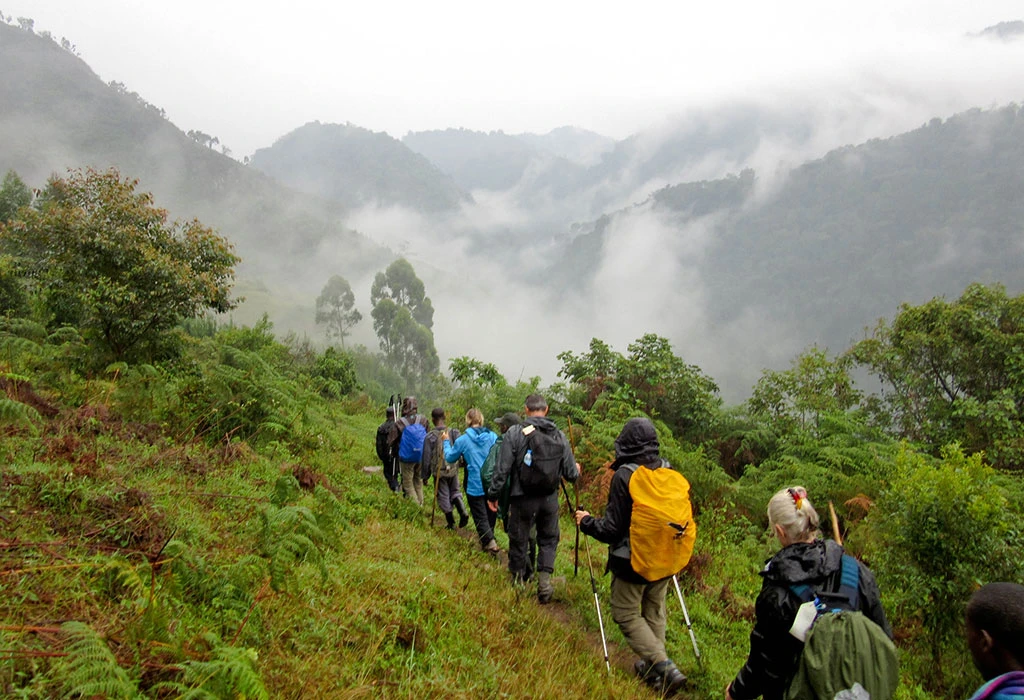
Bwindi is a rainforest, so it’s viable year-round — but the season affects road conditions and trekking comfort.
Drier periods generally mean firmer trails and easier road access, though rain is always possible. Wetter months bring muddier trails but also lower demand and, in some months, discounted permits — UWA’s low-season rates for April, May and November are a direct response to this.
| Period | Practical consideration |
|---|---|
| January–February | Generally good for trekking and road travel |
| March | Rainfall increasing |
| April–May | Low-season permits; wetter conditions |
| June–August | Peak travel period; book permits early |
| September–October | Good balance, with some variable rain |
| November | Low-season permit rates; rain likely |
| December | High festive-season demand |
Don’t assume “dry season” means no rain, or “wet season” means constant downpours — Bwindi’s weather can turn quickly either way.
What Is the Kigali to Bwindi Journey Actually Like?
The drive is a gradual shift in scenery. Kigali starts things off as a polished, hilly capital with paved roads and dense urban activity. Heading northwest, the landscape opens into cultivated hills and shifting elevation.
Near Musanze, the volcanic character of the Virunga region takes over — dramatic peaks framing the road toward the border. Once you cross into Uganda, the drive continues through Kisoro and into the mountains surrounding Bwindi, where roads narrow, the terrain steepens, and forest starts to dominate the view.
Treat this leg as part of the safari experience, not just a transfer between two points on a map.
Is Kigali or Entebbe Better for a Bwindi Gorilla Trek?
It depends on where your international trip starts and which sector you’re trekking in.
If you’re already in Rwanda, or your flights route conveniently through Kigali, there’s little reason to detour north or east toward Entebbe first. If you’re flying directly into Uganda — especially with Bwindi as part of a longer itinerary through Queen Elizabeth, Kibale or Murchison Falls — Entebbe remains the more logical starting point.
| Starting point | Main advantage | Best suited to |
|---|---|---|
| Kigali | Shorter overland access to southwestern Uganda | Rwanda + Uganda combinations |
| Entebbe | Direct start for a wider Uganda itinerary | Multi-park Uganda safaris |
This route makes the most sense when Volcanoes National Park, Akagera or a broader Rwanda itinerary are already on your list.
Can You Combine Bwindi with Queen Elizabeth National Park?
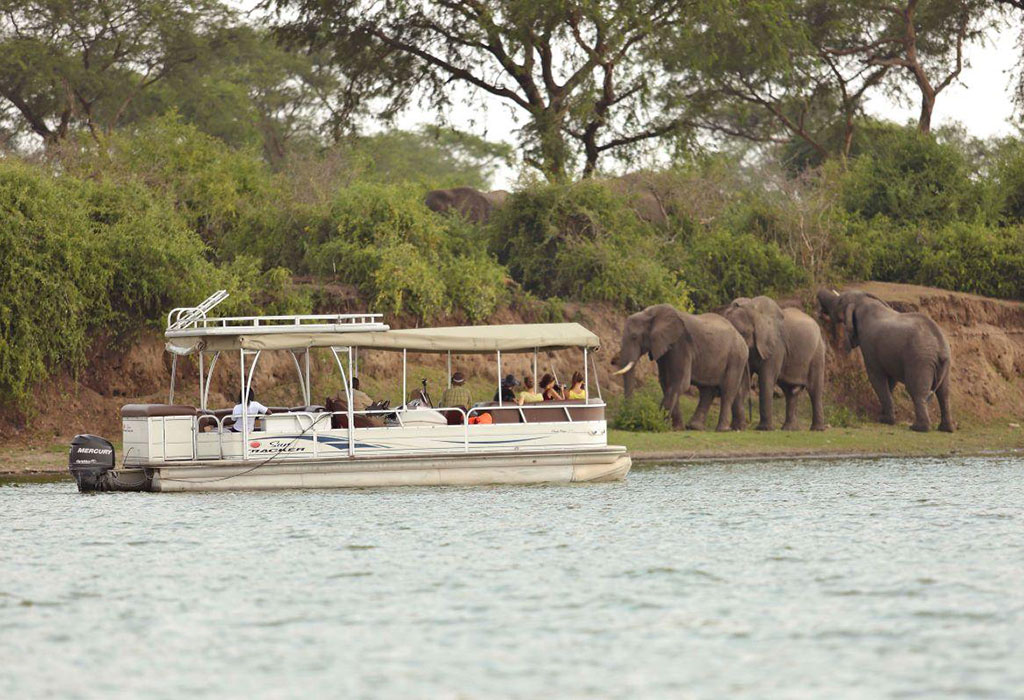
Yes — a longer Uganda leg can continue from Bwindi to Queen Elizabeth National Park for game drives and the Kazinga Channel boat cruise:
Kigali → Bwindi → Queen Elizabeth → Kigali or Entebbe
This adds classic savanna wildlife viewing to the gorilla experience and works especially well as a 5-day-plus itinerary.
A Practical 2-Day Kigali to Bwindi Gorilla Safari
Day 1: Kigali to Bwindi
Leave after breakfast for the appropriate border. For Rushaga or Nkuringo, that’s the Musanze–Cyanika–Kisoro route. Clear immigration, continue to your lodge, and keep the rest of the day relaxed — trekking takes energy, and this isn’t the day to pile on extra activities after a long journey.
Day 2: Gorilla Trekking and Return
Early breakfast, then the briefing at the trailhead. The trek’s length depends entirely on where your assigned gorilla family is that day. Once located, you get the regulated observation hour before heading back out and returning to Kigali.
This tight schedule suits travelers with limited time who are comfortable moving fast.
A 3-Day Kigali to Bwindi Gorilla Safari
Day 1: Kigali to Bwindi
Travel to your border crossing — Cyanika for Rushaga/Nkuringo, Gatuna/Katuna–Kabale for Ruhija/Buhoma — check into your lodge, and rest.
Day 2: Gorilla Trekking
Early breakfast, park briefing, and the trek itself — anywhere from two to seven hours depending on the gorillas’ location that day — followed by your hour of observation. Return to the lodge for a well-earned meal.
Day 3: Bwindi to Kigali
Head back to Kigali, timed around your onward flight. This structure gives international travelers a comfortable, unrushed gorilla trip without committing to a longer Uganda safari.
A 4-Day Kigali to Bwindi Extension
Four days takes the pressure off entirely:
Day 1: Kigali arrival or city exploration
Day 2: Kigali to Bwindi
Day 3: Gorilla trekking
Day 4: Bwindi to Kigali
This works particularly well if your international flight lands in Kigali late in the day, and it leaves room to add a community or cultural experience near Bwindi if time allows.
Where to Stay Near Bwindi

Nkuringo Bwindi Gorilla Lodge
Choose your lodge according to your trekking sector — this is one of the most important lessons in planning this trip. A lodge that looks close on a map can still mean a long, winding drive because of Bwindi’s mountainous terrain. Don’t book on price alone; weigh distance from the briefing point, road access, meal arrangements and overall comfort too.
Here’s a practical starting shortlist by sector and budget:
Rushaga
- Mid-range: Ichumbi Gorilla Lodge — about 12 minutes from the Rushaga trailhead, with forest-view cottages and occasional gorilla sightings from the balcony
- Luxury: Gorilla Safari Lodge and Chameleon Hill Lodge, both well positioned for early-morning briefings
- Budget: Trekkers Tavern Cottages and Rushaga Gorilla Havens Lodge
Nkuringo
- Luxury: Nkuringo Gorilla Lodge — Uganda’s highest lodge, with sweeping Virunga views and private cottages with log fires
- Luxury/mid-range: Trackers Safari Lodge — rustic-luxury cottages with an African-themed, romantic feel
- Budget: Nkuringo Gorilla Camp and Gorilla Mist Camp, both simple but well placed near the trailhead
Buhoma
- Luxury: Buhoma Lodge, Mahogany Springs Lodge, and Bwindi Lodge — all clustered near the main trailhead with excellent forest views
- Mid-range/budget: Buhoma Community Rest Camp, a simpler option run with community involvement
Ruhija
- Mid-range: Bakiga Lodge and Ruhija Gorilla Safari Lodge, both solid, well-run options
- Budget: Gift of Nature Lodge and Agandi Uganda Eco Lodges
Rushaga and Buhoma have the widest range of accommodation overall, while Ruhija and Nkuringo have fewer options — so if your permit is for one of those two, it’s worth booking your lodge early.
What to Pack for Kigali to Bwindi
You’re packing for both city travel and rainforest trekking, so plan for both.
- Essential clothing: lightweight long-sleeved shirts, long hiking trousers, a waterproof jacket, a warm fleece, sturdy hiking boots, spare socks, waterproof trousers, comfortable evening wear, and a hat.
- Trekking gear: a small daypack, reusable water bottle, walking poles, garden gloves (for grabbing vegetation), a face mask, insect repellent, sunscreen, personal medication, camera with spare batteries or a power bank, waterproof bags for electronics, and binoculars.
A waterproof backpack cover earns its space — rain in Bwindi can arrive without warning. And don’t pack only for Kigali’s warm, urban climate; Bwindi is cooler, wetter, and physically more demanding.
How Difficult Is Gorilla Trekking in Bwindi?
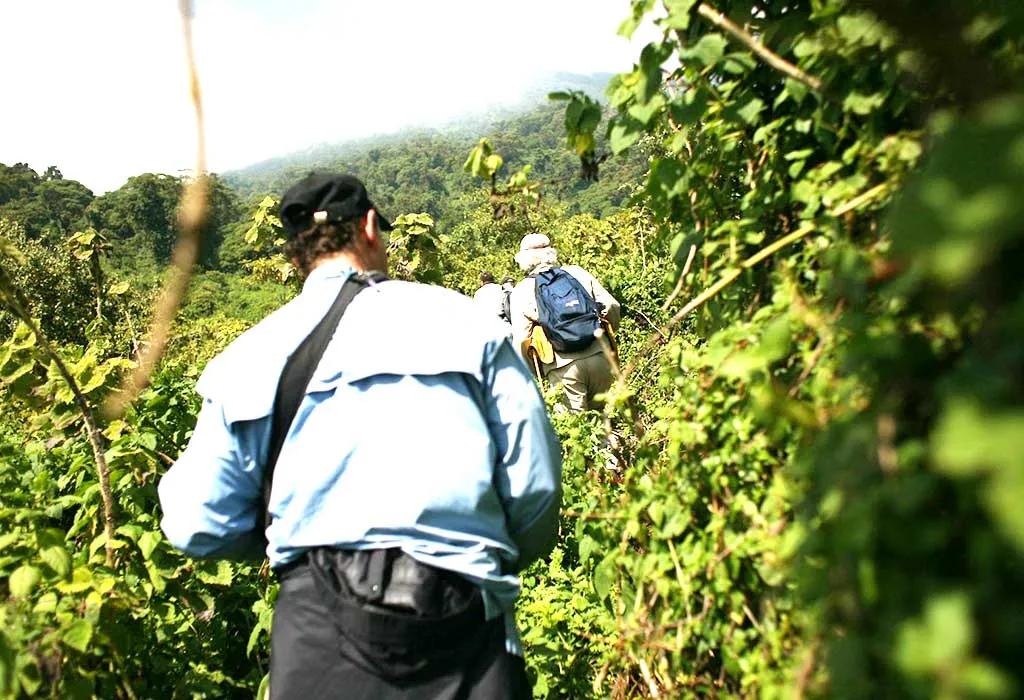
UWA describes the trek as requiring moderate fitness, with treks running two to seven hours — but the hours are only part of the story. Steep slopes, mud, roots, dense vegetation and altitude all shape how demanding a given day feels.
Useful preparation before your trip: regular long walks, stair climbing, hiking on uneven ground, gradually building endurance, breaking in your boots beforehand, and practicing with a loaded daypack. If you have mobility concerns, flag them ahead of time so the right arrangements — including porters — can be made.
Gorilla Trekking Rules to Remember
- Follow ranger instructions at all times
- Never touch the gorillas
- Never feed wildlife
- Keep noise to a minimum
- Maintain the required viewing distance
- Skip the trek if you have a potentially infectious respiratory illness — gorillas are highly susceptible to human disease
The point of the trek isn’t proximity for its own sake — it’s observing a wild gorilla family while disturbing them as little as possible.
Combining Kigali, Bwindi and Volcanoes National Park
One of the strongest features of this route is stitching together primate experiences across both countries:
Kigali → Volcanoes National Park → Cyanika → Bwindi → Kigali
A longer version can also fold in Kigali city touring, golden monkey trekking, Dian Fossey-related sites, Lake Bunyonyi, Queen Elizabeth National Park, Kibale Forest and chimpanzee trekking — turning the Rwanda–Uganda border crossing into a single continuous adventure rather than two separate trips.
Why Book Your Gorilla Permit Before Finalizing the Road Trip?
The permit is the anchor for everything else. Once your trekking date and sector are confirmed, transport and lodging fall into place around it — not the other way around.
Booking a lodge first is a common mistake, since it doesn’t guarantee a permit will be available for the nearest sector on your preferred date. And with UWA now requiring full payment to secure a permit (rather than the old seven-day hold), early planning matters more than ever for travelers working around fixed flights.
Why a 4×4 Vehicle Matters on the Kigali to Bwindi Route
The main roads between Kigali and the border are generally smooth, but the final stretch into Bwindi runs through mountainous terrain that can get rough — especially after heavy rain. A 4×4 offers better clearance and stability, keeps luggage secure, and gives you room to enjoy the scenery along the way. For private trips, a 4×4 Land Cruiser with an experienced driver-guide is the practical standard, particularly if your itinerary continues into other Uganda parks.
Practical Tips for a Smooth Kigali to Bwindi Journey
- Confirm your sector first — don’t plan the route until you know if it’s Rushaga, Nkuringo, Ruhija or Buhoma
- Build in time buffers — don’t count on a perfect border crossing
- Keep documents accessible — passport, visa and vaccination certificate within easy reach
- Carry some small-value cash for minor expenses
- Pack for shifting temperatures — Kigali, the highlands and Bwindi each feel different
- Stay flexible on trekking day — the gorillas set the schedule, not you
- Use an experienced driver-guide — local knowledge matters when conditions shift
Is Kigali to Bwindi Safe for Tourists?
Yes, with the usual precautions. This is a well-established tourism corridor, but stick to recognized border crossings, carry proper documentation, and follow instructions from immigration officers and safari staff. Avoid informal border crossings, don’t exchange money with strangers offering “special rates,” keep your passport secure, and use established accommodation. In the forest, stay with your ranger-guided group and follow park regulations at all times.
Who Should Choose Kigali to Bwindi?
This route works especially well for:
- Travelers already visiting Rwanda
- Anyone flying internationally into Kigali
- Couples looking for a short, efficient gorilla safari
- Honeymooners combining Rwanda and Uganda
- Families planning a private East African trip
- Photographers drawn to gorillas and highland scenery
- Travelers short on time
- Anyone combining Volcanoes National Park with Bwindi
- Travelers who’d rather skip Entebbe entirely
It’s less useful if your entire trip is centered on central or northern Uganda — in that case, starting from Entebbe likely makes more sense.
Kigali to Bwindi: Frequently Asked Questions
How far is Kigali from Bwindi?
It depends on the sector. Southern sectors (Rushaga, Nkuringo) run roughly four to five hours via Cyanika; northern sectors (Buhoma, Ruhija) take five or more hours via Gatuna/Katuna and Kabale.
Which border should I use from Kigali to Bwindi?
Cyanika for Rushaga or Nkuringo; Gatuna/Katuna for Buhoma or Ruhija.
Can I travel from Kigali to Bwindi in one day?
Yes, especially for the southern sectors — just build in time for immigration, road conditions and rest before your trek.
Can I do a two-day gorilla safari from Kigali?
Yes — transfer on day one, trek on day two, return to Kigali afterward. A three-day version is more comfortable for most travelers.
How much is a Uganda gorilla permit?
Standard tracking runs US$800 for foreign non-residents (2026–2027 rates), with lower tiers for residents and East African citizens, and discounted US$600 permits in April, May and November.
Is the Uganda gorilla permit cheaper than Rwanda’s?
Rates shift over time on both sides, so it’s worth checking current official pricing before comparing.
Is Kigali closer to Bwindi than Entebbe?
For the southern sectors especially, yes — significantly so.
Which Bwindi sector is closest to Kigali?
Rushaga and Nkuringo, both via Cyanika and Kisoro.
Do I need a 4×4 from Kigali to Bwindi?
Strongly recommended — the final approach can be steep, rough or muddy, especially in wet season.
How long does gorilla trekking take?
Between two and seven hours, plus one hour of observation once the family is located.
Can I combine Kigali, Bwindi and Queen Elizabeth National Park?
Yes — a longer itinerary can run Kigali → Bwindi → Queen Elizabeth → Kigali or Entebbe.
Planning the Ultimate Kigali to Bwindi Gorilla Journey
The best Kigali to Bwindi itineraries are built around the gorilla permit, not the shortest line on a map. Pick your trekking date, confirm your permit and sector, then choose your border crossing, lodge and vehicle around that anchor point.
For Rushaga and Nkuringo, plan around Cyanika and Kisoro. For Buhoma and Ruhija, plan around Gatuna/Katuna and Kabale. Build in time for immigration and unpredictable roads rather than cutting it close.
Two or three days delivers the essential gorilla experience. With more time, Bwindi can anchor a much broader Rwanda–Uganda journey spanning wildlife, chimpanzees, golden monkeys and highland culture.
For travelers who already have Rwanda on their itinerary, Kigali to Bwindi turns a two-country trip into one seamless East African adventure.
Ready to Book Your Uganda Gorilla Safari from Kigali?
Iconic Africa Safaris specializes in Uganda and Rwanda safari planning — gorilla permits, private 4×4 transport, lodge selection and cross-border itineraries between Kigali and southwestern Uganda.
We offer three simple, reliable ways to secure your next unforgettable Ugandan adventure today. Simply complete our quick online booking form to start planning your dream safari experience right away. Our friendly team also welcomes direct emails at info@iconicafricasafaris.com to discuss your specific travel plans and preferences. For direct messaging or WhatsApp calls, tap the green WhatsApp icon in your screen’s bottom right corner anytime.
Our driver-guides are the trip managers guests trust most — trained professionals, some former park rangers, all skilled interpreters of wildlife and culture. They stay with travellers from the first airport pickup to the final wave-off, keeping each day running smoothly and safely.
Your exploration of Bwindi extends beyond its natural wonders, offering a window into the lives of the indigenous communities that call this forest home. Embark on a guided cultural trail with the Batwa Pygmies, who share their ancestral traditions, dances, and stories with you. This intimate interaction offers insights into their unique way of life, their deep connection with the forest, and their enduring cultural heritage. It’s a humbling experience that highlights the intricate relationship between humanity and the natural world.