
3-Day Gorilla Trekking from Kigali to Bwindi
3-Day Gorilla Trekking from Kigali to Bwindi: Cost, Itinerary & Complete Guide
A 3-day gorilla trekking trip from Kigali to Bwindi ranks among the easiest ways to meet Uganda’s gorillas and can cost between $1500-$1800 per person. Iconic Africa Safaris connects Kigali with Bwindi Impenetrable National Park by road, crossing the border, securing two forest nights. The drive usually takes about five hours, depending on the chosen sector, border procedures, traffic, and road conditions. This short Uganda gorilla safari suits travelers with limited time who still want one complete trekking experience. Day one covers the journey to Bwindi, day two delivers the trek, and day three returns everyone to Kigali. Iconic Africa Safaris can add a Batwa cultural experience or Kigali activities when the flight schedule allows extra time.
At a Glance: 3-Day Gorilla Trekking from Kigali
| Safari detail | What to expect |
|---|---|
| Duration | 3 days and 2 nights |
| Starting point | Kigali, Rwanda |
| Main destination | Bwindi Impenetrable National Park, Uganda |
| Gorilla trekking | Day 2 |
| Road transfer | About 5 hours each way, depending on route |
| Border crossings | Cyanika or Gatuna/Katuna |
| Accommodation | Budget, mid-range or luxury options |
| Trekking time | Usually 2–6 hours |
| Gorilla viewing | Up to 1 hour with the assigned family |
| Optional experience | Batwa cultural visit |
| Return point | Kigali hotel or Kigali International Airport |
Why Choose Gorilla Trekking from Kigali to Bwindi?
Starting a gorilla safari in Kigali saves valuable travel time for travelers whose main goal is Uganda’s gorillas. Kigali gives Iconic Africa Safaris a practical entry point for reaching southwestern Uganda without a long overland journey. From Kigali, the route continues toward the Rwanda-Uganda border before reaching the appropriate Bwindi trekking sector for each guest. The route also suits travelers who want to combine a Rwanda arrival with a genuine Uganda gorilla experience nearby. Guests land at Kigali International Airport, meet the safari driver, and travel directly toward Bwindi for the first night. Iconic Africa Safaris then completes the trek and returns every guest safely to Kigali on the third day. This structure suits travelers working with genuinely tight vacation schedules and a limited number of annual leave days.
Main advantages of this route
Shorter overland connection: Kigali sits much closer to southwestern Uganda than Entebbe, making the road transfer practical for a short gorilla safari. Depending on the Bwindi sector and border crossing, the journey generally takes several hours rather than a full day. This arrangement gives travelers more useful time for resting before the trek and makes a three-day itinerary realistic.
Easy three-day structure: The itinerary follows a simple flow that travelers understand and plan around quickly without much extra guidance needed. Guests travel from Kigali to Bwindi on day one, trek mountain gorillas on day two, and return home afterward. Because the trekking day sits between two road-transfer days, nobody attempts a long drive right after the forest.
Choice of Bwindi sectors: The final trekking sector chosen can influence the route, driving time, accommodation, and the trekking experience for each guest. Southern sectors such as Rushaga and Nkuringo work particularly well with Kigali-based itineraries, while other sectors need different arrangements. Choosing the sector before booking accommodation and transport creates a noticeably smoother three-day schedule for everyone involved.
Flexible accommodation choices: Iconic Africa Safaris builds the same basic itinerary around several different accommodation levels to fit every traveler. Budget travelers can choose simpler properties, while comfort-seeking travelers can select mid-range or luxury lodges near the sector. Flexible accommodation also lets the total safari price match each traveler’s specific travel budget and personal comfort preferences.
How Far Is Kigali from Bwindi?
Kigali and Bwindi sit roughly 230 to 290 kilometers apart, depending on the specific sector and chosen route. The journey commonly takes around four to six hours, although border processing, traffic, and lodge location change actual time. Travelers heading to southern Bwindi sectors typically use the Cyanika crossing, while other routes rely on Gatuna or Katuna. The important point remains that Kigali to Bwindi is not one fixed distance or a single driving time. Bwindi covers a large mountainous area holding four main trekking sectors: Buhoma, Ruhija, Rushaga, and Nkuringo itself. Iconic Africa Safaris therefore selects the border crossing and route based on the gorilla family sector and lodge booked.
Insider Tip: Choose the Bwindi trekking sector for the safari before confirming the lodge booked for the entire trip. This simple step reduces unnecessary driving on both day one and the final return day home again. Ask Iconic Africa Safaris to match the border crossing, lodge, and trekking sector together rather than separately.
What Makes this 3-Day Gorilla Trip Different?
The main appeal lies in efficiency without ever removing the central gorilla trekking experience travelers came for. Guests still enjoy a full trekking day in Bwindi, including the morning briefing and guided forest walk. Iconic Africa Safaris built this itinerary so travelers spend two nights near the forest before returning comfortably. This route also gives travelers a chance to experience more than just the gorilla trek alone offers. The drive from Kigali passes through changing landscapes before reaching Uganda’s mountainous and forested southwestern region entirely. An optional Batwa cultural experience adds deeper understanding of communities living around Bwindi, and a Kigali stop can follow.
Detailed 3-Day Gorilla Trekking from Kigali to Bwindi Itinerary
This 3-day Uganda gorilla trekking itinerary suits travelers arriving in Kigali who want to reach Bwindi without wasted days. The schedule combines private road transport, two nights of accommodation, gorilla trekking, meals, and border assistance together. The exact driving time depends on the trekking sector, accommodation, border crossing, traffic, and current road conditions.
Day 1: Kigali to Bwindi Impenetrable National Park
The three-day gorilla trekking adventure begins with pickup from the hotel or the Kigali International Airport itself. Iconic Africa Safaris meets every guest at the agreed time before starting the long journey toward southwestern Uganda. The drive passes through Rwanda’s green countryside before reaching the Rwanda-Uganda border for the standard entry procedures. After completing the required border procedures, the journey continues onward toward Bwindi and the selected lodge accommodation.
The exact route depends entirely on the chosen gorilla trekking sector booked for that particular safari group. Travelers heading toward southern Bwindi typically use the Cyanika border, while other itineraries use the Gatuna/Katuna crossing. Iconic Africa Safaris selects the most suitable crossing according to each guest’s final chosen trekking location booked.
Once the group reaches the Bwindi area, every guest checks into the lodge and settles in comfortably. Depending on arrival time, travelers can rest, enjoy the surrounding scenery, or join an optional community activity. Guests should have an early night because gorilla trekking always starts very early the following forest morning.
| Day 1 details | |
|---|---|
| Meal plan | Half Board |
| Accommodation | Budget, mid-range or luxury lodge |
| Main activity | Kigali to Bwindi road transfer |
| Estimated driving time | About 4–6 hours, depending on the sector and border crossing |
Day 2: Gorilla Trekking in Bwindi Impenetrable National Park
Day two delivers the main highlight of this entire three-day gorilla trekking safari experience for everyone involved. After breakfast, guests prepare for the gorilla trekking experience and travel to the designated park briefing point together. Ranger guides then explain forest safety, gorilla behavior, trekking rules, and responsible wildlife viewing before departure begins.
The trek takes place inside Bwindi Impenetrable National Park, a mountainous rainforest holding endangered mountain gorillas nearby. Walking distance and duration vary because gorillas move through their natural habitat throughout each and every single day. Some groups reach their assigned gorilla family relatively quickly, while others require several long hours of hiking.
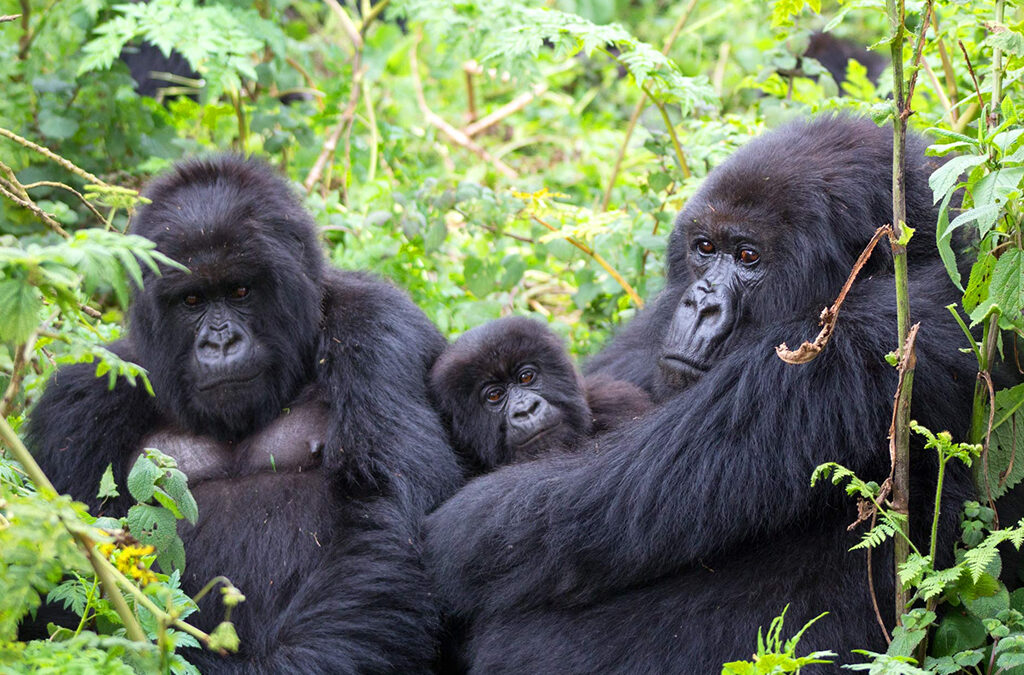
Once the group locates the assigned gorilla family, guests normally spend up to a full one hour observing. Park rangers guide this encounter, letting travelers watch feeding, movement, grooming, and communication at a safe distance. This moment forms the emotional center of the entire three-day gorilla trekking safari experience for every guest.
After the encounter, the group treks back toward the park headquarters at a comfortable, quite steady pace. Depending on return time and energy levels, guests can relax comfortably at the lodge for the afternoon. Iconic Africa Safaris can also arrange an optional Batwa cultural experience connected historically with this forest community.
| Day 2 details | |
|---|---|
| Meal plan | Full Board |
| Main activity | Gorilla trekking |
| Trekking duration | Usually several hours, depending on gorilla location |
| Gorilla viewing | Up to one hour |
| Overnight | Bwindi lodge |
What Happens During Gorilla Trekking?
Gorilla trekking is not simply a short walk toward one fixed wildlife viewing point in the forest. The gorillas move freely through the forest, so ranger teams use recent tracking information to locate them. Every trek therefore carries a genuinely different walking distance and a different level of physical challenge overall.
Once the ranger team locates the gorilla family, the group observes them quietly while following strict rules. Travelers may see adults feeding, young gorillas playing, mothers caring for infants, or silverbacks resting nearby quietly. The experience stays deliberately controlled to protect both visitors and gorillas while revealing natural behavior up close.
Day 3: Bwindi to Kigali
After breakfast, guests leave the lodge and begin the long return road journey back toward Kigali city. Iconic Africa Safaris plans the departure time around each guest’s international or onward flight schedule quite carefully. Border processing and road conditions can affect the arrival time, so careful timing genuinely matters here always. The driver-guide handles the entire road transfer and assists closely throughout the full journey back toward Rwanda.
The return route again depends on the trekking sector and the border crossing used earlier that day. Once the group crosses back into Rwanda, the journey continues onward toward Kigali through scenic green countryside. Travelers with later flights can request additional activities or a comfortable, relaxed Kigali city stop instead today. Guests with earlier departures should allow enough extra time for a relaxed and fully unhurried airport transfer.
The three-day gorilla trekking safari ends with drop-off at Kigali International Airport or the guest’s own hotel. Iconic Africa Safaris can connect this itinerary with a wider Uganda, Rwanda, Kenya, or Tanzania safari for travelers continuing.
| Day 3 details | |
|---|---|
| Meal plan | Breakfast |
| Main activity | Bwindi to Kigali transfer |
| Estimated driving time | About 4–6 hours, depending on the route |
| Safari ends | Kigali hotel or Kigali International Airport |
3-Day Gorilla Trekking from Kigali to Bwindi: What’s Included?
A well-organized package covers the main services needed for the entire journey from Kigali to Bwindi itself. Exact inclusions depend on the accommodation category and quotation selected, so travelers should confirm the final package. Iconic Africa Safaris always confirms every detail of the package before travelers finalize payment for the safari.
Gorilla trekking permit: The permit grants access to the gorilla trekking experience in Bwindi and forms one of the largest individual costs. Because permits stay limited, Iconic Africa Safaris always confirms availability before finalizing accommodation and transport arrangements together. The team arranges the permit reservation directly as part of every single booking process handled with care.
Private safari transportation: Private 4×4 transport gives every traveler greater flexibility during the journey between Kigali, the border, and Bwindi. The driver-guide adjusts departure times around border procedures, lodge check-in, trekking requirements, and each guest’s flight plans. This flexibility matters enormously across a tightly packed three-day gorilla trekking itinerary built for every single traveler.
Accommodation: Iconic Africa Safaris includes two full nights of accommodation according to the package category each guest selects. Budget, mid-range, and luxury options suit different comfort preferences and travel budgets across every itinerary built for guests. Choosing a lodge near the briefing point reduces early-morning travel time and eases the entire trekking day.
Meals: Meals follow the accommodation and itinerary plan set for the entire three-day safari trip that gets booked. Day one runs on half-board, day two runs full board, and day three includes breakfast before departure. Guests should communicate special dietary requirements early so the lodge team can prepare accordingly for everyone involved.
Professional driver-guide: The driver-guide handles the road journey, coordinates border procedures, and shares useful information throughout the entire transfer. Having the same guide throughout the trip gives every traveler one reliable contact point from pickup onward. Iconic Africa Safaris trains every driver-guide to manage schedules, border crossings, and unexpected delays quite confidently indeed.
What’s Not Included?
Not every expense connected with the trip comes automatically bundled inside one standard travel package deal today. International flights, travel insurance, personal purchases, alcoholic drinks, tips, and optional activities stay separate unless quoted otherwise. Iconic Africa Safaris lists every single travel exclusion clearly within the written quotation sent to each traveler.
International flights: Flights to Kigali and onward flights after the safari get booked separately from the ground safari package. When planning arrival, choose flight times that allow enough time for the full road transfer toward Bwindi. Guests should also allow enough time for the return journey before any important onward international flight connection.
Travel insurance: Comprehensive travel insurance stays strongly recommended for every single international visitor joining this three-day gorilla trekking itinerary. The policy should cover medical expenses, emergency assistance, trip interruptions, and baggage issues relevant to the journey. Confirm the policy requirements before traveling rather than waiting until well after arrival in Rwanda or Uganda.
Personal expenses: Drinks, souvenirs, laundry, telephone charges, snacks, and other personal purchases get paid separately by every single guest. Carry appropriate local currency or an accepted payment method, especially when purchasing crafts or supporting community activities. Iconic Africa Safaris can advise on typical local costs before departure whenever a traveler requests that information.
Tips: Tips for guides, lodge staff, porters, and drivers remain generally discretionary throughout the entire three-day safari trip. If guests choose to tip, the amount should reflect the service received and each traveler’s personal preference. Iconic Africa Safaris never treats tipping as a mandatory safari charge for any booking traveler at all.
Optional activities: Activities such as Batwa cultural experiences or additional Kigali excursions may carry separate charges on the final invoice. Guests wanting an optional activity should request it early so timing, transport, and cost integrate more smoothly. Iconic Africa Safaris incorporates every optional extra into one single coordinated itinerary well before the safari begins.
How Much Does a 3-Day Gorilla Trekking Trip from Kigali Cost?
Total price depends mainly on the gorilla permit, accommodation category, traveler numbers, transport, and the travel season. Two travelers sharing a vehicle and room normally receive a different per-person rate than a solo traveler. Some safari expenses simply get shared more efficiently among multiple travelers booked on that exact same itinerary.
For an accurate quotation, Iconic Africa Safaris first confirms preferred travel dates, traveler numbers, and accommodation level. These details determine which permit and accommodation arrangements the team can secure for the full booked itinerary. This process lets the safari company calculate one complete package rather than an unrealistic headline price shown.
Main factors affecting the price
Gorilla permit: The permit forms a major part of the total cost and must get secured very early always. Uganda’s permit pricing differs from Rwanda’s gorilla permit pricing, explaining why travelers often stay in Kigali while trekking Uganda. Always confirm the applicable permit price for the exact travel date before booking anything else at all.
Accommodation level: Budget lodges provide the lowest overall package cost, while mid-range and luxury properties increase the total price. The difference grows significant because accommodation includes the room, meals, location, facilities, and its proximity to trekking. Iconic Africa Safaris helps every traveler weigh comfort against budget when selecting the right lodge for them.
Number of travelers: Safari vehicles, driver-guide costs, and some logistical expenses always get shared among travelers on the booked itinerary. As a result, two or more people traveling together often receive a much lower total per-person rate. Iconic Africa Safaris explains these savings clearly during the initial quotation stage sent to every single traveler.
Travel season: Demand for permits and accommodation affects package pricing and overall availability across the different travel months each year. Travelers with flexible dates can ask Iconic Africa Safaris about lower-demand periods and available seasonal safari offers. April, May, and November count among the commonly lower-season months for Uganda’s gorilla safari arrangements each year.
Trekking sector: The selected Bwindi sector affects the route, driving time, lodge choices, and overall trip logistics for every guest. A sector that appears cheaper at accommodation level does not always produce the lowest overall trip cost anyway. Extra driving or complicated transfers can quietly raise the total price of a booked safari package overall.
Is Gorilla Trekking from Kigali to Bwindi Cheaper than Trekking in Rwanda?
For travelers comparing both options, the gorilla permit price stands out as the truly most important difference. Uganda’s standard gorilla permit costs significantly less than Rwanda’s standard permit, though actual safari cost depends on other factors. Staying in Kigali therefore does not automatically mean trekking gorillas exclusively inside Rwanda’s own national parks always.
The Kigali-to-Bwindi option appeals strongly to travelers wanting Uganda’s lower permit cost alongside Kigali’s easy travel convenience. Iconic Africa Safaris still compares the final price as one complete package covering every single relevant expense. Transport, accommodation, meals, and border logistics all form a real part of the total combined final safari cost.
Insider Tip: Compare the Complete Safari Cost. Never compare gorilla permits alone when weighing a Uganda versus Rwanda gorilla trekking decision quite this carefully. Ask Iconic Africa Safaris for a complete quotation covering the permit, transport, accommodation, meals, and guide services. A cheaper permit alone does not automatically create a much cheaper overall entire three-day safari package deal.
Best Bwindi Sector for a Gorilla Trek from Kigali
Bwindi holds four main gorilla trekking sectors: Buhoma, Ruhija, Rushaga, and Nkuringo, each offering something genuinely different. They all sit within the broader Bwindi Impenetrable National Park landscape, yet they differ meaningfully in access. The right choice should therefore always consider more than just the trekking sector’s name printed on paper.
For a three-day trip starting and ending in Kigali, route efficiency becomes especially important for careful planning. Southern sectors such as Rushaga and Nkuringo suit Kigali-based itineraries well, while Ruhija and Buhoma fit different route plans.
Rushaga
Rushaga sits in the southern part of Bwindi, forming an important trekking area for travelers approaching from Rwanda. This sector works especially well for short Kigali-based itineraries because the route plans around southern border crossings. Rushaga also hosts gorilla habituation experiences, giving travelers interested in a much longer encounter another good option.
Nkuringo
Nkuringo forms another southern Bwindi sector known widely for its dramatic mountainous setting and forest views nearby. Iconic Africa Safaris incorporates this area into Kigali-to-Bwindi safaris while carefully considering road conditions and lodge location. Travelers choosing Nkuringo should always prioritize accommodation offering convenient and easy access to the trekking briefing point.
Ruhija
Ruhija lies in the eastern part of Bwindi and remains reachable quite comfortably from Kigali by road. This sector suits travelers wanting to combine gorilla trekking with other destinations across eastern or central Uganda. Within a three-day itinerary, Iconic Africa Safaris always plans the route carefully around limited available driving time.
Buhoma
Buhoma stands as the original and one of the very best-known gorilla trekking sectors within Bwindi itself. It offers a wide selection of accommodation and fits comfortably into longer Uganda safari circuits built for travelers. For a strict three-day Kigali itinerary, travelers should weigh the extra road distance against these southern sectors.
Which Border Crossing Is Used?
The border crossing used depends on the chosen Bwindi sector and the route Iconic Africa Safaris plans. The Cyanika border commonly serves journeys toward southern southwestern Uganda, while Gatuna/Katuna serves other travel routes. The driver-guide always confirms the most suitable crossing before departure rather than assuming one crossing works everywhere.
Border procedures take genuinely different amounts of time depending on traffic, documentation, immigration requirements, and traveler numbers. Iconic Africa Safaris always keeps the itinerary flexible enough to accommodate reasonable delays at the busy border. This flexibility matters most for travelers holding an important international flight scheduled on the final return day.
Insider Tip: Avoid scheduling a very tight international flight connection immediately after arriving back into Kigali from distant Bwindi. Road journeys face traffic, weather, border procedures, and unexpected delays throughout even the smoothest planned safari itinerary. A later flight gives Iconic Africa Safaris more flexibility and reduces the risk of a rushed day.
Best Time for a 3-Day Gorilla Trekking Trip from Kigali
Gorilla trekking in Bwindi runs throughout the entire year, so no single month makes the experience impossible. Travel dates still affect road conditions, hiking conditions, accommodation availability, and overall safari demand across the region. Travelers with flexible schedules can consider lower-demand periods, while others simply prefer traditionally drier trekking months instead.
The commonly recognized drier periods run from June through September and December through February of each year. These months offer much easier forest trails, although rain remains possible because Bwindi forms a tropical rainforest. April, May, and November often bring lower-season travel arrangements, appealing strongly to value-focused travelers wanting fewer crowds.
June to September
June through September ranks among the popular periods for gorilla trekking because conditions favor much comfortable hiking. Trails can still turn muddy, but travelers generally benefit from relatively drier conditions than during wetter months. Iconic Africa Safaris recommends booking accommodation and gorilla permits early because demand clearly rises during these months.
December to February
December, January, and February provide another very commonly preferred period for gorilla trekking across the entire region. Holiday travel combined with relatively favorable conditions increases demand, so early careful planning proves genuinely useful here. Travelers arriving through Kigali should allow enough time for their flight schedule around the necessary road transfers.
April, May and November
These months attract budget-conscious travelers because they fall within lower-demand periods for many safari arrangements already booked. The permits are discounted from $800 to $600 for foreign non-residents and from $700 to $500 for foreign residents. Rain can make forest trails wetter and more challenging, but experienced travelers should not rule out these months. The forest stays beautiful, and Iconic Africa Safaris continues gorilla trekking whenever conditions genuinely permit it happening.
How Difficult is Gorilla Trekking in Bwindi?
Gorilla trekking demands real physical effort because Bwindi forms a mountainous rainforest with steep slopes and uneven ground. Actual difficulty varies from one trek to another because gorilla families move freely through the dense forest. One group may find gorillas relatively close to the trailhead, while another group hikes for several hours.
Travelers do not need elite fitness levels to join, but reasonable fitness helps considerably during the trek. Regular walking, hiking, stair climbing, and other moderate exercise before the safari improve overall trekking comfort greatly. Guests with fitness concerns should discuss them with Iconic Africa Safaris before booking so arrangements suit everyone.
Can Older Travelers Go Gorilla Trekking?
Yes, age alone does not automatically prevent older travelers from enjoying gorilla trekking safely and comfortably in Bwindi. Physical ability, stamina, balance, and comfort with uneven terrain matter much more than a traveler’s actual age. Older travelers should communicate their needs early so Iconic Africa Safaris provides appropriate guidance and support options.
Can I Hire a Porter?
Porters work around Bwindi and provide genuinely useful assistance throughout the entire gorilla trekking experience always offered. They carry backpacks, water, camera equipment, and other personal items while helping travelers negotiate difficult trail sections. Hiring a porter also provides direct income to people living around the park and its forest community.
What to Pack for Gorilla Trekking from Kigali to Bwindi
Packing for a three-day gorilla safari requires carefully balancing comfort against genuine practicality across a short trip. Travelers do not need a large suitcase for such a short trip, especially when continuing elsewhere afterward. A comfortable daypack should hold trekking essentials while larger luggage stays behind at the lodge or vehicle.
- Waterproof hiking boots: Bwindi trails turn muddy and slippery underfoot, particularly right after heavy rainfall soaks the entire forest floor. Sturdy hiking boots with good grip provide much better stability than ordinary sneakers across genuinely uneven terrain. Choose footwear already worn and properly tested before the safari, since brand-new shoes often cause painful blisters.
- Long trousers and long-sleeved clothing: Long clothing protects legs and arms from vegetation, insects, and minor scratches during the entire long hike. Lightweight layers help because temperatures change during the trek, particularly during early mornings and steep elevation climbs. Iconic Africa Safaris recommends packing at least two full outfits for the entire three-day gorilla trekking trip.
- Rain jacket: Bwindi forms a rainforest, so rain can occur even during months generally considered relatively drier overall today. A lightweight waterproof jacket protects every traveler from sudden showers without taking up too much daypack space. Keep it easily accessible rather than buried beneath other items at the very bottom of the bag.
- Daypack: A small, comfortable backpack holds all trekking essentials comfortably for the entire duration of the forest hike. Carry drinking water, snacks, rain protection, a camera, spare batteries, and personal medication throughout the entire hike. Avoid carrying unnecessary extra weight, since travelers may hike for several hours through dense, mountainous forest terrain.
- Gardening gloves: Gloves help when moving through vegetation or using branches for support on steep, genuinely uneven trail sections. Choose lightweight gloves that allow good movement and grip across muddy or rough trail sections often encountered. They also protect hands when navigating rough terrain during the longer, more physically demanding gorilla forest treks.
- Insect repellent: Bwindi remains a natural forest environment with insects, so repellent proves genuinely useful throughout the entire trek. Apply it before entering the forest and always follow the product instructions printed clearly on its packaging. Long clothing adds an extra physical barrier and reduces exposed skin during the entire long forest hike.
- Camera and spare batteries: Gorilla encounters provide excellent photography opportunities, but photography should never interfere with the gorillas or park rangers. Carry spare batteries or a power bank because charging options stay genuinely limited near the remote forest. Iconic Africa Safaris advises testing all camera equipment before departure to avoid disappointment during the gorilla encounter.
Gorilla Trekking Rules in Bwindi
Gorilla trekking rules exist primarily to protect the gorillas, visitors, and the wider surrounding forest environment always. Ranger guides explain these rules clearly before the trek begins, and travelers must follow every single instruction. Responsible behavior reduces stress and disease risks for gorillas while preserving the experience for future generations too.
Important guidelines include keeping the required distance, avoiding loud noises, following ranger instructions, and never touching gorillas. Travelers feeling unwell should always inform Iconic Africa Safaris before trekking, since human illness poses serious risks.
Do Not Feed the Gorillas
Visitors must never offer any food to gorillas during any part of the entire trekking encounter itself. Feeding wild animals alters their natural behavior and creates unhealthy associations between people and available food sources. The ranger ensures every group always closely follows responsible wildlife-viewing practices throughout the entire gorilla trekking encounter.
Do Not Touch the Gorillas
Even when a gorilla approaches very closely, travelers should never attempt to actually touch the wild animal. These animals stay genuinely wild and deserve appropriate space throughout the entire trekking encounter with every group. Staying calm and closely following ranger instructions remains the safest response if a gorilla approaches too closely.
Keep Noise Low
Gorillas communicate through sounds, body movements, and other subtle behaviors throughout the entire long forest trekking encounter. Excessive noise can easily disturb them and reduce the overall quality of the encounter for every traveler. Speak quietly and listen very carefully to the ranger throughout the entire duration of the forest trek.
Follow the Ranger’s Instructions
Ranger teams bring many years of experience tracking gorillas and managing visitor encounters safely and quite respectfully. Follow their instructions closely regarding distance, movement, photography, and positioning throughout the entire long gorilla forest encounter. They keep the encounter genuinely safe and respectful for every single traveler involved in the gorilla trek.
Is a 3-Day Gorilla Trek from Kigali Enough?
Yes, three days suffice when the main goal centers only on one gorilla trekking experience via Kigali. The itinerary gives travelers one travel day to reach Bwindi, one full trekking day, and a return day. It therefore ranks among the shortest practical formats for combining Kigali with a genuine Uganda gorilla experience.
The trip suits fewer additional destinations, since Bwindi sits far from many of Uganda’s major safari parks. Adding Queen Elizabeth, Kibale, or Murchison Falls requires additional days beyond this core three-day Kigali itinerary offered. Travelers with more available spare time can extend the entire trip into a much longer Uganda safari.
Can I Do Gorilla Trekking from Kigali in 2 Days?
A two-day itinerary may appear possible on paper, though it creates a genuinely much tighter overall schedule. Travelers would need to reach Bwindi, trek the following morning, and return to Kigali that same day. This leaves very little flexibility for road delays, border procedures, bad weather, or a longer trek needed.
For most travelers, three days provides a noticeably better overall balance across the entire gorilla trekking experience. The extra night lets travelers reach Bwindi calmly before trekking and approach the trekking day without exhaustion. It also makes the overall Iconic Africa Safaris experience considerably less rushed for every guest involved throughout.
Can I Start from Kigali Airport?
Yes, a three-day gorilla safari can begin with pickup from Kigali International Airport or a Kigali hotel directly. Airport pickup suits travelers arriving in Rwanda specifically to connect with a genuine Uganda gorilla trekking trip. Iconic Africa Safaris meets every guest according to the flight arrival time and begins the road journey.
When arranging airport pickup, provide exact flight information to Iconic Africa Safaris well in advance every time. This allows the team to monitor the planned arrival time and build reasonable flexibility into day one.
Can I Combine Gorilla Trekking with Other Activities?
Yes, although the three-day schedule limits how much travelers can comfortably add to this fixed core itinerary. A Batwa cultural experience ranks among the most practical additions since it fits neatly around time near Bwindi. Travelers with additional Kigali time can also consider a relaxed and comfortable city tour scheduled beforehand instead.
Travelers wanting to combine gorilla trekking with a wider wildlife safari should extend the itinerary rather than overcrowd it. Queen Elizabeth National Park, Lake Mburo, and Kibale Forest all fit comfortably into longer Uganda safari programs.
Why Book Your 3-Day Gorilla Trekking Safari with Iconic Africa Safaris?
Choosing the right safari operator matters because a successful Kigali-to-Bwindi trip depends on coordinating many moving parts. Iconic Africa Safaris focuses on tailor-made Uganda and East African safari arrangements built for every individual traveler. Guests adjust accommodation, transport, activities, and itinerary details according to personal preference and comfort level throughout every trip.
- Experienced safari planning: The Iconic Africa Safaris team matches travel dates, gorilla permits, trekking sectors, and Kigali transfers into one clear plan. This attention matters enormously for a three-day trip, since spare time for inefficient routing stays quite minimal. Every single detail gets checked carefully before the safari begins for each individual traveler on the itinerary.
- Private safari transport: Private transportation gives every single traveler greater control over departure times and stops during the entire journey. The driver-guide adjusts the schedule whenever border procedures, road conditions, or flight plans require some extra flexibility. This control matters most across a tightly scheduled three-day gorilla trekking itinerary planned for every single traveler.
- Accommodation choices: Travelers select accommodation according to their preferred budget and comfort level for the entire safari trip booked. Rather than forcing one fixed lodge on everyone, Iconic Africa Safaris adjusts the itinerary around nearby available properties. Every lodge sits near the selected trekking sector for maximum convenience and comfort every single early morning.
- Gorilla permit assistance: Securing the gorilla permit ranks among the most important parts of planning the entire safari trip carefully. The Iconic Africa Safaris booking team checks availability and arranges the permit alongside transport and accommodation together. Travelers avoid coordinating separate parts of the trip themselves during a genuinely busy travel planning period alone.
- Support throughout the safari: From the first inquiry through airport drop-off, Iconic Africa Safaris gives travelers one clear point of contact. Guests discuss special requirements, dietary needs, preferred accommodation, and flight schedules before departure with complete confidence always. This consistent support makes the entire journey noticeably easier to plan, manage, and genuinely enjoy fully overall.
Frequently Asked Questions About Gorilla Trekking from Kigali to Bwindi
Is it possible to trek gorillas in Uganda while staying in Kigali?
Yes, travelers arrive in Kigali, travel by road across the Rwanda-Uganda border, and spend two forest nights. Iconic Africa Safaris completes the entire gorilla trek in Uganda before returning every guest safely to Kigali. This arrangement particularly suits travelers whose international flights connect through Kigali rather than through busy Entebbe airport.
How long does it take to drive from Kigali to Bwindi?
The journey generally takes around four to six hours, although the exact duration depends on several factors. Bwindi sector, chosen border crossing, traffic, road conditions, and border procedures all shift the actual travel duration. Because Buhoma, Ruhija, Rushaga, and Nkuringo sit far apart, no single driving time fits every possible itinerary.
Is gorilla trekking from Kigali safe?
The Kigali-to-Bwindi route stays regularly used by travelers visiting the region, though normal travel precautions still apply. A professional Iconic Africa Safaris driver-guide assists with the road journey, border procedures, and route planning throughout. Inside Bwindi, trained ranger guides accompany every trekking group closely and provide instructions constantly throughout the encounter.
How early should I book a gorilla trek?
Booking several months ahead comes strongly recommended, particularly for preferred travel dates, accommodation, and specific trekking sectors. Gorilla permits stay limited, so waiting until the last minute restricts available choices considerably for every traveler. Early booking matters most during popular travel periods when permits become genuinely quite difficult to secure quickly.
What is the minimum age for gorilla trekking?
The standard minimum age for gorilla trekking in Uganda currently stands at fifteen years old exactly today. Travelers should confirm current regulations and permit requirements with Iconic Africa Safaris when booking, since policies change. Families traveling with younger children can consider other age-appropriate activities while adults complete the entire gorilla trek.
Can I trek gorillas if I am not very fit?
Gorilla trekking requires reasonable physical fitness because forest terrain can turn genuinely steep, muddy, and uneven quickly. Difficulty varies depending on exactly where the rangers locate the gorilla family on any given trekking day. Travelers concerned about fitness should discuss their exact situation with Iconic Africa Safaris before the trek begins.
Should I stay in Uganda or return to Kigali after trekking?
For a three-day trip, returning to Kigali stays practical because it keeps the itinerary focused and efficient. Travelers with more time can stay longer in Uganda and combine gorilla trekking with wildlife viewing or chimpanzee trekking.
Is Uganda gorilla trekking cheaper than Rwanda?
Uganda generally carries a lower standard gorilla permit price than Rwanda, though the final safari cost depends on more. Accommodation, transport, meals, travel dates, trekking sector, and optional activities all affect the total safari package price. A complete quotation from Iconic Africa Safaris gives a more useful comparison than permit prices alone offer.
Ready to Book Your 3-Day Gorilla Trekking Safari from Kigali?
Iconic Africa Safaris tailors this three-day Uganda gorilla trekking experience around travel dates, preferred accommodation, and trekking sector. The team assists with gorilla permits, private transportation, accommodation, meals, border logistics, and every optional activity together. Every major part of the journey gets organized as one coordinated, carefully managed itinerary for each guest.
Iconic Africa Safaris offers three simple, reliable ways to secure the next unforgettable Ugandan adventure today itself. Guests complete the quick online booking form to start planning their dream safari experience right away today. The friendly team also welcomes direct emails at info@iconicafricasafaris.com to discuss specific travel plans and preferences. For instant assistance, guests tap the green WhatsApp icon in the screen’s bottom right corner anytime today.
Iconic Africa Safaris’ driver-guides serve as the trip managers guests trust most, including trained former park rangers. They stay with travelers from the first airport pickup through the final wave-off, keeping each day smooth.