
14-Day Uganda Safari – Shoebills, Waterfalls, Primates and Gorillas
14-Day Uganda Safari: Wetlands, Waterfalls, Primates and Gorillas
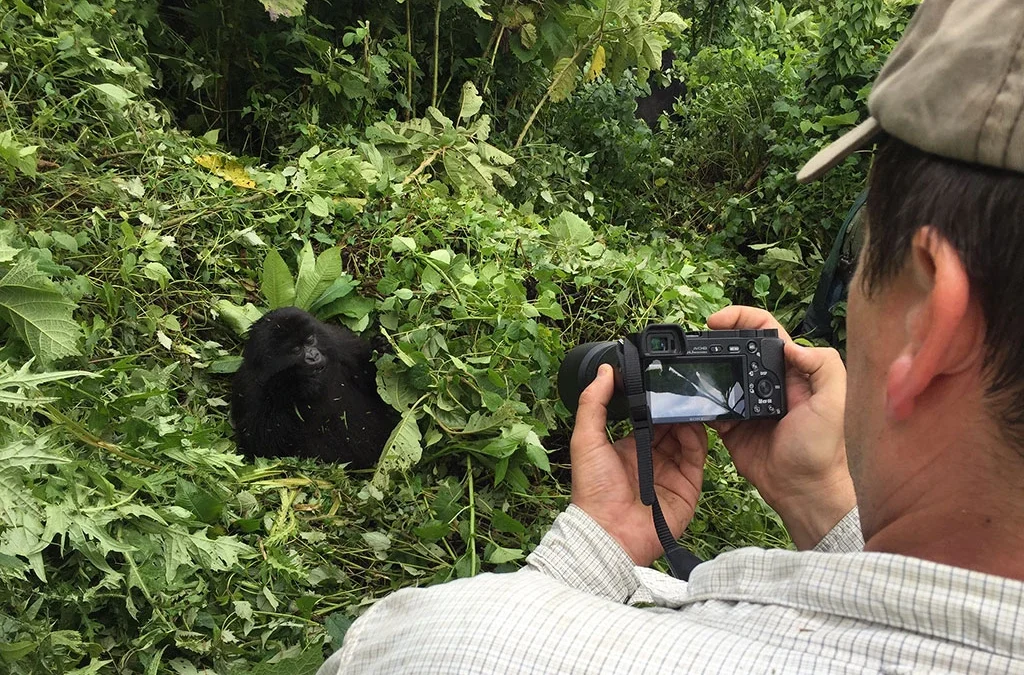
A 14-Day Uganda Safari is the most complete way to experience the country: in two weeks you can see a shoebill stork in Mabamba Swamp, hike beside the Sipi waterfalls, watch the Nile squeeze through Murchison Falls, track chimpanzees in Kibale, find tree-climbing lions in Ishasha, sit with mountain gorillas in Bwindi and finish with golden monkeys in Mgahinga. This guide from Iconic Africa Safaris walks through every day of that route, explains what you will see, and gives you the permit prices, seasons, route map and estimated costs you need to plan with confidence.
The itinerary links the best wetlands, waterfalls, savannah parks and primate forests into one logical loop. It starts in Entebbe and finishes near the Rwandan border at Kisoro, with enough time at every stop to enjoy it rather than simply pass through. It is the route we recommend to travellers who want the full Uganda experience: big game, birds, culture, adventure and, of course, gorillas.
Why Choose a 14-Day Uganda Safari?
Two weeks is the sweet spot for Uganda. It is long enough to visit all five major national parks without rushing, and short enough to fit into most holiday allowances. Shorter trips usually have to cut a park, most often the far south-west where the gorillas live or the north-west where the Nile plunges over Murchison Falls. A two-week journey keeps both.
It also gives you the chance to combine three of Africa’s most sought-after primate experiences in one trip: gorillas in Bwindi, chimpanzees in Kibale and golden monkeys in Mgahinga. Few other destinations let you do that, and almost none at Uganda’s permit prices.
Who this Safari Suits
- First-time visitors to Uganda who want a complete overview of the country in one trip.
- Primate lovers who want gorillas, chimpanzees and golden monkeys together.
- Wildlife photographers and birders who want varied habitats: wetlands, rivers, savannah, rainforest and volcanic highlands.
- Couples, families and small groups who prefer a private vehicle and a personal driver-guide to a large group tour. Families with younger children can adapt the trip, as explained in the family section below.
- Active travellers who enjoy walking, hiking and cultural visits as well as game drives.
It is not a lazy beach holiday. Two days involve very long drives, and the primate treks can be demanding. But the reward is a journey few other destinations can match.
14-Day Uganda Safari at a Glance
| Trip detail | Information |
|---|---|
| Duration | 14 days and 13 nights |
| Start point | Entebbe International Airport |
| End point | Kigali, Rwanda, or Kisoro airstrip |
| National parks visited | Murchison Falls, Kibale Forest, Queen Elizabeth, Bwindi Impenetrable, Mgahinga Gorilla |
| Other highlights | Mabamba Swamp, Source of the Nile, Sipi Falls, Bigodi Wetland, Ishasha sector, Kisoro |
| Key wildlife | Shoebill, elephants, lions, giraffes, hippos, crocodiles, chimpanzees, tree-climbing lions, mountain gorillas, golden monkeys |
| Main activities | Canoe trip, waterfall hike, coffee tour, game drives, Nile launch cruises, primate trekking, cultural visits |
| Pace | Moderate, with two long driving days |
| Best time to go | June to September and December to February |
| Transport | Private 4×4 safari vehicle with a driver-guide |
The Route Map of Your 14-Day Uganda Safari
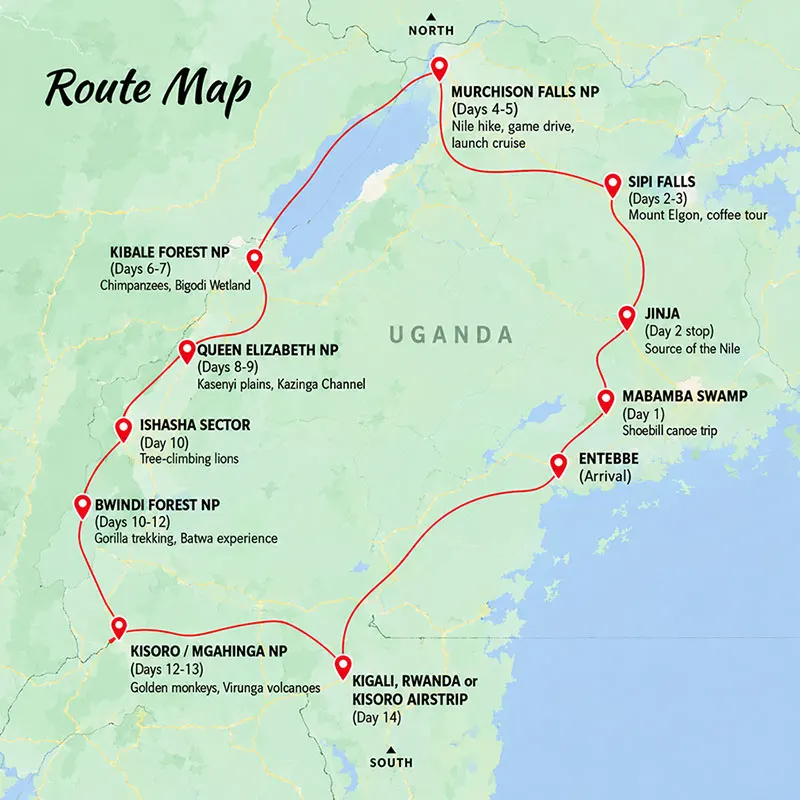
The route runs in a large arc: from Entebbe east to Mount Elgon, north-west to Murchison Falls, south-west through Kibale and Queen Elizabeth, and finally to the far south-western corner of Uganda and the primate forests. The text map below shows the order of stops, and the table after it gives approximate drive times.
Route Summary Table
| Day | From | To | Approx. drive time | Main highlight |
|---|---|---|---|---|
| 1 | Entebbe | Mabamba Swamp and back | 1 to 1.5 hours each way | Shoebill canoe trip |
| 2 | Entebbe | Sipi Falls via Jinja | 6 to 7 hours | Source of the Nile |
| 3 | Sipi Falls | Local area | Short transfers | Waterfall hike and coffee tour |
| 4 | Sipi Falls | Murchison Falls NP | 7 to 8 hours | Hike to the top of the falls |
| 5 | Paraa area | Local area | Game drive and cruise | Wildlife and Nile launch trip |
| 6 | Murchison Falls NP | Kibale via Hoima and Fort Portal | 6 to 7 hours | Tea estates and crater lakes |
| 7 | Kibale | Local area | Short transfers | Chimpanzee trekking and Bigodi Wetland |
| 8 | Kibale | Queen Elizabeth NP | 2 to 3 hours | Rwenzori views |
| 9 | Mweya area | Local area | Game drive and cruise | Kasenyi plains and Kazinga Channel |
| 10 | Queen Elizabeth NP | Bwindi via Ishasha | 4 to 5 hours with stops | Tree-climbing lions |
| 11 | Bwindi | Local area | Trek of 2 to 6 hours | Mountain gorillas |
| 12 | Bwindi | Kisoro | 3 to 5 hours | Community visit and crafts |
| 13 | Kisoro | Mgahinga NP and back | Short transfers | Golden monkeys |
| 14 | Kisoro | Kigali or Kisoro airstrip | 3 to 4 hours to Kigali | Departure |
Drive times are estimates. Road conditions, weather, border queues and the number of stops you make all affect real travel time, which is why we plan early starts on the longer days.
Detailed Day-by-Day Itinerary
Day 1: Entebbe to Mabamba Swamp, in Search of the Shoebill

Your safari begins the moment you land at Entebbe International Airport. Your driver-guide from Iconic Africa Safaris meets you at arrivals, helps with your luggage and introduces the vehicle that will be your base for the next two weeks. After a short briefing, you head west of Entebbe to the village of Mabamba, around 1 to 1.5 hours away depending on traffic.
Mabamba Swamp is a Ramsar-listed wetland on the shores of Lake Victoria and one of the most dependable places in Africa to see the shoebill stork. This extraordinary bird stands more than a metre tall, with a huge clog-shaped bill and a slow, statue-like patience that makes it look like a survivor from the age of the dinosaurs. It is among the most wanted birds for visiting birdwatchers, and even people who have never owned binoculars find it unforgettable.
You travel through the swamp in a narrow wooden canoe, poled quietly by a local guide through channels of papyrus and water lilies. The silence is part of the experience. Besides the shoebill, you may see blue-breasted bee-eaters, African jacanas walking across lily pads, malachite kingfishers, swamp flycatchers and purple herons. With luck, you will also glimpse the shy sitatunga, a swamp-dwelling antelope.
After the canoe trip, you return to your lodge near Entebbe to rest. The lakeside town has restaurants serving fresh tilapia and a relaxed evening atmosphere that makes a gentle start to the safari.
Overnight: Near Entebbe.
Tips for Day 1: Early morning is the best time to see the shoebill. If your flight arrives late at night, the canoe trip can move to the following morning, though that affects Day 2, so talk it through with us in advance. Bring a hat, sunscreen and a waterproof bag for your camera.
Day 2: Journey to Sipi Falls via the Source of the Nile
This day is a travelling day, but a rewarding one. You leave Entebbe after breakfast and drive east for roughly 6 to 7 hours towards the foot of Mount Elgon, an extinct volcano on the border with Kenya.
The first major stop is Jinja, Uganda’s adventure capital and the place where the White Nile begins its long journey to the Mediterranean. At the Source of the Nile, you can take a short boat ride, visit the memorial and stand where explorers once argued about the birthplace of the world’s longest river. For those who want an adrenaline rush, Jinja also offers white-water rafting, bungee jumping and quad biking as optional extras if your schedule allows.
After lunch, you continue through Iganga and Mbale and up the lower slopes of Mount Elgon to Sipi Falls. The scenery changes steadily as you climb: flat plains give way to green terraces, small farms and banana plantations, then to cooler air and wide views across the valleys. You arrive in the late afternoon in time to enjoy the view from your lodge.
Overnight: Sipi Falls.
Day 3: Sipi Falls Hike and Mount Elgon Coffee Tour

Sipi Falls is a series of three waterfalls pouring over the cliffs of Mount Elgon. The upper fall drops around 95 metres, the middle fall about 75 metres and the lowest close to 65 metres. Together they make one of the most beautiful landscapes in eastern Uganda.
After breakfast, you set out with a local guide on a hike that passes all three falls. The route follows farm paths, crosses streams, passes caves and takes in views across the plains towards Karamoja. The hike can be done at different levels, from a gentle half-day walk to a longer, steeper loop for more energetic hikers. Along the way, your guide explains the traditional farming methods of the Sabiny people, who have lived on these slopes for generations.
In the afternoon, a coffee tour follows the whole journey from bean to cup. You pick ripe cherries, remove the pulp, dry the beans, roast them over a fire and grind them by hand before tasting the coffee you made. Mount Elgon Arabica is known for its bright flavour, and the tour directly supports the farming families who run it.
Overnight: Sipi Falls.
Tips for Day 3: Wear sturdy shoes with good grip, because paths can be slippery after rain. Carry water, a rain jacket and a small day pack. If you prefer an easier day, tell your guide and the hike can be shortened.
Day 4: Sipi Falls to Murchison Falls National Park
Day 4 is the first of the two big drives. Leave early, ideally by 6:30 or 7 AM, for the journey of 7 to 8 hours via Soroti, Lira and Karuma into Murchison Falls National Park, Uganda’s largest protected area. The road passes through northern and eastern Uganda, where you see everyday life that tourists rarely encounter: markets, cattle, cyclists carrying impossible loads and wide open farmland.
As you cross the Karuma bridge over the Nile, the land begins to feel more like savannah. By afternoon, you enter the park and head towards the Paraa area, the hub of Murchison Falls.
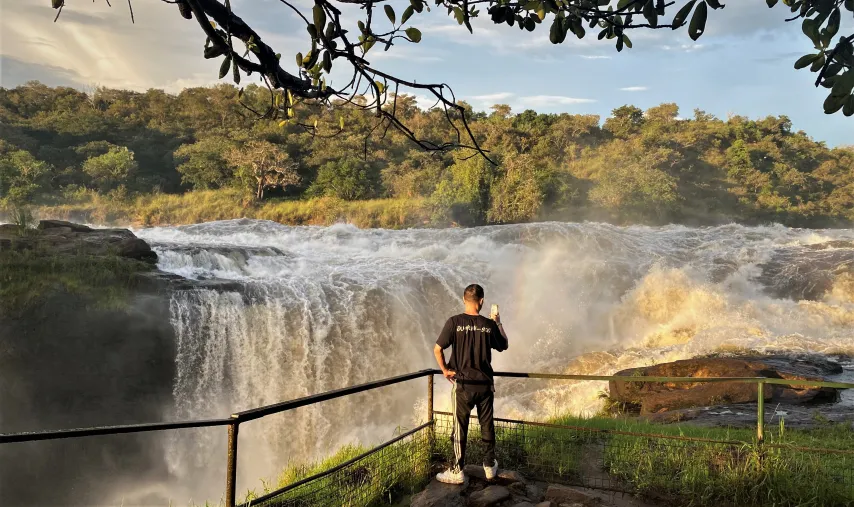
If time and light allow, you finish the day with a hike to the top of the falls. Here the entire Nile, usually a broad and lazy river, is squeezed through a rock gap just seven metres wide and plunges about 43 metres into the Devil’s Cauldron. The sound is tremendous, the spray soaks you within seconds and the ground trembles under your feet. It is one of the most powerful sights in East Africa. If you arrive late, we move the hike to Day 5 so you are not walking in the dark.
Overnight: Near Paraa.
Day 5: Morning Game Drive and Afternoon Nile Cruise

A safari day starts before sunrise. You leave in the cool of dawn for a game drive, often on the northern bank of the Nile, reached by the Paraa ferry. This area is open savannah dotted with borassus palms and acacia, and it is excellent for wildlife. You can expect Rothschild’s giraffes, which are especially associated with this park, as well as elephants, buffalo, Jackson’s hartebeest, Uganda kob, oribi, waterbuck and warthogs. Lions are present too, and early morning is your best chance of finding them. Leopards are seen occasionally, and your guide knows the likely spots.
After lunch and a rest, you board a launch for the famous Nile cruise upstream towards the base of the falls. The boat sails slowly past banks lined with hippos, basking Nile crocodiles, buffalo and elephants coming down to drink. Birdlife is outstanding: African fish eagles, goliath herons, pied kingfishers, red-throated bee-eaters and, with luck, another shoebill. The cruise ends near the Devil’s Cauldron, where you see the falls from below and understand the scale of the river.
Overnight: Near Paraa.
Tips for Day 5: Bring binoculars and a zoom lens. A hat and sunscreen are important on the water, where there is little shade. If you missed the hike to the top of the falls on Day 4, it can be done after the morning game drive.
Day 6: Murchison Falls to Kibale Forest via Hoima and Fort Portal
This is the second major driving day. After an early breakfast, you leave Murchison Falls and drive south-west through Hoima to Fort Portal, a journey of 6 to 7 hours.
The reward is the scenery. As you approach the Fort Portal area, the landscape turns from dry savannah to lush green hills, tea estates that stretch in perfect rows across the slopes, and crater lakes that sit in old volcanic bowls. Fort Portal is also one of the cleanest and most pleasant towns in the country, with a backdrop of the distant Rwenzori Mountains on clear days.
You arrive at your lodge near Kibale in the late afternoon, in good time to rest and prepare for the next day’s chimpanzee trek.
Overnight: Near Kibale.
Tips for Day 6: Pack your trekking gear in an easy-to-reach bag, because you will want it the next morning. Stretch your legs when you stop for lunch, and try the fresh fruit from roadside stalls, some of the best you will taste in Uganda.
Day 7: Chimpanzee Trekking and Bigodi Wetland Sanctuary
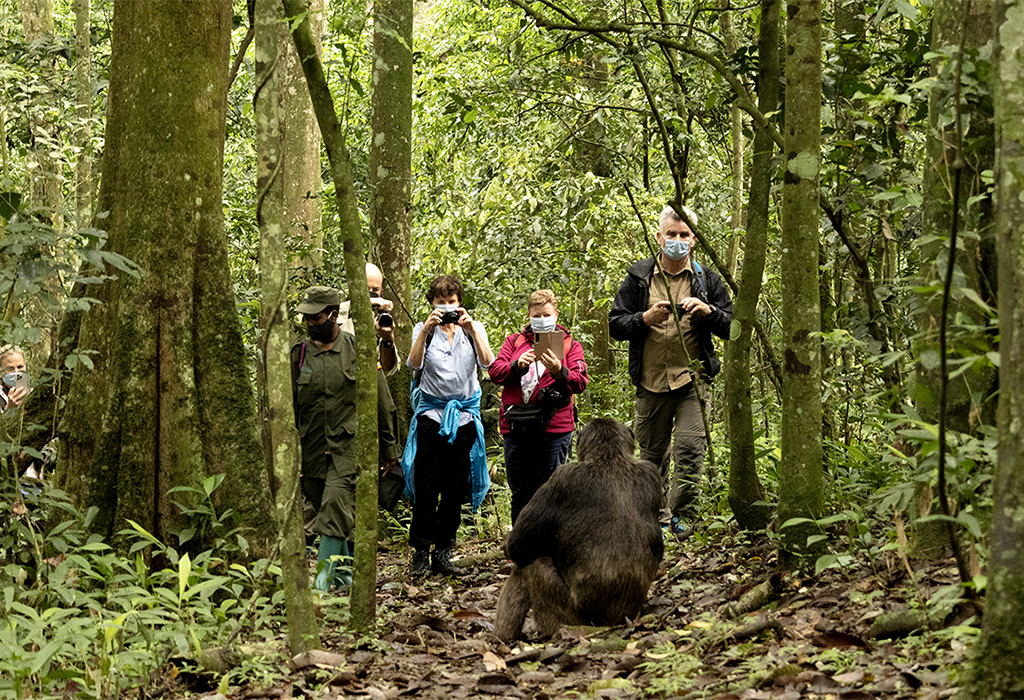
Kibale Forest National Park is home to roughly 1,500 chimpanzees and holds one of the highest densities and diversities of primates on earth, with 13 species. It is the best place in Africa for chimpanzee trekking, and the chance of finding them is very high.
After a briefing at the park headquarters at Kanyanchu, you are assigned a ranger guide and follow the trail into the forest. When the chimpanzees are found, you get one hour with them. You watch them feed in the fig trees, groom each other, play, quarrel and travel through the canopy, and the intelligence in their faces makes it hard to look away. You may also meet red colobus monkeys, black-and-white colobus, grey-cheeked mangabeys, blue monkeys and many forest birds along the way.
In the afternoon, you can add the optional guided walk through the Bigodi Wetland Sanctuary, a community-run project just outside the park. A raised boardwalk crosses the swamp, and the walk is superb for birds and monkeys, with more than 200 bird species recorded, including the great blue turaco. Proceeds support local schools and health projects. Because the boardwalk is easy and flat, it is also a good activity for children who are too young to trek chimpanzees.
Overnight: Near Kibale.
Tips for Day 7: Wear long trousers, long sleeves and good boots. Bring a rain jacket even in the dry season, because the forest is always damp. Keep a respectful distance from the chimpanzees, and do not trek if you have a contagious illness, because primates are susceptible to human diseases.
Day 8: Kibale to Queen Elizabeth National Park

After the intensity of the previous days, Day 8 is gentler. You drive south from Kibale for about 2 to 3 hours towards Queen Elizabeth National Park. On clear days, the Rwenzori Mountains, the legendary “Mountains of the Moon”, rise on the horizon with their snow-capped peaks, one of very few places on the equator where glaciers can be seen. Along the way you cross the equator itself, where a photo stop at the monument is almost obligatory, and you pass crater lakes and small villages.
You arrive at your lodge around midday or early afternoon. Take time to relax, sort your photos and enjoy the setting. Many lodges here overlook the Kazinga Channel or the open plains, and you can often watch elephants and hippos from your veranda. If you still have energy, an optional evening game drive offers soft light and active animals.
Overnight: Near Mweya or Kasese.
Tips for Day 8: If you want to add the Kyambura Gorge chimpanzee trek, a further primate experience in a dramatic rainforest gorge, it can replace the next morning’s game drive. Ask us in advance, because permits are limited.
Day 9: Kasenyi Game Drive and Kazinga Channel Boat Cruise

Queen Elizabeth National Park is Uganda’s most visited savannah park, a varied landscape of open plains, crater lakes, swamps, forests and channels. It is home to roughly 95 mammal species and more than 600 bird species, making it one of the richest wildlife areas in East Africa.
You set out at dawn for the Kasenyi plains, famous for large herds of Uganda kob and the lions that hunt them. A morning drive here often delivers dramatic sightings: lions stalking through the grass, kob performing their mating displays and herds of elephants and buffalo grazing in the early light. Warthogs, topi, waterbuck, bushbuck and spotted hyenas are common as well.
In the afternoon, you board a boat for the Kazinga Channel cruise. The channel is a 32-kilometre natural waterway connecting Lake George to Lake Edward, and its banks are among the best wildlife viewing spots in Africa. Hippos float in large pods, buffalo wade at the water’s edge and elephants come to drink and bathe. The bird list is extraordinary: pelicans, African skimmers, saddle-billed storks, pied kingfishers, water thick-knees and, at the right time of year, migratory waders. Because the boat is slow and close to shore, it is an excellent platform for photography.
Overnight: Near Mweya.
Tips for Day 9: The cruise is usually timed for the afternoon, when animals gather to drink. Bring a hat, sunscreen, binoculars and, if you have one, a polarising filter for photography.
Day 10: Ishasha Tree-Climbing Lions and Drive to Bwindi
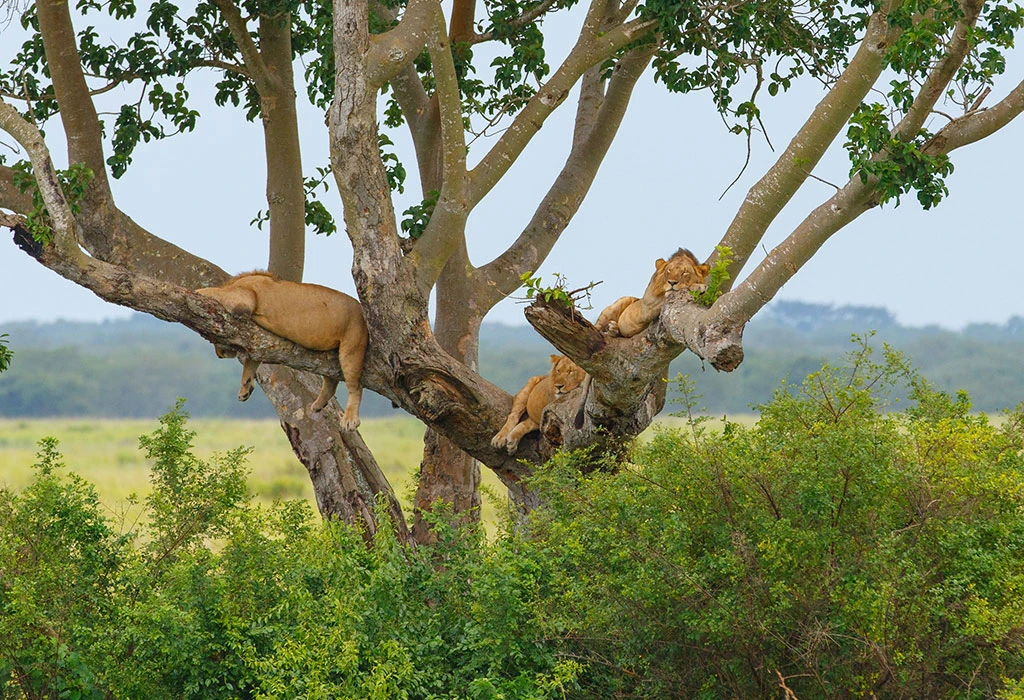
This day, you leave the northern part of Queen Elizabeth National Park and head south to the Ishasha sector, one of the few places in the world where lions habitually climb trees. Nobody knows exactly why, but the cats stretch out along the branches of huge fig and acacia trees, often with their legs dangling, to escape the heat and biting flies or to scan the plains for prey. Your guide knows the trees the prides prefer, and you scan the branches slowly and patiently. Sightings are not guaranteed, but a lion draped over a branch is among the most photogenic scenes in African wildlife.
Ishasha is also less visited than the northern sector, which gives it a quiet, uncrowded atmosphere. Topi, Uganda kob, elephants, buffalo and many bird species share the plains.
From Ishasha, you continue to Bwindi Impenetrable Forest, climbing gradually through rolling hills and terraced farmland, with the forest appearing as a dark green wall on the horizon. The exact route depends on the sector of your gorilla permit: Buhoma, Ruhija, Rushaga or Nkuringo. You arrive at your lodge in the late afternoon, with time to rest and prepare for the trek.
Overnight: Near Bwindi.
Tips for Day 10: Go to bed early, because gorilla briefings start early the next morning. Pack your day bag the night before with water, snacks, a rain jacket, gloves and insect repellent, and arrange a porter at the lodge if you want one.
Day 11: Gorilla Trekking and the Batwa Cultural Experience
This is the experience that brings many travellers to Uganda. Bwindi Impenetrable National Park, a UNESCO World Heritage Site, protects roughly half of the world’s remaining mountain gorillas. Its ancient rainforest features steep slopes, dense vegetation, and muddy trails that make every trek a memorable adventure.
After breakfast, arrive at the briefing point around 7:30 AM, where ranger guides explain the trekking rules and assign visitors to habituated gorilla families. Each group has a maximum of eight visitors. Accompanied by rangers and trackers, you enter the forest in search of the gorillas. The trek usually takes between two and six hours, depending on their location, terrain, and weather conditions. Although the walk can be demanding, every step brings you closer to an extraordinary wildlife encounter.
When the trackers locate the family, you approach quietly and prepare your camera. You might see a silverback resting among the foliage, mothers caring for infants, and juveniles playing nearby. You spend one hour observing these remarkable animals in their natural habitat, creating memories that stay with you long after the trek.
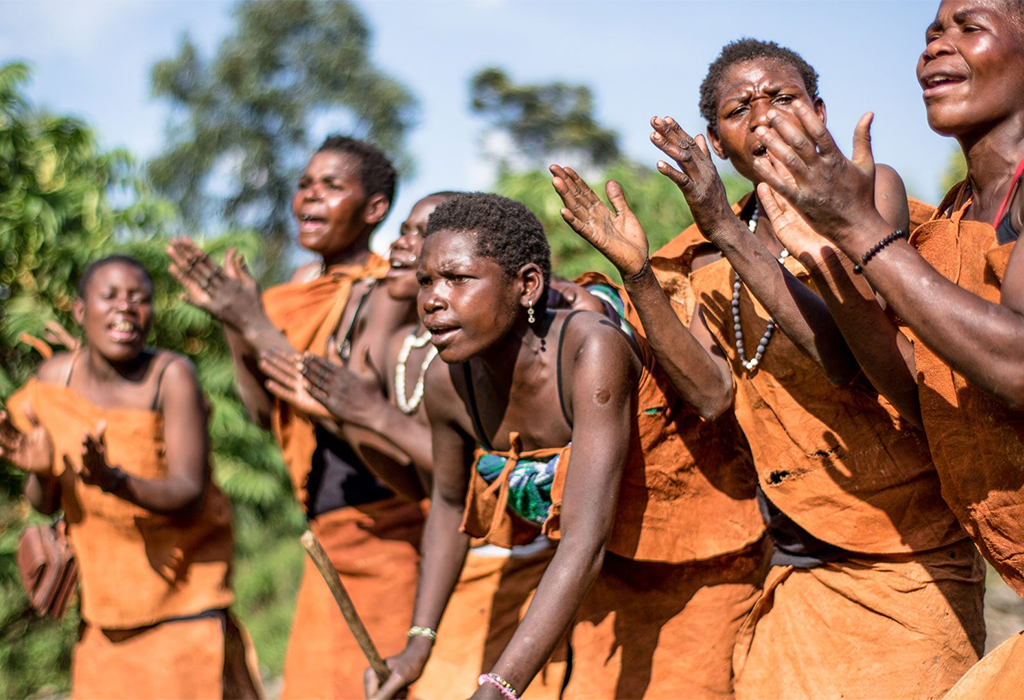
In the afternoon, consider an optional Batwa cultural experience. Community members share traditional knowledge, demonstrate historical hunting and gathering practices, and present their songs, dances, and stories. The experience supports local livelihoods while helping visitors understand the Batwa’s deep connection to the forest.
Overnight: Near Bwindi.
Tips for Day 11: Wear long trousers tucked into socks, facemask, long sleeves, sturdy boots and gardening gloves, because the vegetation can sting and the slopes can be steep. Gorilla trekkers must be 15 or older. Do not approach the gorillas yourself, keep your voice low and never trek if you are unwell. Flash photography is not permitted.
Day 12: Nature Walk, Community Visit and Drive to Kisoro

After the excitement of the gorillas, you take a slower morning. Depending on your lodge, you can enjoy a gentle nature walk along the forest edge, looking for birds, butterflies and smaller primates such as L’Hoest’s monkeys. Bwindi is one of Africa’s best birding sites, with more than 350 species, including a number of Albertine Rift endemics found nowhere else.
You also visit a local community, where you can meet farmers, craftspeople and healers and see how people live around the park edge. It is a good opportunity to buy handmade baskets, wood carvings and woven items directly from the people who made them. Your purchases help local families and give the community a direct economic reason to protect the forest and its gorillas.
After lunch, you drive to Kisoro, a journey of 3 to 5 hours depending on your starting sector. The road winds over high ridges with spectacular views of terraced hillsides, and as you get closer, the Virunga volcanoes rise ahead of you, three cones standing together on the border of Uganda, Rwanda and the Democratic Republic of Congo. Kisoro is a small, friendly town and a good base for the final stage of the trip.
Overnight: Kisoro.
Tips for Day 12: Carry small notes in Ugandan shillings for crafts. Keep your camera ready on the road to Kisoro, because the views over the Bwindi hills and the volcanoes are among the best of the journey.
Day 13: Golden Monkey Trekking in Mgahinga Gorilla National Park
Mgahinga Gorilla National Park may be Uganda’s smallest national park, but it offers an incredible mix of wildlife, mountain scenery, and adventure. The park protects the Ugandan slopes of the Virunga volcanoes, including Mount Muhabura, Mount Gahinga, and Mount Sabinyo. Its landscape combines bamboo forests, montane woodland, and open mountain slopes.
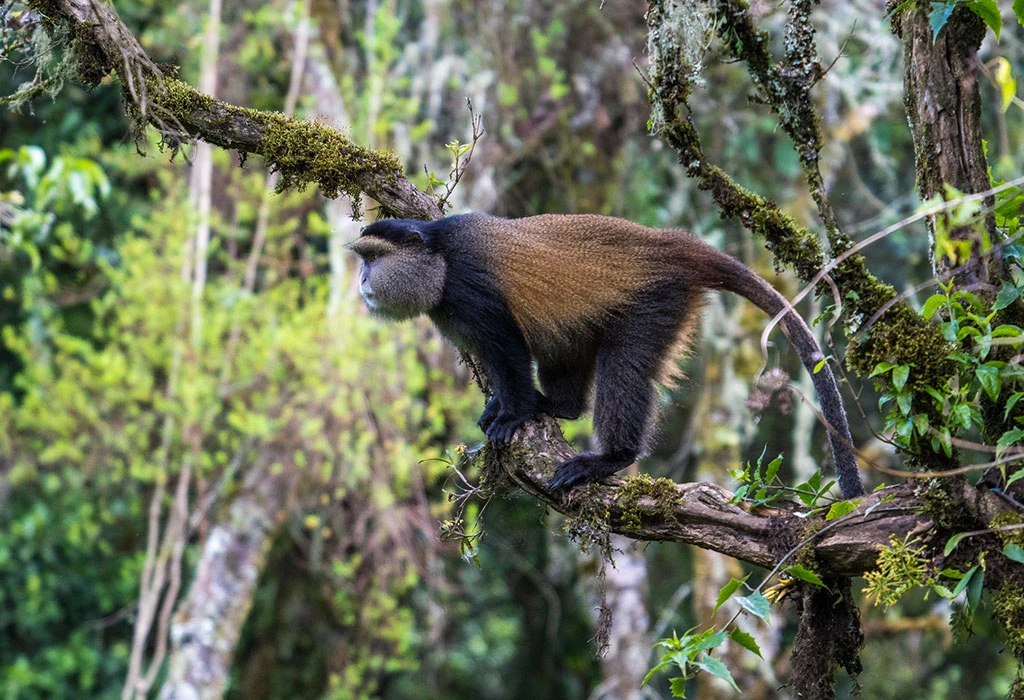
The main attraction is golden monkey trekking, available only in Mgahinga within Uganda. After a briefing, ranger guides lead you into the bamboo forest to find these playful primates, recognized by their golden orange coats and dark limbs. Once you locate a troop, you spend one hour watching them feed, leap between bamboo stems, and interact. Golden monkey habituation is also available for a longer experience, but advance arrangements are essential.
Mgahinga is also home to the Nyakagezi mountain gorilla family. Because gorillas can move across the borders of Uganda, Rwanda, and the Democratic Republic of Congo, sightings depend on the group’s current location. If you would like to trek gorillas here instead of Bwindi, let us check permit availability and recent movements before confirming your itinerary.
After your activities, relax at your lodge or explore nearby Kisoro. You can also visit Lake Mutanda or Lake Bunyonyi, or arrange a guided hike on Mount Sabinyo or Mount Gahinga for an adventurous finish.
Overnight: Kisoro.
Day 14: Departure via Kigali or Kisoro Airstrip
Your safari ends today. The most common departure is a drive to Kigali, Rwanda, which takes about 3 to 4 hours from Kisoro via the Cyanika border crossing. Keep your passport with you and check the entry and visa requirements for Rwanda before you travel, because rules can change. Border formalities are usually straightforward, and your driver-guide helps you through them.
If you prefer not to cross the border, you can fly from the Kisoro airstrip, a much faster option than the very long drive back to Entebbe, which takes 10 to 11 hours. Please share your onward flight details early so we can build in a comfortable buffer.
Travelling With Children on a 14-Day Uganda Safari
Uganda is a rewarding destination for families, but the primate permits come with strict minimum ages that protect both children and the animals. Gorilla trekking requires a minimum age of 15, while chimpanzee trekking and golden monkey trekking require a minimum age of 12. Children below those ages cannot join the treks, and rangers do check.
On the days when adults trek, younger children stay at the lodge and enjoy alternative activities. We plan these in advance so that nobody feels left out, and we arrange supervision through the lodge or a guide you are comfortable with.
| Activity | Minimum age | What children do instead while adults trek |
|---|---|---|
| Gorilla trekking (Bwindi, Day 11, and Mgahinga’s Nyakagezi family) | 15 | Stay at the lodge for forest-edge nature walks, bird spotting, a community visit or a craft session, then hear the story from the adults over lunch |
| Chimpanzee trekking (Kibale, Day 7) | 12 | Join the easy Bigodi Wetland boardwalk walk, relax at the lodge or take a short guided nature walk |
| Golden monkey trekking (Mgahinga, Day 13) | 12 | Enjoy the lodge, a short walk around Kisoro or a lakeside outing near Lake Mutanda or Lake Bunyonyi |
Game drives, boat cruises, the Sipi Falls walk, the coffee tour and cultural visits are generally family-friendly, although individual lodges and operators may have their own age rules for some of them, and we check these for you when you book. If you are travelling with children of mixed ages, speak to us early. We can adjust the order of activities, add rest days and select lodges with family rooms and relaxed surroundings.
Uganda Gorilla and Chimpanzee Permit Prices
Permits are the largest fixed cost of a Uganda primate safari, and they are issued by the Uganda Wildlife Authority (UWA). They must be booked through a licensed tour operator such as Iconic Africa Safaris, and since 2026 they must be paid in full at the time of booking. Standby permits are no longer sold at the parks, so booking ahead is essential. Prices are shown in US dollars per person.
Gorilla Trekking Permit Prices
| Permit type | Foreign non-resident | Foreign resident | Notes |
|---|---|---|---|
| Standard gorilla trekking permit | $800 | $700 | Bwindi (Buhoma, Ruhija, Rushaga and Nkuringo) and Mgahinga (Nyakagezi family); one hour with the gorillas |
| Discounted (low-season) gorilla permit | $600 | $500 | Same as the standard permit, for travel in April, May and November |
| Gorilla habituation experience, until 31 December 2026 | $1,500 | $1,000 | Rushaga sector only; up to four hours with a family being habituated |
| Gorilla habituation experience, from 1 January 2027 | $1,800 | $1,600 | Rushaga sector only; the price rises by $300 |
Chimpanzee Trekking Permit Prices
| Permit type | Foreign non-resident | Foreign resident | Location |
|---|---|---|---|
| Standard chimpanzee trekking permit | $250 | $200 | Kibale Forest National Park |
| Discounted (low-season) chimpanzee permit | $200 | $150 | Kibale, for the low-season months |
| Chimpanzee habituation experience, until 31 December 2026 | $300 | $250 | Kibale; full-day experience with chimpanzees being habituated |
| Chimpanzee habituation experience, from 1 January 2027 | $400 | $300 | Kibale; the price rises by $100 |
| Kyambura Gorge chimpanzee trek | $200 | $150 | Queen Elizabeth National Park |
Important Permit Notes
- Habituation prices go up on 1 January 2027. The gorilla habituation experience, available only in the Rushaga sector, rises from $1,500 to $1,800, and the chimpanzee habituation experience rises from $300 to $400. If you want either experience and your travel dates are close to the change, the booking date and the travel date both matter, so ask us which rate applies to you.
- Book the gorilla permit first. Dates sell out months in advance, especially in the dry months and over Christmas. Everything else can be arranged around your permit date.
- Low-season discounts apply to specific months. The discounted rates apply to April, May and November, which are rainy months, so you save money in exchange for wetter trails.
- Golden monkeys have their own permits. Golden monkey trekking and habituation are available only in Mgahinga, and we include the standard trekking permit in this itinerary.
- Tariffs can change. UWA reviews its tariff periodically, so we always confirm the current rate at the time of booking.
- Refunds are limited. If you fall ill and a park warden confirms it, a partial refund is possible. If you trek all day but cannot find the gorillas, a larger partial refund applies. Travel insurance is strongly recommended.
- Age limits. Gorilla trekkers must be at least 15 years old. Chimpanzee and golden monkey trekkers must be at least 12.
- Compare with Rwanda. A standard gorilla permit in Rwanda costs $1,500, which is almost double Uganda’s price. Uganda also offers the longer habituation experience and many more gorilla families to choose from.
The Best Time for a 14-Day Uganda Safari: Season Comparison
Uganda sits on the equator, so temperatures stay fairly constant all year at about 20 to 28 degrees Celsius in the lowlands and much cooler in the mountains. The main difference between seasons is rain. Uganda has two dry seasons and two wet seasons, and the right time for your 14-Day Uganda Safari depends on what you value most: easier trekking, lower prices, fewer crowds or greener scenery.
| Season | Months | Weather | Game viewing | Primate trekking | Crowds and prices |
|---|---|---|---|---|---|
| Long dry season | June to September | Mostly dry and sunny, cooler nights | Excellent, because animals gather near water and the grass is shorter | Excellent, with drier and easier trails | High demand and higher prices, so book early |
| Short wet season | October to November | Showers and thunderstorms, often in the afternoon | Good, with lush scenery and many newborn animals | Good, though trails can be muddy | Fewer visitors, and discounted permits in November |
| Short dry season | December to February | Warm, dry and sunny | Very good, with clear skies and good light | Very good, with firm trails | Busy around Christmas and New Year |
| Long wet season | March to May | Heavy rain, especially April and May | Fair, as vegetation is thick, but birding is superb | Possible but harder, with slippery and steep trails | Quietest period, lowest prices and discounted permits in April and May |
Which Season Is Best for You?
- For the easiest trekking and the best wildlife photography, choose June to September or December to February. Dry trails make the gorilla, chimpanzee and golden monkey treks more comfortable, and the open savannah is excellent for game drives.
- For lower prices and fewer people, consider the low-season months of April, May and November, when gorilla and chimpanzee permits are discounted. Pack good rain gear and accept that some roads and trails will be muddy.
- For birdwatching, the wet months are excellent, because migratory species arrive and resident birds are in breeding plumage. March to May and November are especially good.
- For a balance of weather and value, consider shoulder periods such as early June, early December or late February, when conditions are good and crowds are thinner.
Gorillas, chimpanzees and golden monkeys can be seen all year round, because they live in rainforest where it rains even in the dry season. The right time to travel is therefore a question of comfort and budget, not of whether you will see them.
Estimated Costs of the 14-Day Uganda Safari
The price of this safari depends on the standard of accommodation, the number of travelers, the season and the permits you choose. The figures below are estimates per person sharing a room, based on a private safari with a driver-guide and a 4×4 vehicle.
Estimated Cost by Accommodation Level
| Travel style | Typical accommodation | Estimated cost per person sharing | Best for |
|---|---|---|---|
| Budget | Comfortable rooms with hot showers and other basic essentials, in simple lodges, guesthouses and basic safari camps | $4,450 to $4,820 | Travellers who want the full itinerary at the lowest cost without giving up a clean, comfortable bed |
| Mid-Range | Well-appointed lodges and tented camps with private en-suite bathrooms, hot water, restaurant-style meals, friendly service and good locations, often with views of the park or forest | $5,300 to $5,720 | Most travellers, offering a strong balance of comfort, location and value |
| Luxury | Premium lodges and camps with spacious suites or villas, fine dining, spa and pool facilities, prime locations in or beside the parks and attentive personal service | From $9,200 | Travellers who want high-end comfort, privacy and the best-positioned lodges, especially for the gorilla stay |
Estimated Cost Breakdown (Mid-Range, Per Person Sharing)
| Cost item | Estimated amount |
|---|---|
| Gorilla trekking permit (standard) | $800 |
| Chimpanzee trekking permit (standard) | $250 |
| Golden monkey trekking permit | $100 |
| National park entry fees (Murchison Falls and Queen Elizabeth) | About $95 |
| Nile and Kazinga Channel boat cruises | About $80 |
| Accommodation, 13 nights with meals | About $1,900 to $2,050 |
| Private 4×4 vehicle, fuel and driver-guide | About $1,700 to $1,850 |
| Included activities (Batwa experience, Bigodi walk, coffee tour) | About $170 to $290 |
| Estimated total | $5,300 to $5,720 |
The breakdown shows how a mid-range trip adds up. Budget and luxury trips use the same permits and park fees, so the difference between them comes almost entirely from accommodation and, at the luxury level, from added services such as private guiding and premium vehicles. All figures are estimates for budgeting, not fixed quotes, and the final price depends on your dates, group size and the season.
Optional Upgrades That Change the Price
| Upgrade | Price effect |
|---|---|
| Gorilla habituation experience (Rushaga) | $1,500 per person until 31 December 2026, then $1,800 from 1 January 2027, instead of the $800 standard permit |
| Chimpanzee habituation experience (Kibale) | $300 per person until 31 December 2026, then $400 from 1 January 2027, instead of the $250 standard permit |
| Kyambura Gorge chimpanzee trek | $100 per person |
| Golden monkey habituation (Mgahinga) | Priced separately, so ask us for the current rate |
| Extra gorilla trek in Mgahinga (Nyakagezi family) | Standard gorilla permit price, subject to availability |
Solo travellers pay more because they carry the full cost of the vehicle and a single-room supplement. Larger groups pay less per person because they share transport costs.
What Is Usually Included
- Airport pick-up and drop-off
- Private 4×4 safari vehicle with fuel and an experienced driver-guide
- Accommodation for 13 nights, with meals as specified
- All permits for the activities listed (gorillas, chimpanzees and golden monkeys)
- National park entrance fees
- Boat cruises at Murchison Falls and Queen Elizabeth
- Bottled drinking water in the vehicle
What Is Usually Not Included
- International flights and visa fees
- Travel and medical insurance
- Tips for guides, rangers, porters and lodge staff
- Alcoholic drinks and personal items
- Optional activities not listed in the itinerary
- Visa fees for Rwanda if you exit through Kigali
Ways to Reduce the Cost
- Travel in the low season. Discounted permits in April, May and November can save $200 on the gorilla permit alone.
- Travel in a group. Sharing a vehicle with three or four people sharply lowers the per-person transport cost.
- Mix accommodation levels. Choose a mid-range lodge for the gorilla stay and simpler places elsewhere.
- Book early. Early booking secures permits and the best lodge rates.
What to Pack for a 14-Day Uganda Safari
Packing well makes a real difference, especially on trekking days. Use soft duffel bags rather than hard suitcases, because they fit more easily into a safari vehicle.
- Clothing: lightweight long-sleeved shirts and trousers in neutral colours, a warm fleece for cool mornings, and a waterproof jacket. Avoid bright colours, and in tsetse-fly areas such as parts of Murchison, avoid dark blue and black.
- Footwear: sturdy, broken-in hiking boots with good grip, plus comfortable sandals for the lodge.
- Trekking extras: gardening gloves, gaiters, a hat, a daypack and a walking stick (often provided at the park).
- Photography: a camera with a zoom lens, spare batteries and memory cards, and a dust-proof bag. Low-light performance matters in the forest.
- Health and comfort: insect repellent, sunscreen, sunglasses, a basic first-aid kit, hand sanitiser and any personal medication.
- Documents: your passport, visa, yellow fever certificate, travel insurance papers and a copy of your permit confirmations.
Health, Safety and Responsible Travel
Uganda is widely regarded as one of the friendliest and safest safari destinations in Africa, and the tourism infrastructure is well established. Even so, sensible preparation helps.
- Vaccinations and malaria: a yellow fever certificate is usually required. Most travellers take anti-malarial medication, and you should talk to a travel clinic well before you travel.
- Travel insurance: choose a policy that covers medical care and, ideally, emergency evacuation.
- Primate etiquette: keep your distance from gorillas, chimpanzees and golden monkeys, speak softly, do not eat near them and do not trek when you are ill. Primates can catch human illnesses.
- Responsible tourism: your permits and fees fund conservation and local communities. Respect local customs, ask before photographing people and buy crafts directly from makers.
- Safety: your driver-guide is experienced and knows the routes, parks and conditions. Follow his or her advice about wildlife, weather and road timing.
Frequently Asked Questions About the 14-Day Uganda Safari
Is 14 days enough to see the best of Uganda?
Yes. Fourteen days covers the main highlights, including Murchison Falls, Kibale, Queen Elizabeth, Bwindi and Mgahinga, with time to enjoy each place. Shorter trips usually have to cut at least one park.
How difficult is gorilla trekking?
It depends on where the gorillas are that day. Treks last 2 to 6 hours over steep and sometimes muddy ground. Moderate fitness is enough, and porters can carry your bag and help you on difficult sections.
What is the best time of year for a Uganda safari?
June to September and December to February are the driest and most comfortable for trekking. April, May and November are cheaper and quieter, with discounted permits, but have more rain.
Can I see all of the Big Five in Uganda?
No. You can see elephants, buffalo and lions, and leopards are possible but rare, but there are no wild rhinos in the main safari parks. Uganda’s strength is its primates, birds and variety of landscapes.
How much is a gorilla permit in Uganda?
The standard permit is $800 per person for foreign non-residents and $700 for foreign residents. A discounted low-season permit is $600 and $500 respectively for April, May and November.
How much is a chimpanzee permit in Kibale?
The standard permit is $250 for foreign non-residents and $200 for foreign residents, with discounted rates in the low season.
Are habituation prices changing?
Yes. From 1 January 2027, the gorilla habituation experience, which takes place only in the Rushaga sector, rises from $1,500 to $1,800. The chimpanzee habituation experience rises from $300 to $400.
Where can I do golden monkey trekking in Uganda?
Only in Mgahinga Gorilla National Park, which is also the only place in Uganda for golden monkey habituation. The park is also home to the Nyakagezi gorilla family.
Can children join the safari?
Yes, with age limits on the primate treks. Gorilla trekking requires a minimum age of 15, and chimpanzee and golden monkey trekking require a minimum age of 12. Younger children stay at the lodge for alternative activities while adults trek, and most other safari activities are family-friendly.
What is the best way to get from Bwindi to the airport?
Most travellers either drive to Kigali, which takes about 3 to 4 hours from Kisoro, or fly from the Kisoro airstrip. Driving back to Entebbe takes 10 to 11 hours.
Do I need a visa for Uganda?
Most visitors need a visa, which can be arranged online before travel. Check the latest rules for your nationality, and check Rwandan visa requirements if you leave through Kigali.
Is Uganda safe for tourists?
Uganda is widely considered a safe safari destination, and the main tourist routes and parks are well established. Always use a licensed operator such as Iconic Africa Safaris and check your government’s current travel advice.
Plan Your 14-Day Uganda Safari With Iconic Africa Safaris
Iconic Africa Safaris offers three simple, reliable ways to secure your next unforgettable Ugandan adventure today. Simply complete our quick online booking form to start planning your dream safari experience right away. Our friendly team also welcomes direct emails at info@iconicafricasafaris.com to discuss your specific travel plans and preferences. For WhatsApp messages and calls, tap the green WhatsApp icon in your screen’s bottom right corner anytime.
Your experience on the ground matters just as much as your itinerary. Our experienced driver guides understand Uganda’s wildlife and cultural heritage and help you appreciate the places you explore. They accompany you throughout your safari, from the initial airport pickup to your final drop off, coordinating daily travel and activities while sharing local knowledge that adds depth to every destination. With thoughtful planning and personal guidance, your safari becomes more than a holiday; it becomes a collection of lasting memories.