
When do the River Crossings happen in Serengeti
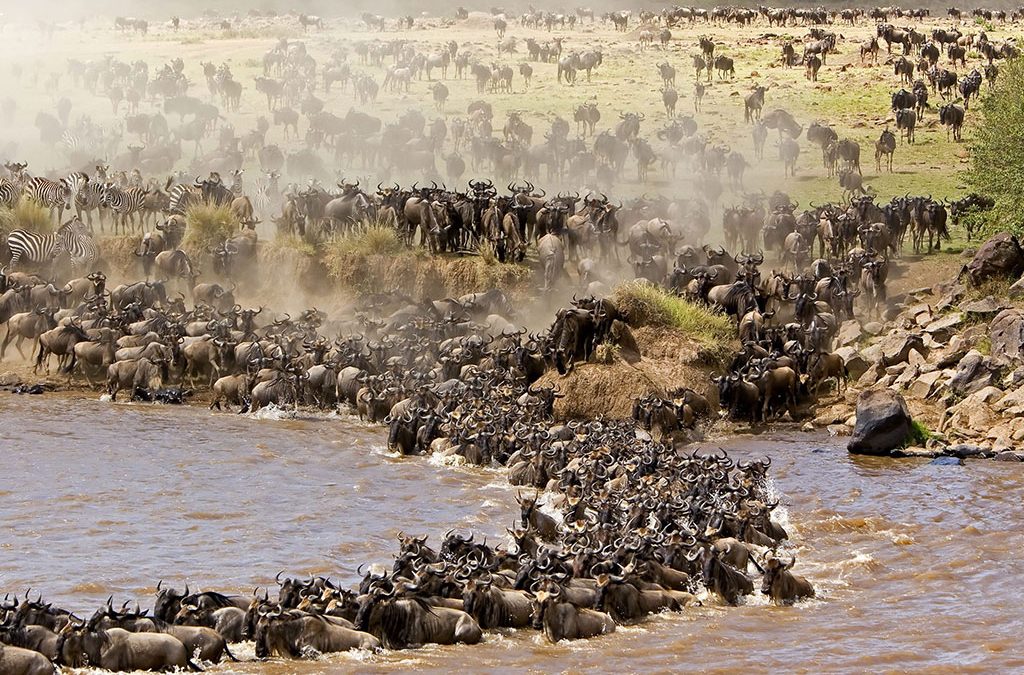
River Crossings in Serengeti National Park are among the most thrilling wildlife spectacles in the world, defined by drama and survival. Every year, over a million wildebeest, zebras, and gazelles move across vast plains in search of fresh grass and water. The sound of pounding hooves echoes through the open savannah as dust and energy fill the air. Crocodiles wait silently beneath the river’s surface, while predators lurk nearby, turning each crossing into a test of endurance. Watching this breathtaking event evokes awe, excitement, and deep respect for nature’s rhythm.
The Great Migration Journey
The Great Migration is a continuous cycle of movement across the Serengeti-Mara ecosystem, driven by the seasonal rains. From December to March, the herds graze and give birth in the lush southern plains of Serengeti and Ndutu. As the dry season approaches, they begin moving west and north in long, endless columns. This natural rhythm follows the life-giving rain, shaping one of the earth’s most dramatic wildlife events. Each stage reveals new landscapes, from open plains to rocky valleys and deep river crossings.
During May and June, wildebeest and zebra gather in the Western Corridor, preparing for the first major challenge—the Grumeti River crossings. The river flows through thick woodland, its banks lined with waiting Nile crocodiles. Depending on water levels, herds plunge across to reach greener pastures beyond. Although not as massive as later crossings, this scene remains thrilling, filled with heart-stopping tension and spectacular views of predator-prey interactions.
The Dramatic Mara River Crossings
By July, the herds begin arriving in the Northern Serengeti, close to the Mara River, one of Africa’s most iconic wildlife locations. Here, the crossings reach their breathtaking peak between July and October. Thousands of wildebeest gather along the riverbanks, restless and nervous, their instinct urging them forward despite the roaring current. The air feels heavy with anticipation as one brave animal finally leaps into the water, triggering a rush that shakes the landscape.
In August and September, crossings often occur daily, offering unforgettable photographic opportunities. The northern plains are alive with movement, echoing the cries of animals and the splashes of hooves churning through the muddy waters. Travelers watching from nearby hills or tented camps witness nature’s purest display of courage and instinct. Watching one crossing gives you a deep appreciation for the balance of danger and determination that defines the migration.
By October, the rains return to the south, calling the herds home. During this return migration, many animals cross the Mara River once again, navigating back through familiar dangers. This is the final chapter of their long journey before calving season begins anew in the south. Each return crossing carries the energy of survival and the promise of another cycle beginning soon.
Where to Stay in Serengeti
Options for accommodation in Serengeti National Park vary from luxurious lodges to mobile tented camps designed for adventure. Each region offers a different experience and unique access to migration routes.
Central Serengeti – The Seronera Area
The Central Serengeti, known as Seronera, offers fantastic game viewing all year and easy airstrip access. This region thrives with lions, leopards, and cheetahs, making it perfect for classic safari days. Guests can stay at the Four Seasons Safari Lodge, Meliá Serengeti Lodge, or Serengeti Serena Safari Lodge for comfort and panoramic views. For travelers preferring tented stays, Lemala Ewanjan, Dunia Camp, and Ole Serai Luxury Camp deliver a mix of adventure and elegance surrounded by endless plains.
Northern Serengeti – The Mara River Area
The Northern Serengeti is the most coveted region between July and October, offering front-row access to the Mara River crossings. Here, luxury meets wilderness in camps like Singita Mara River Tented Camp, Lemala Kuria Hills, Sayari Camp, and Nomad Lamai Serengeti. Their locations place guests close to crossing points, ensuring thrilling daily sightings and peaceful sunset views afterward. Each evening, you can listen to the distant roar of wildebeest and the murmuring waters of the Mara.
Southern Serengeti & Ndutu – The Calving Season
Between December and March, the southern Serengeti and Ndutu plains burst with new life during the calving season. More than half a million wildebeest are born here within weeks, attracting countless predators and offering intense wildlife encounters. Camps such as Lemala Ndutu, Kusini Safari Camp, and Mwiba Lodge provide ideal access to these calving grounds. The vast plains glitter with fresh green grass, and each sunrise paints the sky gold over an ocean of animals.
Western Corridor – The Grumeti Crossings
For travelers visiting from May to July, the Western Corridor provides a mixture of beauty and action. The Grumeti River flows through wooded landscapes, home to crocodiles and abundant birdlife. Lodges like &Beyond Grumeti River Lodge and Mbali Mbali Soroi Serengeti Lodge offer stylish comfort near the migration route. Guests often enjoy boat-like views of herds lining riverbanks under stormy skies, reminding them how nature rules this wild paradise.