
Uganda and Tanzania Safari: How to Combine Gorillas, Wildlife & the Serengeti
Uganda and Tanzania Safari: How to Combine Gorillas, Chimps, Wildlife & the Serengeti
A Uganda and Tanzania Safari is one of the most rewarding ways to experience East Africa. In a single journey, you can sit metres from a mountain gorilla in Bwindi’s misty forest, track chimpanzees through Kibale, then watch wildebeest pour across the Serengeti plains. Few safari combinations offer this much variety, and none feel quite so complete.
The practical question is how to make it work. The two countries are neighbours, but they are not linked by a simple road route for safari travelers, and each has its own seasons, permits and park rules. This guide explains how to combine them sensibly, what each country does best, how long you need, what it costs and how to avoid the common planning mistakes.
At Iconic Africa Safaris, we design every combined itinerary around the things you most want to see, then handle the permits, flights, lodges and transfers so the trip feels effortless. Use this guide to shape your ideas, then let Iconic Africa Safaris turn them into a confirmed, fully managed plan.
Why Combine Uganda and Tanzania in One Safari?
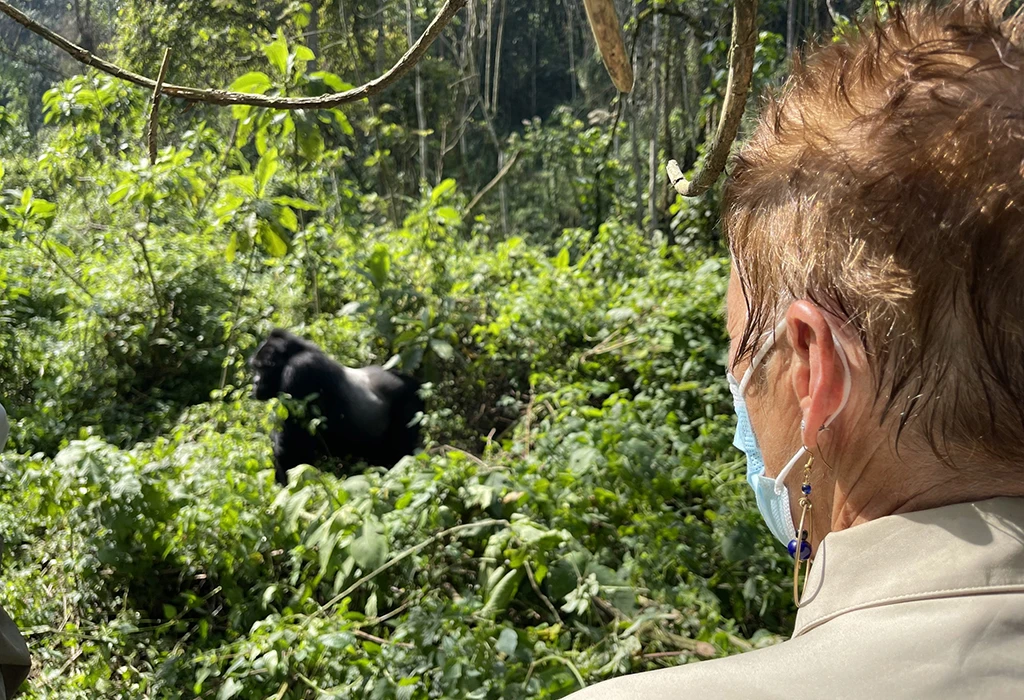
Tourist During Gorilla Trekking in Bwindi Impenetrable Forest National Park

Game drive in the plains of Serengeti National Park
Uganda and Tanzania are complementary rather than competing destinations. Uganda is intimate, green and primate-focused. Tanzania is vast, open and famous for large herds and big cats. Visiting only one means missing the other half of what East Africa offers, and the two together create a far more balanced safari.
Here are the main reasons travelers choose to combine them:
- Two completely different landscapes. Rainforest and volcanic highlands in Uganda, then open savanna, a volcanic crater and endless plains in Tanzania.
- Experiences you cannot get in one country alone. Tanzania has no mountain gorilla trekking, and Uganda has no Great Migration.
- A natural rhythm. Starting with quiet, walking-based forest encounters in Uganda and finishing with sweeping game drives in Tanzania builds the trip toward a big finale.
- Value and flexibility. Uganda’s gorilla permits cost far less than Rwanda’s, which leaves more budget for Tanzania’s lodges and park fees.
- Strong wildlife variety. You can see mountain gorillas, chimpanzees, tree-climbing lions, the Big Five and the Great Migration across one itinerary.
What Makes Uganda and Tanzania Different?
Understanding what each country does best helps you decide how many days to spend in each. The two are different in character, not just in scenery, and that difference is exactly what makes the combination so appealing.
Uganda for Gorillas and Primates
Uganda is one of the best places in the world to see primates. Bwindi Impenetrable National Park is home to roughly half of the world’s remaining mountain gorillas, and trekking to a habituated family is often described as the highlight of a lifetime. You spend up to one hour with the group once you find them.
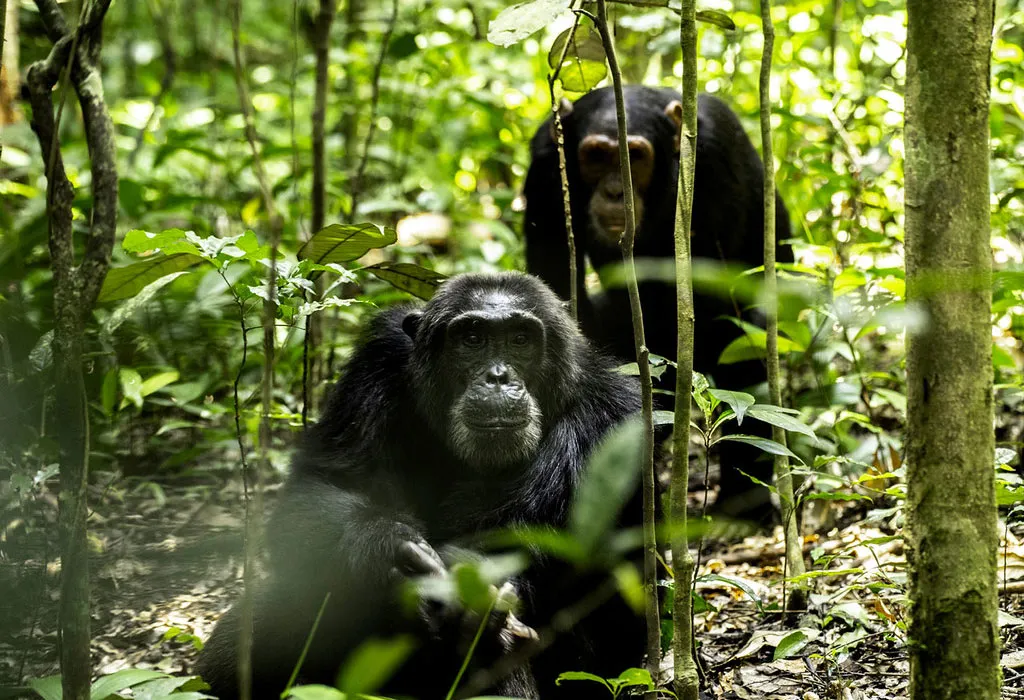
Beyond gorillas, Kibale Forest has one of the highest concentrations of primates anywhere, with excellent chimpanzee trekking. Queen Elizabeth National Park adds classic savanna game drives, the Kazinga Channel boat cruise and the tree-climbing lions of the Ishasha sector. Uganda also offers a long list of bird species and a warm, relaxed travel atmosphere.
Tanzania for the Serengeti and Big Five

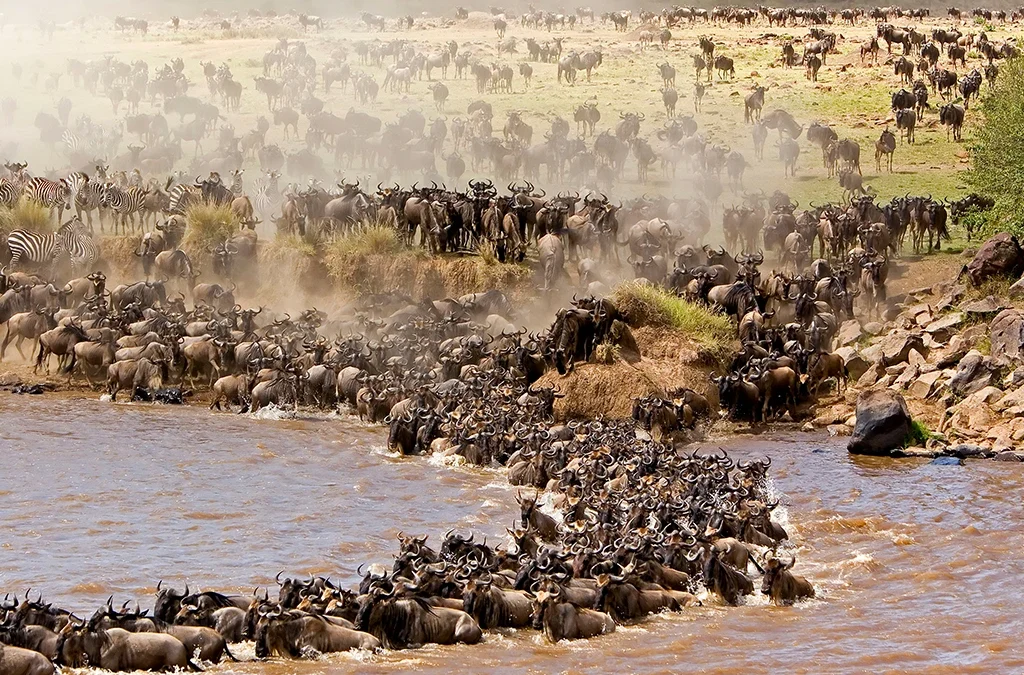
Tanzania is known for scale. The Serengeti’s plains stretch to the horizon and support one of the planet’s greatest wildlife spectacles: the Great Migration of more than a million wildebeest, plus zebra and gazelle, along with lions, leopards, cheetahs and elephants. Few places make big-cat sightings so likely.
Ngorongoro Crater offers a concentrated wildlife experience on its floor, often including black rhino, which is rare elsewhere. Tarangire is famous for large elephant herds and baobab trees, while Lake Manyara adds forest, lake and birdlife. Together, these parks give Tanzania the classic safari experience many travelers dream about.
How to Combine Uganda and Tanzania
There is no single correct route. The right structure depends on your priorities, your budget and how much time you have. In every case, the key principle is to do Uganda first and finish in Tanzania, because the Serengeti is the larger and more open finale, and because Tanzania’s Kilimanjaro airport is a convenient departure point.
Option 1: Entebbe → Bwindi → Entebbe → Tanzania
This is the simplest structure. You arrive in Entebbe, complete your Uganda itinerary, return to Entebbe (by road or by a short domestic flight from the Bwindi region), and then fly to Tanzania via a regional hub. It is easy to organise, flexible with dates and works well for travelers who want the fewest moving parts.
The drawback is that Bwindi to Entebbe is a long road journey if you do not fly, so many travelers use a domestic flight to save a full day. This option suits first-time visitors and anyone who values predictability.
Option 2: Entebbe → Bwindi → Kigali → Tanzania
In this route, you finish gorilla trekking in the southwest and cross toward Kigali, Rwanda, which is close to Bwindi’s southern entrance. From Kigali, you fly on to Kilimanjaro or Arusha, usually with a connection. This can save time on the road because Kigali is much closer to Bwindi than Entebbe is.
The trade-off is cross-border logistics and the need to check visa, vehicle and entry requirements carefully. It works best when your trip is planned as a one-way journey and your guides and transfers are coordinated in advance.
Option 3: Uganda Wildlife → Gorillas → Tanzania
This version builds a fuller Uganda experience before flying to Tanzania. You add Murchison Falls or Queen Elizabeth for savanna wildlife, then Kibale for chimpanzees, and end with gorillas before connecting to Tanzania. It gives a deeper Uganda experience and suits travelers who want more than a primate-only trip.
Because it adds days, it works best for itineraries of 14 days or longer. The Serengeti should still receive proper time, so avoid cutting Tanzania too short just to extend Uganda.
Best Uganda and Tanzania Safari Itineraries
Trip length shapes everything, including how rushed the journey feels and which parks you can realistically include. The itineraries below are summaries. Each can be customised, and each links to a dedicated page with day-by-day details.
7-Day Uganda and Tanzania Safari
A 7-day combination is tight but possible for travelers with limited time. Typically, you spend three to four days in Uganda focused on Bwindi gorilla trekking, then fly to Tanzania for a short Serengeti or Ngorongoro extension. Expect long travel days and minimal downtime.
This option suits experienced travelers who want the highlights and accept a fast pace. If gorilla trekking and the Serengeti are both essential, it is the shortest practical way to do both. For comfort, we usually suggest adding a few more days.
10-Day Uganda and Tanzania Safari
Ten days is a good balance between ambition and comfort. A typical plan includes a chimpanzee trek in Kibale, gorillas in Bwindi and a quick wildlife stop in Queen Elizabeth, followed by Tarangire, Ngorongoro and one night or two in the Serengeti.
You see the main highlights of both countries without feeling constantly in transit. The Serengeti portion is short, so this suits travelers who want a taste of Tanzania rather than a full migration-focused stay.
14-Day Uganda and Tanzania Safari
Fourteen days is the sweet spot for a combined safari and is the version we recommend most often. You can enjoy a relaxed Uganda section with chimpanzees, wildlife and gorillas, then give the Serengeti three full days. That is enough time to track the herds and enjoy the park without feeling rushed.
The detailed day-by-day plan appears in the next section. It works well for couples, honeymooners and photographers who want depth without an extreme trip length.
21-Day Uganda and Tanzania Safari
Twenty-one days lets you build a comprehensive East African journey. You can add Murchison Falls, extra time in Queen Elizabeth and Lake Mburo in Uganda, then extend Tanzania with Lake Manyara, a longer Serengeti stay and even a stop at Zanzibar or the northern Serengeti for river crossings.
This option suits travelers who want to slow down, photograph widely and combine safari with a beach finish. It also leaves a buffer for weather or flight changes.
Example 14-Day Uganda and Tanzania Safari
This sample itinerary shows how the pieces fit together. Iconic Africa Safaris confirms details such as flight routes, lodges and exact timings at booking and adjusts them to your travel dates.
Day 1: Arrival in Entebbe.
You land at Entebbe International Airport and transfer to your lodge, usually nearby, to rest after the journey. Depending on your arrival time, you may have an evening at the lake or a short orientation with your guide. It is a gentle first day that avoids rushing into a long road trip while still jet-lagged.
Day 2: Entebbe → Kibale Forest.
Drive west to Kibale, a journey of around six to eight hours with scenic stops through tea country and rural villages. You arrive in the afternoon and settle in at your lodge near the forest. The countryside along the way is a highlight in itself and offers a first real feel for Uganda.
Day 3: Chimpanzee trekking → Queen Elizabeth National Park.
Set out early to track chimpanzees in Kibale, one of the best places in Africa for this experience. After the trek, continue to Queen Elizabeth National Park. The afternoon is for relaxing or a short drive, with the sun setting over the volcanic crater lakes and savanna.
Day 4: Game drive and Kazinga Channel boat cruise.

Start with a morning game drive in search of elephants, buffalo, antelope and, with luck, lions and leopards. In the afternoon, take a boat cruise on the Kazinga Channel, where hippos, crocodiles and numerous birds gather along the water’s edge. It is a relaxed, photogenic day that contrasts nicely with the forest treks.
Day 5: Ishasha (tree-climbing lions) → Bwindi.
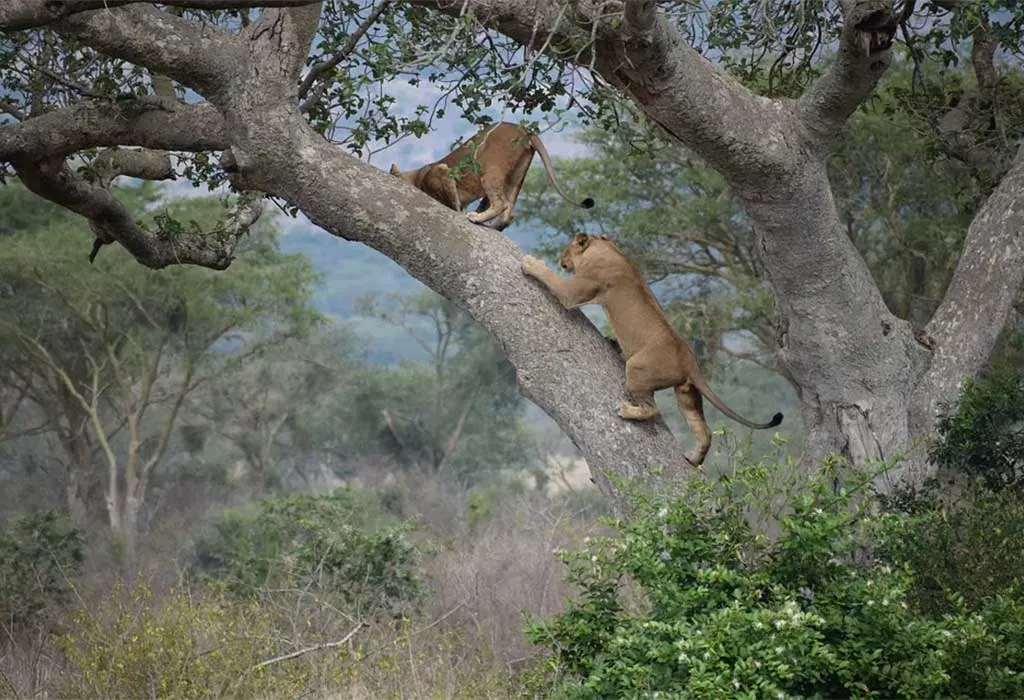
Drive south to the Ishasha sector, famous for lions that rest in fig trees. After a game drive there, continue through the highlands to Bwindi. The scenery becomes steadily more dramatic, with terraced hills and deep valleys, and you arrive ready for the next morning’s trek.
Day 6: Gorilla trekking in Bwindi.
After a briefing, trek into the forest with trackers and guides to find a habituated gorilla family. The hike can be short or long, depending on where the gorillas are that day. Once you find them, you spend one hour observing at close range, an experience most travelers remember for life.
Day 7: Bwindi → Entebbe/Kigali → fly to Arusha.
This is the transition day and a long one. You travel from Bwindi to a departure point, either Entebbe or Kigali, or use a domestic flight where available, then connect to Tanzania. Iconic Africa Safaris confirms the flight route, direct or via a regional hub, at booking and coordinates every transfer. You arrive in Kilimanjaro or Arusha in the evening to rest.
Day 8: Arusha → Tarangire National Park.
After breakfast, drive to Tarangire, known for large elephant herds, baobab trees and strong birdlife. A full afternoon of game drives gives an excellent introduction to Tanzania’s wildlife. Tarangire is especially rewarding in the dry months when animals gather near the Tarangire River.
Day 9: Tarangire → Ngorongoro highlands (Karatu).
Enjoy a final morning game drive, then continue to the Karatu area, a fertile highland region on the edge of the Ngorongoro Conservation Area. You have time to relax at your lodge, enjoy the views and prepare for the crater descent and the long journey toward the Serengeti.
Day 10: Ngorongoro Crater → Serengeti.

Descend into the crater early for a half-day game drive on its floor, where you may see lions, hyenas, hippos and sometimes black rhino. In the afternoon, continue to the Serengeti, crossing the highlands and plains. You arrive at your camp or lodge in the evening, with the open savanna all around.
Day 11: Full day in the Serengeti.
Spend the day on game drives with your guide, searching for big cats, elephants, giraffes and, depending on the season, the Great Migration. Early morning and late afternoon are usually best for wildlife. A picnic lunch in the bush keeps you in the best areas through the day.
Day 12: Full day in the Serengeti.
Today you can explore a different region of the park or follow where the herds have moved. Your guide uses recent sightings and local knowledge to choose the most productive area. Some travelers add an optional balloon safari at sunrise, which is booked in advance.
Day 13: Full day in the Serengeti.
Another day to enjoy slow, rewarding wildlife viewing. With three full days, you can wait patiently at a river, follow a lion pride or spend time with the herds, rather than just driving from one sighting to the next. It is often the day that travelers say they wish they had more of.
Day 14: Serengeti → fly to Arusha/departure.
After a final morning game drive, you transfer to an airstrip and fly to Arusha, where you connect to your onward international flight. Flights from the Serengeti typically leave from airstrips at set times, so your lodge and guide coordinate the schedule for a smooth finish.
For a longer trip, the Serengeti section should receive more time, especially when the Great Migration is a major reason for the trip. With three full days, travelers have a realistic chance of following the herds rather than simply visiting the area.
Uganda and Tanzania Safari Cost
Prices for a combined safari vary widely with season, lodge choice, group size and flight routes. The figures below are indicative ranges per person sharing for a 14-day trip, meant to help you plan, not to replace a formal quotation. Park fees and permits are reviewed regularly, so Iconic Africa Safaris confirms current rates in your written quotation before you commit to anything.
| Safari style | Indicative price (per person, 14 days) | What to expect |
|---|---|---|
| Budget | From about US$5,500 | Simple lodges and tented camps, shared or basic vehicles, fewer extras |
| Mid-range | About US$8,000 to US$12,000 | Comfortable lodges, private 4×4 with guide, some domestic flights |
| Luxury | About US$15,000 and above | Premium lodges and camps, private flights, exclusive experiences |
The main cost components are:
- Gorilla permit. Uganda’s gorilla trekking permit for foreign non-residents has been around US$800 per person. Permits are limited and sell out in peak months, so book early. Rwanda’s permits cost considerably more.
- Chimpanzee trekking. Permits in Kibale are typically in the range of US$250 per person, with a habituation experience costing more.
- Tanzania park fees. These are charged per person per day and vary by park. The Serengeti and Ngorongoro are the most expensive, and Ngorongoro adds a per-vehicle crater service fee. Fees often change from July each year.
- Accommodation. The largest variable. Budget camps and luxury lodges can differ several times over in price, especially in the Serengeti.
- 4×4 safari vehicle. A private vehicle and driver-guide in each country is a significant cost, shared by the group.
- Domestic flights. Useful for saving time, such as Bwindi to Entebbe or Serengeti to Arusha, and add to the total.
- International flights. Not usually included in safari prices. Fares vary by season and routing, so compare Entebbe and Kilimanjaro or Nairobi options.
Best Time for a Uganda and Tanzania Safari
The best time depends on what you value most. Gorilla trekking is possible year-round, but dry months make hiking easier. Tanzania’s wildlife viewing changes with the Great Migration, so timing can shape where you stay.
- Uganda gorilla trekking seasons. The drier months of June to September and December to February make trails easier and less muddy. The rainy seasons, roughly March to May and October to November, bring lush scenery, fewer visitors and sometimes lower prices, but steeper, slipperier hikes.
- Tanzania dry season. From late June to October, vegetation is thinner and animals gather near water, making wildlife viewing easier. It is the most popular season, so book early.
- Serengeti wildlife viewing. The Serengeti has excellent game year-round, with resident lions, leopards, elephants and giraffes in every season.
- Great Migration timing. The herds move in a broad cycle. From December to March, they are generally in the southern Serengeti and Ndutu area. Around June and July, they head toward the western corridor. From July to October, they are often in the northern Serengeti and near the Mara River.
- Calving season. From roughly late January to February, hundreds of thousands of wildebeest calves are born in the south, drawing predators and offering dramatic wildlife viewing.
- Rainy-season travel. Rains in March to May can mean muddy roads and some closed camps, but also green landscapes, fewer crowds and excellent photography light.
- Lower-season pricing. Many lodges offer reduced rates in the wetter months, which suits flexible travelers. Gorilla permits, however, are not discounted in the same way.
For most travelers combining the two countries, June to October and December to February are the strongest windows, balancing manageable trekking with excellent safari conditions.
Uganda Gorilla Trekking and Tanzania Safari
This pairing is the heart of the combination, and the reason many travelers begin planning. Gorilla trekking and the Serengeti are two of Africa’s most sought-after wildlife experiences, and they sit in different countries. Doing both in one trip is entirely realistic with the right structure.
Gorilla trekking in Uganda. The experience begins with an early briefing at the park headquarters, then a hike into the forest with rangers and trackers. The time to find the gorillas varies from under an hour to several hours. Once you reach them, you stay for one hour, watching the family feed, play and rest. Trekking is physically moderate to challenging, and porters are available to help carry bags and assist on steep slopes.
The Serengeti after the forest. After the quiet intensity of the gorilla trek, the Serengeti’s open horizons provide a dramatic change of pace. Game drives replace hiking, and the focus shifts to big cats, herds and wide landscapes. Many travelers find that the contrast makes each part more memorable.
Planning tips for doing both:
- Book your gorilla permit first. Permits are limited and are the hardest item to secure, especially in peak months. Fix your trekking date, then build the rest of the itinerary around it.
- Allow a buffer day. Gorilla treks can take longer than expected, so avoid scheduling an early flight the next morning.
- Place gorillas before Tanzania. This leaves the more flexible Serengeti segment for the end, where timing can adapt.
- Give the Serengeti at least three full days. It rewards patience and lets you follow wildlife movements.
Uganda vs Tanzania Safari
Travelers often ask whether Uganda or Tanzania is the better safari destination. The honest answer is that they offer different things. Uganda excels at close, immersive primate encounters and lush landscapes. Tanzania excels at vast plains, high wildlife density and the Great Migration. Rather than choosing one, many Iconic Africa Safaris guests choose both.
| What to compare | Uganda | Tanzania |
|---|---|---|
| Signature experience | Trekking to mountain gorillas in Bwindi and tracking chimpanzees in Kibale. Encounters are quiet, close and on foot. | Following the Great Migration across the Serengeti and descending into Ngorongoro Crater. Encounters are on game drives across open plains. |
| Landscape | Rainforest, rolling green hills, crater lakes, rivers and the Rwenzori and Virunga mountains. | Wide golden savanna, volcanic highlands, baobab-studded valleys and the Rift Valley escarpment. |
| Wildlife highlights | Mountain gorillas, chimpanzees, 13 primate species in some areas, tree-climbing lions, elephants, hippos and over 1,000 bird species. | Wildebeest and zebra herds, lions, leopards, cheetahs, large elephant herds, black rhino and the Big Five. |
| Pace and feel | Relaxed and personal, with fewer vehicles and a warm, welcoming atmosphere. | Expansive and dramatic, with a well-developed safari circuit and a wide choice of lodges and camps. |
| Physical effort | Moderate. Forest treks can be steep and muddy, though porters and flexible trekking options help. | Low. Most wildlife viewing is from the safari vehicle, with short walks at camp. |
| Best season | June to September and December to February for drier trails. Trekking is possible year-round. | Late June to October for dry-season viewing. The Migration moves, so timing shapes where you stay. |
| Cost drivers | Gorilla and chimpanzee permits. Daily park fees are generally lower. | Park fees, which are higher in the Serengeti and Ngorongoro, plus premium camps and lodges. |
| Best for | Primate lovers, birders, travelers who want an intimate, off-the-beaten-path experience. | First-time safari-goers, photographers, families and anyone dreaming of the Migration. |
The conclusion is simple. If you want only one experience, choose the country that matches it. If you want the most complete East African safari, combine them. Iconic Africa Safaris plans the balance between forest and savanna so that neither country feels like an afterthought.
How to Travel Between Uganda and Tanzania
For almost every combined safari, flying is the best way to travel between the two countries. The usual connection is between Entebbe International Airport (EBB) in Uganda and Kilimanjaro International Airport (JRO) in northern Tanzania, which is the gateway to Arusha, Tarangire, Ngorongoro and the Serengeti. Iconic Africa Safaris builds this transfer into every combined itinerary: we choose the routing, plan the timing around your gorilla trek and arrange meet-and-greet and transfers at both ends.
Flight Connections Between Uganda and Tanzania
The table below shows the most common routings. Times are indicative estimates. Airline schedules, routes and layover lengths change often, so Iconic Africa Safaris confirms the best current option for your travel dates.
| Route | Connection | Flight time (approx.) | Total journey (approx.) |
|---|---|---|---|
| Entebbe (EBB) → Kilimanjaro (JRO) | Via Nairobi (NBO) | About 1.5 hours + 1 hour | 4 to 6 hours including layover |
| Entebbe (EBB) → Kilimanjaro (JRO) | Via Kigali (KGL) | About 1 hour + 2 hours | 5 to 7 hours including layover |
| Entebbe (EBB) → Kilimanjaro (JRO) | Via Dar es Salaam (DAR) | About 2 hours + 1 hour 15 minutes | 5 to 8 hours including layover |
| Entebbe (EBB) → Kilimanjaro (JRO) | Direct, where scheduled | About 1 hour 45 minutes to 2 hours | 2 to 3 hours, but not offered every day |
| Kigali (KGL) → Kilimanjaro (JRO) | Direct, where scheduled | About 2 hours | 3 to 4 hours door to airport |
Getting From Bwindi to Your International Flight
Most of the transfer effort sits between the gorilla forest and the airport, so this leg matters as much as the flight itself.
| Journey | Method | Approximate time |
|---|---|---|
| Bwindi → Entebbe | Road | 8 to 10 hours |
| Bwindi (Kihihi or Kisoro airstrip) → Entebbe | Light aircraft | About 1 hour 15 minutes |
| Bwindi → Kigali | Road, including the border crossing | 4 to 5 hours |
| Kilimanjaro (JRO) → Arusha | Road | About 1 to 1.5 hours |
| Arusha → Serengeti airstrip | Light aircraft | About 1 hour to 1 hour 30 minutes |
| Arusha → Tarangire | Road | About 2.5 to 3 hours |
Overland Travel Between Uganda and Tanzania
It is technically possible to travel overland, but it is rarely practical for a safari. Driving from Kampala through Nairobi to Arusha involves roughly 17 to 20 hours on the road, normally split over two days, plus border crossings. Routes around Lake Victoria are also long. For most travelers, the time lost outweighs the savings.
Tips for a Smooth Transition Day
- Treat the transfer as a travel day. Avoid scheduling activities on the day you fly between countries.
- Finish your gorilla trek first. Leave at least one buffer night between trekking and your international flight, since treks can run long.
- Choose a morning departure from the forest region where possible. A domestic flight from Bwindi saves a full day compared with driving.
- Pack for soft-bag limits. Light aircraft in both countries typically restrict luggage to about 15 kg in soft bags.
- Check entry requirements. If you route via Kigali, confirm visa rules and any East Africa Tourist Visa arrangements. Iconic Africa Safaris advises on this when you book.
With Iconic Africa Safaris, your driver-guide meets you at the airport or airstrip, manages luggage and keeps the connection running to time, so the move between countries is one of the smoothest parts of your safari.
Best Places to Stay
Accommodation shapes the feel of the trip. Choices range from simple tented camps to refined luxury lodges, and the best option depends on your budget and priorities. The following overview shows what to look for in each area. Iconic Africa Safaris selects and books specific properties for your dates, matching each lodge to your budget, travel style and the season.
Uganda
- Bwindi. Look for lodges close to your trekking sector, with views over the forest. Budget options are simple and friendly, mid-range lodges offer comfort and good food, and luxury camps provide private cottages and exceptional service.
- Kibale. Choose a lodge near the forest edge for early trekking starts. Many offer birdwatching, nature walks and views over crater lakes.
- Queen Elizabeth. Options range from lodges overlooking the Kazinga Channel to camps in the Ishasha sector, which place you close to the tree-climbing lions.
Tanzania
- Arusha. A comfortable base for arrival, often a coffee-estate lodge or boutique hotel to rest before the safari begins.
- Tarangire. Tented camps and lodges overlooking the river or baobab-dotted hills, ideal for elephant viewing.
- Ngorongoro. Crater-rim lodges offer dramatic views, while Karatu lodges offer comfort at lower prices and easier access.
- Serengeti. Choose between permanent lodges and seasonal or mobile camps that follow the Migration. Location matters more than style, so ask where the herds are likely to be on your dates.
What Is Included in a Combined Safari?
Inclusions vary by operator and package, but most quality combined safaris include:
- Airport pickups and drop-offs
- Accommodation as described in your itinerary
- Meals as specified, often full board on safari
- Private 4×4 safari vehicle with an experienced driver-guide
- Park entrance fees and conservation fees
- Gorilla and chimpanzee trekking permits, if specified
- Game drives, boat cruises and guided activities listed in the itinerary
- Bottled drinking water during game drives
- Domestic flights, if included in your package
Always check your quotation carefully so you know exactly what your package covers.
What Is Not Included?
Some costs are usually excluded, and it is helpful to plan for them:
- International flights to and from East Africa
- Visas and entry fees
- Travel and medical insurance
- Tips for guides, drivers, trackers, porters and lodge staff
- Personal items such as laundry, souvenirs and alcoholic drinks
- Optional activities, such as a balloon safari
- Vaccinations and medical costs
- Costs caused by changes to your itinerary after booking
Uganda and Tanzania Safari Packing List
Packing well makes the trip more comfortable. Choose lightweight, layered clothing in neutral colours, and remember that domestic flights often have strict baggage limits, typically around 15 kg in soft bags.
- Clothing. Long-sleeved shirts, lightweight trousers, a warm fleece for early mornings, a waterproof jacket and a sun hat.
- Footwear. Sturdy, broken-in hiking boots for gorilla and chimpanzee trekking, plus comfortable shoes for the vehicle and camp.
- Trekking gear. Gardening-style gloves, gaiters or long socks to tuck trousers into, and a small daypack.
- Photography. A camera with a good zoom lens, spare batteries, memory cards and a dust-proof bag. Note that flash is not allowed with gorillas.
- Health and protection. Insect repellent, sunscreen, sunglasses, a basic first-aid kit and any personal medication.
- Documents. Passport with sufficient validity, visas, vaccination records, permits and insurance details.
- Extras. Binoculars, a power bank, a reusable water bottle and a small torch or headlamp.
Who Should Take a Uganda and Tanzania Safari?
This combination suits a wide range of travelers, as it can be adapted to different interests and paces.
- Couples. A romantic journey with varied experiences and memorable moments to share.
- Honeymooners. Intimate lodges, sunrise game drives and an unforgettable shared adventure.
- Families. Suitable for families with older children, noting that gorilla trekking has a minimum age of 15.
- First-time Africa travelers. A well-rounded introduction with variety, comfort and expert guidance.
- Photographers. Rich subject matter, from gorilla portraits to sweeping Serengeti landscapes.
- Wildlife enthusiasts. A chance to see an exceptional range of species and habitats.
- Gorilla trekking enthusiasts. Those who want gorillas first and a classic safari afterward.
Ready to Book Your Uganda and Tanzania Safari with Iconic Africa Safaris?
Iconic Africa Safaris offers three simple, reliable ways to secure your next unforgettable Uganda and Tanzania adventure today. Simply complete our quick online booking form to start planning your dream safari experience right away. Our friendly team also welcomes direct emails at info@iconicafricasafaris.com to discuss your specific travel plans and preferences. For WhatsApp messages and calls, tap the green WhatsApp icon in your screen’s bottom right corner anytime.
Our driver-guides are the trip managers guests trust most: trained professionals, some former park rangers, all skilled interpreters of wildlife and culture. They stay with travellers from the first airport pickup to the final wave-off, keeping each day running smoothly and safely.
Frequently Asked Questions
Can I combine Uganda and Tanzania on one safari?
Yes. Many travelers do so, usually by flying between the two countries. A well-planned itinerary lets you enjoy Uganda’s primates and Tanzania’s savanna wildlife without feeling rushed.
How many days do I need for Uganda and Tanzania?
A minimum of 7 days is possible for the highlights, but 10 to 14 days is more comfortable. For a relaxed pace and a strong Serengeti experience, 14 days is ideal.
Is Uganda or Tanzania better for safari?
Neither is simply better. Uganda is best for gorillas, chimpanzees and a quieter feel, while Tanzania is best for the Serengeti, Ngorongoro and the Great Migration. Combining both gives the most complete experience.
Can I do gorilla trekking and the Serengeti in one trip?
Yes. Gorilla trekking in Uganda followed by a Serengeti safari in Tanzania is one of East Africa’s most popular combinations. Book your gorilla permit early and allow a buffer between the two.
How much does a Uganda and Tanzania safari cost?
Costs vary with style and season. As a guide, a 14-day trip may start from around US$5,500 for budget travel and rise to US$15,000 or more for luxury. Permits, park fees and flights make up a large share of the total.
What is the best time to combine Uganda and Tanzania?
June to October and December to February are generally best, with drier trails in Uganda and strong wildlife viewing in Tanzania. The ideal Migration area depends on the month.
Can I visit the Serengeti after gorilla trekking?
Yes, and it is the recommended order. Complete your gorilla trek first, then travel to Tanzania using a transition day, and finish with the Serengeti.
Is it better to fly or drive between Uganda and Tanzania?
Flying is almost always better. The safari regions are far apart, and overland routes are long and slow. A flight, often through a regional hub, saves valuable days.