
Top 5 Must-See Animals in Lake Mburo National Park
Lake Mburo National Park is located in Uganda’s hills, just a 5 hours from the capital city Kampala. This park is smaller than other famous parks, covering 370 square kilometers. It has open grasslands with acacia trees, lakes surrounded by papyrus plants, and wetlands. The park is home to over 350 bird species and many different mammals. Unlike bigger parks, Lake Mburo is less crowded, giving visitors closer experiences with wildlife. You can enjoy game drives, boat trips, and even walking safaris.
What makes Lake Mburo special? It’s one of the few parks in Uganda where you can drive your own car and walk on trails with park rangers as guides. The park focuses on protecting nature while helping local communities. Seeing these top 5 animals is not just about checking them off a list—it’s about learning how they live in this ecosystem. Bring binoculars, book a guided tour (costs about $40–60 per person), and visit during the dry season (June to September or December to February) for the best animal viewing.
1. Burchell’s Zebras: The Striped Stars
Zebras are the park’s most beautiful animals. Lake Mburo has about 4,000 zebras, making it one of Uganda’s biggest zebra populations. These black-and-white animals eat grass in groups across the hills. Their stripes create an interesting pattern that confuses predators like lions.
Why should you see them? Zebras show you the rhythm of life on the savanna. Watch them stop eating when they hear strange sounds, with their ears moving like antennas. During morning drives on the Rwakajunju Trail, you’ll see them mixing with impalas and warthogs, walking in lines to water holes. Interesting fact: Their stripes don’t just hide them from predators—they also keep biting flies away by confusing the insects. You can best see zebras on guided game drives from Mpanga Gate or during walks, where you might watch baby zebras playing with adult zebras.
2. Impalas: Graceful Jumping Antelopes
You must see impalas when visiting Lake Mburo. There are thousands of these athletic antelopes in the park. They have smooth, reddish-brown coats, and male impalas have beautiful curved horns up to 75cm long. These animals can jump 3 meters high and 11 meters forward in stiff-legged jumps called “pronking”—they do this when alarmed or trying to attract mates.
What’s exciting about impalas? When they sense danger like a leopard nearby, whole groups jump together in perfect timing, turning the field into a dance. Near Lake Mburo’s shores, they eat acacia shoots and often stay close to zebras for safety. Listen for their loud snorting sounds—they use these to warn others of danger.
Where to see them? Boat safaris on Lake Mburo show impalas going into the water to eat water plants. Night drives let you see them in spotlights, with their eyes shining. Bird watchers also like watching impalas because their movements attract eagles.
3. Eland: The Gentle Giants
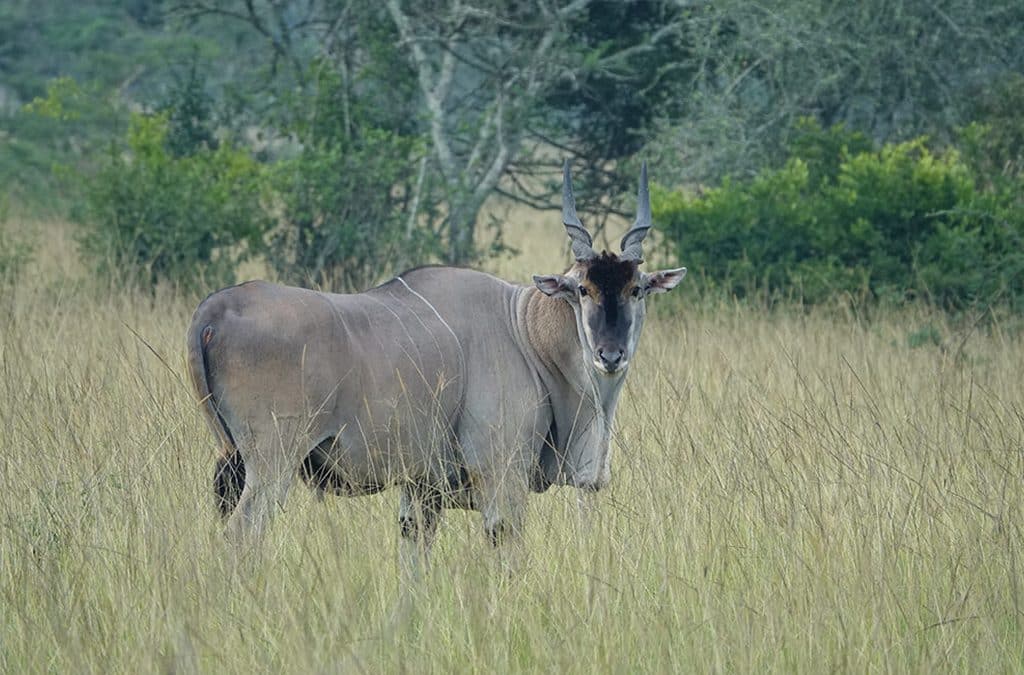
The rare eland is Africa’s largest antelope. Small groups of 10–20 elands live in Lake Mburo. They can weigh up to 900kg, have spiral horns and loose skin folds under their necks. Despite their large size, they move gracefully.
Why are they must-see animals? Elands are rare in Uganda—Lake Mburo is the only place to find them. See them on hilltops at sunrise, or watch them bend their bodies to clean their babies. Male elands make deep sounds like lions during mating season.
Walk the Rubanga Forest Trail for close views, or join a ranger-led walk to watch them eating mid-height bushes. They eat leaves from thorny trees that other animals avoid, which helps control bush growth. Conservation note: Elands show successful protection work. Poaching once killed many of them, but anti-poaching efforts have brought their numbers back up.
4. Hippos: Water Giants
Lake Mburo’s lakes are full of hippos. Groups of 20–50 hippos make grunting sounds from the water. These 3-ton animals come out of the water at sunset to eat 50kg of grass each night. They can open their mouths up to 150 degrees.
Why you shouldn’t miss them: Hippos are very important for the ecosystem. They stir up lake beds, which puts oxygen in the water, and their waste fertilizes the grasslands. Underwater boat trips give you amazing views—pink-skinned hippos moving like submarines, with baby hippos riding on their mothers’ backs. Be careful: Hippos kill more people in Africa than any other large animal because they protect their territory aggressively.
Take a boat from Rwambu Swamp (costs $30 per person) during sunset when hippos open their mouths wide together. You can also look for crocodiles. Sustainability note: Too many hippos can stress the lakes, so rangers use drones to monitor them, balancing tourism with protecting the habitat.
5. Rothschild’s Giraffes: The Tall Newcomers
The last animal on our list is the Rothschild’s giraffe. These giraffes have irregular brown patches and no spots on their lower legs. They were brought to the park in 2018 from Nairobi, and their population has grown. They’re rare in Uganda outside of zoos.
These 5.5-meter-tall animals stretch their long necks to eat from the tops of acacia trees. Male giraffes fight by swinging their necks and hitting each other with their heads to show dominance. Baby giraffes have very long legs and can run soon after being born.
See them from Warukiri viewpoint or mobile camps, especially during dry seasons when trees have more leaves. They’re shy but curious, looking down at visitors from their great height. Conservation success: This type of giraffe is endangered in other places. Lake Mburo’s protection efforts, supported by partners like the Rothschild Foundation, give them a safe home.
Getting to Lake Mburo National Park from Kampala
Lake Mburo is one of Uganda’s most accessible national parks, located about 240 km (150 miles) west of Kampala. Here are your options:
By Road (most common):
- Duration: 4.5-5 hours drive
- Route: Take the Kampala-Mbarara highway via Masaka. At Sanga (about 13 km after Lyantonde), turn off toward the park
- Options:
- Self-drive with a rental car (4WD recommended but not essential)
- Hire a private car with driver
- Use organized tour operators who arrange transport
- The road is mostly paved and in good condition
Public Transport:
- Take a bus or matatu from Kampala to Mbarara, ask to be dropped at Sanga junction
- From Sanga, hire a boda-boda (motorcycle taxi) or special hire to the park (about 13 km)
- Less convenient but more budget-friendly
Best Time to Visit Lake Mburo National Park
Dry seasons (ideal):
- June to August and December to February
- Advantages: easier game viewing as animals gather at water sources, better road conditions, pleasant weather for activities
Wet seasons:
- March to May and September to November
- The park is beautiful and green, good for birdwatching (migratory birds present November-April), fewer tourists, but roads can be muddy and animals more dispersed


