Top 10 Must-See Animals in Murchison Falls National Park
Nestled in northwestern Uganda along the mighty Nile River, Murchison Falls National Park spans over 3,840 square kilometers of savannah, woodlands, and dramatic riverine landscapes. As Uganda’s largest national park, it’s a biodiversity hotspot where the Nile squeezes through a narrow 7-meter gorge, creating one of Africa’s most spectacular natural phenomena. For wildlife lovers, birders, and safari planners like you, Murchison offers unparalleled game viewing—especially during dry seasons (June to September or December to February) when animals congregate around water sources. Home to over 76 mammal species and 450 birds, the park promises thrilling encounters. Here’s our curated top 10 animals to spot with tips to maximize your sightings on game drives or boat safaris.
1. Nile Crocodiles: Apex Predators of the Nile
No visit to Murchison is complete without spotting the formidable Nile crocodile (Crocodylus niloticus), Africa’s largest reptile, growing up to 6 meters long. These stealthy ambush hunters lurk in the park’s rivers and swamps, with the highest concentrations near the falls and along the Nile’s bends. Boat safaris from Paraa offer prime viewing—watch them bask on banks or launch explosive attacks on hippos or antelope. Females lay up to 60 eggs in sandy nests, guarding them fiercely. Conservation note: Overhunting has reduced populations, but Uganda’s protections are aiding recovery. Spotting tip: Dawn boat trips reveal them sunning themselves.
2. Hippopotamuses: River Giants in Pods
Hippos (Hippopotamus amphibius) dominate Murchison’s waterways, with an estimated 2,000 individuals forming massive pods in the Victoria Nile. These 3-ton behemoths spend days submerged to avoid sunburn, emerging at dusk to graze up to 40kg of grass nightly. Their thunderous yawns and territorial grunts make for unforgettable audio experiences. Boat safaris showcase their social dynamics—bulls fiercely defend harems. Fun fact: Hippos kill more humans in Africa than any other large animal due to their unpredictability. Conservation efforts focus on habitat protection amid poaching threats. Tip: Join a late-afternoon Nile cruise for close-up views without disturbing their rest.
3. African Elephants: Gentle Titans of the Savannah
Murchison’s elephant herds (Loxodonta africana), numbering around 1,000, roam the northern grasslands, browsing acacia trees and dust-bathing to regulate body temperature. Mature bulls can weigh 6 tons, their tusks gleaming as they trumpet across the plains. Game drives in the Buligi or Red Chili sectors yield family groups with playful calves. These intelligent herbivores shape the ecosystem by dispersing seeds. Ivory poaching decimated numbers in the 1980s, but anti-poaching patrols have boosted populations. Spotting tip: Early morning drives catch them at waterholes; binoculars help track distant herds.
4. Lions: Kings of the Pride
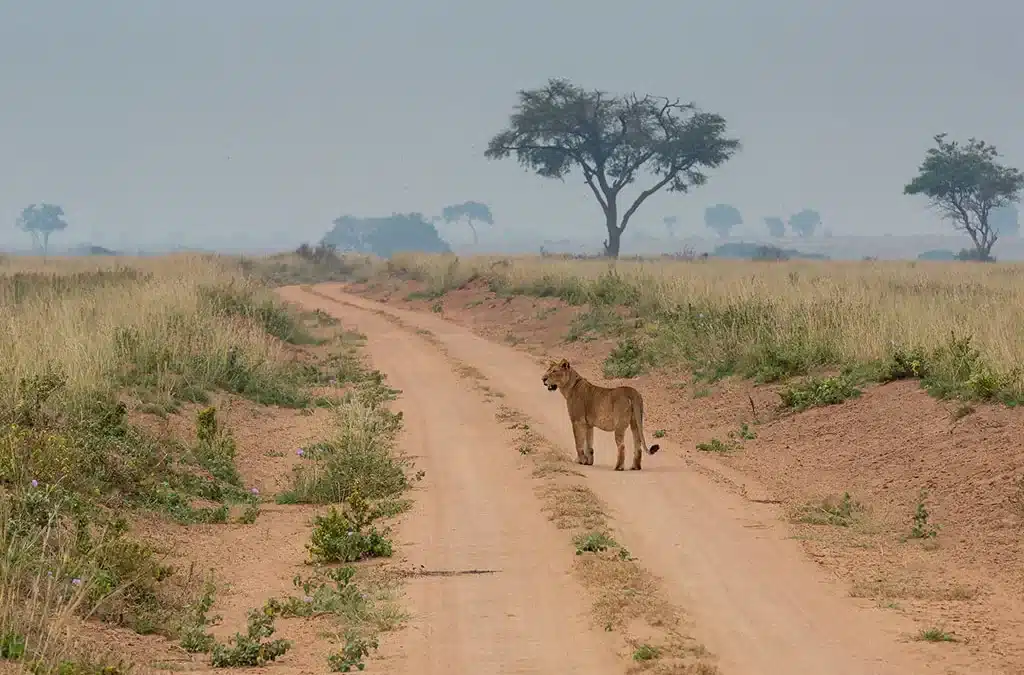
The park’s 50-100 lions (Panthera leo) prowl open savannahs, often hunting in prides of 10-15. Murchison’s prides are habituated to vehicles, offering safe, eye-level views of cubs tumbling or adults devouring kills like buffalo. The Nile provides easy prey access, leading to dramatic riverbank hunts. Males’ dark manes signal dominance. As Uganda’s only park with year-round lion sightings, it’s a highlight for big cat enthusiasts.
5. Uganda Kob: Graceful Antelope Icons
The endemic Uganda kob (Kobus kob thomasi), Uganda’s national antelope, graces Murchison’s floodplains in herds of hundreds. Males, with their glossy reddish coats and lyre-shaped horns, lek (display) dramatically to attract mates—leks near the Nile are birding bonuses too. These grazers thrive in grassy areas, fleeing predators in zigzags. Park rangers use kob populations to gauge ecosystem health.
6. Rothschild’s Giraffes: Towering Acrobats
Elegant Rothschild’s giraffes (Giraffa camelopardalis rothschildi), with fewer than 1,500 left globally, browse treetops in Murchison’s woodlands. Their long necks stretch 5.5 meters, peeling leaves with prehensile tongues. Watch calves gallop awkwardly behind mothers. This subspecies, distinguished by no leg spots, faces habitat loss. Spot them in the northern sector; game drives offer silhouette views at sunset.
7. Cape Buffaloes: Black Death Herds
Murchison’s buffalo herds (Syncerus caffer), up to 100 strong, wallow in swamps and charge intruders with curved horns forming a “boss.” Known as “black death” for malaria-carrying flies and aggression, they form the lion’s top prey. Boat safaris reveal mud-caked groups crossing the Nile. Stable populations here aid predator sustenance.
8. Primates: Playful Troops of Baboons and Monkeys
Olive baboons (Papio anubis) and patas monkeys swing through riverine forests in raucous troops. Baboons, with hierarchical societies, forage omnivorously, while agile patas sprint at 55km/h across grasslands. Spot them from game drives or walks near the Delta. These social primates offer comic relief with grooming sessions. Habitat fragmentation threatens them, but Murchison’s corridors help.
9. Oribi and Other Antelopes: Hidden Gems
Slender oribi (Ourebia ourebi), with their black glandular faces, dart through tall grasses alongside defassa waterbuck and Jackson’s hartebeest. These smaller antelopes add diversity to drives, often signaling larger predators nearby. Oribi whistle alarms; waterbuck’s shaggy coats shine wet. Less common but rewarding for patient spotters. Conservation focuses on grassland preservation.
10. Nile Lechwes: Marsh Specialists
The handsome Nile lechwe (Kobus megaceros) inhabits papyrus swamps, males sporting elegant spiral horns. These semi-aquatic antelopes swim effortlessly, grazing aquatic plants. Boat safaris in the Delta provide the best views of their bobbing herds. Endangered by wetland drainage, Murchison protects a key population.