
How much does the Gorilla Safari Package Cost in Uganda and Rwanda?
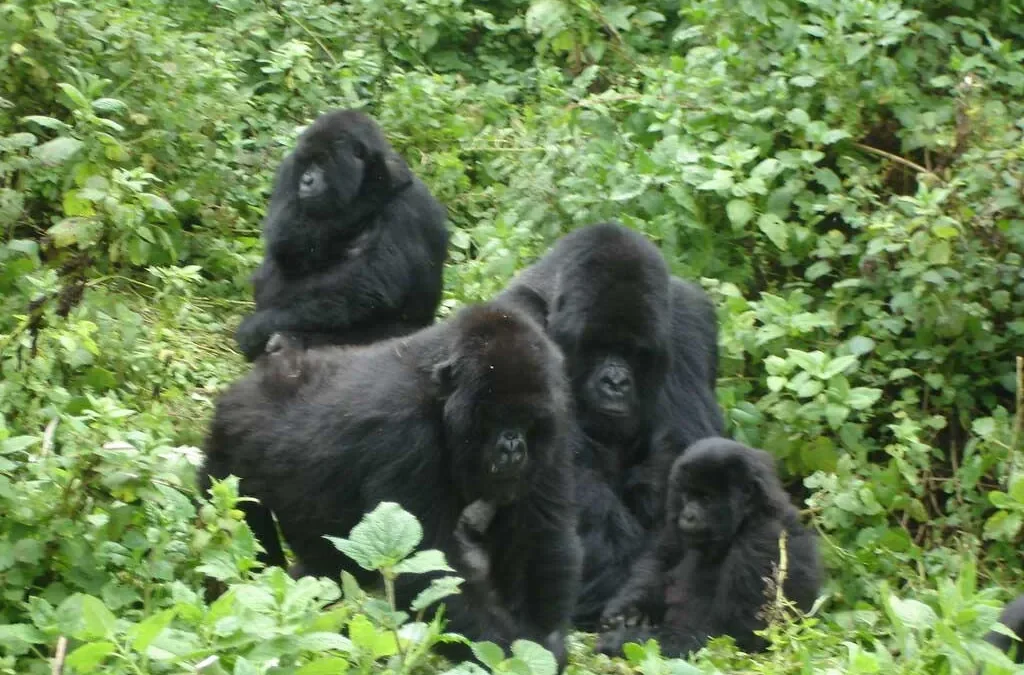
Gorilla safari package cost in Uganda and Rwanda vary depending on the package type offered by Iconic Africa Safaris: Up-Market, Midrange, and Basic. All packages include the cost of the gorilla permit, but the total price depends on additional factors like accommodation, transportation, and other inclusions.
In Rwanda, the cost of a gorilla trekking permit differs based on residency. Foreign nonresidents pay $1500, foreign residents $500, and East African nationals $200. For those interested in a more immersive experience, Uganda offers gorilla habituation permits. The costs here are $1500 for international nonresidents, $1000 for international residents, $1000 for African citizens, and 750,000 shillings for East Africans.
In Uganda, gorilla trekking permits are priced differently from Rwanda’s. Foreign nonresidents are charged $800, foreign residents $700, citizens of other African countries $500, and East Africans pay 300,000 shillings.
When planning your gorilla safari, consider the duration of your trip, the number of days spent trekking or habituating gorillas, and any additional activities included. Iconic Africa Safaris is dedicated to tailoring your experience to match your preferences and budget, ensuring an unforgettable adventure in the heart of Africa’s gorilla habitats.
The Best Time to Book Gorilla Trekking Safari in Uganda or Rwanda
The best time to book gorilla safaris in Uganda or Rwanda is throughout the year, but the dry season is especially exciting. The dry season typically falls in June, July, August, September, December, and January. During this time, the mountain gorillas and other forest inhabitants are cheerful and active. In Bwindi, Mgahinga, and Volcanoes forests, where occasional rains occur, there is less precipitation in the dry season. Trails through these forests are easier to navigate, and rivers flow regularly. Despite the typically damp ground, conditions improve in the dry season as more sunlight filters through the dense forest canopy.
Sightseeing and spotting wildlife in the jungle are simpler during the dry season. However, this is also the peak tourism season, so demand for gorilla permits is high while supply is limited. Nonetheless, it’s worth considering gorilla trekking during the wet season, from March to May and November. Although fewer tourists book safaris during this time, it might offer unexpected opportunities for solo gorilla trekking experiences. Those with limited budgets could take advantage of discounted costs offered by service providers during this less busy season.
The time taken on gorilla trekking safari in Uganda or Rwanda?
When you embark on a gorilla trek in Uganda or Rwanda, predicting your return time can be challenging. Finding the mountain gorillas depends on various factors like weather and the gorillas’ behavior. While the search may take time, there’s much to appreciate in the forest: diverse birdlife, other primates, unique trees, and beautiful waterfalls.
Though the wait may seem long, it passes swiftly as you explore the forest’s wonders. When you finally encounter the mountain gorillas, follow the ranger’s lead to gauge their mood. Capture the moment with photos to cherish this extraordinary experience.
During the encounter, remember to respect the gorillas’ natural routines. You’ll have only one hour with them to minimize disturbance to their daily lives. After that, it’s important to allow them space to continue their activities uninterrupted. This limitation ensures minimal disruption to the gorillas’ normal behavior by human presence. So, while the trek may be unpredictable, the journey is rich with discoveries. Take in the beauty of the forest and its inhabitants, and when you meet the gorillas, treasure the brief but unforgettable encounter while respecting their way of life.