
Affordable Gorilla and Chimpanzee Safari in Uganda
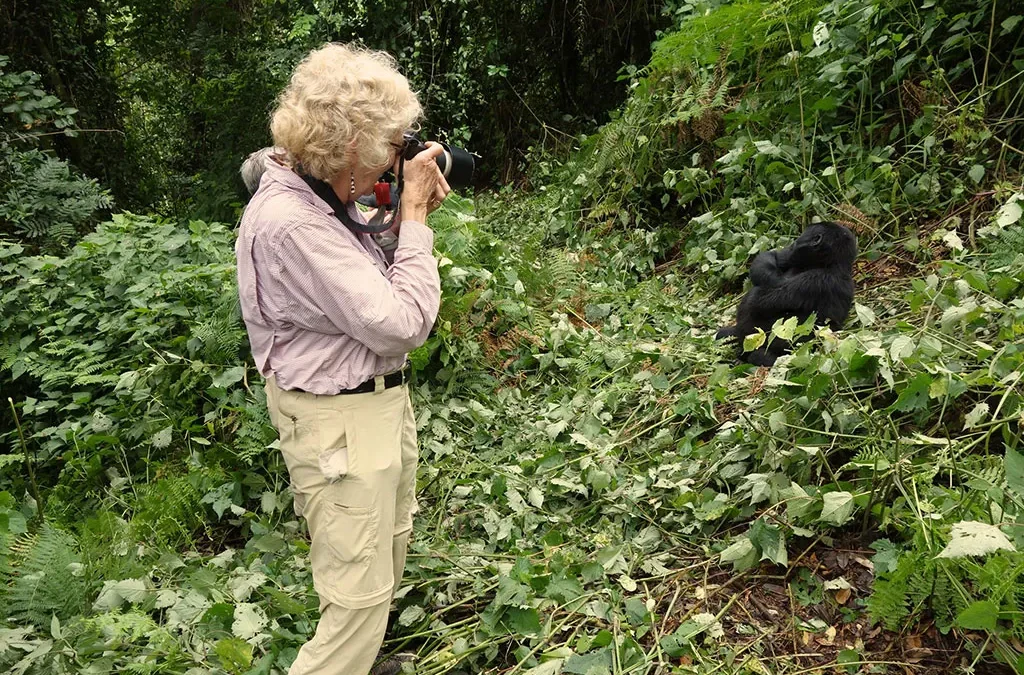
Affordable Gorilla and Chimpanzee Safari in Uganda: Cost, Itinerary & Tips
An Affordable Gorilla and Chimpanzee Safari in Uganda gives you the chance to experience two of East Africa’s most exciting primate encounters on one carefully planned journey. This adventure combines chimpanzee trekking in Kibale Forest with mountain gorilla trekking in Bwindi Impenetrable National Park. From $1,820 per person for 2 people sharing on 5-Day, the safari is designed for travelers who want a genuine Uganda wildlife experience while keeping the overall cost under control.
Uganda is one of the best destinations for combining gorilla and chimpanzee trekking because the two experiences can be included within one safari route. Kibale Forest is widely known for its large chimpanzee population, while Bwindi is home to many habituated mountain gorilla families. Instead of arranging separate trips, this itinerary connects the two destinations with private safari transport, accommodation, permits and a professional local guide.
The price of an Affordable Gorilla and Chimpanzee Safari in Uganda depends on several factors, including travel season, accommodation category, number of travelers and permit costs. Traveling during Uganda’s lower-demand months can reduce the overall cost, while sharing transport with other travelers can make the safari even more affordable. Our aim is to keep the package comfortable and reliable without adding expensive extras that do not improve the core wildlife experience.
This 5-day Uganda primate safari is particularly suitable for couples, friends, families and small groups who want to see chimpanzees and mountain gorillas without committing to a luxury safari budget. You will spend time in Uganda’s forests, travel through changing landscapes and enjoy guided wildlife experiences with local knowledge along the way. The itinerary can also be adjusted around your preferred accommodation level, arrival point and available travel dates.
Why Uganda
Uganda holds a distinctive position in African wildlife tourism. It is one of only three countries on earth where mountain gorillas survive in the wild, alongside Rwanda and the Democratic Republic of Congo, and it is widely regarded as the most efficient and affordable place to pair gorilla trekking with chimpanzee trekking in a single trip.
Kibale National Park, in western Uganda, holds the highest concentration of primates of any park in East Africa, chimpanzees included. Bwindi Impenetrable National Park, a few hours further south, shelters roughly half of the world’s remaining mountain gorilla population inside 331 square kilometers of ancient, tangled forest that UNESCO has designated a World Heritage Site. The two parks sit close enough together that a single itinerary can move between them by road, without the added cost or complexity of internal flights.
Rwanda offers a comparable combination, routing travelers from Kigali to Nyungwe Forest for chimpanzee trekking and on to Volcanoes National Park for gorilla trekking. It’s a genuinely beautiful route, but Nyungwe and Volcanoes sit at opposite ends of the country, several hours apart by road, and Rwanda’s permit pricing runs considerably higher than Uganda’s. Uganda’s version of this same combined experience is both geographically tighter and structurally cheaper, which is exactly why Iconic Africa Safaris builds its core itinerary around Kibale and Bwindi as one continuous overland journey.
Quick Facts at a Glance
| Detail | Information |
|---|---|
| Recommended duration | 5 days, adjustable to suit your schedule |
| Starting price | From $1,820 per person during low season |
| Parks visited | Kibale National Park, Bwindi Impenetrable National Park |
| Primates tracked | Wild chimpanzees, mountain gorillas |
| Trekking difficulty | Moderate to strenuous |
| Group size | Private departures or small groups |
| Minimum age | 12 for chimpanzee trekking, 15 for gorilla trekking |
| Best low season months | April, May, November (for discounted permit rates) |
| Best regular season months | June through October, December through February |
The five day route below is the itinerary Iconic Africa Safaris recommends as the most efficient balance of cost, comfort, and pace, but it isn’t the only shape this trip can take. Later sections cover shorter and longer versions, along with add ons like Queen Elizabeth National Park, that let you adjust the route around your own time and budget.
Understanding the Real Cost of a Gorilla and Chimpanzee Safari
Before getting into itineraries and packing lists, it’s worth being honest about where the money actually goes, because this is the most misunderstood part of planning a primate safari in Uganda.
Every quote is built from four cost layers, and each behaves differently:
- Government conservation permits. Fixed fees set by the Uganda Wildlife Authority (UWA), not by any individual operator. They fund park protection, ranger salaries, anti poaching patrols, and community revenue sharing programs. This figure is identical no matter who books your trip.
- Ground transport. A private 4×4 safari vehicle and a professional driver guide for the entire route, including fuel, vehicle upkeep, and the driver’s accommodation and meals while on the road with you.
- Accommodation. The most flexible line item in the whole package. The same route can cost noticeably different amounts depending on whether you sleep in a simple guesthouse or a forest edge luxury lodge.
- Park and service fees. Entry fees to Kibale and Bwindi, meals as specified in your itinerary, drinking water, and airport transfers.
Permits alone can represent well over half your total safari cost, which is why comparing quotes purely on the headline number is a mistake. A package that quietly excludes one of the two permits isn’t a better deal. It’s a bigger bill waiting at the park gate.
Gorilla and Chimpanzee Permit Prices Explained
The Uganda Wildlife Authority runs a seasonal pricing structure for foreign non resident travelers, and understanding it is the single most useful piece of financial planning you can do before booking.
| Cost factor | Regular season | Low season (April, May & November) | Savings |
|---|---|---|---|
| Gorilla trekking permit | $800 | $600 | $200 |
| Chimpanzee trekking permit | $300 | $200 | $100 |
| Combined total | $1,100 | $800 | $300 |
Traveling in low season saves $300 per person on permits alone: $200 on the gorilla permit and $100 on the chimpanzee permit. That’s not a marketing discount, it’s UWA’s own seasonal pricing, designed to spread visitor demand more evenly across the year. Low season corresponds to Uganda’s two rainy periods, which sounds like a downside until you understand what it means on the ground: heavier afternoon showers, greener forest, and noticeably fewer trekkers sharing the trail with you. The gorillas and chimpanzees don’t go anywhere during the rains. The forest stays fully accessible, permits are still issued, and treks still happen daily.
Book early. Gorilla and chimpanzee permits should be secured at least 3 to 6 months in advance to guarantee your preferred date during peak season (June through October and December through February). During low season, booking a few weeks ahead is often still enough, though earlier is always safer. Permits are allocated per gorilla family per day, and Bwindi’s four trekking sectors each host a limited number of habituated families, so popular dates can sell out well before the trekking day itself. Iconic Africa Safaris secures permits directly through UWA’s booking system as early as possible for every confirmed itinerary.
Gorilla and Chimpanzee Habituation Permits
For travelers who want a longer, quieter encounter than the standard one hour visit, UWA offers habituation permits, giving you up to four hours with a gorilla family or chimpanzee community that is still in the process of becoming accustomed to human presence rather than fully habituated. Effective 1 January 2027, pricing is structured by residency category as follows.
| Category | Gorilla habituation permit | Chimpanzee habituation permit |
|---|---|---|
| Foreign non resident | $1,800 | $400 |
| Foreign resident | $1,600 | $300 |
| East African resident | $1,000 | $250 |
| East African citizen | UGX 750,000 | UGX 250,000 |
The gorilla habituation experience is currently offered in Bwindi’s Rushaga sector, and because it runs longer and admits fewer trekkers per group than a standard permit, it should be booked well ahead of your travel dates, ideally alongside your standard permits rather than as an afterthought.
Kibale Forest National Park
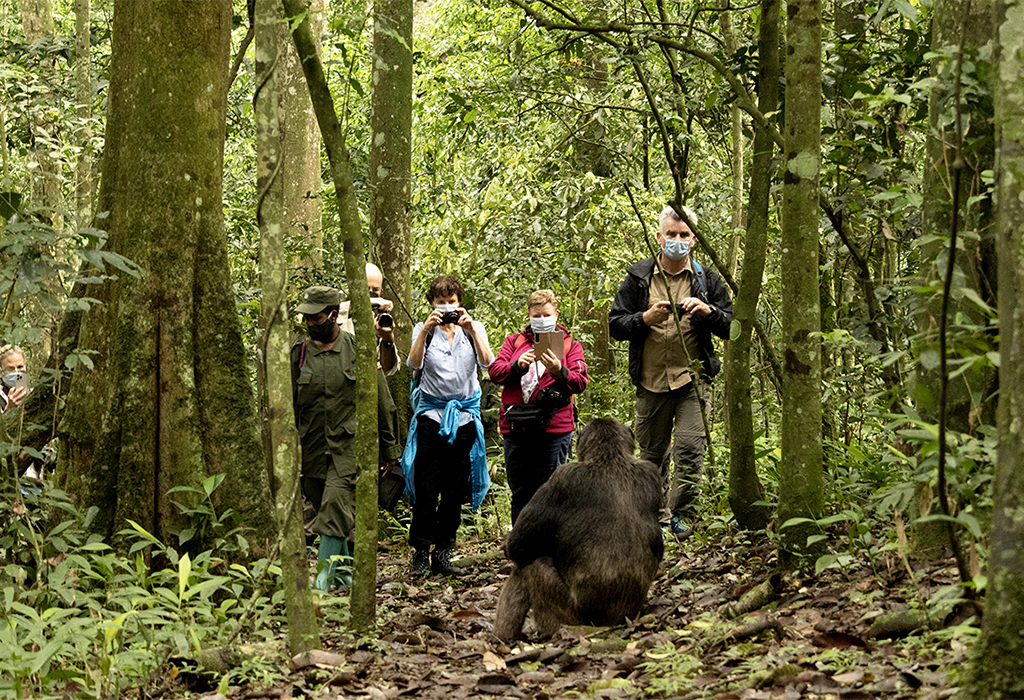
Kibale sits in western Uganda, roughly five to six hours by road from Entebbe, and holds the title of East Africa’s primate capital. Thirteen primate species live within its boundaries, more than any other park in the region, including an estimated 1,500 chimpanzees spread across several communities.
The forest itself is a moist, mid altitude tropical rainforest, structurally different from Bwindi’s tangled highland jungle. Kibale’s canopy runs taller and more open at ground level, which makes for enjoyable walking even before you encounter a single primate. Chimpanzee trekking here typically means following a habituated community for two to four hours as they move, feed, and vocalize through the canopy. Unlike gorillas, who spend much of the day resting on the ground, chimpanzees are almost constantly in motion, which makes the tracking faster paced and, for many travelers, more physically engaging than gorilla trekking.
Beyond chimpanzees, Kibale rewards anyone interested in primates as a category rather than gorillas specifically: red colobus monkeys, L’Hoest’s monkeys, grey cheeked mangabeys, and the striking black and white colobus are all commonly sighted along the same trails. Birders should note that Kibale also sits adjacent to Bigodi Wetland Sanctuary, a community run reserve known for over 200 recorded bird species and a handful of primate species not typically seen inside the main park.
Bwindi Impenetrable Forest National Park
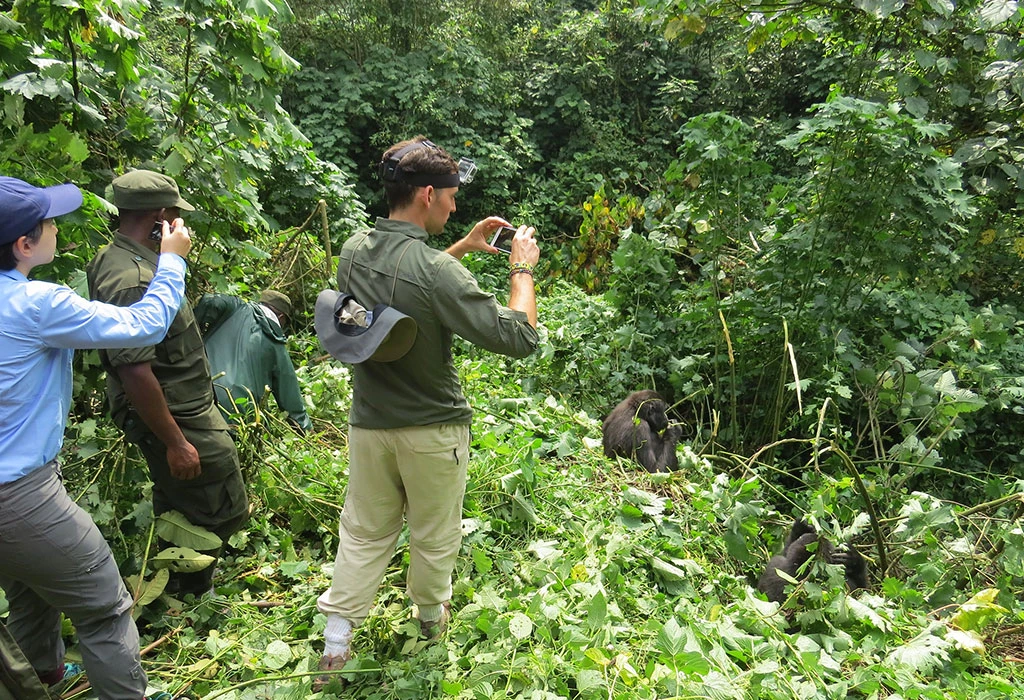
If Kibale is about motion, Bwindi is about stillness. The park’s name is not marketing. “Impenetrable” describes the reality of a forest so dense with vines, ferns, and centuries old hardwoods that visibility beyond a few meters is often impossible, with trails cut fresh through undergrowth rather than following any fixed path.
Bwindi holds roughly half of the world’s remaining mountain gorilla population, spread across four distinct trekking sectors, each with its own character and its own habituated gorilla families:
- Buhoma. The park’s original and most established sector, with the gentlest terrain of the four and the widest range of accommodation nearby, from budget to luxury.
- Ruhija. The highest altitude sector, known for cooler temperatures and dramatic misty forest views, with somewhat steeper trekking.
- Rushaga. The sector with the greatest number of habituated gorilla families, making it the most likely location for last minute permit availability, and home to Bwindi’s gorilla habituation experience.
- Nkuringo. The most physically demanding sector, set on a dramatic ridge with sweeping views over the Virunga volcanoes, generally recommended for fitter travelers.
The trek itself is unpredictable by design. Some gorilla families rest close to the trailhead and can be reached within an hour, while others range deep into the forest and require four to six hours of strenuous hiking across steep, muddy terrain. UWA offers porters for hire at the trailhead for a modest fee, and travelers are strongly encouraged to take one regardless of fitness level. It’s a small cost that eases the trek and directly supports the local community economy around the park.
Recommended Itinerary: Day by Day
5-Day Gorilla and Chimpanzee Safari in Uganda Itinerary
This 5-Day Affordable Gorilla and Chimpanzee Safari in Uganda is designed to combine Kibale Forest and Bwindi without unnecessary activities that increase the overall cost. The journey focuses on the two main experiences travelers are searching for: chimpanzee trekking and gorilla trekking. Road transportation, accommodation and meals are arranged around the trekking schedule, giving you a practical route through western Uganda while keeping the safari focused on wildlife and primate encounters.
Day 1: Kampala or Entebbe to Kibale Forest
Your safari begins with pickup from Kampala or Entebbe International Airport and a drive toward Kibale Forest National Park. The journey takes you through Uganda’s countryside, with opportunities to see local communities, farms and changing landscapes along the way. After arriving near Kibale, you check into your accommodation and have time to relax before the following day’s chimpanzee trekking. Your guide will also brief you about the forest experience and the expected schedule.
Day 2: Chimpanzee Trekking in Kibale Forest
After breakfast, you head into Kibale Forest for your chimpanzee trekking experience. Trained park guides lead visitors through the forest while tracking habituated chimpanzee communities. You may encounter chimpanzees moving through the trees, feeding, calling or interacting with one another. The forest also supports other primates and many bird species, making the trek interesting beyond chimpanzees alone. After the activity, you return to your lodge and prepare for the journey toward Bwindi.
Day 3: Kibale Forest to Bwindi Impenetrable National Park
Day three involves a scenic transfer from the Kibale area toward Bwindi Impenetrable National Park. This is one of the longer driving days because the two destinations are separated by a considerable distance. The route provides changing views of western Uganda, including countryside, hills and rural communities. Once you arrive near your selected Bwindi sector, you check into your lodge, relax and receive a briefing about the following day’s gorilla trekking experience.
Day 4: Gorilla Trekking in Bwindi
After an early breakfast, you travel to the park headquarters for registration and briefing before beginning your gorilla trek. Rangers allocate trekking groups according to the available gorilla families and provide guidance throughout the experience. The trek can take several hours depending on where the gorillas are located. Once you find the family, you spend regulated time observing them before returning through the forest to your lodge.
Day 5: Bwindi to Kampala, Entebbe or Kigali
After breakfast, you begin your return journey from Bwindi. Depending on your onward travel plans, the safari can finish in Kampala or Entebbe, or the itinerary can be arranged to connect with Kigali in Rwanda. Travelers continuing through Kigali may find this option useful because Bwindi is relatively close to the Rwanda border compared with returning all the way to central Uganda. Your guide handles the transfer according to the agreed itinerary and departure arrangements.
Optional Batwa Cultural Experience and Bigodi Sanctuary Nature Walk
Travelers can add a Batwa cultural experience ($40 per person) around Bwindi after gorilla trekking, depending on available time and their chosen trekking sector. The experience introduces visitors to Batwa culture, traditional forest knowledge, history and community life through local guides and community members. It provides a meaningful cultural addition after the gorilla trek while supporting community tourism. Travelers focused strictly on an Affordable Gorilla and Chimpanzee Safari in Uganda can skip this activity to keep costs lower.

Batwa People Near Bwindi
The Bigodi Wetland Sanctuary Nature Walk ($30 per person) can be added around Kibale before or after chimpanzee trekking. The community-managed sanctuary is known for its rich birdlife, primates, butterflies, vegetation and wetland scenery. A guided walk follows trails through the sanctuary while providing opportunities to observe wildlife and learn about local conservation efforts. Because Bigodi is close to Kibale Forest, it fits naturally into the itinerary without requiring a major change to the safari route or adding unnecessary travel time.
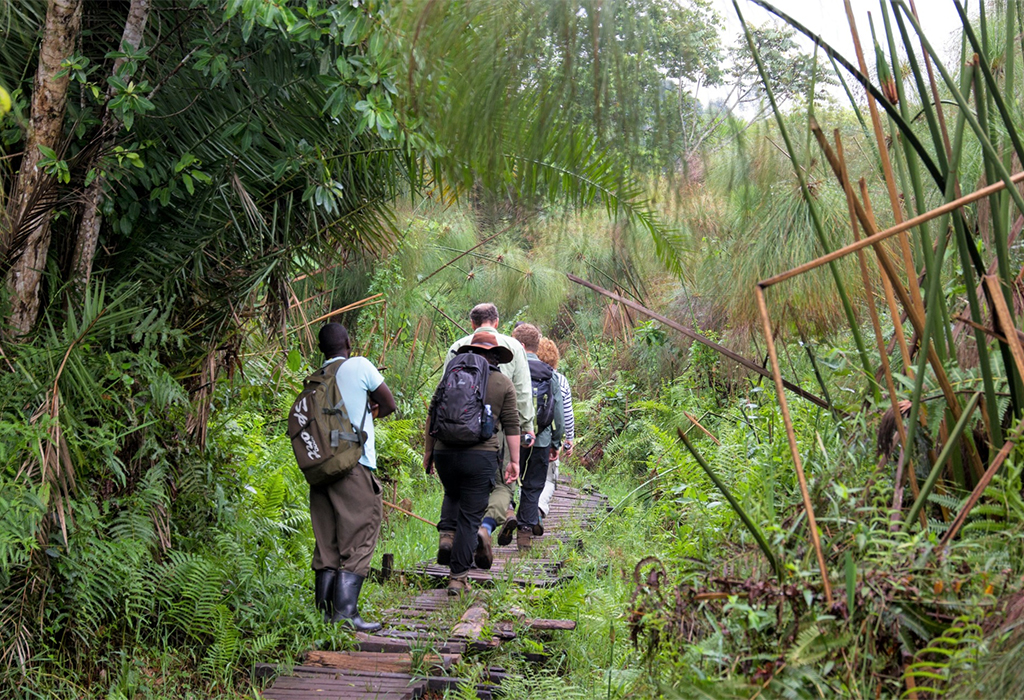
Alternative Itinerary Options
The five day itinerary above is the benchmark route, but it isn’t the only way to combine these two experiences. Depending on your travel dates and appetite for pace, one of these alternatives may suit you better.
4-Day express combination.
For travelers with tight schedules, a compressed 4-day version is possible by trekking chimpanzees the morning after arrival in Kibale, transferring directly to Bwindi the same afternoon, and gorilla trekking the following day. This cuts cost by removing one accommodation night, but it also removes the preparation day before gorilla trekking, which increases fatigue risk on what is already the more physically demanding of the two treks. This option generally suits travelers who are confident in their fitness level and have flexible expectations around trekking duration.
7-Day extended safari.
Travelers with more time can extend the core route by adding Queen Elizabeth National Park between Kibale and Bwindi, a natural geographic fit since it sits directly on the road between the two. This adds a game drive through savanna grassland home to tree climbing lions, elephants, and buffalo, plus an optional boat cruise along the Kazinga Channel, one of Africa’s most reliable wildlife viewing waterways for hippos, crocodiles, and waterbirds. This version costs more in absolute terms but spreads the daily cost more evenly and adds a genuinely different landscape and wildlife experience to the trip.
Habituation experience add-on.
For travelers drawn specifically to Rushaga sector, the gorilla habituation permit outlined above allows up to four hours with a family still becoming accustomed to human presence, rather than the standard one hour visit. It costs more and requires advance booking, but offers a quieter, less crowded experience for travelers willing to pay for it.
Traveling with children.
Chimpanzee trekking has a minimum age of 12, and gorilla trekking has a minimum age of 15. Families traveling with younger children don’t need to leave anyone behind: Iconic Africa Safaris arranges alternative activities at the lodge, such as guided nature walks, cultural visits, or supervised games, to keep younger travelers engaged and safe while parents trek.
Insider tip: If your flight home departs from Kigali rather than Entebbe, mention it when booking. Bwindi sits close enough to the Rwanda border that ending your safari in Kigali instead of driving back north through Uganda can save a full day of transport time and cost.
What’s Included in Your Safari Price
Transparency here matters more than almost anywhere else in trip planning, because permit costs alone can make two superficially similar quotes differ by hundreds of dollars depending on what’s actually bundled in.
Included in every Iconic Africa Safaris quote:
- Gorilla trekking permit, secured directly through UWA
- Chimpanzee trekking permit, secured directly through UWA
- Private 4×4 safari vehicle for the entire route
- A professional, English speaking driver guide throughout
- Accommodation as specified in your chosen itinerary tier
- Meals as stated in the day by day plan, typically full board at lodges, with lunches en route on transfer days
- Park entry fees for both Kibale and Bwindi
- Drinking water throughout the safari
- Airport or Entebbe pickup and drop off
Not included, and worth budgeting for separately:
- International flights to and from Uganda
- Uganda visa fees, available online in advance or on arrival for most nationalities
- Tips and gratuities for your driver guide, trackers, and lodge staff
- Travel and medical insurance, including evacuation coverage
- Alcoholic beverages and specialty drinks not covered by full board meal plans
- Optional add ons such as the Batwa cultural visit or Bigodi Sanctuary Nature Walk
- Porter fees at the trailhead, modest, and strongly recommended regardless of fitness level
A useful check when comparing any quote against another: permits alone can total up to $1,100 per person in regular season. If a competing quote sits well below that once transport and accommodation are added in, it’s worth asking directly what’s excluded before assuming it’s the better deal.
Accommodation Guide: Choosing the Right Tier
Accommodation is the most flexible cost lever in the entire safari, and it’s where most of the planning conversation with Iconic Africa Safaris happens, because the right choice genuinely depends on what you’re optimizing for. Typical nightly rates near both Kibale and Bwindi’s sectors fall into three broad tiers.
| Tier | Typical rate per night | What to expect |
|---|---|---|
| Budget | $50 to $80 | Simple, clean guesthouses and lodges, en suite rooms, reliable hot water, straightforward meals |
| Midrange | $90 to $250 | Purpose built safari lodges, private cottages or bandas, verandas overlooking forest or valley, full board dining |
| Luxury | $350 and above | Premium finishes, spa or lounge facilities, infinity pools, prime positioning on the park boundary |
Budget properties won’t have infinity pools or forest view decks, but they put you within easy reach of both trailheads and free up more of your budget for permits, extra trekking days, or a longer overall trip. Most travelers land in the midrange tier, and for good reason: the jump in comfort from budget to midrange is substantial, while the cost increase is proportionally smaller than the jump from midrange to luxury. The luxury tier suits travelers who see the lodge itself as part of the experience rather than simply a place to sleep between treks.
Accommodation in Kibale Forest National Park.
Lodges here sit close to the forest edge, generally within a short drive of the ranger station where chimpanzee treks begin.
Budget:
- Kibale Forest Camp, a relaxed budget camp providing basic accommodation surrounded by forest scenery and close to major attractions.
- Rwintera Safari Camp.
Midrange:
- Chimpanzee Forest Lodge.
- Isunga Lodge, a charming lodge offering comfortable cottages, beautiful countryside views, and a relaxing atmosphere near Kibale Forest.
- Turaco Treetops, a comfortable forest retreat combining attractive rooms, nature surroundings, and convenient access to Kibale’s wildlife experiences.
Luxury:
- Kyaninga Lodge, an upscale lodge offering stylish cottages, excellent crater views, and a peaceful setting near Kibale Forest.
- Papaya Lake Lodge, a luxurious lakeside retreat providing elegant accommodation, scenic views, and relaxing facilities within the Kibale region.
- Ndali Lodge, a premium lodge overlooking crater lakes, with elegant cottages, excellent views, and peaceful surroundings near Kibale Forest.
- Primate Lodge Kibale, a comfortable lodge offering well appointed cottages, peaceful surroundings, and convenient access to chimpanzee trekking activities.
- Mirima Lodge Kibale, a high end option in the same range.
Accommodation in Bwindi Impenetrable Forest National Park.
Choice here depends heavily on which of the four sectors your gorilla permit is allocated to, since Bwindi’s sectors are spread across different sides of the forest and lodges rarely sit within easy reach of more than one.
Buhoma sector
- Budget: Buhoma Community Bandas and Ride 4 A Woman, a community linked property that channels part of its income into local women’s empowerment projects around the park.
- Midrange: Bakiga Lodge and Engagi Lodge.
- Luxury: Buhoma Lodge, Mahogany Springs Lodge, and Sanctuary Gorilla Forest Camp.
Ruhija sector
Budget:
- Broadbill Forest Camp, a strong option for budget conscious travelers and birdwatchers, close to the Ruhija gate and particularly convenient for those interested in the Mubwindi Swamp area.
- Ruhija Gorilla Friends Resort and Campsite Company Limited, a practical community oriented option for travelers who want to control accommodation costs.
- Ruhija Community Rest Camp, suitable for travelers looking for simple accommodation and camping facilities.
- Ruhija Gorilla Guest House, a simple guesthouse option that works well for travelers prioritizing affordability.
Midrange:
- Bakiga Lodge, one of the better known Ruhija properties, with cottages and scenic views over the forest, associated with the Bakiga Community Project.
- Agandi Uganda Eco-lodges Bwindi National Park, an eco focused property offering a more distinctive stay in the Ruhija area.
- Gorilla Mist Camp, frequently listed among Ruhija’s accommodation choices and suitable for travelers looking for a comfortable forest setting.
Higher end:
- Kiho Gorilla Safari Lodge, a higher end option with cottages, forest views, and a more premium atmosphere.
- Ruhija Gorilla Lodge, positioned as a comfortable lodge close to the gorilla trekking area.
Nkuringo sector
Budget:
- Virunga Campsite and Backpackers, a relaxed accommodation option providing comfortable facilities for travelers seeking good value near Nkuringo.
Midrange:
- Nkuringo Bwindi Gorilla Lodge, a well positioned lodge offering both upper midrange and luxury cottages, forest views, and convenient access to the gorilla trekking starting point.
Luxury:
- Clouds Mountain Gorilla Lodge, an exclusive mountain lodge with spacious cottages, excellent views, and personalized service overlooking the Virunga volcanoes.
- Gorilla Heights Lodge, a premium lodge with stylish accommodation, panoramic scenery, and convenient access to Nkuringo gorilla trekking activities.
Rushaga sector
Rushaga has accommodation across all three tiers, with several properties close to the gorilla trekking briefing point.
Budget:
- Rushaga Gorilla Lodge, a practical budget lodge near UWA headquarters, offering convenient access to the trekking briefing point.
- Nshongi Gorilla Camp, a simple budget camp with basic accommodation and an authentic setting near the southern Bwindi forest.
- Bwindi Guest House, a basic guesthouse option suitable for travelers seeking simple accommodation while keeping their safari costs low.
- Rushaga Gorilla Camp, a budget friendly camp with simple rooms and tented cottages, suitable for travelers prioritizing location and affordability.
Midrange:
- Rushaga Gorilla Havens Lodge, a comfortable lodge offering convenient accommodation for travelers trekking gorillas in the Rushaga sector.
- Gorilla Safari Lodge, Rushaga sector, a comfortable safari lodge positioned conveniently near the Rushaga trekking and habituation experience areas.
- Gorilla Valley Lodge, a popular southern Bwindi lodge with comfortable rooms and convenient access to the gorilla trekking area.
- Ichumbi Gorilla Lodge, well located near Rushaga Gate, making early morning gorilla trekking starts particularly convenient.
- Bweza Gorilla Lodge, a comfortable lodge offering a practical base for travelers exploring the Rushaga sector and surrounding communities.
- Kaara Gorilla Mountain Lodge, a premium mountain lodge with comfortable accommodation and scenic surroundings within the Rushaga area.
- Emirambi Gorilla Safari Lodge, an upscale safari lodge near Rushaga providing a comfortable base for gorilla trekking visitors.
Luxury:
- Four Gorillas Lodge, Rubuguri, Rushaga, a premium lodge with spacious accommodation and attractive surroundings close to the southern Bwindi forest.
- Gorilla Leisure Lodge, an upscale property providing comfortable accommodation for travelers seeking additional relaxation after gorilla trekking.
Iconic Africa Safaris matches your lodge choice to your confirmed sector at the time of booking, rather than defaulting every itinerary to the same property, so your accommodation and trailhead are always a manageable distance apart.
Insider tip: Midrange lodges near Bwindi often sit physically closer to the gorilla trekking briefing point than the flagship luxury properties do. That means a shorter, less bumpy early morning drive on trekking day. The upgrade sometimes costs you convenience rather than adding to it.
Physical Preparation: What Trekking Actually Demands
Neither trek requires elite fitness, but both are genuinely physical, and being honest about the demands upfront prevents an unpleasant surprise on the trail.
Gorilla trekking in Bwindi is the more demanding of the two. Trails are unmarked, cut fresh by trackers each day, and frequently run through mud, over tree roots, and up steep inclines at altitudes between 1,160 and 2,600 meters. Duration is entirely unpredictable. Some groups reach their gorilla family within an hour of relatively flat walking, others hike for four to six hours across genuinely strenuous terrain before finding them. Since you can’t know in advance which kind of day you’ll have, it’s worth preparing as though it will be the harder version.
Chimpanzee trekking in Kibale is generally gentler underfoot, since Kibale’s terrain is less steep than Bwindi’s, but it compensates with pace. Chimpanzees move quickly and unpredictably through the canopy, so trackers often walk briskly to keep the group within sight and hearing range.
Practical preparation steps:
- Build in some cardiovascular conditioning in the weeks before travel. Regular walking, hiking, or stair climbing is sufficient; you don’t need marathon level fitness.
- Practice walking on uneven, unstable surfaces if your daily routine doesn’t already involve this.
- Hire a porter at the trailhead regardless of your fitness level. Porters carry your daypack, offer a steadying hand on difficult terrain, and their fee directly supports the local community economy.
- Pace yourself deliberately on the ascent. Your guide and trackers set a rhythm designed for sustainability over a multi hour trek, not speed.
- Mention any relevant health conditions to your Iconic Africa Safaris consultant before booking, so your itinerary and sector choice can be planned around your actual physical baseline.
What to Pack for Gorilla and Chimpanzee Trekking
Packing correctly makes a genuine difference to trekking comfort, particularly in Bwindi’s dense, often wet forest interior.
- Sturdy, broken in hiking boots with ankle support. This is not the trek to test new footwear on.
- Long trousers and a long sleeved shirt, tucked in at the wrists and ankles, to protect against stinging nettles, thorny vines, and biting insects common in both forests.
- A lightweight, packable rain jacket. Even in dry season, sudden showers are common in both parks.
- Gardening gloves or trekking gloves, genuinely useful for gripping vines and branches on steep sections without getting stung.
- A face mask. Recommended, and sometimes required, at the trailhead as an added precaution against transmitting respiratory illness to the gorillas.
- A daypack for water, snacks, and camera gear, ideally with a rain cover.
- At least two liters of water per trekking day, plus energy dense snacks.
- Insect repellent with a reasonably high DEET concentration.
- A hat and sunscreen, even under forest canopy. UV exposure on transfer days and open trail sections adds up.
- Binoculars, particularly valuable for chimpanzee trekking, where subjects are often high in the canopy.
- A camera with a versatile zoom lens. Flash photography is prohibited near gorillas and chimpanzees, so a lens that performs reasonably in low forest light is worth prioritizing over raw zoom range.
- Gaiters, optional but useful for keeping mud and debris out of boots on the muddiest Bwindi trails.
- Cash in small denominations for tipping trackers, porters, and rangers, since card payment infrastructure is unreliable this deep into the parks.
Best Time for an Affordable Gorilla and Chimpanzee Safari
Uganda’s equatorial climate means there’s no single closed season for trekking. Both parks operate treks year round, but rainfall patterns still meaningfully shape the experience and the price.
| Period | Months | Character | Permit cost |
|---|---|---|---|
| Low season, long rains | March through May | Heaviest rainfall, lush green forest, fewer travelers | Gorilla $600, chimpanzee $200 |
| Regular season, dry | June through October | Driest, most popular trekking window | Gorilla $800, chimpanzee $300 |
| Low season, short rains | November | Lighter, more intermittent rainfall | Gorilla $600, chimpanzee $200 |
| Regular season, dry | December through February | Second dry window, popular over holidays | Gorilla $800, chimpanzee $300 |
The financial case for low season is straightforward: a combined saving of $300 per person on permits alone, before accounting for generally lower accommodation rates during quieter months. The trade off is real but often overstated. Rain in Uganda’s forests tends to arrive as intense afternoon downpours rather than all day drizzle, meaning treks that start early in the morning frequently avoid the worst of it entirely.
Insider tip: Low season months aren’t just cheaper. Bwindi’s trails see noticeably fewer trekking groups in April, May, and November, meaning less crowding at the briefing point and a more spacious, less rushed hour once you find the gorilla family.
How to Make Your Safari More Affordable
Beyond timing, there are several concrete ways to control cost without sacrificing the core experience.
- Travel during low season. The single largest lever, saving $300 per person on permits alone, split as $200 on gorilla trekking and $100 on chimpanzee trekking.
- Travel in a small group of 2 to 4 people. Vehicle and driver guide costs are fixed per trip, not per person, so splitting them across more travelers meaningfully lowers the per person total.
- Choose budget or midrange accommodation. The most flexible cost category in the entire itinerary.
- Rely on road transport between parks. Uganda’s road network makes overland transfers between Kibale and Bwindi practical and far cheaper than any domestic flight alternative.
- Book permits as early as possible. Three to six months ahead for peak season, a few weeks ahead for low season. Beyond simply securing availability, early booking avoids the price pressure that builds as popular dates fill up.
- Be selective with optional add ons. The Batwa cultural visit, habituation upgrade, and Queen Elizabeth extension are all genuinely worthwhile, but none of them are required to complete the core trekking experience, and skipping them is a legitimate way to control cost.
- Consider Rushaga sector for gorilla trekking. With the highest number of habituated families of Bwindi’s four sectors, it often has the best last minute permit availability, which can matter if your travel dates are less flexible.
Gorilla and Chimpanzee Safari Rules and Etiquette
Both treks operate under strict UWA regulations designed to protect the animals as much as the visitor experience, and understanding them in advance avoids awkward surprises on the day.
- Minimum age of 15 for gorilla trekking and 12 for chimpanzee trekking. Travelers below these ages can stay at the lodge, where alternative activities are arranged to keep them engaged while the rest of the group treks.
- A strict one hour limit with the gorilla family once located, enforced regardless of how the trek to reach them went.
- A minimum distance of seven meters from gorillas at all times, to reduce disease transmission risk between humans and a species genetically close enough to be vulnerable to human illnesses.
- A face mask is recommended and sometimes required at the trailhead, for the same reason.
- No trekking while visibly ill, particularly with respiratory symptoms. UWA reserves the right to bar entry, and travelers who suspect illness should notify their guide before the trek begins.
- No flash photography, which can startle both gorillas and chimpanzees.
- No eating, drinking, or smoking in the immediate presence of the animals.
- Speaking quietly and moving calmly, following your guide’s lead on when and how to approach.
- Groups capped at eight trekkers per gorilla family per day, a limit set specifically to minimize stress on habituated groups.
These rules exist because gorillas and chimpanzees share close enough genetic and physiological similarity with humans that a common cold, harmless to a person, can be genuinely dangerous to them. That single fact shapes nearly every regulation on this list.
Conservation, Community, and Why the Cost Matters
It’s worth pausing on why permit prices sit where they do, because the answer is directly tied to why mountain gorillas still exist at all. In the 1980s, the global mountain gorilla population had fallen to under 300 individuals, driven by habitat loss, poaching, and regional conflict. Sustained conservation effort, funded substantially by trekking permit revenue, has since pushed that number past 1,000, the only great ape population currently increasing rather than declining.
A meaningful share of every gorilla permit fee funds UWA’s ranger patrols, anti poaching operations, and veterinary monitoring of habituated families. A separate revenue sharing mechanism channels a percentage of park income directly to communities living on Bwindi and Kibale’s boundaries, funding schools, clinics, and infrastructure in areas that gave up agricultural and grazing land when the parks were gazetted.
This is also the practical reasoning behind hiring a porter at the trailhead even if you don’t strictly need one. Porter fees are one of the most direct forms of tourism income reaching individual families in communities bordering the park, and it’s recommended as standard practice for every trekking client, regardless of fitness level.
Uganda vs Rwanda: Comparing Gorilla Safari Costs
Rwanda is Uganda’s most frequently compared alternative for gorilla trekking, and it does offer its own combined route, flying or driving into Kigali, trekking chimpanzees in Nyungwe Forest, then continuing north to Volcanoes National Park for gorilla trekking. It’s worth taking seriously as an option, and it’s worth understanding honestly against Uganda’s version of the same idea.
| Factor | Uganda | Rwanda |
|---|---|---|
| Gorilla permit, regular season | $800 | $1,500 |
| Gorilla permit, low season | $600 | Limited discount availability |
| Combined trip structure | Kibale and Bwindi, close together on one continuous road route | Nyungwe and Volcanoes, several hours apart at opposite ends of the country |
| Overall cost for a combined safari | Lower | Higher |
Rwanda’s permit costs nearly double Uganda’s regular season price, a deliberate positioning choice that trades volume for a more premium, lower density visitor experience. Its road network between Nyungwe and Volcanoes is generally smoother than Uganda’s, but the distance itself adds meaningful transfer time to the trip regardless of road quality. For travelers whose primary goal is the lowest total cost for both experiences on one continuous route, Uganda remains the structurally stronger choice, and the two parks sitting closer together only widens that advantage.
Combining Your Safari with Other Uganda Experiences
Because Kibale and Bwindi sit within reach of several of Uganda’s other major attractions, many travelers extend their trip rather than flying home immediately after gorilla trekking.
- Queen Elizabeth National Park, sitting directly between Kibale and Bwindi on the standard route, offers savanna game drives and a boat cruise along the Kazinga Channel, genuinely easy to add to the core itinerary without significant extra transit time.

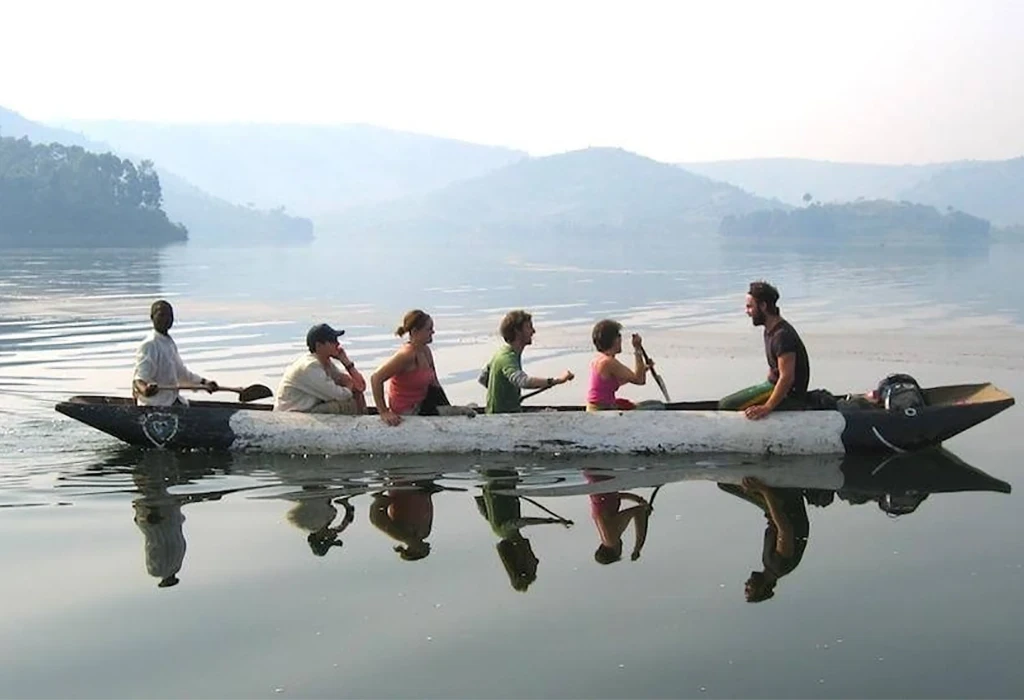
- Lake Bunyonyi, a short detour from Bwindi, offers a restful, scenic close to the trip, one of the few lakes in the region considered safe for swimming, set among terraced hills and small islands.
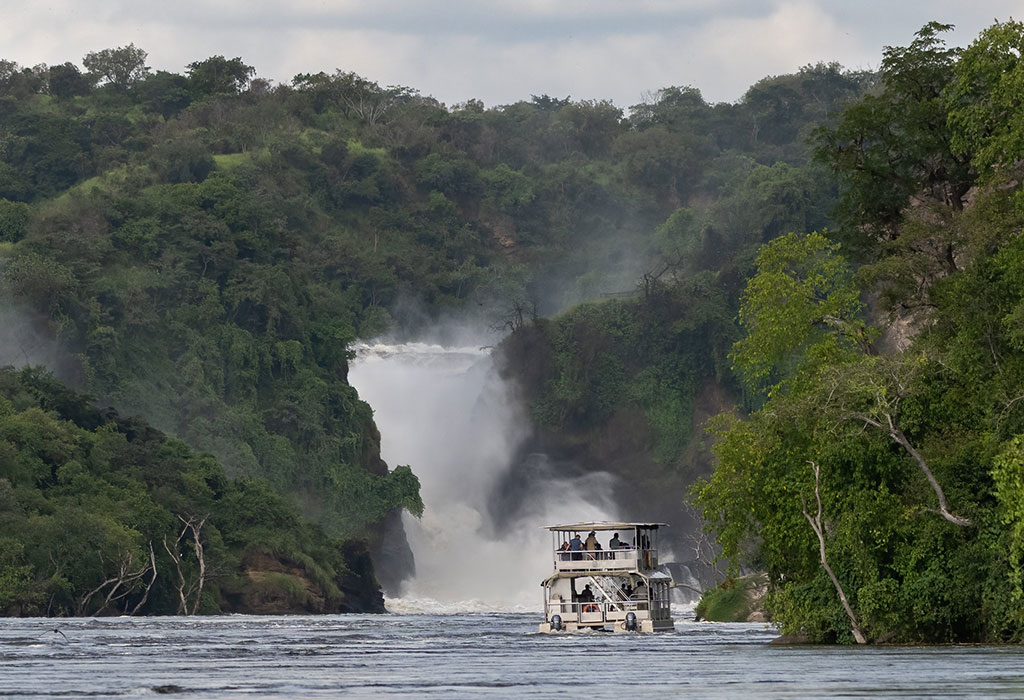
- Murchison Falls National Park, in Uganda’s north, is a further detour better suited to travelers with additional days, offering the Nile’s most dramatic waterfall alongside strong big game viewing.
A Day in the Life: What Gorilla Trekking Morning Actually Feels Like
Your gorilla trekking day starts early, usually with breakfast around 6:00 a.m., although some lodges recommend an earlier meal. By 7:30 or 8:00 a.m., you reach the ranger station for registration and briefing. A Uganda Wildlife Authority ranger explains trekking rules, safe distances, photography guidelines and appropriate behavior around gorillas.
Before you enter the forest, trackers usually search for the gorilla family and report their location to the ranger team. Their updates help your guide understand the likely direction and distance of the trek. Once everyone receives instructions, you start walking through the forest, following trails that can quickly become steep, muddy or challenging.
Every trek feels different because gorillas move freely through their natural habitat. Some groups appear within an hour, while others require several hours of determined hiking. You may cross muddy slopes, step over roots, push through vegetation and climb steep sections before trackers quietly signal that the gorillas are nearby.
When you finally meet the gorilla family, the experience changes completely. Your guide explains family relationships and behaviors while rangers monitor everyone’s safety. The permitted viewing time passes quickly as you watch feeding, playing, resting and social interactions. Afterward, you walk back while sharing photographs, stories and impressions with fellow trekkers, carrying memories that last long after leaving Bwindi.
Currency, Tipping and Money Matters
Uganda’s currency is the Ugandan shilling (UGX), though US dollars are widely accepted for major payments like permits, lodge bills, and safari packages, with a strict caveat: bills printed before 2013, or with any tears, stains, or heavy creasing, are frequently refused by banks, lodges, and permit offices alike. Travelers should bring newer US dollar notes specifically for this trip, and change smaller amounts into Ugandan shillings for local markets, tipping, and incidental purchases.
Tipping isn’t mandatory but is a meaningful part of the local tourism economy. Rough guidelines, which travelers are free to adjust based on group size and service quality, look like this:
- Driver guide: roughly $15 to $20 per day, given directly at the end of the safari
- Gorilla and chimpanzee trackers: roughly $10 to $15 per group, per trek
- Porters: roughly $10 to $15 per person, per trek, in addition to their base fee
- Lodge staff: small daily tips or a lump sum at checkout, depending on lodge policy
Cash machines are limited outside major towns like Kampala, Entebbe, and Fort Portal, and largely absent near the parks themselves, so travelers should carry sufficient cash, both dollars and shillings, for the duration of the safari rather than relying on withdrawing funds along the route.
Staying Connected Near the Parks
Mobile network coverage in Uganda is generally reliable in towns and along main roads, including near both Kibale and Bwindi, with MTN and Airtel offering the most consistent service in these areas. A local SIM card, available at Entebbe International Airport or in Kampala, is inexpensive and gives far better data reliability than relying on international roaming.
Once inside the forest itself, expect no signal at all, a detail worth mentally preparing for rather than fighting. Most lodges near Kibale and Bwindi offer Wi-Fi in common areas, though speeds vary considerably and can slow significantly during peak evening hours when multiple guests are connected simultaneously. Travelers hoping to work remotely or stay closely connected during the safari should treat the trekking days themselves as fully offline, and plan accordingly.
Responsible Travel: Trekking with Care
Gorilla and chimpanzee tourism sits in a genuinely delicate position. The same visitor revenue that funds conservation also brings a level of human presence that, done carelessly, could threaten the very animals it’s meant to protect. A few simple habits make a real difference:
- Stay home if you’re feeling unwell. This isn’t just a rule, it’s the single most important thing any individual trekker can do to protect a genetically vulnerable species from human disease.
- Follow your guide’s instructions immediately, particularly around distance and movement, even if the moment feels too exciting to pause for.
- Avoid single use plastic where possible, particularly water bottles. Many lodges offer refillable water stations.
- Support community run initiatives near the parks, from craft cooperatives to the Batwa cultural experience, which channel tourism income directly to households living alongside the forest.
- Photograph thoughtfully, not compulsively. Spending the entire hour with a gorilla family behind a viewfinder is a common regret among first time trekkers looking back on the experience.
Photography Tips for gorilla and chimpanzee safari
Forest interiors are challenging photography environments. Low light, dense foliage, and fast moving subjects all work against you, but a few practical adjustments make a meaningful difference.
- Favor a lens in the 100 to 400mm range if you have one. Gorillas are often close enough that ultra long lenses become unwieldy, while chimpanzees moving through canopy benefit from reach.
- Raise your ISO rather than relying on flash, which is prohibited near both species.
- Shoot in continuous or burst mode for chimpanzee trekking specifically, given how quickly they move.
- Keep a spare battery and memory card in an easily accessible pocket. Cold starts and long treks drain batteries faster than expected.
- Consider a monopod rather than a tripod. Tripods are impractical on Bwindi’s narrow, uneven trails.
- Resist the urge to photograph exclusively through a viewfinder. The one hour with a gorilla family passes quickly, and most trekkers who return say the moments they remember most clearly are the ones they watched directly rather than through a screen.
Health, Safety and Insurance
Uganda requires proof of yellow fever vaccination for entry from most countries, and travelers should consult a travel health clinic several weeks before departure regarding malaria prevention, given that both Kibale and Bwindi sit within malaria risk zones. A basic travel medical kit, rehydration salts, anti diarrheal medication, blister care, and any personal prescriptions, is worth packing given the remoteness of both parks from major hospitals.
Travel insurance with medical evacuation coverage is strongly recommended and, in practice, essential for anyone trekking at altitude in Bwindi’s more remote sectors. Iconic Africa Safaris can advise on suitable providers but does not include insurance in any package, and travelers should arrange it independently before departure.
Visa and Entry Requirements
Most nationalities can apply for a Uganda eVisa online in advance, a process that typically takes a few business days and is significantly less stressful than arranging a visa on arrival during peak travel periods. Travelers planning to cross into Rwanda as part of a combined itinerary, for example ending the safari in Kigali rather than Entebbe, should also check Rwanda’s separate entry requirements well in advance, since these are handled independently of Uganda’s visa system.
Why Book Your Affordable Gorilla and Chimpanzee Safari With Iconic Africa Safaris
- Experienced local tour consultants. Your itinerary is put together by consultants with more than six years crafting gorilla and chimpanzee routes specifically, not a generic template applied to every client, so routes, sector choices, and pacing reflect real, current conditions on the ground.
- Experienced tour guides. Driver guides who have led these exact treks for years, across multiple sectors and seasons, translating into calmer, better paced days on the trail and sharper spotting of wildlife along the way.
- Good lodging choices for every kind of traveler. Budget, midrange, and luxury options across both Kibale and Bwindi’s sectors, matched to your comfort level and budget rather than a single default property.
- Comfortable transportation. Private 4×4 Land Cruisers built for Uganda’s terrain, with a dedicated driver guide for your group throughout the route, not a shared shuttle on a fixed schedule.
- Transparent, itemized pricing. Every quote breaks down exactly what you’re paying for, so there’s no ambiguity about what’s included before you commit.
- Continuous, well planned routing. Kibale and Bwindi are combined into one efficient overland itinerary, avoiding the extra cost and time of treating them as separate trips.
- Early, proactive permit booking. Gorilla and chimpanzee permits are secured as early as possible for every confirmed itinerary, protecting your preferred trekking dates and sector.
- Customer support from first inquiry to final drop off. One point of contact through planning, booking, the trip itself, and your departure transfer, so questions get answered quickly at every stage rather than getting lost between departments.
Frequently Asked Questions
How much does an affordable gorilla and chimpanzee safari in Uganda cost?
The starting price is shown in the quick facts summary near the top of this guide. The exact total depends on season, group size, and the accommodation tier you choose.
What is the cheapest month for gorilla trekking in Uganda?
April, May, and November offer the lowest gorilla permit price, at $600 per person compared to $800 in regular season.
How much is a gorilla permit in Uganda?
$800 in regular season, June through October and December through February, and $600 in low season, April, May, and November, for foreign non resident travelers.
How much is a chimpanzee permit in Uganda?
$300 in regular season and $200 in low season, for foreign non resident travelers.
How much does the gorilla and chimpanzee habituation experience cost?
Starting 1 January 2027, the gorilla habituation permit is $1,800 for foreign non residents, $1,600 for foreign residents, $1,000 for East African residents, and UGX 750,000 for East African citizens. The chimpanzee habituation permit is $400, $300, $250, and UGX 250,000 across the same categories.
How far in advance should I book my permits?
At least three to six months ahead for peak season travel, and a few weeks ahead is often sufficient for low season, though earlier is always safer given limited daily permit allocations.
Can I see gorillas and chimpanzees on the same safari?
Yes. The recommended itinerary combines chimpanzee trekking in Kibale with gorilla trekking in Bwindi as one continuous overland route.
How many days do I need for a gorilla and chimpanzee safari?
Five days is the recommended, efficient itinerary, allowing one full trekking day for each species plus travel time and a preparation day before gorilla trekking. A 4-day express version suits travelers with tighter schedules, and a 7-day version allows for the addition of Queen Elizabeth National Park.
Can I do gorilla and chimpanzee trekking on a budget?
Yes. Traveling in low season, choosing budget or midrange accommodation, traveling in a small group, and booking permits early are the main ways to reduce cost while keeping both treks fully intact.
What is included in a Uganda gorilla and chimpanzee safari?
Both permits, private 4×4 transport, a driver guide, accommodation, meals as itemized, park entry fees, drinking water, and airport transfers. The full breakdown is above.
Is Uganda cheaper than Rwanda for gorilla trekking?
Yes, substantially. Uganda’s regular season gorilla permit is roughly half Rwanda’s price, and Uganda’s two parks sit closer together, keeping transfer time and cost lower even though Rwanda also offers a combined gorilla and chimpanzee route.
What is the minimum age for gorilla and chimpanzee safari?
Gorilla trekking has a minimum age of 15. Chimpanzee trekking has a minimum age of 12. Younger children can stay at the lodge, where alternative activities are arranged to keep them engaged while the rest of the group treks.
Do I need to be very fit to go gorilla or chimpanzee trekking?
No, but both treks are genuinely physical. Gorilla trekking in particular can involve several hours of steep, uneven terrain, and travelers with any relevant health concerns should discuss them with their consultant before booking so the itinerary and sector can be planned accordingly.
What happens if it rains during my trek?
Treks proceed as scheduled regardless of rain. Permits are not refunded or rescheduled for weather. Both forests are equatorial and see rain year round, with low season months seeing heavier rainfall than regular season. A proper rain jacket and appropriate footwear make far more difference than the weather forecast itself.
Can I extend my trip to include other parks?
Yes. Queen Elizabeth National Park sits directly on the route between Kibale and Bwindi and is easily added to the core itinerary, while Murchison Falls National Park and Lake Bunyonyi are both popular extensions for travelers with additional time.
How to Book Your Affordable Gorilla and Chimpanzee Safari in Uganda
Ready to secure your gorilla and chimpanzee permits? There are three easy ways to book with Iconic Africa Safaris:
- Online Booking Form. Fill out our booking form with your preferred travel dates, group size, and accommodation preference, and our team will confirm availability and send your itemized quote.
- Email. Reach us directly at info@iconicafricasafaris.com with your travel dates and any questions.
- WhatsApp. Tap the WhatsApp icon in the bottom right corner of your screen to chat with our team in real time.
Gorilla and chimpanzee permits are limited and allocated well in advance. Book three to six months ahead for peak season, or a few weeks ahead for low season, to secure your preferred trekking date and sector.