
Flying Safari to Bwindi: The Complete Fly-In Gorilla Trekking Guide

Flying Safari to Bwindi: The Complete Fly-In Gorilla Trekking Guide
A flying safari to Bwindi is the quickest, most comfortable way to reach Uganda’s mountain gorillas when your holiday is short. Rather than spending most of a day on the road from Entebbe, you fly to a regional airstrip, drive the last stretch in a 4×4, and reach your lodge rested enough to enjoy the forest the next morning.
Bwindi has four trekking sectors: Buhoma, Ruhija, Rushaga and Nkuringo. The Kihihi airstrip serves the north, while Kisoro is the gateway to the south. At Iconic Africa Safaris, we plan the flight around your permit, sector, lodge and road transfer together, because a cheap flight that drops you on the wrong side of the forest costs you hours later.
Flying Safari to Bwindi at a Glance
| Detail | What to know |
|---|---|
| International gateway | Entebbe International Airport |
| Domestic airstrips | Kihihi (north) and Kisoro (south) |
| Trekking sectors | Buhoma, Ruhija, Rushaga, Nkuringo |
| Ground transport | Private 4×4 from the airstrip |
| Typical length | 2–5 days |
| Cost | Mid-range from $2,400 per person sharing, including permit, domestic flights, transfers, lodging and meals |
| Best for | Time-conscious, comfort-focused travelers |
| Trade-off | Costs more than travelling entirely by road |
What a Flying Safari to Bwindi Involves
Most visitors land at Entebbe, connect to a scheduled or charter flight to Kihihi or Kisoro, and meet their driver-guide on the airstrip. The following morning is usually set aside for trekking, after which you either spend another night in the forest or head onward. There is no airport inside Bwindi, so every fly-in trip includes a road transfer.
The real gain is not just speed but rhythm. You spend fewer hours strapped into a vehicle and more of your holiday at the destination, which matters most when gorillas are the main reason you came to Uganda. A short, well-timed flight also spares you the fatigue of winding mountain roads straight after a long-haul arrival.
Why Fly Instead of Drive?
Time is the main reason. The road from Entebbe or Kampala can swallow most of a day, while a flight puts you close to the forest in about an hour and ten minutes. On a three- or four-day Uganda trip, that saved day can be the difference between rushing the trek and enjoying a relaxed evening at the lodge.
Insider Tip: Secure your gorilla date and sector, choose a lodge near that trailhead, and only then pick the airstrip. Buhoma, Ruhija, Rushaga and Nkuringo sit in different corners of the forest, so the shortest flight does not always give the shortest journey. Travelers who reverse this order often end up with a long transfer across the park on the day before trekking.
When Driving Is the Better Choice
Flying is not right for everyone. If you have a week or more, driving lets you fold in Queen Elizabeth National Park, Ishasha, Lake Bunyonyi or Lake Mburo without paying for extra flights. Larger groups also tend to save money when a single vehicle and driver cover the whole trip, and the road offers freedom for photography stops, village visits and spontaneous wildlife viewing.
Many of our clients choose a hybrid: fly in to save the outbound day, trek the gorillas, then travel by road through Queen Elizabeth or toward Lake Bunyonyi. Fly when time and comfort matter most; drive when you want a broader, more flexible overland journey. The comparison below sets the two options side by side.
| Factor | Flying | Driving |
|---|---|---|
| Travel time | Much shorter | Considerably longer |
| Cost | Higher | Usually lower |
| Flexibility | Tied to flight schedules | Stop wherever you like |
| Wildlife and scenery en route | Limited | Extensive |
| Best for | Short trips | Longer itineraries |
Kihihi or Kisoro: Choosing Your Airstrip
Let your gorilla sector decide the airstrip. Buhoma lies on the northern edge of Bwindi and Ruhija on the eastern side. Rushaga and Nkuringo are southern sectors. Kihihi serves the north, Kisoro the south, and Kisoro also suits anyone adding Mgahinga Gorilla National Park or Lake Mutanda to their trip, making the final drive short and logical.
| Sector | Usual gateway | Note |
|---|---|---|
| Buhoma | Kihihi | Most logical northern approach |
| Ruhija | Depends on lodge | Compare schedules and routes |
| Rushaga | Kisoro | Strong southern approach |
| Nkuringo | Kisoro | Suits the southern highlands |
Buhoma
Buhoma is Bwindi’s historic trailhead and its most developed tourism hub, with lodges from simple budget stays to refined forest retreats. From Kihihi, your driver heads straight for the sector. It suits travelers who want a classic Bwindi experience, with community visits and extra forest walks available around the gorilla trek. Expect the warmest welcome from a long-established lodge community.
Rushaga
Rushaga, in the south, pairs naturally with a Kisoro landing. The drive climbs through terraced hills and past Lake Mutanda, which makes the transfer part of the scenery rather than a chore. It also makes a convenient base for travelers planning a longer southern Uganda trip that continues into Rwanda after the trek. Rushaga also has many habituated gorilla groups, which helps permit availability.
Nkuringo
Nkuringo sits high on a dramatic ridge with views toward the Virunga volcanoes, and it attracts couples, photographers and anyone wanting seclusion. Land at Kisoro, but never trust the short map distance: the terrain is steep and the roads slow, so we allow generous transfer time. We plan the pickup, drive and lodge check-in as one continuous movement.
Ruhija
Ruhija is the sector where careful planning pays off most. It is quieter, with misty forest scenery and excellent birding, but no single airstrip is always right. The best choice depends on your lodge, the flight schedule and the next morning’s briefing point, so we trace the entire route before recommending Kihihi or another connection rather than trusting a map.
How Long Is the Flight?
The flight from Entebbe takes roughly an hour and ten minutes, whether scheduled or chartered. That figure is only the air time. Add check-in, baggage handling, the airstrip pickup and a road transfer that varies with your lodge and the weather, and the real journey is longer. Judge any itinerary door to door.
What Does a Flying Safari to Bwindi Cost?
At Iconic Africa Safaris, our mid-range fly-in gorilla safari starts from $2,400 per person sharing. That price includes the gorilla permit, return domestic flights, private transfers between airstrip and lodge, accommodation and meals; international flights and visas are extra. The component figures below are estimates for a three-day trip with two travelers sharing, showing how a package like this adds up.
- Gorilla permit: A standard one-hour trek costs about $800 per foreign non-resident, $700 for foreign residents and UGX 300,000 for East Africans. It is the largest fixed cost, and a habituation permit offering up to four hours costs about $1,500. Tariffs are revised periodically, so we confirm the current rate on the day your permit is purchased.
- Domestic flight: Expect roughly $550–$950 return per person between Entebbe and Kihihi or Kisoro on a scheduled flight. Early bookings and quieter months sit at the lower end, while peak trekking dates cost more. Charters typically run into several thousand dollars per aircraft, which makes sense mainly for larger groups or tight schedules.
- Accommodation: Budget lodges usually cost $100–$200 per person per night on full board. Mid-range lodges run about $250–$450, and luxury forest lodges $700–$1,200 or more. A three-day fly-in normally needs two nights, so lodge choice alone can shift your total by more than $2,000 per person.
- Ground transport: A private 4×4 with a driver-guide covers the airstrip transfers and your trek-day driving. For a three-day trip, budget about $200–$300 per person when two travelers share. Larger groups divide the same vehicle cost across more people, so the per-person figure drops noticeably.
| Style (3 days, 2 nights) | Cost per person sharing |
|---|---|
| Budget | From $2,100 |
| Mid-range | From $2,400 (our package) |
| Luxury | From $3,300–$4,600+ |
Each extra night adds the lodge rate, and solo travelers pay more because they carry the whole vehicle cost. Driving instead of flying usually removes the $550–$950 flight cost but adds a night or most of a day on the road, so the saving only pays off on a longer trip. Final pricing depends on your dates, lodge and group size, so we quote each safari individually.
What to Expect on Trek Day
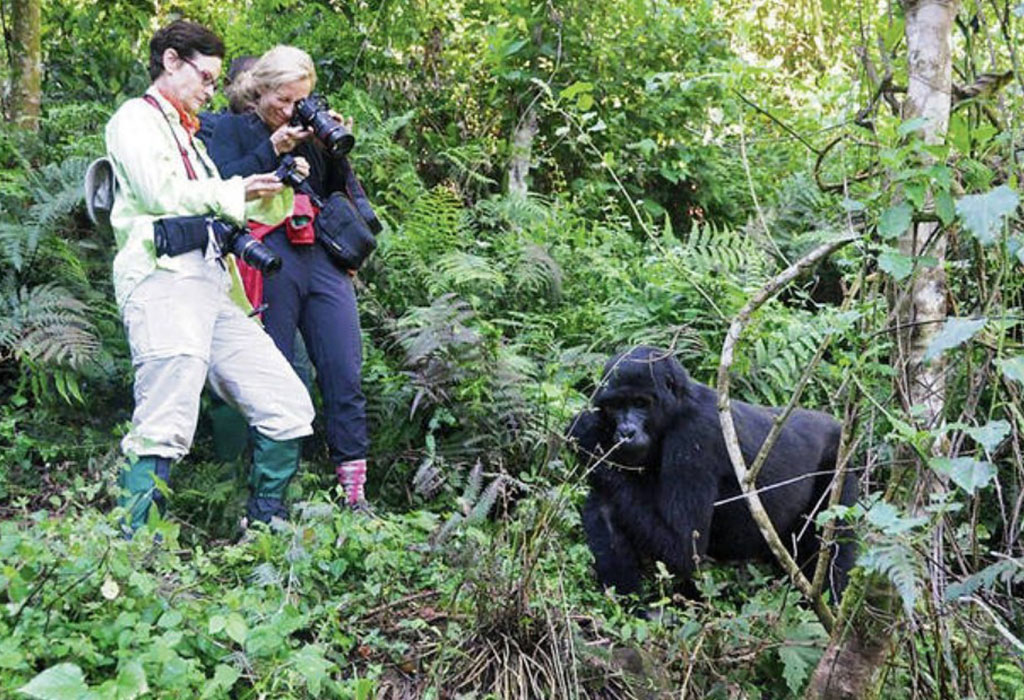
Trekking lasts anywhere from two to seven hours depending on where the gorillas moved overnight, and you spend one hour with the family once found. The terrain is steep, muddy and humid, so reasonable fitness matters. Porters are available locally for a modest fee and are well worth hiring, since they also support nearby communities.
Fly-In Itineraries
2-Day Fly-In Safari
Two days is the minimum, designed for travelers with almost no spare time. You fly and drive to the lodge on day one, trek the next morning, and leave according to the flight schedule. It only works when connections are comfortable, and we confirm timings before recommending it, since trekking should never be squeezed between unreliable departures.
3-Day Fly-In Safari
Three days is the best balance for most travelers. Day one covers the flight and transfer, day two is for gorillas, and day three takes you back to Entebbe or onward. The extra night means you are not racing between landing, sleeping and an international connection, which makes this ideal for couples, first-timers and anyone adding Uganda to a wider East African trip.
4-Day Fly-In Safari
Four days let Bwindi be more than a single activity. After trekking on day two, day three can go to a forest nature walk, a cultural visit with local communities, or simply the lodge veranda. It suits travelers who value atmosphere over ticking off destinations, since the misty hills and village life around the forest reward a slower pace.
5-Day Bwindi and Queen Elizabeth Safari
Five days opens the door to savannah wildlife. Fly in, trek gorillas, then drive toward Queen Elizabeth National Park for game drives and a launch trip on the Kazinga Channel, where elephants, buffalo, antelope and hippos gather. If the route allows, the Ishasha sector adds a chance of seeing tree-climbing lions. You finish with a return to Entebbe, turning a gorilla trip into a rounded safari.
6-Day Gorilla and Wildlife Safari
With six days, flight schedules stop dictating every move and the road becomes part of the safari. You can pair Bwindi with Queen Elizabeth, Kibale for chimpanzees, or Lake Bunyonyi for rest. We choose the combination from your interests, not to lengthen the route; primates suit Kibale, while wildlife lovers usually prefer Queen Elizabeth.
Combining Bwindi With Other Destinations
Queen Elizabeth National Park
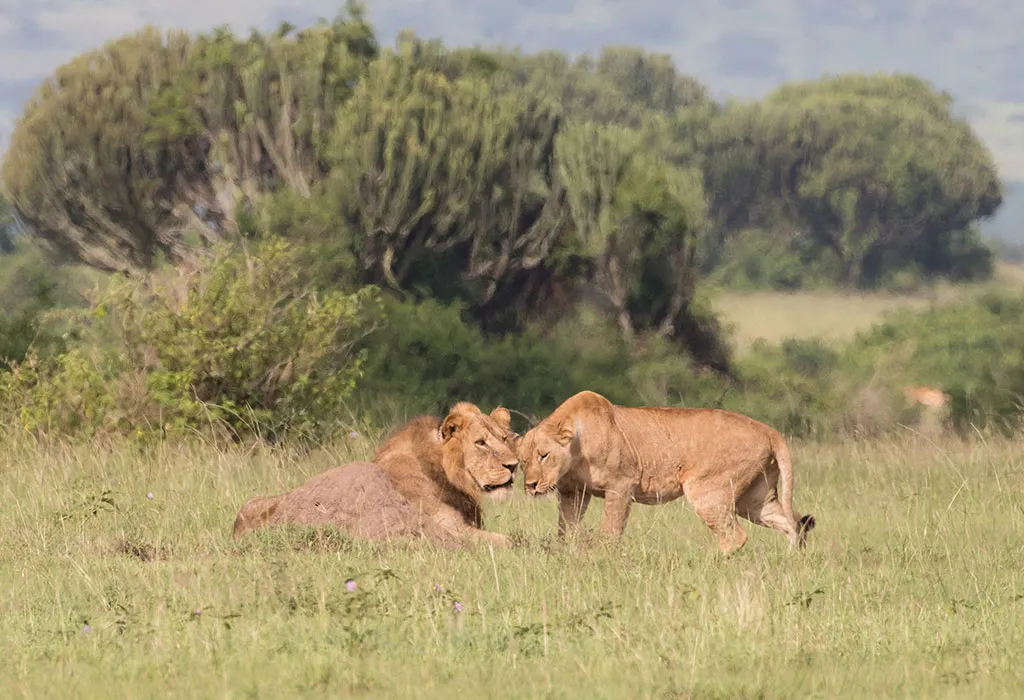
The simplest pairing. After the trek, a road journey north takes you from montane rainforest to open savannah, where game drives and boat cruises wait. It delivers gorillas and classic safari wildlife in one trip without another flight, though you should allow most of a day for the drive between them. A stop at Ishasha breaks the drive nicely.
Kibale Forest National Park

Perfect for primate enthusiasts who want chimpanzees as well as gorillas. The two forests are separated by a long road journey, so give each experience its own night or two rather than rushing between them. Done properly, it is one of Uganda’s richest wildlife pairings, with very different encounters from the same safari.
Lake Bunyonyi
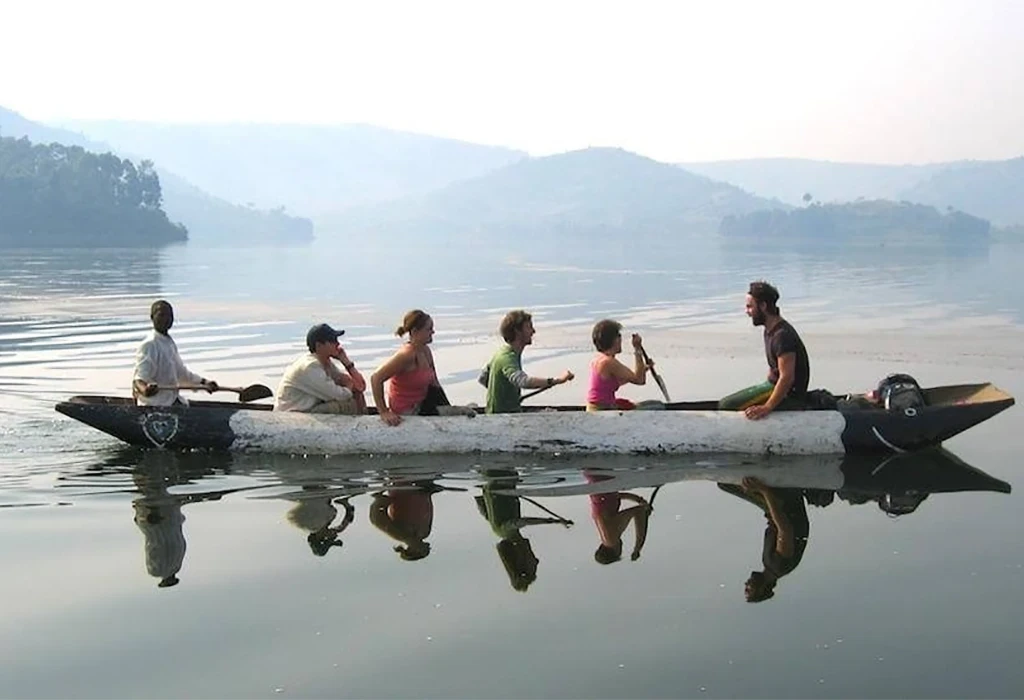
A gentle extension after the intensity of trekking. Terraced hills, small islands and cool highland air make it ideal for a recovery night, and it sits conveniently on the way toward Kigali, Entebbe or another destination. Canoe rides and lakeside walks give tired legs an easy day without demanding anything more than a good book.
Mgahinga Gorilla National Park

Mgahinga sits close to Bwindi’s southern sectors, yet its volcanic slopes and bamboo forest feel quite different. Kisoro is the natural base, which makes this the easiest extension for anyone landing there. Golden monkey trekking and volcano hikes add variety to a gorilla itinerary without much extra driving. Gorilla tracking is also possible there.
Starting From Kigali
Travelers already in Rwanda should not automatically return to Entebbe. Southwestern Uganda is close to Kigali by road, so driving across is often simpler and cheaper than repositioning for a domestic flight, particularly after Volcanoes National Park. If your trip begins in Entebbe, however, flying remains the efficient solution. Your overall route, not the gateway city, should decide.
Best Time to Fly to Bwindi
Bwindi can be visited all year, but it is a rainforest, so even the drier months bring showers. June to August and December to February are the most popular and generally easier underfoot. April, May and November are wetter with discounted permit rates, and trekking continues regardless. Wet-season visits often bring lower lodge rates and lush scenery; just expect muddier trails.
What to Pack for your Flying Safari to Bwindi
Small aircraft have stricter baggage limits than international carriers, so pack one compact soft-sided bag rather than a rigid suitcase. Bring practical clothing for steep, muddy, changeable conditions: good footwear, rain protection and layers matter far more than variety. Exact allowances depend on the operator, so we confirm them for your dates before you fly, especially if you carry heavy camera equipment.
- Waterproof hiking boots: Choose boots that are already broken in, with firm ankle support and a deep grip. Trails can be steep and slippery, and blisters on the morning of a short safari are hard to recover from. Gaiters help keep mud and insects out. Fashion footwear will not survive the forest.
- Rain jacket and dry bags: Showers arrive without warning in a mountain rainforest. A proper waterproof jacket keeps you comfortable, while dry sacks protect cameras, phones, passports and spare clothing inside your daypack. A light poncho is a useful backup that weighs almost nothing. Pack both before leaving the lodge each morning.
- Long sleeves, trousers and gloves: Cover your skin against nettles, thorny vegetation, insects and cool mornings. Sturdy gardening gloves are a trekker’s secret weapon: they protect your palms when you grab branches for balance on slippery slopes. Neutral, comfortable clothing works better than anything new or fashionable. Choose quick-drying fabrics where possible.
- Daypack and essentials: Carry water, snacks, a camera, personal medication, sunscreen, insect repellent and sunglasses in a comfortable daypack. Keep it light, because you will be walking for hours. Wear a face mask if park guidance asks for one near the gorillas, since the animals are vulnerable to human illness. Anyone with a cold should say so beforehand.
Insider Tip: Pack for the whole safari, not just the flight. Bring one soft bag for the full trip and keep trek essentials on top. If your wider itinerary includes several destinations, leave surplus items at your Entebbe hotel before flying. You will handle each transfer with less hassle, and you will arrive at the lodge ready for the forest rather than sorting through a large suitcase.
The Flight Experience
The domestic flight feels very different from an international one. Instead of hours in a vast terminal, you board a small aircraft and watch Uganda’s landscape change below, from Lake Victoria’s shoreline to the folded hills of the southwest. On landing, your driver-guide is waiting with a prepared vehicle, and the drive that follows is your first real introduction to farms, villages and terraces around Bwindi.
Who Should Choose a Flying Safari to Bwindi?
Short-Stay Travelers
If gorillas are the main purpose of your Uganda visit and you have two or three days, flying is the realistic option. It converts a day of driving into extra time at the lodge and leaves you fresh for the trek, instead of arriving stiff and tired from hours on winding roads.
Honeymooners and Couples
Honeymooners and couples value privacy: a scenic flight, a private vehicle, an intimate lodge and a once-in-a-lifetime gorilla encounter without hours spent in transit. The trip can be lifted further with a premium forest lodge, a private dinner or a gentle extra day after the trek to rest together.
Luxury Travelers
For high-end travelers, flying protects the thing luxury really buys: time. We focus on the whole journey rather than only the room, from private transfers and well-judged flight times to carefully chosen meals and seamless handovers between each stage, so nothing in the logistics intrudes on the experience. Bwindi’s finest lodges reward the extra hours.
How to Book a Flying Safari to Bwindi Step by Step
1. Fix your trekking date. Start with a date, since permits are issued for specific days. Flexibility of even a day or two makes everything easier to coordinate, so tell your planner early if your dates can move. Peak months fill quickly, and a confirmed date is what every other booking hangs on. Aim to enquire several months ahead.
2. Secure the permit and sector. Once the date and sector are agreed, the permit is purchased and becomes your anchor. Choose the sector by weighing availability, lodge preferences and your wider route, because the four areas differ in geography and character. This is more than a technical choice; it shapes your scenery, your drive and your stay.
3. Choose your lodge. Pick accommodation close to your trailhead, weighing room quality, food, views and atmosphere. On a short trip, proximity matters most because it protects hours you cannot get back. Ask about packed breakfasts, laundry and whether the lodge can arrange a porter and walking sticks, since these small services make trek day far smoother.
4. Choose the airstrip. With sector and lodge fixed, choose Kihihi or Kisoro, then check current flight availability and your onward route. Seats on small aircraft are limited, so a connection that suits you on paper may be full. Confirm a backup option such as a charter or an early road departure before you commit to the rest of the plan.
5. Arrange the private transfer. Your driver-guide meets you at the airstrip and drives you to the lodge. The pickup is timed around your landing and check-in, with slack built in for delays. A private vehicle also lets you stop for photographs, buy water and snacks, or slow down if the roads are wetter than expected.
6. Review the whole plan. Before departure, check flight, baggage allowance, lodge, permit, transfer and return connection against one another. A good plan reads as a single continuous journey, and this final review catches the small mismatches, such as a pickup time that precedes landing, that otherwise cause stress when you are already travelling. We do this for every client.
Why Book Your Flying Safari to Bwindi With Iconic Africa Safaris
We plan fly-in gorilla safaris as one journey rather than a stack of separate bookings. Permits, domestic flights, lodges, airstrip pickups, private 4x4s and experienced driver-guides are coordinated by one team, so the details agree with each other and the route makes sense on the ground, where Bwindi’s mountainous roads make map distances misleading.
This matters most on complex trips: multiple sectors, several lodges, or Uganda combined with Rwanda. We check the route before confirming anything, avoid backtracking, and build extensions to Queen Elizabeth, Kibale, Lake Bunyonyi or Mgahinga around your interests rather than padding the itinerary. Our starting point is always the trekking date, and everything else is arranged backward from it.
Frequently Asked Questions about a Flying Safari to Bwindi
Can you fly directly into Bwindi?
No aircraft lands inside the forest. Flights use regional airstrips outside the park, and a 4×4 covers the rest. Kihihi serves the northern side and Kisoro the south, with the drive from either varying according to your lodge. Plan for a suitable vehicle even if you fly, because the final approach roads are steep and sometimes rough.
Is flying worth the extra cost?
For short holidays, almost always. Flying returns most of a day to you and reduces fatigue before the trek. On longer trips the answer changes: if you can spare a week and want to see other parks on the way, driving costs less and adds experiences. The deciding question is whether an extra day at the destination is worth more to you than the saving.
Can I fly from Kampala or Kigali?
Domestic safari flights usually depart from Entebbe, and your planner should confirm the departure airport for your dates. From Kigali, most travelers prefer the road into southwestern Uganda, which is relatively short and often cheaper than flying. Fly only if your wider itinerary already passes through Entebbe. Kampala travelers simply transfer to Entebbe first.
Can I choose which gorilla family I see?
Not in advance. Your permit is for a sector and date, and the family you meet is allocated on the morning of the trek, usually taking each group’s fitness into account. Tell the rangers at the briefing if you prefer a gentler walk; they can often assign a family closer to the trailhead, though nothing is guaranteed.
How early should I book Flying Safari to Bwindi?
Permits and small-aircraft seats are both limited, so book as early as your dates allow. For June to August and December to February, start planning 4 to 6 months ahead, and sooner for groups or luxury lodges. Shoulder months are easier, but flights and lodges still sell out around popular trekking dates, so securing the permit early protects everything else.
Ready to Plan Your Flying Safari to Bwindi?
Whether you want a two-day dash, a relaxed three-day private trip, a luxury gorilla escape or a longer Uganda journey combining Bwindi with wildlife and other primates, Iconic Africa Safaris will design it around your dates and style.
Iconic Africa Safaris offers three simple, reliable ways to secure your next unforgettable Ugandan adventure today. Simply complete our quick online booking form to start planning your dream safari experience right away. Our friendly team also welcomes direct emails at info@iconicafricasafaris.com to discuss your specific travel plans and preferences. For WhatsApp messages and calls, tap the green WhatsApp icon in your screen’s bottom right corner anytime.
Our driver-guides are the trip managers guests trust most — trained professionals, all skilled interpreters of wildlife and culture. They stay with travelers from the first airport pickup to the final wave-off, keeping each day running smoothly and safely.