
5-Day Rwanda Safari: Volcanoes with Akagera Big 5 or Nyungwe Chimps
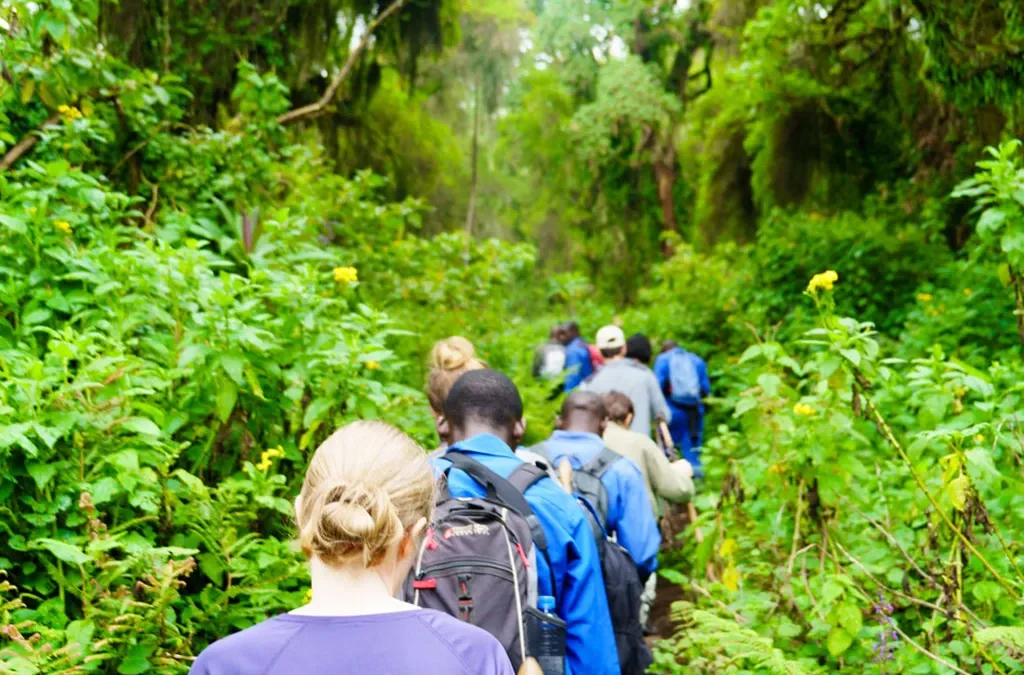
5-Day Rwanda Safari: Akagera with Volcanoes or Nyungwe with Volcanoes
A 5-day Rwanda safari gives you enough time to experience two very different sides of the country without racing between national parks. You can pair the savannahs of Akagera National Park with mountain gorilla trekking in Volcanoes National Park. Or you can choose the rainforest, chimpanzees and canopy walkway of Nyungwe National Park before continuing to the gorillas.
Both routes work well, but they suit different travellers. Akagera with Volcanoes is for those who want a classic game-drive safari plus gorillas. Nyungwe with Volcanoes suits those who want a stronger primate experience, with chimpanzees, rainforest scenery and the canopy walkway before the gorillas.
This guide covers day-by-day itineraries, estimated costs, where to stay, travel times, the best time to go and how to choose between the two routes.
5-Day Rwanda Safari at a Glance
| Option | Main highlights | Best for | Route |
|---|---|---|---|
| Akagera & Volcanoes | Game drives, Big Five, Lake Ihema boat trip, gorillas | Wildlife and gorillas | Kigali → Akagera → Volcanoes → Kigali |
| Nyungwe & Volcanoes | Chimpanzees, canopy walkway, rainforest, gorillas | Primates and forest scenery | Kigali → Nyungwe → Volcanoes → Kigali |
Rwanda’s compact size lets you combine very different landscapes in one trip. Akagera lies in the east and is a mix of savannah, woodland, wetlands and lakes. Nyungwe is a vast mountain rainforest in the southwest. Volcanoes National Park, in the northwest, protects the Rwandan side of the Virunga Mountains, home to mountain gorillas.
Fitting all three parks into five days leaves very little time in each and means long hours on the road. Choosing two gives you a far more comfortable safari.
Which 5-Day Rwanda Safari Should You Choose?
The decision comes down to savannah wildlife or forest primates.
Choose Akagera and Volcanoes if your ideal Rwanda safari includes lions, elephants, giraffes, buffaloes, rhinos, zebras and hippos, as well as a gorilla trek. Akagera is Rwanda’s only savannah safari destination and offers both game drives and boat trips on Lake Ihema.
Choose Nyungwe and Volcanoes if chimpanzees, monkeys, rainforest scenery and gorillas are your priority. Nyungwe adds a completely different environment to the trip.
Akagera and Volcanoes: Wildlife and Gorillas
This route is the closest Rwanda gets to a traditional East African safari. Akagera’s open plains, woodland, wetlands and lakes are home to all of the Big Five: elephant, buffalo, lion, leopard and rhino. Lions and rhinos were reintroduced in recent years, and the park’s wildlife has recovered impressively. Giraffe, zebra, hippo, crocodile, many antelope species and hundreds of bird species add to the variety. A boat trip on Lake Ihema gives a different view of the park, especially for hippos, crocodiles and waterbirds.
You then travel to the foothills of the Virunga Mountains for your gorilla trek.
Nyungwe and Volcanoes: Chimpanzees and Gorillas
This route focuses on Rwanda’s primate diversity. Nyungwe is a high-altitude rainforest with 13 primate species, including chimpanzees, colobus monkeys and L’Hoest’s monkeys. Chimpanzee trekking is the main draw, and the canopy walkway gives an elevated view over the forest. After Nyungwe you travel north for the mountain gorillas.
Option 1: Akagera and Volcanoes
Day 1: Kigali to Akagera National Park
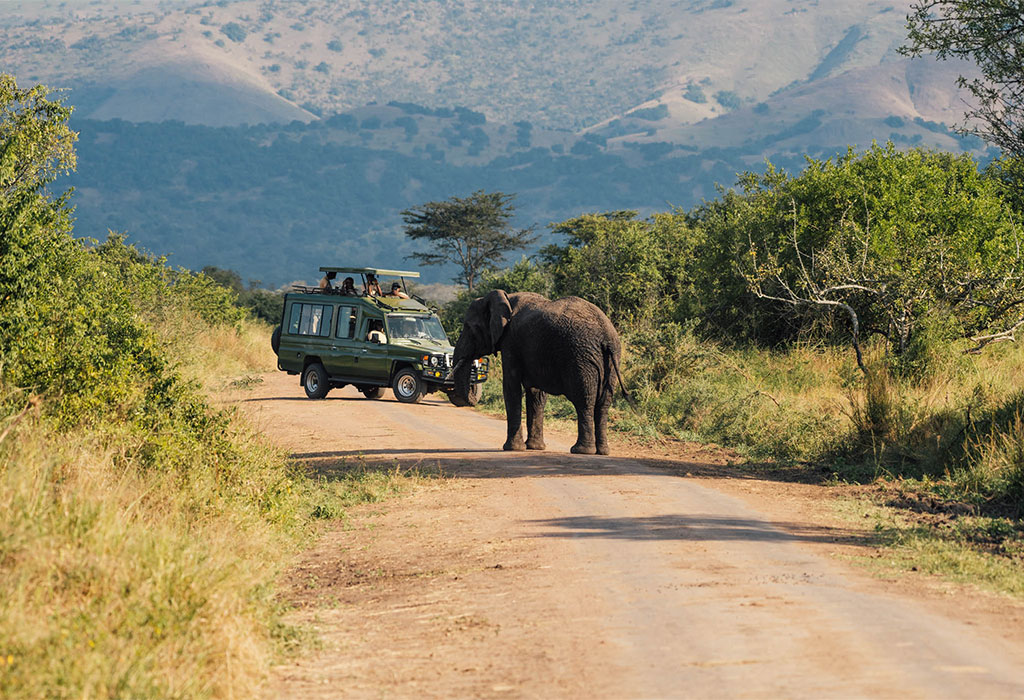
Your driver-guide meets you at the airport or your Kigali hotel. After breakfast you head east toward Akagera. The city gives way to rolling countryside, cultivated hills and, eventually, the warmer savannah of eastern Rwanda. The drive takes roughly 2.5 to 3 hours to the park’s southern gate and a little longer to lodges in the north, depending on your starting point and traffic.
After checking in and having lunch, you take an afternoon game drive or a boat trip on Lake Ihema. You may see giraffes browsing among acacias, zebras on the open grassland, buffalo herds and plenty of antelope. On the lake you will find hippos, Nile crocodiles and large numbers of waterbirds.
Accommodation: Akagera lodge or camp
Meals: Lunch and dinner
Day 2: Full-Day Akagera Safari

Start early. Animals are most active in the cool of the morning, and your guide will choose a route based on recent sightings, road conditions and the areas that are most productive.
Akagera’s wildlife includes elephants, buffaloes, lions, leopards, rhinos, giraffes, zebras, hippos and many antelope. Leopards are elusive and rhinos are closely protected, so sightings of these two take patience and luck. The park also has more than 480 recorded bird species, which makes it rewarding for birders.
After lunch and a rest, you can do another game drive or take the Lake Ihema boat trip. Moving quietly over the water, with hippos, crocodiles and birds along the shore, is one of the most memorable parts of an Akagera safari, especially for photographers.
Accommodation: Akagera lodge or camp
Meals: Breakfast, lunch and dinner
Activities: Game drive and Lake Ihema boat trip
Day 3: Akagera to Volcanoes National Park

After breakfast you leave Akagera for northern Rwanda. The drive to Musanze, the gateway to Volcanoes National Park, takes about 4.5 to 5.5 hours, passing through or around Kigali. The warm eastern plains give way to the cool highlands, with terraced slopes and the Virunga volcanoes ahead.
Check in to your lodge and keep the afternoon easy, since the trek starts early tomorrow. You could visit the Gorilla Guardians Village for a cultural experience, explore Musanze or simply rest. Your guide will brief you on the trekking arrangements and meeting time.
Accommodation: Lodge near Volcanoes National Park
Meals: Breakfast, lunch and dinner
Day 4: Gorilla Trekking

This is the highlight of the safari. After an early breakfast you go to the park headquarters for registration and a briefing, where you are assigned to a gorilla family. Trackers and guides then lead you up the forested slopes of the Virunga Mountains.
The trek can take anywhere from under an hour to several hours, depending on where the family has moved. Once you reach the gorillas, you spend one hour with them. You may watch adults feeding, young gorillas playing, mothers with infants or a silverback keeping watch. Park rules keep viewing groups small and maintain a safe distance to protect both visitors and gorillas.
The standard gorilla permit for international visitors is US$1,500 per person, and the minimum age is 15. After the trek, return to the lodge for lunch and a relaxed afternoon.
Accommodation: Lodge near Volcanoes National Park
Meals: Breakfast, lunch and dinner
Day 5: Volcanoes to Kigali

After breakfast you drive back to Kigali, about 2 to 2.5 hours. If your flight is late, there may be time for a short cultural stop in Musanze or a visit to a Kigali market or memorial before your drop-off at the airport or hotel.
Option 2: Nyungwe and Volcanoes
Day 1: Kigali to Nyungwe National Park
You head southwest through some of Rwanda’s most scenic countryside, with its famous rolling hills slowly turning into the forested highlands near Nyungwe. The drive takes about 5 to 6 hours with stops. Nyungwe is the opposite of Akagera: dense montane rainforest, ancient trees, steep valleys and misty ridges.
Stop for lunch and viewpoints along the way. After checking in, rest or take a short forest walk, since chimpanzee trekking starts very early tomorrow.
Accommodation: Nyungwe-area lodge
Meals: Lunch and dinner
Day 2: Chimpanzee Trekking and Canopy Walkway
Chimpanzee treks usually start around dawn, so expect an early breakfast and transfer to the briefing point. Chimpanzees move quickly and cover long distances, so the trek is more unpredictable than a gorilla trek. You may hear them calling long before you see them. Other primates and forest birds are often seen along the way.
After lunch and a rest, you walk the canopy walkway. Suspended high above the forest floor, it gives sweeping views across the treetops and surrounding hills and is good for birdwatching.
Accommodation: Nyungwe-area lodge
Meals: Breakfast, lunch and dinner
Activities: Chimpanzee trekking and canopy walkway
Day 3: Nyungwe to Volcanoes National Park
This is the longest drive of the trip, around 7 to 8 hours to Musanze, so the aim is a comfortable journey rather than extra stops. The road leaves the rainforest and climbs into the northern highlands, where the Virunga volcanoes eventually fill the horizon.
Check in to your lodge, keep the evening light and get your gorilla trekking briefing.
Accommodation: Lodge near Volcanoes National Park
Meals: Breakfast, lunch and dinner
Day 4: Gorilla Trekking
After an early breakfast you go to the park headquarters for registration and briefing, then trek with guides and trackers. The terrain can be steep, muddy and uneven, so good hiking boots and suitable clothing matter. Once you find your assigned family, you spend one hour with them. The encounter can be strikingly close: a silverback resting nearby, juveniles playing or adults feeding quietly.
Return to the lodge for lunch and a free afternoon.
Accommodation: Lodge near Volcanoes National Park
Meals: Breakfast, lunch and dinner
Day 5: Volcanoes to Kigali
After breakfast you drive back to Kigali (about 2 to 2.5 hours). Depending on your departure time, you can add a short cultural or scenic stop in Musanze or a Kigali city experience before your transfer to the airport.
Akagera vs Nyungwe: How to Decide
Both routes end with gorilla trekking, but the first half is very different.
Choose Akagera and Volcanoes if you want:
- Classic game drives
- Lions, elephants, buffaloes, giraffes, zebras and rhinos
- A Lake Ihema boat trip with hippos and crocodiles
- Birdwatching
- Gorilla trekking
It is the better choice for first-time safari-goers who want a traditional savannah experience alongside the gorillas.
Choose Nyungwe and Volcanoes if you want:
- Chimpanzee trekking
- Mountain rainforest and highland scenery
- The canopy walkway
- Forest primates and birds
- Gorilla trekking
It is especially good for travellers who have already done savannah safaris and want a forest-focused trip. Be aware that it involves more driving, particularly on Day 3.
The short version: Akagera + Volcanoes is wildlife and gorillas. Nyungwe + Volcanoes is chimpanzees and gorillas.
5-Day Rwanda Safari Cost
The cost depends on the route, accommodation level, travel season, group size and permits. The gorilla permit is the single biggest expense on either route.
Key fees (international, non-resident visitors):
- Gorilla permit: US$1,500 per person. A discounted permit of around US$1,050 has been offered for visitors who spend qualifying nights in Akagera or Nyungwe during the low season (roughly November to May). Terms change, so confirm the current offer when booking.
- Akagera park fees: US$100 per person per day.
- Chimpanzee trekking permit: US$100 entrance to $150 permit per person.
- Nyungwe canopy walkway:US$40 per person.
Estimated total per person, based on two people sharing a private safari:
| Level | Akagera & Volcanoes | Nyungwe & Volcanoes |
|---|---|---|
| Budget | US$2,800 – 3,400 | US$2,900 – 3,500 |
| Mid-range | US$3,600 – 4,900 | US$3,800 – 5,100 |
| Luxury | US$6,500 – 11,000+ | US$6,800 – 11,500+ |
These figures include the gorilla permit, accommodation, meals, park fees, a private 4×4 and guide, and the main activities. They are estimates only. Solo travellers pay more, since the vehicle and guide cost is not shared. Groups of three or four pay less per person. Lodge choice, especially around Volcanoes, is the biggest variable.
What affects your final price:
- Number of travellers and single-room requirements
- Travel dates and season
- Gorilla permit rate or discount eligibility
- Accommodation level
- Chimpanzee permit, boat trip and canopy walkway
- Private vehicle and meals
- Optional cultural activities and airport transfers
- Domestic flights or helicopter transfers, if requested
For an accurate price, request a quotation based on your exact dates.
What Is Included in a Private 5-Day Rwanda Safari?
A private safari with Iconic Africa Safaris is arranged around your dates, preferred route and accommodation level. Typical inclusions are:
- Private 4×4 safari vehicle with an English-speaking driver-guide
- Airport or hotel pickup and drop-off in Kigali
- Accommodation and meals as per the itinerary
- Gorilla trekking permit
- Chimpanzee permit (Nyungwe route)
- Akagera game drives and Lake Ihema boat trip (Akagera route)
- Nyungwe canopy walkway (Nyungwe route)
- Park entry fees
- Drinking water during drives
Typically not included:
- International flights
- Visa fees, where applicable
- Travel insurance
- Alcoholic drinks and laundry
- Tips and souvenirs
- Optional activities and extra nights
- Personal medical expenses
Your quotation should state clearly what is covered before you confirm.
Best Time for a 5-Day Rwanda Safari
Rwanda can be visited all year, but the seasons affect conditions.
- Long dry season (June to September): The most popular period. Trails are easier, and game viewing in Akagera is often at its best as animals gather near water.
- Short dry season (December to February): Also good for trekking and wildlife.
- Wet seasons (March to May, and October to November): Landscapes are green, trails can be slippery, and there are fewer visitors. This is also when the discounted gorilla permit may apply. It is a good choice for photographers and birders.
Gorilla permits are limited, so book well ahead, especially for the dry seasons.
Gorilla Trekking on a 5-Day Rwanda Safari
Volcanoes National Park is one of the most important mountain gorilla conservation areas in the world. Treks begin with a briefing, and guides and trackers then lead you into the forest. Even when the gorillas are close to the trailhead, the terrain can be steep and muddy, so good preparation helps.
What to pack for the trek:
- Waterproof hiking boots
- Long trousers and a long-sleeved shirt
- Lightweight rain jacket
- Gardening gloves, for gripping vegetation
- Daypack and reusable water bottle
- Hat, sunglasses, sunscreen and insect repellent
- Camera and a power bank
- Walking stick (usually provided at the start)
A porter is worth hiring, especially if you carry camera gear or want help on steep sections. It also supports the local community.
Chimpanzee Trekking in Nyungwe
Chimpanzee tracking is on foot inside the rainforest. You follow trackers while listening for calls and watching the canopy and forest floor. Because chimpanzees roam widely, the experience is more dynamic than a gorilla trek, and a sighting is never guaranteed. You may also see colobus monkeys, blue monkeys, L’Hoest’s monkeys and many forest birds. The canopy walkway adds a view from above the treetops.
Wildlife You Can See in Akagera
Akagera is the wildlife-focused option. It is home to lion, leopard, elephant, buffalo and rhino, along with giraffe, zebra, hippo, crocodile, many antelope, primates and a large variety of birds. A safari is wildlife viewing, not a checklist, and no honest guide can promise you will see every species. Your guide uses recent sightings, tracks and habitat knowledge to give you the best chance. The Lake Ihema boat trip complements the game drives with close views of hippos and waterbirds.
Where to Stay on a 5-Day Rwanda Safari
Choose lodges for location and comfort rather than changing lodges often. Staying close to the park or trailhead cuts down early-morning transfers. The lodges below are examples by category, and availability depends on your dates.
Akagera National Park
- Budget: Karenge Bush Camp, a simple, affordable tented camp inside the park.
- Mid-range: Akagera Game Lodge, which has a good location near the park’s southern entrance. Akagera Rhino Lodge is another option.
- Upper mid-range: Ruzizi Tented Lodge, a lakeside tented lodge on the Ihema shore with excellent views.
- Luxury: Magashi Camp, an exclusive tented camp in the northern part of the park with some of the best wildlife viewing.
Nyungwe National Park
- Budget: Chimpanzee Lodge
- Mid-range: Nyungwe Nziza Ecolodge, or Nyungwe Top View Hotel for comfortable rooms and forest views.
- Luxury: Nyungwe Forest Lodge, a tea-estate lodge on the edge of the forest, and One&Only Nyungwe House, a high-end retreat inside the forest.
Volcanoes National Park (Musanze)
- Budget: Muhabura Hotel, or La Palme Hotel for simple, clean rooms in Musanze.
- Mid-range: Mountain Gorilla View Lodge and Davinci Gorilla Lodge, both close to the park with comfortable rooms and good views.
- Upper mid-range: Sabyinyo Silverback Lodge, a community-linked lodge near the park boundary.
- Luxury: Bisate Lodge and Virunga Lodge, both with exceptional mountain views, as well as One&Only Gorilla’s Nest and Singita Kwitonda Lodge for the highest tier.
Luxury lodges around Volcanoes can cost several times as much as mid-range options, so lodge choice has a large effect on your total.
5-Day Rwanda Safari from Kigali
Kigali is the natural starting point. For the Akagera itinerary you travel east, for Nyungwe southwest, and for Volcanoes northwest toward Musanze. You can start and finish in the capital without complicated connections. If you arrive internationally the day before, an overnight stay in Kigali helps you recover before the road journey.
5-Day Rwanda Safari from Uganda
You can combine this safari with a Uganda trip, for example after gorilla trekking in Bwindi or Mgahinga. Rwanda can be entered by road from Uganda, with common crossings at Katuna/Gatuna and Cyanika. Check current visa and border requirements before travelling. If you are only travelling to Rwanda, starting from Kigali is simpler. When combining countries, plan around your gorilla permit date, since it is the least flexible part of the trip.
What to Pack
Akagera can be hot, while Nyungwe and Volcanoes are much cooler, especially in the mornings and evenings. Pack for both:
- Lightweight trousers and T-shirts
- Long-sleeved shirts
- Fleece or warm sweater
- Waterproof jacket
- Hiking boots and sandals
- Hat, sunglasses, sunscreen and insect repellent
- Daypack and reusable water bottle
- Camera, spare memory cards and power bank
- Binoculars
- Personal medication
- Travel documents and insurance details
Use a soft-sided bag rather than a hard suitcase, since it fits more easily in a safari vehicle.
Ready to Book Your Rwandan Safari with Iconic Africa Safaris?
Iconic Africa Safaris offers three simple, reliable ways to secure your next unforgettable Rwanda adventure today. Simply complete our quick online booking form to start planning your dream safari experience right away. Our friendly team also welcomes direct emails at info@iconicafricasafaris.com to discuss your specific travel plans and preferences. For WhatsApp messages and calls, tap the green WhatsApp icon in your screen’s bottom right corner anytime.
Our driver-guides are the trip managers guests trust most — trained professionals, all skilled interpreters of wildlife and culture. They stay with travellers from the first airport pickup to the final wave-off, keeping each day running smoothly and safely.
Frequently Asked Questions About a 5-Day Rwanda Safari
Is 5 days enough for a Rwanda safari?
Yes, five days is enough for a focused safari built around two experiences. Akagera and Volcanoes combine savannah wildlife with gorillas, while Nyungwe and Volcanoes combine chimpanzees with gorillas. Rwanda is compact, so transfers are manageable. Adding a third park would mean long drives and less time at each destination, so seven days or more suits all three.
Is Akagera or Nyungwe better for five days?
It depends on your interests. Choose Akagera if you want game drives, big game and a Lake Ihema boat trip, with shorter drives overall. Choose Nyungwe if you prefer rainforest scenery, chimpanzee trekking and the canopy walkway. Nyungwe involves a transfer of up to eight hours to Volcanoes, so it suits travellers who don’t mind more time on the road.
Can I see the Big Five in Akagera?
All five species live in Akagera: lion, leopard, elephant, buffalo and rhino. Lions and rhinos were reintroduced in recent years, and their numbers have grown steadily. Leopards are secretive and rhinos are closely protected, so they are harder to find. Sightings are never guaranteed, but an experienced guide and a full day or two in the park improve your chances.
Can I trek gorillas and chimpanzees on the same safari?
Yes, the Nyungwe and Volcanoes route is designed for exactly this. You trek chimpanzees in Nyungwe on Day 2, then travel to Musanze and trek mountain gorillas on Day 4. Each activity needs its own permit. Both should be booked well in advance, especially for the dry seasons, when demand is highest.
How much is a Rwanda gorilla permit?
The standard permit for international visitors is US$1,500 per person and covers one hour with a gorilla family. A discounted rate of around US$1,050 has been offered in the low season for visitors who spend qualifying nights in Akagera or Nyungwe. Terms can change, so confirm the current rate and eligibility when booking.
What age is required for gorilla trekking?
The minimum age for gorilla trekking in Rwanda is 15 years, and park authorities enforce it. Families with younger children can still enjoy Akagera’s game drives and boat trips, Nyungwe’s canopy walkway and cultural visits around Musanze while older family members trek. Bring passports or other proof of age, as the park may ask to see them.
Is gorilla trekking difficult?
It can be demanding. The forest is at high altitude, with steep, muddy and uneven trails, and treks last from under an hour to several hours depending on where your gorilla family has moved. Moderate fitness helps, and regular walking beforehand is good preparation. Sturdy boots, a steady pace and a porter make the trek far more manageable.
Is Rwanda safe for a safari?
Rwanda is widely regarded as one of Africa’s safer and better-organised safari destinations, with good roads, clean cities and well-run national parks. As anywhere, check your government’s current travel advisory, follow your guide’s instructions, observe park rules and take sensible care of valuables. A private driver-guide adds convenience and local knowledge throughout the trip.
Can I do a private 5-day Rwanda safari?
Yes, and it is the most flexible way to travel. A private safari lets you set the pace, choose your lodges and shape the itinerary around your gorilla trekking date, which is hard to change once booked. Your driver-guide manages transfers, park procedures and timing, and can adjust activities to wildlife movements and your energy levels.
Can I upgrade to luxury accommodation?
Yes. Both routes can be upgraded in all three destinations, from exclusive tented camps in Akagera to forest lodges in Nyungwe and high-end retreats near Volcanoes. Accommodation is the biggest factor in your total cost, and luxury lodges around Volcanoes can cost several times more than mid-range options, so decide your priorities early.
What is the best time for a 5-day Rwanda safari?
The long dry season, from June to September, is the most popular, with easier trails and strong game viewing in Akagera. December to February is also good. March to May and October to November are wetter but bring green scenery, fewer visitors and sometimes discounted gorilla permits. Permits are limited, so book several months ahead for peak periods.
Should I include all three parks in five days?
Not comfortably. Akagera, Nyungwe and Volcanoes sit in different corners of the country, and combining them means long drives that leave little time for activities. With seven to nine days, you can include all three at a relaxed pace, perhaps adding Lake Kivu. For five days, pick the two parks that best match your interests.