
Why Stay at Enkewa Camp in Masai Mara Reserve
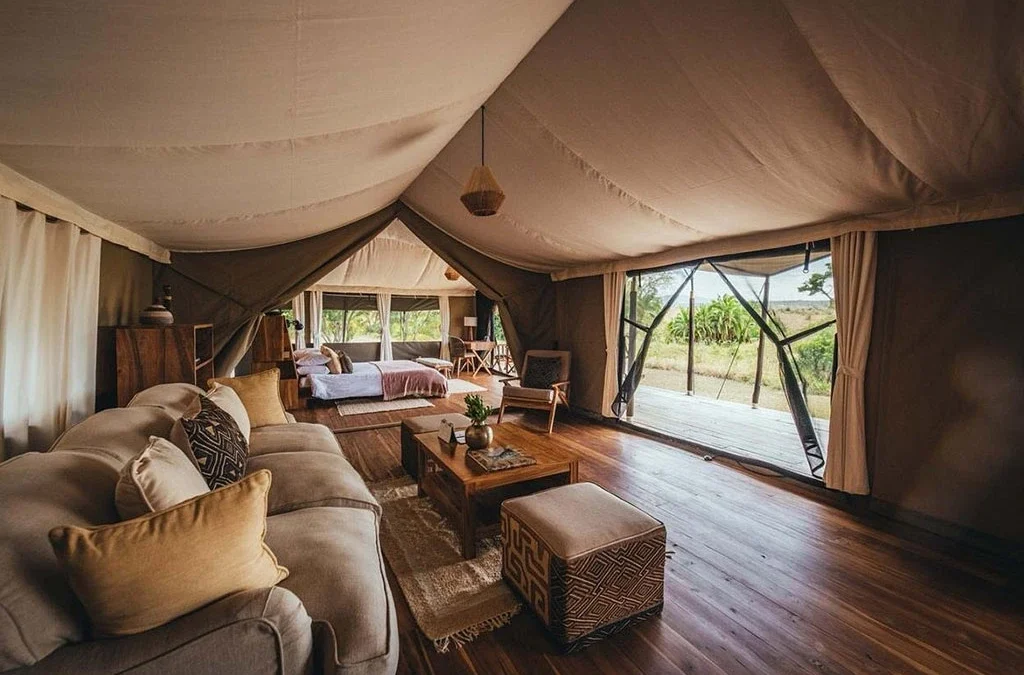
Are you planning a safari and wondering where to stay once you reach the Maasai Mara? Enkewa Camp gives you a front-row seat to one of Africa’s wildest stages, tucked inside the reserve itself, right along the path the Great Migration follows each year. This eco-friendly tented camp pairs rustic charm with real comfort, so you get the feeling of sleeping under canvas without giving up hot showers or a good night’s rest. Staff greet you warmly and stay attentive throughout your visit, the rooms blend wilderness living with modern touches, and the location keeps you close to the action yet far from the noise. Below, find out what makes this camp special, what your room will look like, and how to plan your journey from Nairobi.
Why Stay at Enkewa Camp?
Enkewa sits in the southeast corner of the Maasai Mara National Reserve, directly inside the corridor the wildebeest use during their famous crossing. That position alone sets it apart from camps that sit on the reserve’s edge. Guests reach Enkewa in just 20 minutes from Keekorok Airstrip, yet the camp still feels far removed from crowds and traffic. Local staff run the place with a level of care that turns a stay into something memorable; they’re professional when you need them to be and genuinely warm the rest of the time. Few camps manage that balance between high standards and a personal touch, and Enkewa pulls it off without trying too hard.
What Are the Rooms Like?
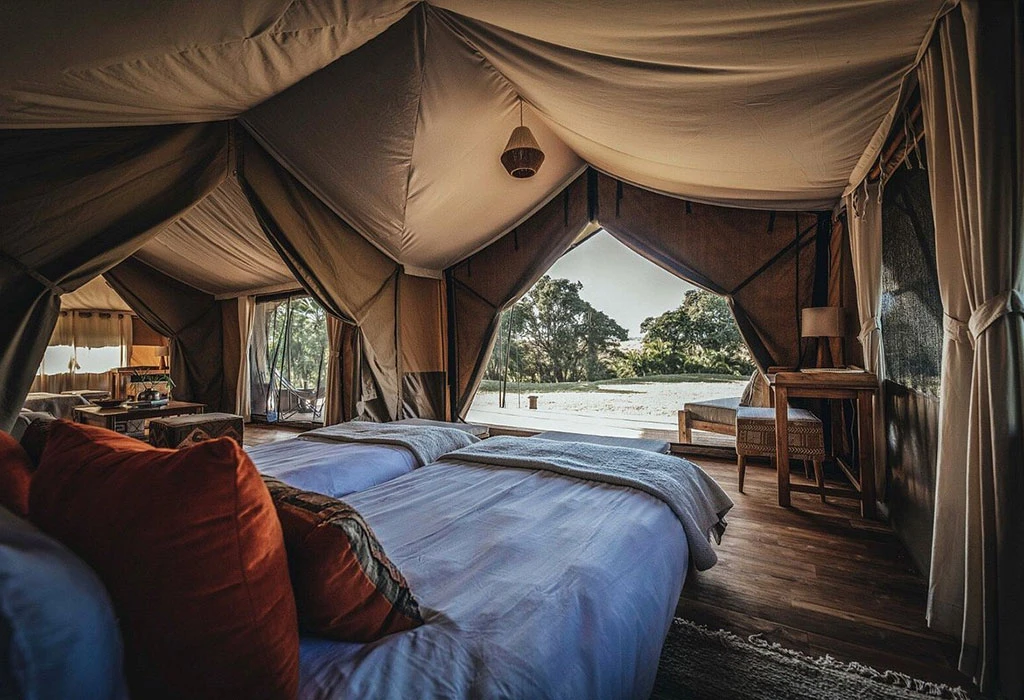
Each tent at Enkewa stretches out into a spacious canvas suite, built to feel luxurious while staying true to its eco-friendly roots. The camp holds 8 double tents and 1 family tent, and none of them sit too close to another. Designers spaced the tents apart on purpose, giving every guest privacy and a clear view toward the bush. Orientation matters here too: each tent faces a direction meant to calm you down after a long day of game drives, not just to catch a nice view.
What Room Features and Amenities Can You Expect?
A few details turn a basic tent into a real home away from home, and Enkewa pays attention to most of them:
- Beds: King-size beds measuring 200 by 200 centimeters come dressed in warm linens, and staff slip hot water bottles between the sheets each night, a small touch that matters once the temperature drops.
- Bathrooms: Private en-suite facilities give you running water, flush toilets, and the classic “safari-style” hot shower, so you never have to walk far or wait in line.
- Layout: Every tent stays fully insect-proof, and inside, you’ll find a writing desk along with a private deck where you can sit and watch animals pass by without leaving your room.
- Power and connectivity: Solar panels keep electricity running around the clock, while international charging points and Wi-Fi mean you stay connected even out here in the bush.
What Accommodation Types Are Available?
Couples and solo travelers tend to book the premium double tents, which come with comfortable bedding and the same en-suite setup found throughout the camp. Groups and families lean toward the family tent instead, since it offers two separate bedrooms joined by a shared lounge, with each bedroom keeping its own private bathroom. Either option puts you close to the wildlife corridor, just with a layout that fits how many people you’re traveling with.
How Sustainable Is the Camp?
Sustainability shapes nearly every decision at Enkewa, starting with the fact that solar power runs the entire camp. That commitment to eco-conscious building goes further than most guests expect. Tent placement actually follows geobiology analysis, a process that studies magnetic fields in the ground before deciding exactly where to pitch each structure. The idea behind this is simple: better alignment with the earth’s natural fields should lead to deeper, more restful sleep out here in the savannah. Whether or not you buy into the science, there’s something appealing about a camp that thinks this carefully about your sleep quality.
What Activities Can You Do in the Maasai Mara?

The Mara doesn’t just offer one or two highlights; it gives you an entire menu of ways to experience the savannah, and most visitors end up trying several:
- The Great Wildebeest Migration: Between mid-july and mid-october, millions of wildebeest, zebra, and gazelle cross the Mara River, where crocodiles wait beneath the surface. Many travelers consider this the single most dramatic wildlife event on the planet, and watching it unfold from the riverbank leaves a lasting impression.
- Hot air balloon safaris: Book an early morning flight for sweeping views over the plains from above. Most flights end with a bush breakfast served in true champagne style, right where the balloon lands.
- Morning and afternoon game drives: Guides take you out in 4×4 vehicles fitted with pop-up roofs, tracking the Big Five, lions, leopards, elephants, buffalo, and rhinos, while also pointing out cheetahs, giraffes, warthogs, hyenas, and various antelope species along the way.
- Cultural village visits: Spend time at a traditional Maasai manyatta, where the local tribe shares its customs, shows off intricate beadwork, and performs the jumping dances they’re known for worldwide.
- Walking safaris and nature hikes: Set out on foot alongside an armed ranger and a local Maasai guide. This slower pace lets you study plant life up close, follow animal tracks, and spot birds you’d easily miss from a vehicle.
- Night game drives: These run only within the private conservancies bordering the main reserve, giving you a rare chance to spot leopards and hyenas as they hunt under cover of darkness.
How Do You Get There?
Getting from Nairobi to the Maasai Mara comes down to two real choices: flying in or driving. Flying saves time and skips the rough roads, while driving costs less and lets you see more of the countryside along the way. The reserve itself sits somewhere between 225 and 275 kilometers from Nairobi, and your exact travel time depends heavily on which gate you’re heading toward.
Flying to the Mara
Flying remains the fastest and most convenient way to reach the reserve, cutting out traffic and bumpy roads entirely. Flights depart from Wilson Airport in Nairobi rather than Jomo Kenyatta International Airport, so double-check your pickup location before booking ground transport. The direct flight itself only takes about 40 to 60 minutes, though these flights often work like a shuttle bus, making stops at different airstrips to drop off other travelers first. That means your actual time in the air can stretch a bit depending on the route that day.
Several airstrips serve different corners of the Mara, including Keekorok, Olkiombo, Musiara, Mara North, and Mara Serena. Book your flight to land at whichever airstrip sits closest to your specific lodge, since landing at the wrong one adds an unnecessary drive afterward. Reliable bush carriers covering these routes include AirKenya Express, Safarilink, and FlyALS, and any of them will get you there safely and on schedule.
Driving to the Mara
Driving gives you a different kind of experience, one built around watching the landscape change as you go, including sweeping views of the Great Rift Valley. Plan for a drive lasting 5 to 6.5 hours, though traffic leaving Nairobi and road conditions near your gate can push that number higher or lower.
Your route starts on the A104 highway out of Nairobi, then shifts onto the B3 highway near Limuru. From there, you’ll pass through Narok Town, the usual stop for fuel and a quick break, before choosing your final road. Drivers heading to the eastern gates, Sekenani, Talek, or Oloolaimutia, take the C12 road, while those aiming for the western gates, Musiara or Oloololo, follow the C13 instead.
The road from Nairobi to Sekenani Gate stays fully paved the entire way, but a 4×4 vehicle still makes sense for this trip. Once you enter the reserve itself, tracks turn rough and unpaved, especially near the western gates, and rainy seasons make these paths even more demanding. A Safari Land Cruiser or a 4×4 safari van handles these conditions far better than a standard car ever could, so it’s worth arranging the right vehicle before you set off.