
What is the cost of 4 Days Mid-Range Uganda Gorilla Safari
4 Days Mid-Range Uganda Gorilla Safari Guide
The cost of 4 Days Mid-Range Uganda Gorilla Safari starts from $3,608 per person. This comprehensive package includes your gorilla trekking permit, comfortable transportation, quality accommodation with meals, authentic Batwa cultural experience, and scenic boat cruise or canoeing at Lake Bunyonyi. Additionally, you will spend your nights at carefully selected mid-range lodges that provide excellent service and stunning views. Furthermore, all activities feature experienced local guides who share their extensive knowledge about wildlife and local culture throughout your journey.
Complete Safari Itinerary
Your adventure begins on Day 1 with pickup from Entebbe International Airport. Subsequently, you travel to Bwindi Impenetrable Forest National Park during a scenic 9-10 hour drive through Uganda’s beautiful countryside. You will stay overnight at Engagi Lodge, which offers comfortable rooms and excellent dining options.
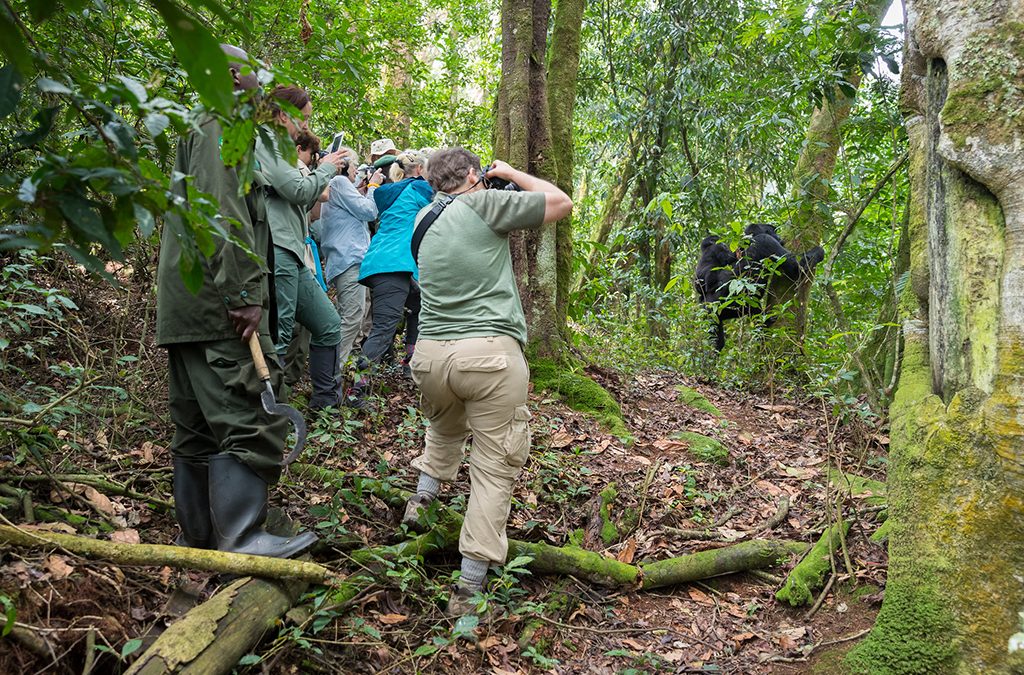
Day 2 brings the highlight of your trip – gorilla trekking in Bwindi Impenetrable Forest National Park. Early morning, you join other visitors at the park headquarters for briefing and group assignment. Then, experienced rangers guide you through dense forest trails to locate your assigned gorilla family. Once you find them, you spend one precious hour observing these magnificent creatures in their natural habitat.
Moving forward, Day 3 combines cultural learning with scenic relaxation. First, you participate in the morning Batwa Cultural Experience, learning about indigenous forest people and their traditional lifestyle. Later, you travel to Lake Bunyonyi for afternoon boat cruise or canoeing among the lake’s 29 beautiful islands. You spend the night at Lake Bunyonyi Rock Resort, enjoying peaceful lakeside views.
Finally, Day 4 concludes your safari with departure preparations. After breakfast, you begin your journey back to Entebbe or continue to your next destination. Throughout the trip, your guide ensures smooth transitions between activities and locations.
Gorilla Permit Costs and Requirements
Gorilla permits vary significantly based on your nationality and residency status. Foreign non-residents pay $800 per person for each permit. Meanwhile, foreign residents living in Uganda pay $700 per person. African citizens receive discounted permits at $500 each. However, East African citizens, including Ugandans, pay only UGX 300,000 (approximately $80).
Importantly, you must be at least 15 years old to participate in gorilla trekking. Also, park authorities require advance booking since they issue limited permits daily. Therefore, you should book your permits 3-4 months before your planned visit. Moreover, permits sell quickly during peak seasons, making early booking essential for securing your preferred dates.
Discovering Bwindi Impenetrable National Park
 Bwindi Impenetrable National Park stands as a UNESCO World Heritage site in southwestern Uganda. This remarkable park sits on the western edge of the Albertine Rift Valley, creating unique geographical conditions that support exceptional biodiversity. The ancient rainforest dates back over 25,000 years, making it one of East Africa’s oldest and most biologically diverse ecosystems.
The park hosts approximately 459 mountain gorillas, representing roughly half of the world’s remaining population. Besides gorillas, Bwindi supports 120 mammal species including baboons, chimpanzees, elephants, and various antelope species. Additionally, birdwatchers discover 350 bird species throughout the forest, with 23 species being Albertine Rift endemics. The park also shelters at least 200 butterfly species, including eight endemic varieties.
Conservation efforts at Bwindi involve local communities directly. Consequently, nearby villages benefit from ecotourism revenue and participate in sustainable resource management programs. This community-based approach ensures long-term conservation success while improving local livelihoods.
Gorilla Trekking Experience
 Gorilla trekking offers an unforgettable wildlife encounter that requires physical preparation and proper equipment. The park operates four different trekking sectors: Buhoma, Nkuringo, Ruhija, and Rushaga. Each sector provides access to different habituated gorilla families, ensuring diverse trekking experiences.
Treks vary dramatically in duration and difficulty. Some groups encounter gorillas within one hour of walking, while others trek up to eight hours through challenging terrain. The forest features dense vegetation, steep slopes, and muddy trails that test your endurance. However, rangers adjust routes based on recent gorilla locations and group fitness levels.
Each trekking group includes maximum eight visitors plus experienced rangers and trackers. Rangers carry communication radios to coordinate with advance scouts who monitor gorilla movements. Once you locate the gorilla family, you observe them for exactly one hour while maintaining safe distances and following strict behavioral guidelines.
Health protocols require all visitors to wear masks when near gorillas. This prevents disease transmission between humans and gorillas, protecting these vulnerable primates. Additionally, anyone showing cold or flu symptoms cannot participate in trekking activities.
The dry season from June to September and December to February provides optimal trekking conditions. During these months, trails remain drier and more accessible, though gorilla viewing remains excellent year-round.
Batwa Cultural Experience
 The Batwa Cultural Experience introduces you to Uganda’s indigenous forest people and their remarkable traditional lifestyle. Previously, the Batwa lived entirely within Bwindi forest as hunter-gatherers for thousands of years. However, conservation efforts relocated them to surrounding communities, creating challenges for cultural preservation.
During your visit, Batwa community members demonstrate traditional hunting techniques using handmade tools and ancient tracking methods. They show how they gathered forest foods, built temporary shelters, and navigated dense forest terrain. Furthermore, you witness traditional songs, dances, and storytelling that preserve their oral history.
The experience typically takes place in the Buhoma area through community-based initiatives. Local Batwa guides share personal stories about forest life and explain their current efforts to maintain cultural traditions. Your participation directly supports Batwa families and helps fund cultural preservation programs.
Lake Bunyonyi Activities and Attractions
 Lake Bunyonyi provides perfect relaxation after your gorilla trekking adventure. This scenic lake features crystal-clear waters surrounded by terraced hillsides and scattered with 29 unique islands. Each island carries fascinating historical stories and natural attractions worth exploring.
Canoeing offers intimate exploration using traditional dugout canoes handcrafted by local artisans. Your guide paddles to various islands while sharing their historical significance and cultural importance. Bushara Island features nature walks through indigenous forests, while Punishment Island reveals sobering historical practices. Bwama Island tells stories of former leper colony residents.
Boat cruises provide comfortable sightseeing alternatives for those preferring leisurely exploration. These guided trips typically last 2-3 hours and visit multiple islands while offering excellent photography opportunities. Both activities guarantee safety since Lake Bunyonyi contains no crocodiles or hippos.
Birdwatching enthusiasts spot over 200 species around the lake’s shores and islands. Night canoeing creates magical experiences filled with natural sounds from crickets, frogs, and nocturnal birds. Some tours include visits to local homesteads where you learn traditional crafts and enjoy authentic meals prepared by community members.
Essential Preparation Tips
Successful gorilla trekking requires proper physical preparation and appropriate equipment. Pack sturdy hiking boots with good ankle support for navigating uneven forest terrain. Bring lightweight, long-sleeved clothing to protect against thorns and insects while allowing comfortable movement.
Rangers provide walking sticks, but you should carry sufficient water and energy snacks for extended treks. A comfortable daypack holds your camera, rain gear, and personal items without restricting movement. Don’t forget to bring a hat and sunscreen for protection during open areas.
Book your safari through reputable operators who handle permit acquisition, transportation, and accommodation arrangements. This ensures smooth logistics and emergency support throughout your adventure. Most importantly, maintain realistic expectations about trekking difficulty and prepare for various weather conditions that enhance this incredible wildlife experience.