
Tree Climbing Lions Safaris in Uganda
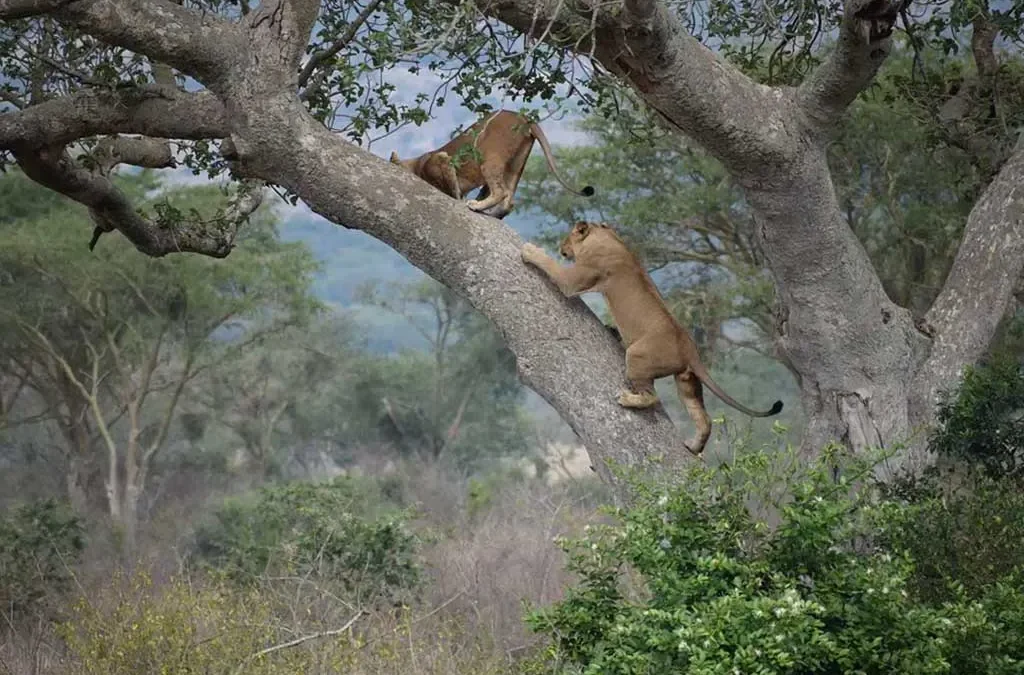
Uganda is known for its unique population of tree climbing lions, which can be found in specific areas of the country. Observing these magnificent creatures in their natural habitat is a thrilling experience. Here is some information about tree climbing lion safaris in Uganda:
Queen Elizabeth National Park:
Located in southwestern Uganda, Queen Elizabeth National Park is one of the best places to see tree climbing lions. The Ishasha sector of the park is particularly famous for its lion population that frequently rests on tree branches. Game drives in this area provide opportunities to spot these lions lounging and relaxing in the trees.
Murchison Falls National Park:
While Murchison Falls National Park is renowned for its spectacular waterfall and diverse wildlife, it is also home to tree climbing lions. The lions in this park are mainly found in the northern sector, specifically in the area known as the Delta. Exploring the park on game drives can offer sightings of lions perched on tree branches.
When planning a tree climbing lion safari in Uganda, it’s essential to book a guided safari with an experienced tour operator or guide who knows the specific areas where these lions are known to climb trees. They will have the knowledge and expertise to maximize your chances of encountering and observing the tree climbing lions.
The best time for tree climbing lion safaris in Uganda is during the dry seasons, which generally occur from December to February and June to September. During these periods, the vegetation is typically less dense, making it easier to spot the lions in the trees. Additionally, the dry weather reduces the presence of tall grass, allowing for better visibility during game drives.
It’s important to note that the presence of tree climbing lions can vary, and sightings are not guaranteed. These lions exhibit their tree-climbing behavior for various reasons, such as escaping insects, finding cooler spots, or gaining a vantage point to spot prey. However, it’s always an incredible experience when you do encounter them.
As with any wildlife safari, it’s crucial to follow the guidance and instructions of your guide to ensure your safety and the well-being of the animals. Remember to respect the wildlife and maintain a safe distance.
By planning your safari during the optimal time and with the assistance of experienced guides, you increase your chances of witnessing the remarkable behavior of tree climbing lions in Uganda.
The best time for tree climbing lion safaris in Uganda
The best time for tree climbing lion safaris in Uganda is during the dry seasons, which typically occur from December to February and June to September. These periods offer more favorable weather conditions and increase the chances of successful lion sightings.
During the dry seasons, the vegetation is generally less dense, making it easier to spot the tree climbing lions resting on tree branches. The reduced foliage and clearer sightlines enhance visibility during game drives, allowing for better opportunities to observe and photograph these unique lions.
Additionally, the dry seasons in Uganda experience less rainfall, resulting in shorter grass and reduced water sources. This can concentrate wildlife, including lions, around remaining waterholes, making it easier to track their movements and locate them within their habitats.
It’s important to note that while the dry seasons are generally recommended for tree climbing lion safaris, sightings are not guaranteed. Tree climbing behavior can vary among lion prides, and there is no guarantee that lions will be in trees at any given time. The behavior is often influenced by factors such as temperature, insect activity, and the lions’ individual preferences.
When planning your safari, it’s advisable to book with a knowledgeable tour operator or guide who is familiar with the specific areas where tree climbing lions are commonly found. They will have insights into recent lion sightings and can help maximize your chances of encountering these fascinating creatures.
It’s also worth noting that weather patterns can vary, and there may still be occasional rainfall or unpredictable weather even during the dry seasons. It’s a good idea to check with local authorities, national parks, or tour operators for the most up-to-date information on weather conditions, lion movements, and other factors that may influence your safari experience.
By visiting Uganda’s national parks, such as Queen Elizabeth National Park or Murchison Falls National Park, during the recommended dry seasons and seeking the expertise of experienced guides, you increase your chances of witnessing the incredible behavior of tree climbing lions in their natural habitat.