
The cost of Chimpanzee Trekking adventure in Rwanda
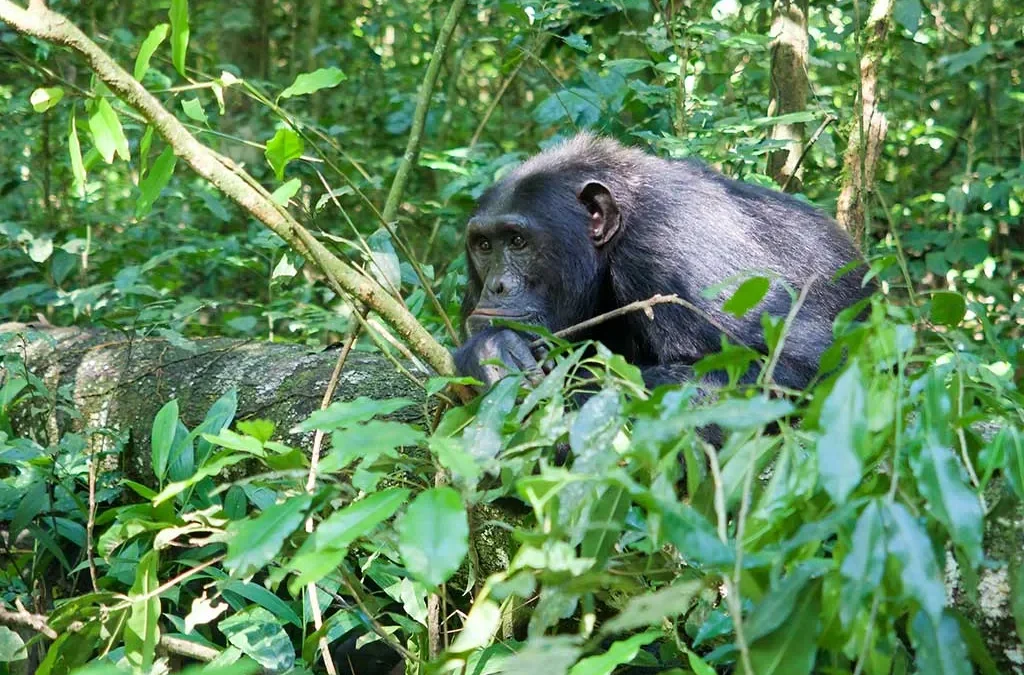
Nyungwe Forest, a lush expanse in Rwanda, boasts a vibrant population of approximately 400 chimpanzees, rendering it an idyllic haven for chimp enthusiasts keen on embarking on a thrilling chimp trekking adventure. These remarkable creatures, akin to humans in countless ways, offer an awe-inspiring spectacle as they mirror human behaviors and lifestyles. The act of tracking chimpanzees presents travelers with an extraordinary sense of connection, given that these creatures share a staggering 97% of their DNA with us, making them our closest evolutionary kin. Nestled within Nyungwe are two distinct communities of chimpanzees awaiting discovery in the Uwinka region. To commence this captivating journey, participants are required to convene at the Uwinka Park headquarters by the punctual hour of 7:00 a.m., where an informative briefing and essential registration take place. The expedition into the realm of these primates commences at 8:00 a.m., and the duration of this adventure is as unpredictable as the chimps’ movements. Depending on the chimps’ current whereabouts, the trek could span anywhere from a mere 30 minutes to an entire day of exploration. Yet, travelers can find solace in the fact that there’s a resounding 99% certainty of encountering these gentle giants on the very day of their escapade. However, the time allowed for direct interaction with these marvelous creatures is capped at a maximum of one hour, ensuring a responsible and respectful experience.
The cost of partaking in this remarkable chimpanzee trekking endeavor is structured to accommodate a diverse array of visitors. For foreign non-residents, the fee stands at $90, while foreign residents and East African Citizens are offered the opportunity at $60. Rwandans, proud citizens of the land, are granted the chance to engage with their native wildlife for a nominal fee of RWF 5000, and the privilege extends to East African community citizens who are asked to contribute $10. Students hailing from Rwanda find an affordable entrance, paying RWF 2500, while foreign resident students bear a cost of $30, and their East African counterparts contribute $5. This financial arrangement holds validity for a generous span of 24 hours, aligning the experience with the ebbs and flows of nature’s rhythms. However, it is noteworthy that the permit, akin to its gorilla counterpart, holds a time-sensitive nature, expiring within an hour of the chimpanzee observation.
Beyond the captivating chimpanzees, Nyungwe Forest shelters a constellation of twelve more primate species, each contributing their unique charm to the tapestry of this verdant sanctuary. Among the distinguished residents are Olive Baboons, Silver Monkeys, Vervet Monkeys, Golden Monkeys, Crowned Monkeys, Owl-faced Monkeys, L’Hoest’s Monkeys, Red Tailed Monkeys, Golden Monkeys, Dent’s Mona Monkeys, and Hamly’s Monkeys, each a testament to the astonishing biodiversity flourishing within this remarkable ecosystem.
For those seeking to immerse themselves further in the wonders of Nyungwe, a splendid opportunity exists to trek other primates, such as the captivating Black and White Colobus and the playful Golden Monkey. The cost structure mirrors the inclusive approach, tailored to the diverse visitor profiles. Foreign non-residents are welcomed at $60, while foreign residents are offered an entry point of $40. Rwandan citizens are granted a cherished opportunity at RWF 5000, with Rwandan citizen students enjoying a subsidized rate of RWF 1500. East African Community students, both local and international, are facilitated with a fee of $3, while foreign resident students contribute $20. This comprehensive fee structure encompasses essential components, including park admission, guided tours, conservation efforts, and the channeling of revenue into local communities, exemplifying a holistic approach to tourism that prioritizes sustainability.
For travelers seeking to lighten their load, porters stand ready to offer invaluable assistance, particularly during the rigorous gorilla trekking expeditions. These porters, hailing from the local communities residing near the national parks, are a diverse group comprising students aiming to support their education and individuals striving to provide for their families. The availability of their services at a reasonable rate of $10 per porter provides both practical assistance and a means of fostering economic growth within the community. Notably, for those requiring additional support, the option of hiring a sedan chair, essential for elderly participants tackling the challenges of gorilla trekking, entails an investment of approximately $400, with porters readily available to bear the weight of this responsibility.
Engaging these porters carries an added dimension of responsibility, as the support granted to them translates into the creation of job opportunities and the betterment of local livelihoods. By opting for their services, visitors to Nyungwe Forest contribute tangibly to the well-being of the neighborhoods intertwined with these invaluable natural landscapes, leaving a positive footprint that extends beyond the immediate boundaries of the forest.
In conclusion, Nyungwe Forest beckons intrepid souls with its enchanting promise of chimp trekking and the broader tapestry of primate encounters. The cost structures designed to accommodate a diverse spectrum of visitors reflect a commitment to inclusive and sustainable tourism. With porters acting as both guides and beneficiaries, this ecosystem of exploration becomes not only a personal journey but also a communal endeavor, wherein the wonders of nature are cherished and the welfare of the local communities is enhanced.