The cost of Chimpanzee Habituation Permit in Nyungwe

Nyungwe Forest Chimpanzee Habituation
The cost of Chimpanzee Habituation Permit in Nyungwe costs $300 per person. This price covers park entrance fees and includes a professional tracker/guide. However, authorities limit each group to four people maximum. The habituation experience takes place in the Gisovu Chimpanzee Community, which sits in the northern part of Nyungwe Forest National Park. All participants must stay at Gisovu Guest house, which provides two cottages with 11 single beds total. Early morning starts are mandatory for this unique wildlife experience.
This full-day activity involves spending time with trackers and wild chimpanzees while they live naturally in their forest home. During the experience, visitors study chimp behavior patterns, feeding habits, and daily routines. Researchers record important data throughout the day for conservation purposes. Guests witness two special moments: watching chimps leave their sleeping nests at dawn and observing them build new nests for the night. Throughout the day, visitors work with trackers to identify individual chimps using their unique physical features. Although Rwanda Development Board accepts direct bookings, licensed tour operators such as Iconic Africa Safaris make the process much easier and faster.
Gisovu Chimpanzee Community
The Gisovu Chimpanzee Community represents one of several chimp groups living in Nyungwe Forest National Park. This community occupies the northern section of the park, near Kibuye town. Unlike older habituated groups, Gisovu chimps are newer to human contact. This newer status creates different opportunities compared to standard chimpanzee trekking. Instead of brief encounters, the habituation experience offers extended observation time. Visitors contribute directly to conservation efforts while learning about chimp society and behavior patterns.
Nyungwe Forest National Park
Nyungwe Forest National Park covers 1,019 square kilometers in southwestern Rwanda. The park sits within the Albertine Rift region and borders both Burundi and the Democratic Republic of Congo. Elevation ranges from 1,600 to 3,000 meters above sea level.
Originally established as a forest reserve in 1933, Nyungwe became a national park in 2004. Rwanda expanded its conservation efforts beyond the famous Volcanoes National Park to protect this ancient rainforest. Scientists consider Nyungwe one of Africa’s oldest rainforests.
The park contains diverse ecosystems including montane rainforest, bamboo forests, grasslands, and high-altitude swamps. This variety makes Nyungwe the largest high-altitude montane forest in East and Central Africa. Approximately 1,500 plant species thrive here, including 140 types of wild orchids and 250 tree species.
Nyungwe supports between 85 to 90 mammal species. The park protects 13 different primate species, making it a premier destination for primate lovers. Besides chimpanzees, visitors can spot Angola colobus monkeys, L’Hoest’s monkeys, golden monkeys, and blue monkeys.
Other mammals include various duiker species, golden cats, forest elephants, and buffaloes. Several small carnivore species also call the forest home. The abundance of chimpanzees and their interesting behaviors make chimpanzee activities extremely popular among visitors.
Additional Activities in Nyungwe
Chimpanzee Trekking offers shorter encounters with semi-habituated chimps. These morning adventures involve tracking chimp groups through dense forest. Small group sizes protect the habitat while ensuring quality wildlife encounters.
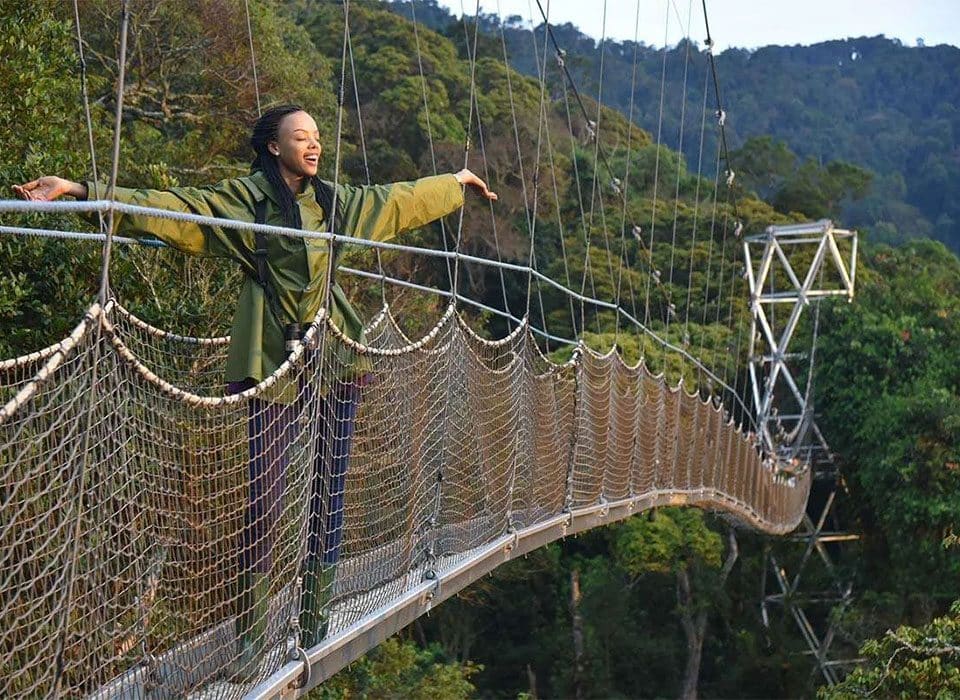
Canopy Walk provides a unique perspective 50-74 meters above the forest floor. The 200-meter-long suspended bridge offers stunning views of the rainforest canopy. Visitors often spot monkeys and birds from this elevated position.
Hiking and Nature Walks range from short strolls to challenging treks. Popular trails include Igishigishigi Trail and Bigugu Trail. These walks reveal diverse flora and fauna while providing peaceful forest immersion.
Wildlife Watching extends beyond primates to over 300 bird species. Endemic species include Grauer’s Rush Warbler and Rwenzori Turaco. Guided tours enhance these wildlife viewing experiences significantly.
Best Time to Visit
The dry season from June to September offers ideal visiting conditions. During these months, sunny weather makes outdoor activities comfortable and enjoyable. Trails remain less muddy, improving hiking conditions and wildlife spotting chances.
A shorter dry period runs from mid-December to mid-February. Although rain can occur anytime in this tropical rainforest, dry seasons provide the most pleasant experience for visitors.
Getting to Nyungwe from Kigali
The journey from Kigali to Nyungwe covers approximately 226 kilometers and takes 4-5 hours by road. The main route heads south through Muhanga and Huye towns. Along the way, travelers pass cultural attractions like the King’s Palace in Nyanza.
The park entrance sits at Uwinka on the main Cyangugu-Butare road. Private car hire offers the most comfortable option with shorter travel times. Public buses run from Nyabugogo bus station to Rusizi, requiring additional transport to reach the park.
Alternatively, visitors can fly to Kamembe (Rusizi) airport, located 55 kilometers from the park. Ground transfers by car or helicopter connect the airport to Nyungwe Forest National Park.