
How to plan Gorilla Safari in Uganda from Sweden
Planning Gorilla Safari in Uganda from Sweden
Planning a gorilla safari in Uganda from Sweden is exciting but needs good preparation. The journey starts with a long flight from Stockholm Arlanda Airport to Entebbe International Airport near Kampala. Airlines such as Ethiopian Airlines, KLM, Turkish Airlines, and Brussels Airlines fly this route. Most flights have layovers in cities like Addis Ababa, Amsterdam, or Istanbul before you reach Uganda. Once you land, you can either rest for a night in Entebbe or travel straight to the gorilla trekking area, depending on your arrival time and energy.
Arrival and First Night in Uganda
After arriving at Entebbe International Airport, some travelers choose to stay overnight in Entebbe. This rest allows you to prepare for the long trip to the gorilla trekking parks. Entebbe offers many places to stay, from budget to luxury. Budget travelers can choose Anderita Beach Hotel, Executive Airport Hotel, or Lake Victoria Granada Hotel for basic but comfortable stays. Mid-range options include Protea Hotel by Marriott Entebbe, Best Western Premier Garden Hotel, and Imperial Botanical Beach Hotel. For luxury, The Boma Hotel, Victoria Crown Resort & Spa, and Imperial Golf View Hotel offer top-class services, lakeside views, and fine dining.
Traveling to Gorilla Trekking Parks
From Entebbe, you can travel to Bwindi Impenetrable Forest National Park or Mgahinga Gorilla National Park. If you drive, the journey to Bwindi takes about 9–10 hours. The trip is long but scenic, with beautiful landscapes and small towns along the way. You can stop for lunch, stretch, buy crafts, or take photos. To save time, you can also take a domestic flight from Entebbe or Kajjansi airfield to airstrips near the parks. Travelers who land early in the morning and feel energetic can start the journey immediately. Those arriving later or feeling tired may prefer to rest first.
Gorilla Trekking Destinations in Uganda
Uganda has two main gorilla trekking destinations. Bwindi Impenetrable Forest National Park is the most famous, covering 321 square kilometers of thick rainforest. This UNESCO World Heritage Site is home to nearly half of the world’s mountain gorillas. Bwindi has more than 22 habituated gorilla families, making it easier to find them. You can also see many birds and other wildlife here. The best trekking months are June to August and December to February. Trekking can last a few hours or most of the day, depending on gorilla locations.
Mgahinga Gorilla National Park is smaller, with 34 square kilometers in the Virunga Mountains near Rwanda and the Democratic Republic of Congo. It is home to the Nyakagezi Gorilla Family and offers a quieter trekking experience. The park also has golden monkeys and stunning views of Mount Muhavura, Mount Gahinga, and Mount Sabinyo. Trekking here is easier in some parts because gorillas live in bamboo forests, which are less dense than Bwindi’s rainforest.
Gorilla Trekking Experience
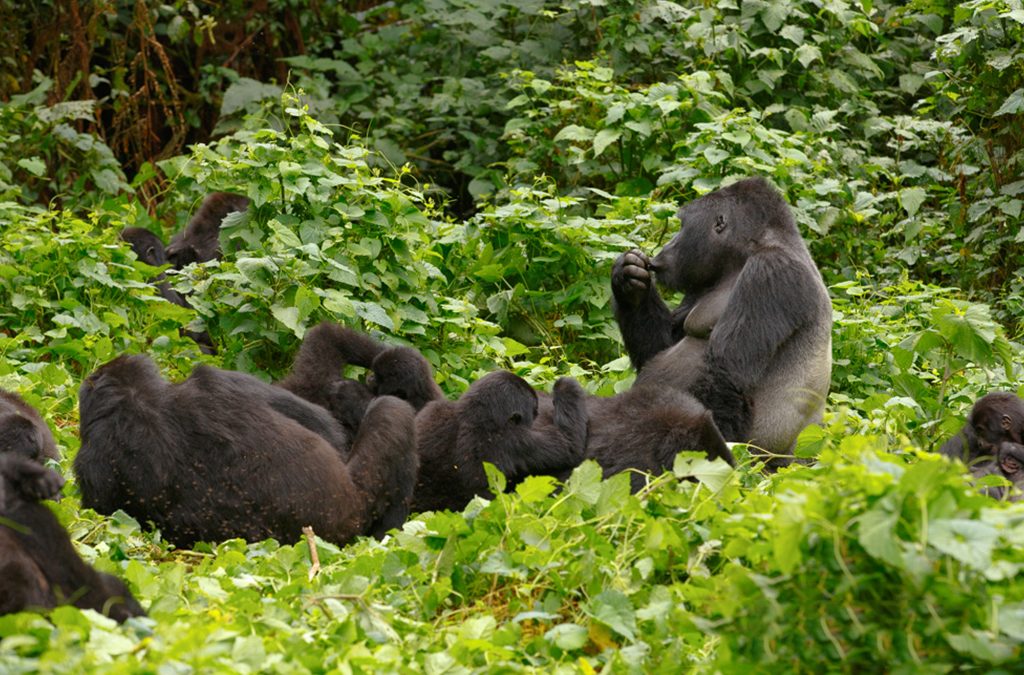
The trekking day begins with a morning briefing at the park headquarters. Guides explain how to behave around gorillas and give safety advice. The trek itself involves hiking through forests, hills, and sometimes muddy paths. It can take from one to six hours to find the gorillas. Once you locate them, you can spend one hour watching and photographing them. You may see them feeding, playing, grooming, or resting. Guides share interesting facts about gorilla behavior and the forest ecosystem. This close contact makes the trek one of the most memorable wildlife experiences in Africa.
Gorilla Trekking Permits and Costs
To trek gorillas in Uganda, you need a permit from the Uganda Wildlife Authority (UWA). In 2025, the permit costs $800 for foreign non-residents, $700 for foreign residents, $500 for other African passport holders, and 300,000 UGX for East African citizens. There is also a gorilla habituation permit for $1,500, which allows four hours with the gorillas instead of one. Booking early is important because permits are limited and sell out quickly, especially from June to September and December to February.
You can buy permits directly from UWA or through a licensed tour operator like Iconic Africa Safaris. Tour operators often include permits in their safari packages. The permit fee also covers park entry on the trekking day, so no extra entry fee is needed.
Accommodation Near Bwindi
If you choose Bwindi for trekking, there are many places to stay. Budget travelers can choose Gorilla Mist Camp, Nshongi Gorilla Resort, or Bwindi My Home. These offer basic comfort and are close to park entrances. Mid-range choices include Buhoma Lodge, Bwindi Neckview Safari Lodge, and Rushaga Gorilla Lodge, which offer better comfort, good meals, and great views. For luxury, Volcanoes Bwindi Lodge, Gorilla Forest Camp, and Nkuringo Bwindi Gorilla Lodge provide elegant rooms, forest views, and high-end services.
Preparing for the Trek
Proper preparation makes trekking more enjoyable. Wear strong hiking shoes because paths can be slippery and steep. Carry rain gear because rain can fall any time of the year. Bring enough drinking water, light snacks, and a walking stick if needed. Hiring a porter is helpful for carrying bags and supporting local communities. During the trek, follow all park rules: keep at least 7 meters from the gorillas, avoid flash photography, and do not eat or drink near them.
Cultural and Scenic Highlights Along the Journey
Traveling to southwestern Uganda is not only about gorillas. The route offers views of rolling hills, tea plantations, lakes, and markets. You can stop in towns like Mbarara for lunch or shop for handmade crafts along the road. Some tours include visits to cultural communities near Bwindi such as Batwa (Pygmies), where you can learn about traditional music, dance, and crafts.