
How to plan Gorilla Safari in Rwanda from Sweden
Planning a Gorilla Safari in Rwanda from Sweden
Planning a gorilla safari in Rwanda from Sweden opens doors to one of Africa’s most incredible wildlife experiences. You will encounter endangered mountain gorillas in their natural habitat at Volcanoes National Park. This journey combines adventure, conservation, and cultural discovery. Rwanda offers excellent accessibility from Europe, making it perfect for Swedish travelers. The country provides world-class gorilla trekking experiences just hours from Kigali. Professional guides ensure your safety throughout the adventure. Conservation efforts protect these magnificent creatures while supporting local communities.
Getting to Rwanda from Sweden
Swedish travelers typically fly from Stockholm Arlanda Airport to Kigali International Airport. Most flights take around 14 hours with one or more stops. Airlines like Ethiopian Airlines, Turkish Airlines, and KLM operate regular routes between these destinations. These carriers offer comfortable connections through their hub cities.
Upon arrival at Kigali International Airport, you have several options for your first day. Early morning arrivals allow time for afternoon city tours. You can visit the Kigali Genocide Memorial, explore Inema Arts center, or shop at Kimironko Market. Alternatively, you can rest at your hotel before starting your adventure.
From Kigali, you can drive directly to Volcanoes National Park the same evening. This scenic journey takes approximately 2.5 hours through beautiful Rwandan countryside. Many travelers prefer staying overnight in Kigali first, then departing for the park the following morning. This option allows better rest after long international flights.
Understanding Gorilla Trekking
Gorilla trekking differs significantly from traditional safari game drives. Instead of passive wildlife viewing, you actively hike through dense rainforest trails. Expert rangers and armed escorts guide these expeditions using specialized knowledge and communication tools. They locate gorilla families with remarkable success rates exceeding 98%.
The habituated gorilla families remain completely wild and free. However, they tolerate human presence during carefully managed visits. This balance protects the gorillas while allowing meaningful wildlife encounters. Each family has unique characteristics and personalities that make every trek special.
The Complete Trekking Experience
Your gorilla adventure begins early morning at Kinigi park headquarters. Rangers conduct detailed briefings about safety procedures, gorilla behavior, and trekking expectations. They organize visitors into small groups of maximum eight people. Each group receives assignment to one of twelve habituated gorilla families including Susa, Igisha, Karisimbi, and Kwitonda.
Rangers consider fitness levels and personal interests when making group assignments. This ensures everyone enjoys suitable and comfortable trekking experiences. The system works well for both beginners and experienced hikers.
Trek duration varies dramatically depending on gorilla locations and group movements. Some treks last only 30 minutes while others extend beyond four hours. You will traverse bamboo forests, navigate mossy undergrowths, and climb volcanic foothills. The diverse ecosystem supports golden monkeys, colorful birds, and numerous other wildlife species.
Forest conditions can prove challenging, particularly during wet seasons. Trails become muddy, steep, and slippery requiring proper preparation. You need reasonable fitness levels and appropriate gear for safe trekking. Rangers provide walking sticks and guidance throughout difficult sections.
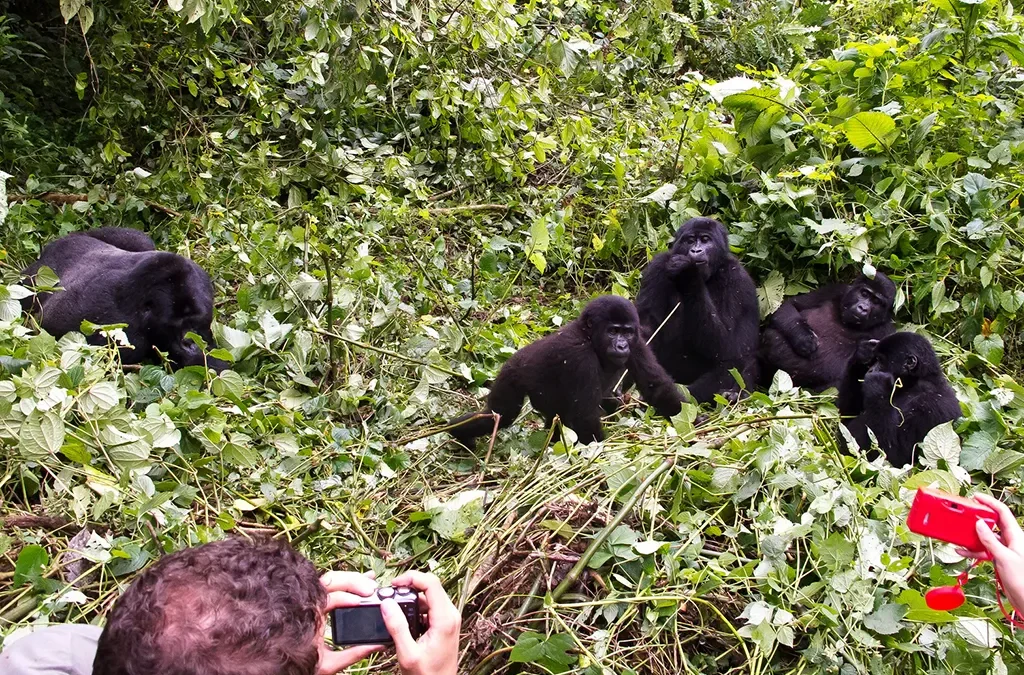
When you finally locate the gorillas, magic happens. You spend exactly one hour observing these incredible creatures in their natural environment. Silverbacks watch protectively over their families while mothers nurse young gorillas. Playful juveniles entertain visitors with their curious antics. Dominant males occasionally perform impressive chest-beating displays showing their strength.
Strict seven-meter minimum distance protects both gorillas and visitors from disease transmission. Sometimes curious gorillas approach closer, creating unforgettable moments. Rangers ensure all safety protocols while maximizing your viewing opportunities.
Conservation and Responsible Tourism
Rwanda operates an exemplary conservation-first gorilla trekking program. Daily permits are strictly limited to 96, with only eight permits per gorilla family. This careful management minimizes human impact on gorilla populations and their fragile ecosystem.
Revenue from trekking permits directly supports park management, conservation initiatives, and local community development. Funds help build schools, healthcare facilities, and infrastructure improvements. This creates positive relationships between conservation efforts and community welfare.
The mountain gorilla population in the Virunga Massif continues growing slowly thanks to these dedicated efforts. This region spans Rwanda, Uganda, and Congo, requiring international cooperation. Park rangers monitor habituated groups continuously ensuring their health and safety.
Gorilla trekking also provides crucial employment opportunities for local communities. Rangers, guides, porters, and hospitality workers depend on tourism income. This economic benefit encourages coexistence between humans and wildlife while promoting sustainable tourism practices.
Permits and Pricing
Gorilla trekking permits are essential for all visitors to Volcanoes National Park. Foreign non-residents pay $1,500 per permit while African residents pay reduced rates of $500. Rwandan citizens and other East African residents pay only $200 per permit.
Only 96 permits are available daily across all twelve habituated gorilla groups. Therefore, advance booking becomes absolutely essential for securing your preferred dates. Most travelers book permits 4-6 months ahead, especially during peak seasons.
You can purchase permits online through Rwanda Development Board or reliable tour operators like Iconic Africa Safaris. Tour operators typically handle all booking procedures, payments, and logistics coordination. The minimum age for gorilla trekking is 15 years, and no refunds apply for unused permits except when gorillas cannot be located after full tracking attempts.
Accommodation Options
Budget Accommodations
Kigali offers affordable options including Step Town Motel, Discover Rwanda Hostel, and Ikaze Guesthouse. These properties provide clean rooms with basic amenities at reasonable prices. Near Volcanoes National Park, budget travelers choose Muhabura Hotel in Musanze, Virunga Hotel, or Kinigi Guesthouse. These accommodations offer comfortable stays close to trekking starting points.
Mid-Range Options
In Kigali, Hotel des Mille Collines and Urban by CityBlue provide modern comfort with convenient central locations. At Volcanoes National Park, Five Volcanoes Boutique Hotel, Le Bambou Gorilla Lodge, and Da Vinci Gorilla Lodge offer excellent value. These properties combine cozy rooms, quality dining, and proximity to gorilla trekking areas.
Luxury Experiences
Premium Kigali accommodations include Kigali Marriott Hotel, Radisson Blu Hotel & Convention Centre, and The Retreat by Heaven. These properties deliver elegance with world-class service and amenities. Near the park, luxury lodges such as Bisate Lodge, Singita Kwitonda Lodge, and One&Only Gorilla’s Nest provide exceptional experiences. They offer fine dining, spa services, and stunning Virunga Volcano views.
Best Time to Visit
The optimal time for visiting Volcanoes National Park falls during dry seasons from June to September and December to February. These months feature clearer trails, easier hiking conditions, and better wildlife viewing opportunities. Weather remains cooler with minimal rainfall, creating ideal photography conditions.
However, the park welcomes visitors year-round since mountain gorillas inhabit the forest regardless of seasons. Wet months from March to May and October to November bring lush green scenery and fewer tourists. Accommodation rates often decrease during these periods, though trekking becomes more challenging due to muddy trails.
During wet seasons, the forest transforms into a vibrant green paradise with abundant wildlife activity. Many photographers prefer this time for capturing dramatic landscapes and gorilla behaviors. Rain typically falls in short afternoon bursts, leaving mornings clear for trekking activities.