
Double Gorilla Trekking in Bwindi from USA – A Complete Guide
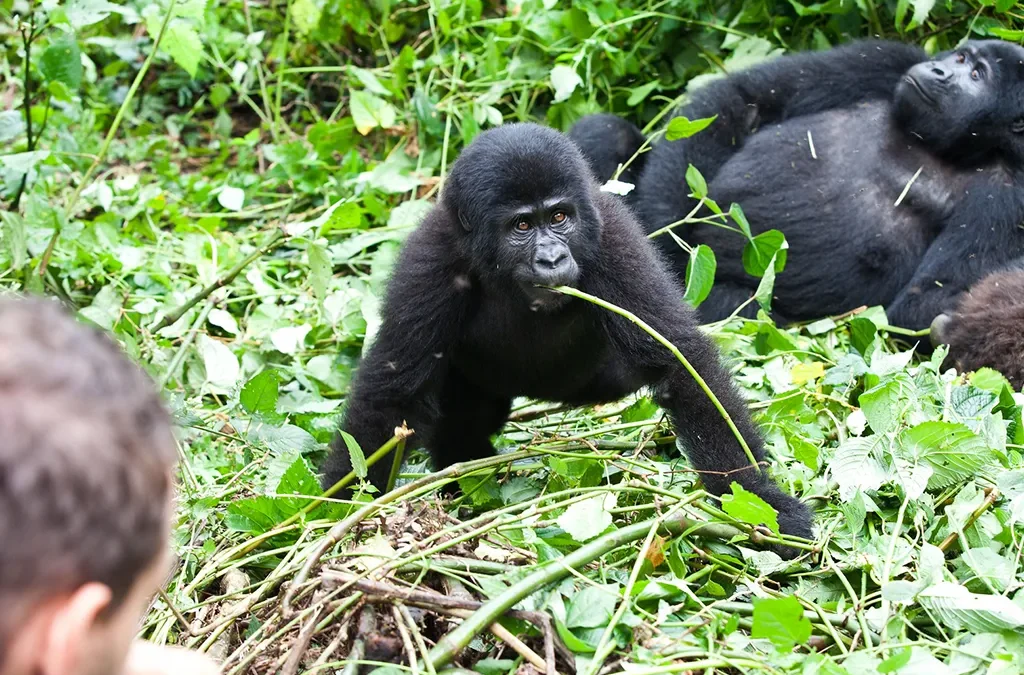
Imagine standing quietly in the heart of a mist-shrouded African rainforest, your breath catching as you lock eyes with a wild mountain gorilla—one of our closest relatives in the animal kingdom. Furthermore, this isn’t just a dream; rather, it’s an extraordinary reality waiting for you in Bwindi Impenetrable National Park, Uganda. Most importantly, home to roughly half of the world’s remaining mountain gorilla population, Bwindi offers a rare opportunity for an up-close encounter with these majestic creatures through double gorilla trekking. Consequently, this adventure allows you to venture into the forest twice, visiting different gorilla families and gaining deeper insights into their complex social structures and daily lives.
Why Choose Bwindi for Your Gorilla Adventure?
A UNESCO World Heritage Treasure
Bwindi Impenetrable National Park stands as a UNESCO World Heritage Site, renowned for its exceptional biodiversity and groundbreaking conservation efforts. Additionally, this ancient rainforest, estimated to be over 25,000 years old, harbors not only the world’s largest population of mountain gorillas but also serves as a sanctuary for countless other species.
The World’s Premier Gorilla Destination
Meanwhile, what sets Bwindi apart is its impressive collection of habituated mountain gorilla families—over 17 groups available for trekking, the most in the world. As a result, this abundance means greater availability of permits and more diverse experiences as each family has its own unique personality, hierarchy, and behaviors. Moreover, the dense forest ecosystem also supports rich wildlife, over 350 bird species, and vibrant local communities whose lives are intimately connected to the forest.
Value Without Compromise
In contrast, while Rwanda’s Volcanoes National Park offers similar gorilla encounters, Bwindi provides a more budget-friendly alternative without sacrificing the authenticity or quality of the experience. Specifically, at $800 per permit compared to Rwanda’s $1,500, you can enjoy double the adventure for less than the cost of a single trek elsewhere.
Planning Your Double Gorilla Trekking Adventure
Best Timing for Your Visit
Bwindi welcomes visitors year-round, but strategic timing can enhance your experience. Particularly, the drier months from June to September and December to February offer the most comfortable trekking conditions. During these periods, trails are less slippery, wildlife spotting is generally easier, and the forest canopy provides clearer views of your gorilla encounters.
Securing Your Gorilla Permits
Undoubtedly, the foundation of your double trekking adventure lies in obtaining two gorilla permits, each allowing a single visit to a different gorilla family. At $800 per person per trek for foreign non-residents, your double trek investment totals $1,600. Subsequently, these permits are issued exclusively by Uganda Wildlife Authority (UWA) or through reputable tour operators such as Iconic Africa Safaris. Therefore, booking 4-6 months in advance is strongly recommended, especially during peak seasons.
Choosing Your Tour Partner
Selecting a trusted tour operator becomes crucial for orchestrating the complex logistics of permits, transportation, accommodation, and park coordination. Fortunately, many operators such as Iconic Africa Safaris offer specialized double trek packages, often customizable to match your preferences for accommodation level, additional activities and travel pace.
Getting There: Your Journey from the USA
International Travel
Your African adventure begins with a flight to Entebbe International Airport (EBB), Uganda’s primary international gateway. Typically, common routes from major US airports like JFK, LAX, or ATL involve connections through Europe or the Middle East with airlines such as KLM, Qatar Airways, Turkish Airlines, or Ethiopian Airlines. Consequently, expect a total travel time of 18-28 hours including layovers.
Reaching Bwindi
From Entebbe, you have several options to reach Bwindi. First, the scenic road journey takes 8-10 hours by car or minibus, winding through Uganda’s rolling hills, tea plantations, and traditional villages. Alternatively, chartered or scheduled domestic flights through operators like Aerolink or Bar Aviation can take you to Kihihi or Kisoro Airstrips, followed by a shorter road transfer to your lodge.
Interestingly, many travelers find it convenient to fly into Kigali, Rwanda, which offers a shorter 4-5 hour drive to Bwindi, often providing easier logistics and more frequent international flight connections.
Your Double Gorilla Trekking Itinerary
Day 1: Arrival and Bwindi Forest Immersion
Your adventure begins as you land at Entebbe or Kigali, clear customs and meet your safari guide from Iconic Africa Safaris. Subsequently, the transfer to Bwindi is a journey in itself, offering spectacular views of terraced hillsides, bustling local markets and glimpses of rural African life. Upon arrival, you’ll check into your chosen accommodation—ranging from comfortable mid-range lodges to luxury retreats—where you’ll enjoy dinner and prepare for the adventures ahead.
LUXURY LODGES:
- Bwindi Lodge – Volcanoes Safaris flagship property near Buhoma Gate
- Buhoma Lodge – Inside the park with forest canopy views and 10 chalets
- Mahogany Springs – 12 Superior Deluxe & 2 Premium Deluxe Suites by Munyanga River
- Nkuringo Bwindi Gorilla Lodge – 18 rooms in 16 residences with Forest Suites
- Chameleon Hill Lodge – Luxury eco-lodge with panoramic views
MID-RANGE LODGES:
- Cuckooland Lodge – Midrange property in Ruhija Sector with forest views
- Ecomarvel Hotel – Located between Buhoma and Ruhija sectors
- Bakiga Lodge – Popular midrange accommodation option
- Gorilla Mist Camp
- Buhoma Community Haven Lodge – Community-run midrange lodge
Day 2: First Gorilla Encounter
After an early breakfast, you’ll receive a comprehensive briefing from park rangers at the headquarters at around 7:am East African time, covering trekking protocols, gorilla behavior and essential safety guidelines. Next, in small groups of maximum eight people, you’ll embark on your first trek, accompanied by experienced rangers and trackers who possess intimate knowledge of the forest and its inhabitants.
The tracking duration varies from one to seven hours, depending on the gorilla family’s location and movements. Once located, you’ll spend one unforgettable hour observing these magnificent creatures in their natural habitat—watching their interactions, feeding behaviors, playful moments and quiet contemplation. Often, this encounter proves deeply emotional, creating memories that last a lifetime.
Day 3: Second Gorilla Family Adventure
Subsequently, your second trek introduces you to an entirely different gorilla family, each with its own dynamics, composition and forest territory. As a result, this diversity multiplies your wildlife observation opportunities, enhances your photographic portfolio and deepens your understanding of gorilla social structures. Meanwhile, the afternoon offers optional community walks, relaxation time, or additional forest hikes for birdwatching and wildlife spotting.
Day 4: Departure and Reflection
Your final day involves the transfer back to Entebbe or Kigali for your departure flight or continuation of your African adventure. Remarkably, many travelers find this journey provides valuable time for reflection on their extraordinary encounters.
The Trekking Experience
Physical Demands and Preparation
Double gorilla trekking requires moderate physical fitness. You’ll navigate steep, muddy, and dense jungle terrain for several hours each day. Therefore, proper gear is essential: sturdy hiking boots, long pants, rain jackets, gaiters, gloves, and daypacks will ensure your comfort and safety. Additionally, local porters are available for hire, providing assistance with gear and navigation while supporting the local community economically. Indeed, these experienced guides prove invaluable when terrain becomes challenging.
Conservation Guidelines and Etiquette
Furthermore, strict rules govern gorilla encounters to protect both visitors and these endangered animals. Specifically, maintain at least 6-7 meters distance from gorillas, avoid flash photography, and never trek if you’re feeling unwell, as gorillas are susceptible to human illnesses. Additionally, group sizes are limited to eight trekkers per gorilla family per day and encounters are restricted to one hour maximum once the gorillas are located.
Beyond Gorilla Trekking: Enhancing Your Experience
Additional Adventures
Moreover, consider adding the Gorilla Habituation Experience, a four-hour session with researchers that allows extended observation time with semi-habituated gorilla groups but at more priced permit at $1500 per person per trek. Furthermore, other activities include world-class birdwatching, forest walks, cultural encounters with the Batwa pygmy communities or combining your trip with chimpanzee trekking in nearby Kibale Forest.
Conservation Impact
Your gorilla trekking investment directly funds crucial conservation efforts, anti-poaching patrols and local employment opportunities. Consequently, the high permit costs are strategically calculated to minimize visitor numbers, reduce environmental impact and provide sustainable financing for gorilla protection programs.
Essential Preparation for American Travelers
Before departure, ensure you have the necessary documentation: Uganda requires an electronic visa or consider the East Africa Tourist Visa for multi-country trips. Additionally, required vaccinations include yellow fever, with recommendations for typhoid, hepatitis, and malaria prophylaxis. Moreover, comprehensive travel insurance with medical evacuation coverage is essential.
Finally, pack thoughtfully: binoculars, reusable water bottles, insect repellent, and quick-dry clothing will enhance your comfort. However, while Wi-Fi is available in most lodges, expect intermittent connectivity.