
How to Plan an Affordable Luxury Safari in Uganda
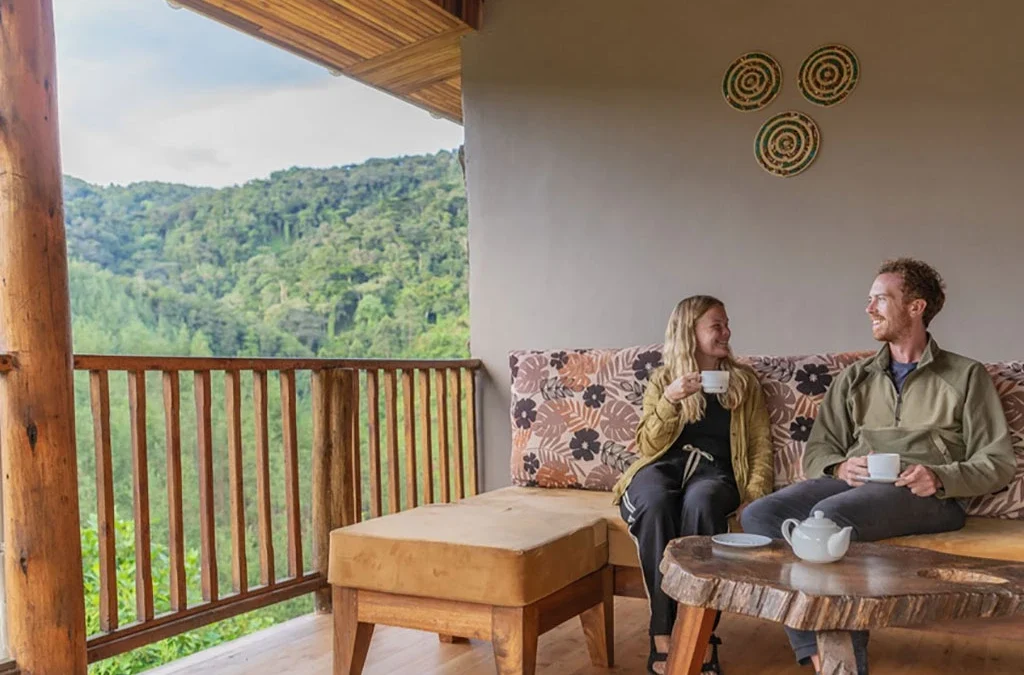
How to Plan an Affordable Luxury Safari in Uganda
An affordable luxury safari in Uganda is real, and it is easier to book than most travelers expect. You will not pay branded luxury prices, and you will not sleep in a basic tent either. Instead, you stay in set of premium rooms inside upper mid range lodges, ride in a private vehicle with your own guide, and still see gorillas, chimpanzees and the Big Four. A well planned 7 day trip like this costs between 3,800 and 5,200 US dollars per person, sharing with one other traveler.
This guide walks through exactly what that number includes, where the savings actually come from, and how to build your own itinerary from 5 to 14 days. Every price and route below comes from real Uganda safari planning, not guesswork.
Quick Answer: What an Affordable Luxury Safari in Uganda Costs
Before the details, here is the short version. Prices are per person, based on two people sharing a vehicle and rooms, for 2026 travel.
| Trip Length | Estimated Cost Per Person | Gorilla Trekking Included |
|---|---|---|
| 5 days | 2,800 to 3,600 USD | Optional, can be added |
| 7 days | 3,800 to 5,200 USD | Yes, one permit |
| 10 days | 5,800 to 7,800 USD | Yes, one or two permits |
| 14 days | 8,500 to 11,500 USD | Yes, two permits or a Rwanda add on |
These figures cover your driver guide, private 4×4 vehicle, park fees, most meals, and rooms at upper mid range lodges with luxury cottages or suites. They do not cover international flights, alcohol, tips, or travel insurance. We will break down each of these costs later in the guide.
If you want to skip ahead, our team can send a free personalized quote based on your travel dates and group size.
Who this Style of Safari Suits Best
An affordable luxury safari in Uganda tends to work best for a specific kind of traveler. If any of these sound like you, this guide was written with your trip in mind.
- Couples celebrating an anniversary or honeymoon who want a genuinely special room, without the price tag of a five star chain
- Small families or groups of friends who want privacy and comfort but are splitting costs, so per person pricing matters
- First time Africa travelers who want gorillas, chimpanzees and the Big Five in one trip, without a two week schedule
- Repeat East Africa travelers who have already done a budget or mid range trip and now want a more comfortable version of the same route
- Photographers and wildlife enthusiasts who want good rooms and good light, but would rather put extra budget toward a habituation permit than a fancier bed
If your priority is a private plunge pool at every stop or a globally recognized brand name on your booking confirmation, a branded luxury itinerary will serve you better, at a noticeably higher price. This guide is built for travelers who want the comfort without paying for the name.
What Does Affordable Luxury Actually Mean in Uganda
Luxury safari pricing in East Africa is not one price point. It is a range, and Uganda sits at a sweet spot within that range.
At the top end, branded luxury camps run 1,200 US dollars or more per person, per night. These are the names most travelers already recognize from safari magazines and social media. At the bottom, budget campsites and simple guesthouses can cost under 100 dollars a night, but you give up privacy, comfort and often good food.
Affordable luxury sits in the middle, closer to the top end in comfort but far closer to the bottom end in price. Here is how it works in practice. Many upper mid range lodges in Uganda have a small number of standout rooms, often called executive cottages, deluxe suites or honeymoon suites, tucked inside a larger property. These rooms come with real luxury details, queen size beds, soaking tubs, private decks, and full board meals, but they are priced as part of a mid range lodge rather than a global luxury brand.
The result is simple. You get a five star room without paying for a five star name.
Why this Works in Uganda Specifically
Uganda has fewer large international hotel chains running its safari lodges compared with Kenya or Tanzania. Most properties are independently owned, often by Ugandan families or small regional operators. That keeps overhead lower, which keeps nightly rates lower too, even for the nicest rooms on the property.
The tradeoff is availability. These luxury rooms are usually limited to somewhere between four and twelve per lodge. Book late, especially in peak months, and you may only find the standard rooms left, even if the lodge itself still has space.
Affordable Luxury vs Branded Luxury vs Budget
It helps to see all three tiers side by side, since the word luxury gets used loosely across the industry.
| Tier | Typical Room | Typical Price Per Night Per Person | What You Give Up |
|---|---|---|---|
| Budget | Shared or basic ensuite room, simple meals | 60 to 150 USD | Privacy, room size, food quality |
| Affordable luxury | Private cottage or suite within an upper mid range lodge | 250 to 450 USD | Global brand recognition, some extra spa or pool facilities |
| Branded luxury | Private villa or tent with a recognized international name | 450 to 1,200 plus USD | Nothing in comfort, but you pay for the name and marketing |
The middle tier is where most of this guide lives, since it delivers close to branded luxury comfort without the branded luxury bill.
Uganda Safari Costs: What You Actually Pay Per Person Per Day
Travelers often ask for a single daily number, so here is one, broken into its real parts. Expect to pay roughly 500 to 750 US dollars per person per day on a 7 day affordable luxury itinerary that includes one gorilla trek. Strip out the gorilla permit and the daily average drops closer to 350 to 480 dollars.
Here is where that money actually goes.
| Cost Category | Typical Daily Range Per Person | Notes |
|---|---|---|
| Accommodation | 250 to 450 USD | Full board luxury cottage at an upper mid range lodge |
| Private vehicle and driver guide | 75 to 125 USD | Cost is shared across your group, so it drops per person as group size grows |
| Meals not included at lodge | 10 to 30 USD | Most lodges are full board, so this mainly applies on transfer days |
| Park entry fees | 40 to 60 USD | Varies by park, usually bundled into your quote |
| Optional activities | 20 to 60 USD | Boat cruises, village walks, birding walks |
Gorilla and chimpanzee permits are priced separately and are covered in detail further down, since they can double a single day’s cost on their own.
Currency, Visas and Other Practical Costs
A few smaller costs are easy to forget when budgeting for an affordable luxury safari in Uganda, but they add up.
- Visa fees. Most travelers need a Uganda visa, which currently costs around 50 US dollars for a single entry, either applied for online in advance or on arrival at Entebbe Airport.
- East Africa Tourist Visa. If you plan to combine Uganda with Kenya or Rwanda, a joint visa covering all three countries costs about 100 US dollars and can work out cheaper than separate visas.
- Local currency. The Ugandan shilling is the local currency, but US dollars are widely accepted at lodges and for permit payments. Bring newer bills, since older or worn notes are sometimes refused.
- Tips. Budget roughly 15 to 20 US dollars per day for your driver guide, and 5 to 10 dollars per day split among lodge staff. Gorilla and chimpanzee trekking guides and porters are usually tipped separately, often 10 to 20 dollars per group.
- Vaccinations and health costs. A yellow fever vaccination is required for entry, and travel clinics often also recommend malaria prevention medication for the trip. Check current requirements with your doctor or a travel clinic before you go.
None of these are large individual costs, but together they can add 150 to 300 US dollars per person to a trip, so it is worth including them in your overall budget from the start.
Choosing Luxury Lodges Uganda Travelers Can Actually Afford
Picking the right lodge matters more than picking the right park. Two travelers can visit the exact same park on the exact same dates and pay very different prices, simply because one stayed in a branded luxury camp and the other stayed in the luxury cottages at an upper mid range property nearby.
What to Look For in an Affordable Luxury Lodge
A few signals tend to separate genuinely good value lodges from properties that just use the word luxury loosely.
- The lodge offers a small, named category of rooms, such as executive cottages or a honeymoon suite, separate from its standard rooms
- Meals are full board and prepared on site, not trucked in from a nearby town
- The property has direct forest, savannah or channel views rather than a view of a parking area
- Staff to guest ratio feels personal, not rushed, based on recent guest reviews
- The lodge is independently run or regionally owned, rather than part of a global five star chain
Example: Kibale Forest
Turaco Treetops in Kibale Forest is a good example of this model. It is classified as an upper mid range property, but it has eight private cottages built into pockets of the forest, each with large windows, a wooden deck, and forest canopy views. You are as likely to see a Great Blue Turaco from your deck here as you would from a branded luxury camp charging twice as much a night.
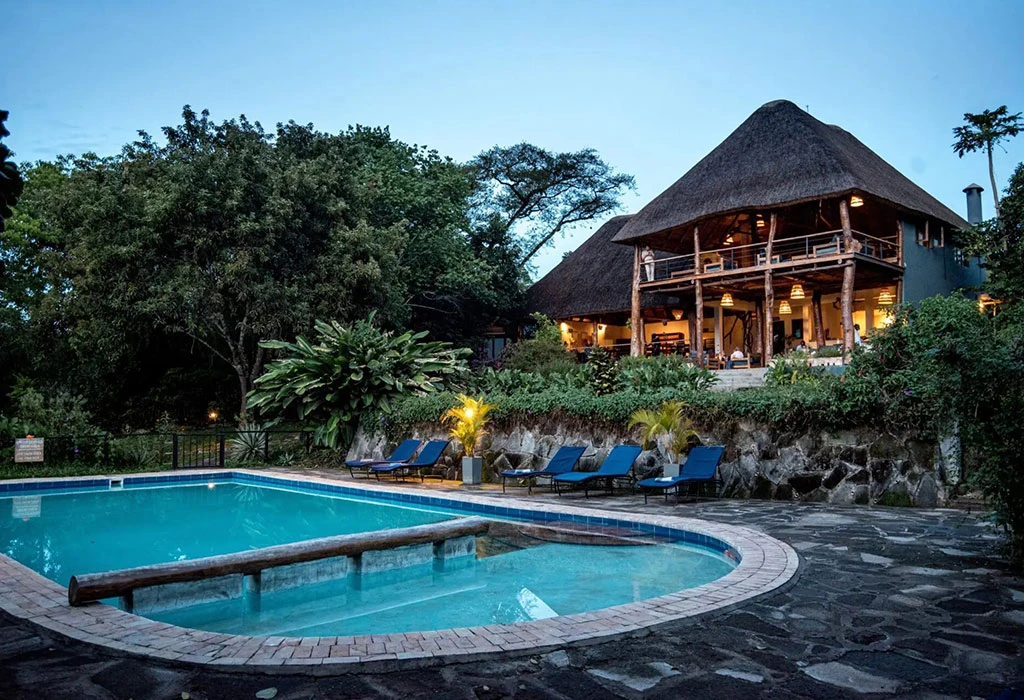
Example: Queen Elizabeth National Park
Buffalo Safari Lodge near Queen Elizabeth National Park works the same way. Its Deluxe Cottages run about 770 square feet, with a queen bed, a proper sitting area, and a bathroom that includes a soaking tub, a rainfall shower and an instant water heater. Guests get a private balcony facing the Rwenzori Mountains. The lodge itself is priced as upper mid range, but that specific room category competes directly with branded luxury.
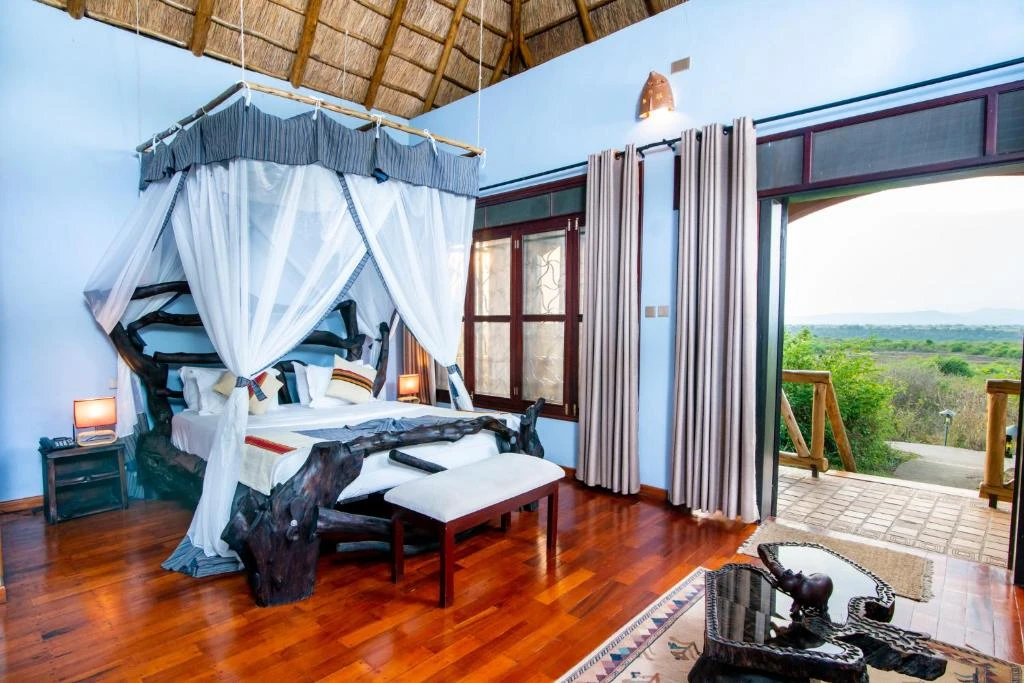
Example: Bwindi Impenetrable Forest
Gorilla Leisure Lodge in Rushaga sector follows the same pattern near Bwindi. Its Honeymoon Suite, open to any guest and not just honeymooners, includes a private candlelit dinner, an in room massage, a personal tea station and full room service, all bundled into a room category that sits within a broader upper mid range property. After a full day of trekking, this kind of room does the same job as a branded luxury suite at a noticeably lower price.
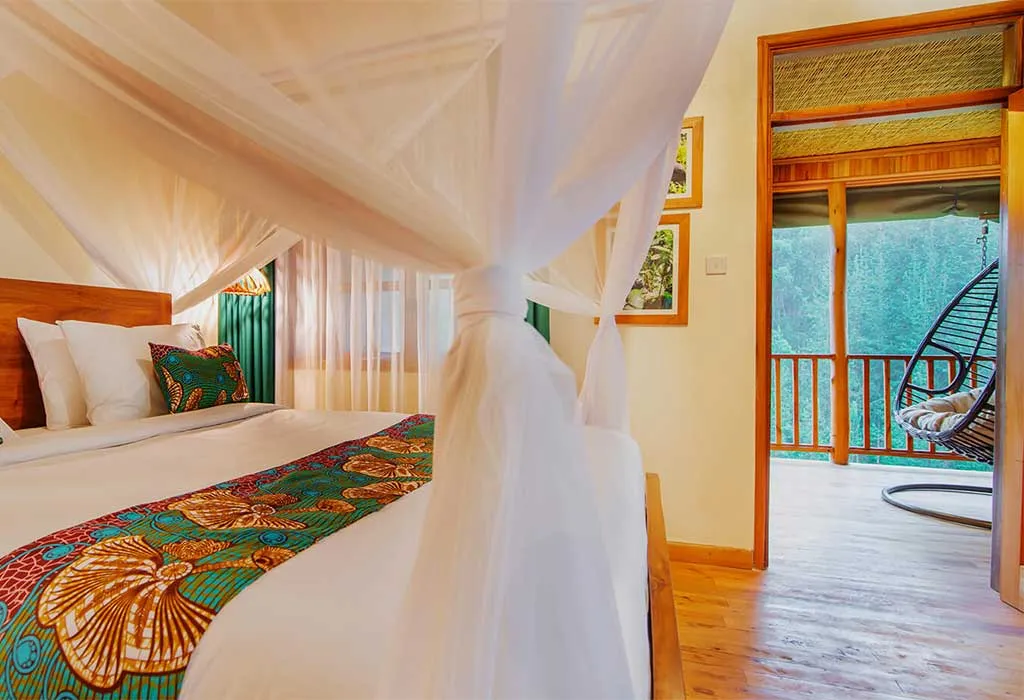
Gorilla Leisure Lodge
Read more about lodges and stays on our Uganda accommodation page.
How We Put This Guide Together
The routes, lodge examples and permit prices in this guide come from itineraries we have actually built and run for travelers across Kibale Forest, Queen Elizabeth National Park, Bwindi Impenetrable Forest and Murchison Falls. Prices are checked against current 2026 rates and the confirmed 2027 permit changes from the Uganda Wildlife Authority. Because lodge rates and permit prices do change from year to year, always confirm exact figures with your operator before booking, and treat the ranges here as planning guidance rather than a final invoice.
Best Parks for an Affordable Luxury Safari in Uganda
Uganda does not need a long list of parks to deliver a complete safari. Three parks, linked in a simple loop, cover almost everything travelers come for.
Kibale Forest National Park

Kibale is the best chimpanzee tracking destination in Africa. Chimpanzee trekking here gives you a strong chance of close sightings, since the habituated troops are well studied and regularly visited. The Bigodi Wetland Sanctuary nearby adds a relaxed afternoon of birding and primate spotting without another park fee.
Queen Elizabeth National Park

This is Uganda’s most visited park, and for good reason. Game drives across the Kasenyi Plains offer strong odds of spotting elephants, buffaloes, lions and the occasional leopard, alongside large herds of Uganda kob. The Kazinga Channel boat cruise, linking Lake George and Lake Edward, is one of the best wildlife viewings in the country, with hippos, Nile crocodiles and dense birdlife along both banks. The Ishasha sector, in the park’s south, is one of the only places on earth where lions regularly climb into fig trees to rest.
Bwindi Impenetrable Forest

Bwindi is a UNESCO World Heritage Site and home to roughly half of the world’s remaining mountain gorillas. This is where most travelers spend their gorilla trekking day, and lodges here tend to sit right on the forest edge, with cool mountain air and quiet evenings.
Murchison Falls National Park
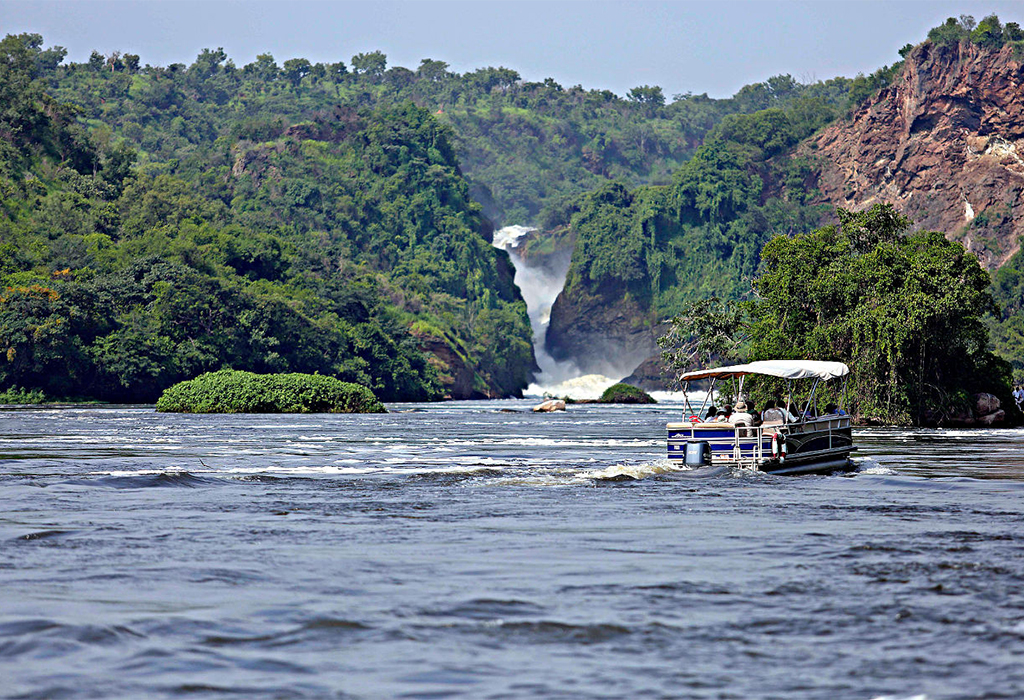
For longer trips, Murchison Falls adds a different landscape, centered on the Nile River gorge. A boat cruise to the base of the falls, paired with a game drive on top, rounds out a 10 to 14 day itinerary well.
See full park details on our Uganda national parks guide.
Getting Around: Private Vehicle or Domestic Flights
Most affordable luxury safaris in Uganda use road transfers in a private 4×4, with your own driver guide for the whole trip. This is not a downgrade from flying. It is usually the smarter choice.
Why Road Transfers Work Well in Uganda
Uganda is compact compared with Kenya or Tanzania, and its primary roads connecting the western parks are in reasonably good condition. A transfer from Kibale Forest to Queen Elizabeth National Park takes about two and a half hours. The longer leg, from Entebbe Airport to Kibale, takes six to seven hours, but it runs through tea plantations and green hills that are part of the experience, not just a delay before it.
Road transfers also mean your guide is with you the entire trip. That consistency matters. A driver guide who has been with you since day one spots things a rotating guide might miss, and can adjust the day’s plan on the fly if you want to stop for a photo or a village market.
When Domestic Flights Make Sense
Flights are worth considering mainly on longer trips, 10 days or more, where you are covering more ground and want to save travel time for extra activities. A flight between Murchison Falls and Bwindi, for example, can save most of a full day of driving. The tradeoff is cost. A single domestic flight leg often runs 200 to 400 US dollars per person, so it makes more sense to spend on flights when time, not money, is your limiting factor.
Gorilla and Chimpanzee Permit Costs in 2026 and 2027
Permits are set by the Uganda Wildlife Authority, not by your safari operator, so prices are fixed and non negotiable. They are also one of the largest single costs on a Uganda itinerary, so it is worth understanding them clearly before you book.
| Permit Type | 2026 Price Per Person | 2027 Price Per Person (from January 1) |
|---|---|---|
| Chimpanzee trekking | 250 USD | 250 USD |
| Chimpanzee habituation experience | 300 USD | 400 USD |
| Gorilla trekking | 800 USD | 800 USD |
| Gorilla habituation experience | 1,500 USD | 1,800 USD |
Standard chimpanzee and gorilla trekking prices are staying the same. The habituation experiences, which give you extended time with a research group rather than a fully habituated one, are both increasing from January 1, 2027. If your travel dates fall in 2026 and you are considering the habituation option, booking before the change can save you 100 to 300 dollars per person.
Trekking vs Habituation, and Which One to Choose
Standard trekking gives you one hour with a fully habituated gorilla or chimpanzee group, once you find them. Habituation experiences run up to four hours with a semi habituated group, alongside the researchers and rangers who are still working with them.
Habituation is a genuinely different experience, not just a longer version of trekking. You see the actual research process, not just the animals. It suits photographers, repeat visitors, and travelers who want to understand gorilla or chimpanzee behavior in depth. For a first Uganda trip, standard trekking is usually the better value, since it still delivers the core experience at roughly half the chimpanzee cost and just over half the gorilla cost.
Full permit and booking details are on our gorilla trekking permits page.
Best Time to Travel: Low and Shoulder Season Savings
When you travel changes your price more than almost any other decision, aside from choosing gorilla trekking itself.
Peak Season
June through September and December through January are Uganda’s peak months. Lodge rates rise, luxury rooms sell out early, and gorilla permits for popular dates can be booked out three to six months ahead. If your travel dates are fixed in this window, book as early as you can.
Shoulder and Low Season
March, April, May, October and November bring lower lodge rates, often 15 to 25 percent below peak pricing, along with thinner crowds at the parks. These months do include more rain, but Uganda’s parks are not as dependent on dry conditions for good wildlife viewing as, say, the Serengeti Mara ecosystem. Gorilla trekking still happens daily in these months, and forest trails are simply a bit muddier.
For travelers building an affordable luxury itinerary on a set budget, shoulder season is often the single best lever to pull, since it lowers accommodation costs without touching the fixed permit fees.
Uganda Weather by Month, in Plain Terms
- December to February: Warm and mostly dry, one of the two peak windows, good general wildlife viewing
- March to May: The long rainy season, with the heaviest rain usually in April, but forest trekking and game drives still run daily
- June to September: The main dry season and the busiest travel window, with the clearest skies for photography
- October to November: A shorter rainy season, generally lighter than March to May, and a strong value window for lodges
Rain in Uganda tends to arrive in short afternoon or evening bursts rather than settling in for full days, so it rarely cancels a planned activity. It mostly affects trail conditions during gorilla and chimpanzee treks, which is why porters are available to help on muddy sections.
Group Size and How It Changes Your Price
Every safari on this kind of itinerary is private, meaning your vehicle and guide are yours alone, not shared with strangers. That has a direct effect on price. The vehicle and driver guide cost is fixed per trip, not per traveler, so it gets divided across however many people are in your group.
Here is a simplified example, based on a 7 day itinerary with one gorilla trek.
| Group Size | Approximate Cost Per Person |
|---|---|
| Solo traveler | 5,800 to 6,600 USD |
| Two people sharing | 3,800 to 5,200 USD |
| Four people sharing | 3,200 to 4,100 USD |
| Six people sharing | 2,900 to 3,700 USD |
Traveling with a partner, a family, or a small group of friends is one of the most effective ways to bring a luxury trip within reach, since accommodation costs also often drop per person when rooms are shared.
Sample Affordable Luxury Safari Itineraries
Below are four itinerary lengths, each built around the same core idea. Stay in upper mid range lodges with standout luxury rooms, keep transfers efficient, and choose your permits deliberately.
5 Day Affordable Luxury Safari
Best for travelers with limited time who still want the signature gorilla encounter.
- Day 1: Fly into Entebbe, transfer to Queen Elizabeth National Park
- Day 2: Morning game drive on the Kasenyi Plains, afternoon Kazinga Channel boat cruise
- Day 3: Transfer to Bwindi Impenetrable Forest
- Day 4: Gorilla trekking, followed by a Batwa cultural walk in the evening
- Day 5: Transfer to Kigali for departure, or fly out from a nearby airstrip
7 Day Affordable Luxury Safari
This is the itinerary most first time Uganda travelers choose, since it fits chimpanzees, the Big Four and gorillas into one trip without feeling rushed.
- Day 1: Arrive Entebbe, transfer to Kibale Forest National Park, stay at Turaco Treetops
- Day 2: Chimpanzee trekking in the morning, Bigodi Wetland walk in the afternoon
- Day 3: Transfer to Queen Elizabeth National Park, afternoon game drive on the Kasenyi Plains, stay at Buffalo Safari Lodge
- Day 4: Early game drive, afternoon Kazinga Channel boat cruise
- Day 5: Ishasha sector game drive for tree climbing lions, transfer to Bwindi
- Day 6: Gorilla trekking, evening Batwa cultural experience
- Day 7: Transfer to Kigali, city tour, departure
10 Day Affordable Luxury Safari
Everything in the 7 day route, with more breathing room and one added experience.
- Days 1 to 7: Same as the 7 day itinerary above
- Day 8: Extra day in Bwindi for a gorilla habituation experience instead of, or alongside, standard trekking
- Day 9: Relaxed morning at the lodge, short nature walk, transfer toward Kigali
- Day 10: City tour and departure
14 Day Affordable Luxury Safari
Best for travelers who want to see Uganda’s full range of landscapes, or add a second gorilla trek across the border.
- Days 1 to 7: Same core route through Kibale, Queen Elizabeth and Bwindi
- Days 8 to 10: Transfer to Murchison Falls National Park, boat cruise to the base of the falls, top of the falls game drive
- Days 11 to 13: Optional Rwanda extension into Volcanoes National Park for a second gorilla trek
- Day 14: Transfer to Kigali International Airport for departure
Every one of these can be adjusted. Swap chimpanzee habituation for standard trekking, add an extra night at any lodge, or drop Murchison Falls if time is tight. Our team builds each quote around your actual dates rather than a fixed template. See more sample routes on our Uganda safari itineraries page.
What Is Included and What Is Not
A clear quote should separate these two lists plainly. Here is what a typical affordable luxury safari quote covers.
Usually included:
- Private driver guide and 4×4 vehicle for the full trip
- Accommodation in the specified upper mid-range, luxury cottages or suites
- Gorilla and chimpanzee permits
- Full board meals at most lodges
- Park entrance fees
- Airport transfers
- Bottled water in the vehicle each day
Usually excluded:
- International flights to and from Uganda
- Alcoholic drinks and premium beverages unless offered by the lodge in the room price
- Tips for your guide, lodge staff and porters
- Travel insurance and visa fees
- Optional extras like a Batwa cultural walk or Bigodi Wetland guided walk
How to Book: Practical Advice
Booking a Uganda safari is not complicated, but a few decisions early on save money and stress later.
Start With Your Dates, Not Your Itinerary
Fix your travel window first, then check permit availability for those dates. Gorilla permits for popular weeks in peak season can sell out three to six months ahead, and your entire itinerary often gets built around whichever gorilla trekking date is available.
Confirm Room Category
Since the whole idea of affordable luxury depends on booking the specific luxury cottages or suites within a lodge, not just any room, get the exact room category confirmed in your booking.
Money Saving Tips for a Luxury Uganda Safari
- Travel in shoulder season months to cut accommodation costs by 15 to 25 percent without losing wildlife viewing quality
- Choose standard gorilla and chimpanzee trekking over habituation unless the extended research experience is a specific priority for you
- Travel with at least one other person to split the private vehicle and guide cost
- Pick upper mid range lodges with a luxury room category instead of branded luxury camps offering a similar room standard
- Limit domestic flights to longer itineraries where they genuinely save a full day of travel
- Skip optional add ons you are not genuinely interested in, since these are usually priced separately and easy to remove from a quote
Common Mistakes That Increase Safari Costs
- Booking too close to travel dates. This is the single biggest cost driver. Late bookings often mean the luxury rooms are gone, forcing a shift to either standard rooms or a pricier branded luxury camp with space left.
- Skipping the itemized quote request. Without one, permit fees, park fees or activity costs can appear as unexpected additions later, even though they were part of the plan all along.
- Overbooking habituation experiences. These cost significantly more than standard trekking and, for many travelers, do not add proportionally more enjoyment. Choose based on genuine interest, not just because it sounds like the premium option.
- Assuming branded luxury is always better. In Uganda specifically, the room, the view and the meal at a good upper mid range lodge’s top cottages are often nearly identical to a branded luxury camp charging twice as much.
Frequently Asked Questions
Is Uganda cheaper than Kenya or Tanzania for a luxury safari?
Generally, yes. Uganda’s luxury lodges are mostly independently owned rather than part of large international hotel chains, which keeps nightly rates lower for a comparable room standard.
How far in advance should I book an affordable luxury safari in Uganda?
Book 3 to 6 months ahead, especially for travel in June through September or December through January. Gorilla permits and luxury rooms are both limited and sell out first for these months.
Can I do a luxury Uganda safari for under 3,000 US dollars?
A shorter 4 to 5 day trip without gorilla trekking, or a larger group splitting vehicle and guide costs, can bring per person pricing under 3,000 dollars. Most gorilla inclusive trips run above this.
Does group size really change the price that much?
Yes. Since your vehicle and driver guide are private to your group, the cost is fixed per trip, not per traveler. A group of four often pays noticeably less per person than a solo traveler or couple.
Is the gorilla habituation experience worth the extra cost?
It depends on what you want. Standard trekking gives you one hour with a fully habituated gorilla family for 800 dollars. Habituation gives up to four hours with a semi habituated group and the research team for 1,500 dollars in 2026, rising to 1,800 dollars from January 2027. It suits photographers and repeat visitors more than first time travelers.
What is the best time of year for an affordable luxury safari in Uganda?
Shoulder season months, March through May and October through November, offer the best balance of lower lodge rates and strong wildlife viewing. Peak season, June through September and December through January, has the best weather but the highest prices and earliest sellouts. During the month of April, May and November, gorilla and chimpanzee permits are discount up to around 25%.
Do I need to fly between parks, or is road transfer enough?
Road transfer is enough for most itineraries under 10 days. Uganda’s western parks are linked by reasonably good roads, and transfer times between Kibale, Queen Elizabeth and Bwindi run from two and a half to four hours. Flights become more useful on longer trips covering more distant parks like Murchison Falls.
What is not included in a typical affordable luxury Uganda safari quote?
International flights, gorilla and chimpanzee permits, alcohol, tips and travel insurance are usually billed separately from the core lodge, vehicle and meal package. Always request a full breakdown before booking.
Can I combine an affordable luxury Uganda safari with Rwanda gorilla trekking?
Yes. Bwindi Impenetrable Forest sits close to the Rwanda border, and many 10 to 14 day itineraries end with a transfer to Kigali, either for departure or for a second gorilla trek in Volcanoes National Park. Rwanda’s gorilla permit currently costs more than Uganda’s, so most travelers do their main trekking in Uganda and treat a Rwanda add on as a bonus rather than the main event.
Is it safe to self drive in Uganda instead of hiring a driver guide?
Self driving is possible but not common for visitors, since park roads can be rough, signage is limited, and a driver guide adds real value beyond just driving, including wildlife spotting and local knowledge. Nearly all affordable luxury itineraries include a driver guide as standard, and the cost is already factored into the daily pricing shown earlier in this guide.
How many days of gorilla trekking do I actually need?
One trek is enough to see a full gorilla family and spend your hour with them. A second trek, either in a different park or with a different family, mainly appeals to photographers or travelers who want to compare two very different family groups and terrain types.
Planning Your Own Affordable Luxury Safari in Uganda
Iconic Africa Safaris offers three simple, reliable ways to secure your next Affordable Luxury Safari in Uganda today. Simply complete our quick online booking form to start planning your dream safari experience right away. Our friendly team also welcomes direct emails at info@iconicafricasafaris.com to discuss your specific travel plans and preferences. For instant assistance, tap the green WhatsApp icon in your screen’s bottom right corner anytime.