
Tracking the Habinyanja Gorilla Family in Bwindi
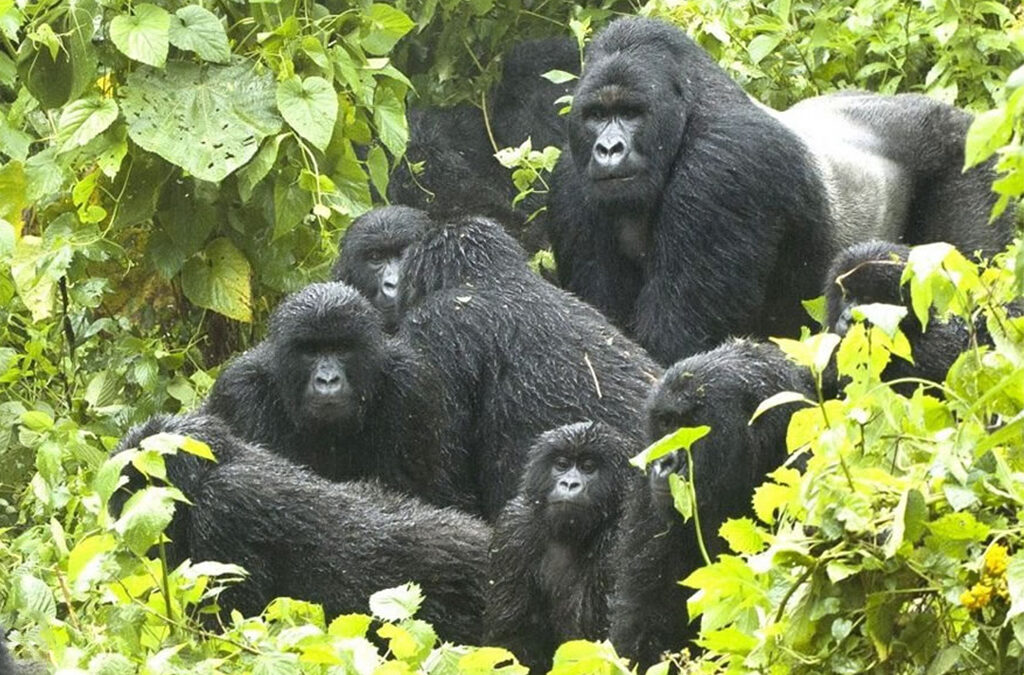
Tracking the Habinyanja Gorilla Family in Bwindi Impenetrable National Park offers a profound experience for wildlife enthusiasts. This particular family, found within the Buhoma sector, stands as one of three habituated groups available for trekking in that specific area. The trek typically spans three to eight hours, providing ample time for observation. Guests often find it best to spend a night at a lodge in the Buhoma area before their adventure. The Habinyanja family represents a substantial group, comprising eighteen members and including two prominent silverbacks.
Exploring the Habinyanja Family
The Habinyanja family resides in the Buhoma sector of Bwindi Impenetrable National Park. Their family unit currently consists of eighteen members, including two impressive silverbacks. They underwent habituation in 1997, and tracking for tourists began in 1999. The name “Habinyanja” holds significance; it means “a place with water” in Rukiga, reflecting where the group was initially encountered near swamp ponds. Key members of this family include the powerful silverbacks Makara and Rugyendi. Other important individuals within the group are Kisho, Binyonko and Nyamuhango. The trail leading to the Habinyanja group originates near Nyamishaba village. This starting point requires approximately a forty-five-minute drive from the main assembly area.
The History of the Group
Interaction with this gorilla group over the past decade reveals much intrigue and drama. It presents power struggles and secret alliances which mirror compelling family sagas. The narrative began during the habituation period under the leadership of the aging dominant silverback patriarch, Mukurusi. He peacefully led a large family of about thirty individuals, a considerable number even for gorilla standards. Mukurusi, meaning ‘old man’ in Rukiga, was nearing the end of his life. He soon passed away, leaving behind several sons.
The death of a patriarch often ignites sibling rivalries within families, and Mukurusi’s offspring were no different. The immediate point of contention became family leadership. This challenging situation arose because four silverbacks existed within the group. These were Rwansigazi, a silverback at his father’s death and next in line to lead the family. However, his dominance remained uncertain due to his half-brothers. Mwirima also held the status of a silverback when his father died and emerged as a strong contender for supremacy. Initially, both brothers shared power, but eventually the situation reached a critical point.
Further intensifying the struggle for dominance were Mukurusi’s other sons. These included the young and energetic Makara. There was also Binyindo, considered the black sheep of the family. Maraya, known for his flexible morals and equally flexible loyalties, also contributed to the unfolding drama. The adult females of the group further enriched this family chronicle. They were led by the shrewd and self-proclaimed alpha female, the one-eyed Kisho.
After Mukurusi’s death, the original Habinyanja group remained a single family unit. They lived under the combined leadership of the two eldest silverbacks, Rwansigazi and Mwirima, for several years. The two brothers likely would have continued as one family if not for an irreconcilable difference. Rwansigazi preferred a larger home range, often leading the family on difficult and extensive marches. This contrasted sharply with the much smaller home range Mukurusi had favored. Perhaps Rwansigazi sought to explore the world, a desire he felt his elderly father could not fulfill due to his advanced age and limited travel ability. Regardless of the reason, his brother and co-leader, Mwirima, preferred to keep the family within a more confined area.
On Valentine’s Day 2002, a potential conflict that could have resulted in the death of one of the leading silverbacks resolved itself peacefully. Rwansigazi may have communicated to the group that they faced a long trek that day. Mwirima might have responded by saying he did not desire a long walk, suggesting Rwansigazi proceed without him. He then invited any females who wished to remain with him to do so. This settled matters amicably, and the family divided with a cheerful farewell from both sides. The group that chose to stay with Rwansigazi retained the name Habinyanja.
Buhoma Sector
The Buhoma sector is located in the northern section of Bwindi Impenetrable National Park. It stands as one of four sectors on the park’s borders where tourists begin daily gorilla trekking excursions. These treks allow visitors to see mountain gorillas in their natural environment. Buhoma is also the first trailhead established by the Uganda Wildlife Authority (UWA). It attracts numerous tourists, transforming the small village trading center into a bustling town.
Mountain gorillas exist in two distinct subpopulations within East-Central Africa. They are surrounded by a human matrix of cultivated highlands and village settlements. The southern subpopulation resides in the Virunga Mountains, covering approximately 451 square kilometers. This area straddles the borders of the Democratic Republic of Congo, Rwanda and Uganda. Each of these nations manages designated protected areas within this tri-national habitat. These include Virunga National Park, Volcanoes National Park and Mgahinga Gorilla National Park, respectively.
Approximately twenty-five kilometers to the north, the second subpopulation occupies Bwindi Impenetrable National Park in southwestern Uganda. It also inhabits the contiguous Sarambwe Nature Reserve (SNR), which spans 9.8 square kilometers in the Democratic Republic of Congo. UWA, the park’s managing body, divided the 331 square kilometer Bwindi Impenetrable National Park into four sections. This division was based on the location of habituated gorilla families. It provides tourists with convenient access to visit them. The four sections include Ruhija, Rushaga, Nkuringo and Buhoma Sectors.