
6-Day Uganda Safari: Gorillas, Wildlife & Lake Bunyonyi
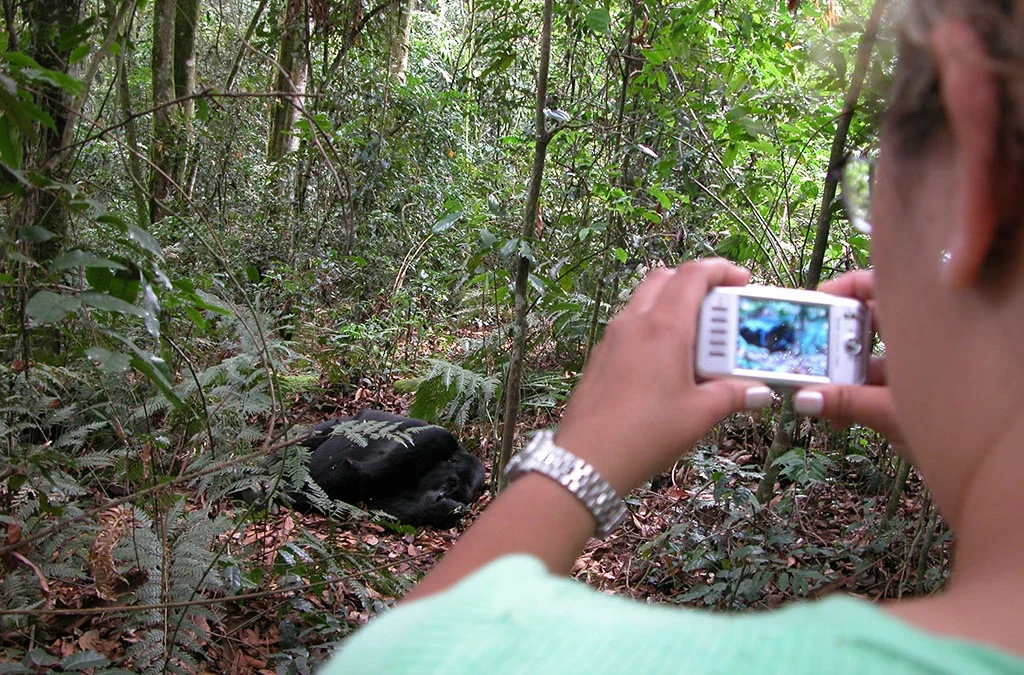
This 6-Day Uganda Safari takes you from the open savannah of Queen Elizabeth National Park and the tree-climbing lion country of Ishasha, into the misty rainforest of Bwindi for a mountain gorilla trek, and finally to the calm islands and terraced hills of Lake Bunyonyi. The route stays within southwestern Uganda, so you spend your time on experiences rather than on the road. You travel in a private 4×4 safari vehicle with an experienced driver-guide, which suits couples, honeymooners, friends, families with eligible children and first-time visitors.
6-Day Uganda Safari at a Glance
| Day | Destination | Main Experience |
|---|---|---|
| Day 1 | Entebbe/Kampala – Queen Elizabeth National Park | Scenic drive west, Equator stop, optional evening game drive |
| Day 2 | Queen Elizabeth National Park | Morning game drive and Kazinga Channel boat cruise |
| Day 3 | Queen Elizabeth – Ishasha – Bwindi | Morning game drive in Ishasha, then transfer to Bwindi |
| Day 4 | Bwindi Impenetrable National Park | Gorilla trekking, optional Batwa experience and souvenir shopping |
| Day 5 | Bwindi – Lake Bunyonyi | Kigezi highlands drive and lakeside relaxation |
| Day 6 | Lake Bunyonyi – Entebbe/Kampala | Scenic return journey and departure |
Why Choose this 6-Day Uganda Safari?
Six days is enough to combine savannah, rainforest and lake landscapes without an unrealistic countrywide route. Fitting Murchison Falls, Kibale, Kidepo, Queen Elizabeth and Bwindi into six days would mean adding extra days. This itinerary keeps to one connected circuit with a natural rhythm:
- Wildlife first: Queen Elizabeth and Ishasha give you game drives, a boat cruise and a chance at tree-climbing lions.
- Gorillas next: Bwindi is the physical and emotional highlight.
- Rest last: Lake Bunyonyi lets you recover after the trek, so the trip is not just long drives and strenuous activity.
Ishasha also sits on the natural route from Queen Elizabeth to Bwindi, so the extra game drive costs you no backtracking.
Detailed 6-Day Uganda Safari Itinerary
Day 1: Entebbe or Kampala to Queen Elizabeth National Park

Your 6-Day Uganda Safari begins when the driver-guide picks you up early from Entebbe, Kampala or another agreed location, and you head west through trading centers, farmland and small towns. A stop at the Uganda Equator can be added for photographs, souvenirs and a short break, depending on your start point and schedule.
After lunch, you continue toward Queen Elizabeth National Park, passing distant hills and crater landscapes. Depending on your arrival time, you can relax at the lodge or enjoy an introductory evening game drive, where you will see Uganda kob, warthogs and buffaloes as your first sightings.
Main activity: Scenic transfer and optional evening game viewing
Accommodation: Comfortable budget-friendly lodge (Mid-Range or Luxury Options available)
Meals: Lunch and dinner
Day 2: Queen Elizabeth National Park Wildlife Safari

After an early breakfast, you set out on a morning game drive, when animals are most active. You will see Uganda kob, buffaloes, warthogs, waterbuck and hippos on every drive, and you will see elephants on most drives as they cross the plains. On a lucky day you will also spot lions, leopards or spotted hyenas, which are rare sightings.
After lunch and a rest at the lodge, you head to the Kazinga Channel for an afternoon boat cruise between Lake Edward and Lake George. You will see one of the highest concentrations of hippos in Africa, large numbers of Nile crocodiles, and waterbirds such as pelicans, African fish eagles, kingfishers and egrets. Elephants and buffaloes come down to the shore to drink. Seeing the ecosystem from the water gives a different perspective from the vehicle.
Rare animals are never guaranteed, so your driver-guide adjusts the route to animal movements, weather and accessible areas.
Main activities: Morning game drive and Kazinga Channel boat cruise
Accommodation: Comfortable budget-friendly lodge (Mid-Range or Luxury Options available)
Meals: Breakfast, lunch and dinner
Day 3: Morning Game Drive in Ishasha, then Transfer to Bwindi

Leave early after breakfast and drive south to the Ishasha sector, the quieter, remote part of Queen Elizabeth National Park. Ishasha is famous for its tree-climbing lions, which rest in the branches of large fig trees during the day. This is a luck-day sighting: on a lucky morning you will find the lions in the trees, and on other mornings they stay hidden in the grass. Your driver-guide checks the known fig-tree spots first.
You will see topi, Uganda kob, buffaloes and waterbuck grazing the open plains in large numbers, hippos in the Ntungwe River, and plentiful birdlife. On a lucky day you will also spot elephants and leopards, which are rare here.
After the game drive and lunch, you continue toward Bwindi Impenetrable National Park. The landscape changes from open savannah to rolling hills, terraced slopes and dense highland forest.
Your destination depends on your gorilla trekking sector (Buhoma, Ruhija, Rushaga or Nkuringo), which is set by your permit allocation. Ideally, your lodge is in the same sector as your trek. Details on each sector are in the sector section below.
On arrival, you settle in and receive a briefing for the next day’s trek. Your guide helps you prepare your daypack, walking shoes and rain protection. Rest early, because trekking starts in the morning.
Main activities: Ishasha morning game drive and transfer to Bwindi
Accommodation: Comfortable budget-friendly lodge (Mid-Range or Luxury Options available)
Meals: Breakfast, lunch and dinner
Day 4: Gorilla Trekking, Optional Batwa Experience and Souvenir Shopping
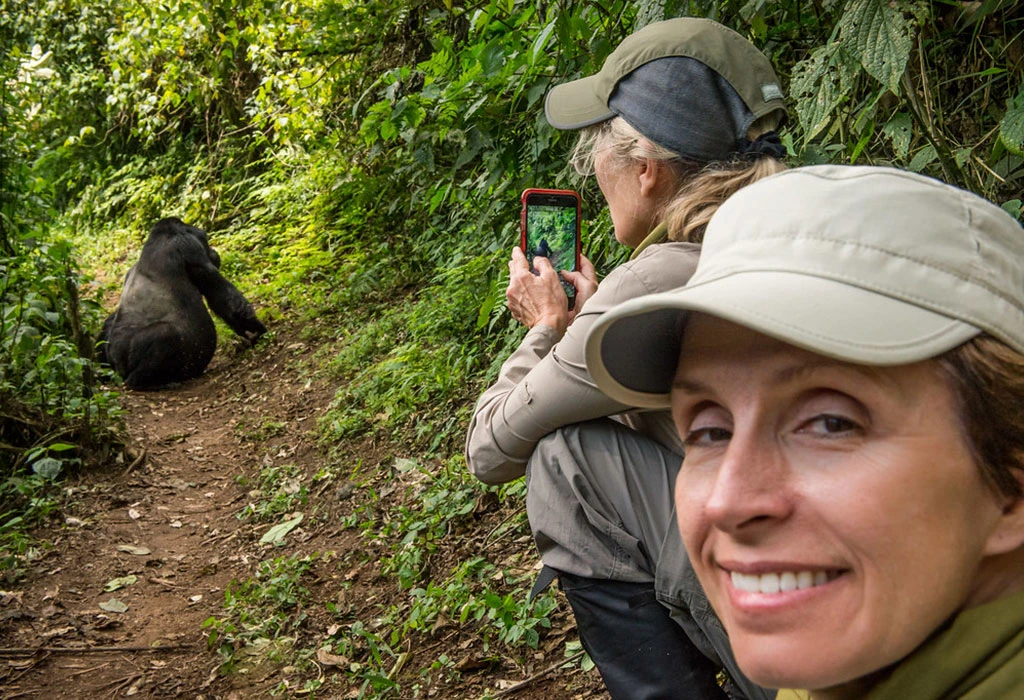
This is the highlight of the safari. After an early breakfast, you travel to the trekking starting point for registration and a briefing on the guidelines. Rangers allocate visitors to gorilla families, and you enter the forest with experienced trackers.
When you find your assigned family, you spend the permitted hour observing the gorillas as they feed, rest, interact and move through the forest. The encounter is carefully managed to protect both visitors and gorillas. Even when the gorillas are out of sight, the trek passes through dense vegetation, streams and steep slopes in one of Africa’s most biodiverse forests. Along the trail you will see black-and-white colobus monkeys, blue monkeys and forest birds. On a lucky day you will also meet forest elephants, chimpanzees or giant forest hogs, which are rare.
After the trek, you can add optional activities, depending on your energy and the time available:
- Batwa cultural experience (optional): The Batwa are the original forest people of Bwindi. On a guided cultural visit, community members share their traditional way of life, including forest skills, songs and dances, and their history before the forest became a national park. Availability varies by sector, and it is an optional extra.

Batwa Cultural Encounters
- Souvenir purchases (optional): Local craft shops and community outlets sell baskets, woodcarvings, woven items and other handmade pieces. Buying directly supports local households.

Afterwards, you return to the lodge for a quiet evening and a comfortable meal.
Main activities: Mountain gorilla trekking, optional Batwa experience and souvenir shopping
Accommodation: Comfortable budget-friendly lodge (Mid-Range or Luxury Options available)
Meals: Breakfast, lunch and dinner
Day 5: Bwindi to Lake Bunyonyi

After breakfast, you travel through the Kigezi highlands, where steep cultivated hills and winding roads create some of southwestern Uganda’s best scenery. Lake Bunyonyi, ringed by terraced hills and scattered islands, is a calm contrast to the trek.
After checking in and having lunch, you can take a traditional canoe ride, go on a boat excursion, explore the shoreline or simply relax. The lake also offers good landscape photography and birdwatching, and you will see herons, kingfishers, weavers and cormorants every day. You spend the evening at the lodge overlooking the water.
Main activities: Scenic transfer, relaxation and optional lake experience
Accommodation: Comfortable budget-friendly lodge (Mid-Range or Luxury Options available)
Meals: Breakfast, lunch and dinner
Day 6: Lake Bunyonyi to Entebbe or Kampala
After breakfast, you drive through Kabale and Mbarara toward the central region. Another Uganda Equator stop can be arranged if you wish. You are dropped off in Kampala or Entebbe.
The road journey takes many hours, so plan any same-day international flight carefully. For an early departure, an extra night near Entebbe makes for a more relaxed ending.
Main activity: Return transfer
Meals: Breakfast and lunch
How Much Does a 6-Day Uganda Safari Cost?
At Iconic Africa Safaris, this 6-day Uganda safari starts at $2,330 per person. This is a budget price based on two people sharing a comfortable private 4×4 safari vehicle and a comfortable, budget-friendly room. It covers the main logistics of the trip, including the gorilla trekking permit.
Mid-range and luxury versions cost more. The price changes with the level of accommodation, and also with travel dates, group size and optional extras such as the Batwa experience. Gorilla permits are a significant part of the cost, and conservation fees and supplier rates can change, so always confirm your quotation before payment.
What Is Included
- Private transport in a comfortable 4×4 safari vehicle, with applicable fuel and vehicle costs
- Professional English-speaking driver-guide, with applicable driver-guide expenses
- Gorilla trekking permit
- Five nights’ accommodation
- Meals as specified in the itinerary
- Game drives in Queen Elizabeth National Park, including the Ishasha sector
- Kazinga Channel boat cruise
- Lake Bunyonyi experience as included in the confirmed itinerary
- Park entry fees for scheduled activities
- Drinking water during the safari
- Airport or agreed-location pickup and drop-off
- Safari planning and logistical coordination
Your personalized quotation lists the exact inclusions.
What Is Not Included
- International flights
- Uganda visa fees
- Travel insurance
- Tips for guides, rangers, lodge staff and porters
- Porter fees
- Optional Batwa cultural experience and other optional activities
- Alcoholic drinks and other personal beverages (Unless for Luxury Option where some alcoholic drinks are included in the room rates)
- Laundry, souvenirs and other personal expenses
- Medical or evacuation expenses
- Additional accommodation outside the itinerary
- Changes caused by personal travel arrangements
What Does a Gorilla Permit Cover?
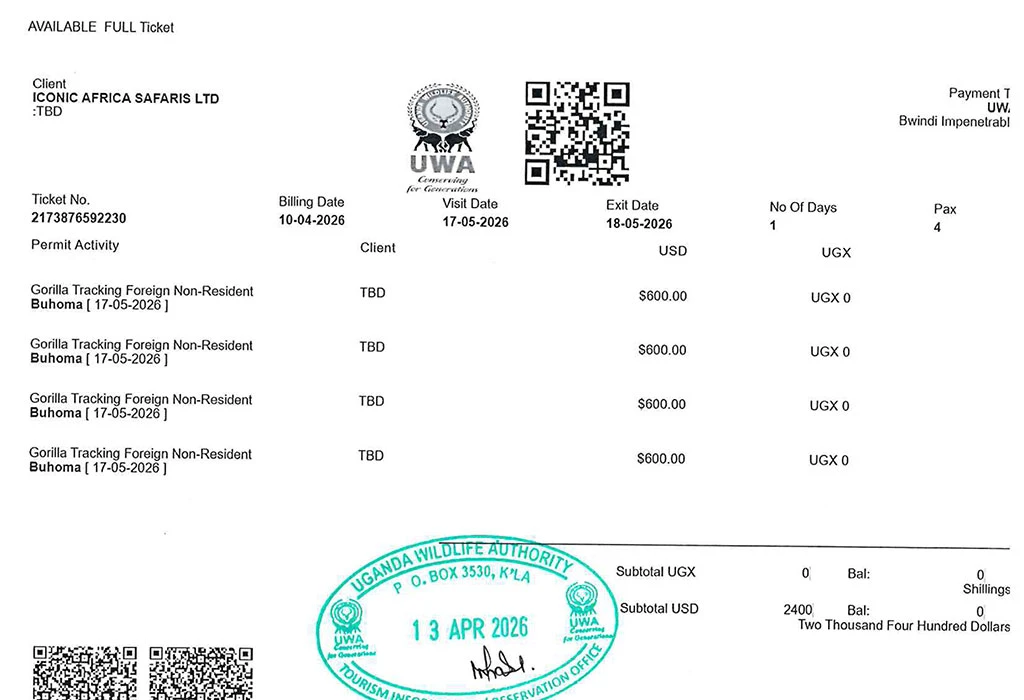
One of our May 2026 discounted gorilla permits — which were reserved for an Iconic Africa Safaris clients.
A permit gives you access to a scheduled trek under the management of Uganda’s wildlife authorities. It is not just an entrance ticket, because it supports ranger guidance, gorilla protection and the management of tourism activities. Permits are limited, so the trekking date should be secured before you finalize accommodation and other route details. A confirmed permit is required for trekking, and a trek is never guaranteed until the permit is booked.
How to add More Days to extend 6-Day Uganda Safari
6-Day Uganda Safari covers the southwestern highlights. If you have more time, add days to include other parks. Each extension below slots into the route without repeating the drive.
| Add-On Park | Extra Days | Main Experience |
|---|---|---|
| Kibale Forest National Park | +1 to 2 days | Chimpanzee trekking or habituation |
| Mgahinga Gorilla National Park | +1 to 2 days | Golden monkey trekking or habituation |
| Lake Mburo National Park | +1 day | Walking safari with zebras, giraffes and elands |
| Murchison Falls National Park | +2 to 3 days | Top of the falls and boat cruise to the bottom of the falls |
| Kidepo Valley National Park | +3 to 4 days | Remote big game, cheetahs and Karamojong culture |
Kibale Forest National Park: Chimpanzee Trekking or Habituation
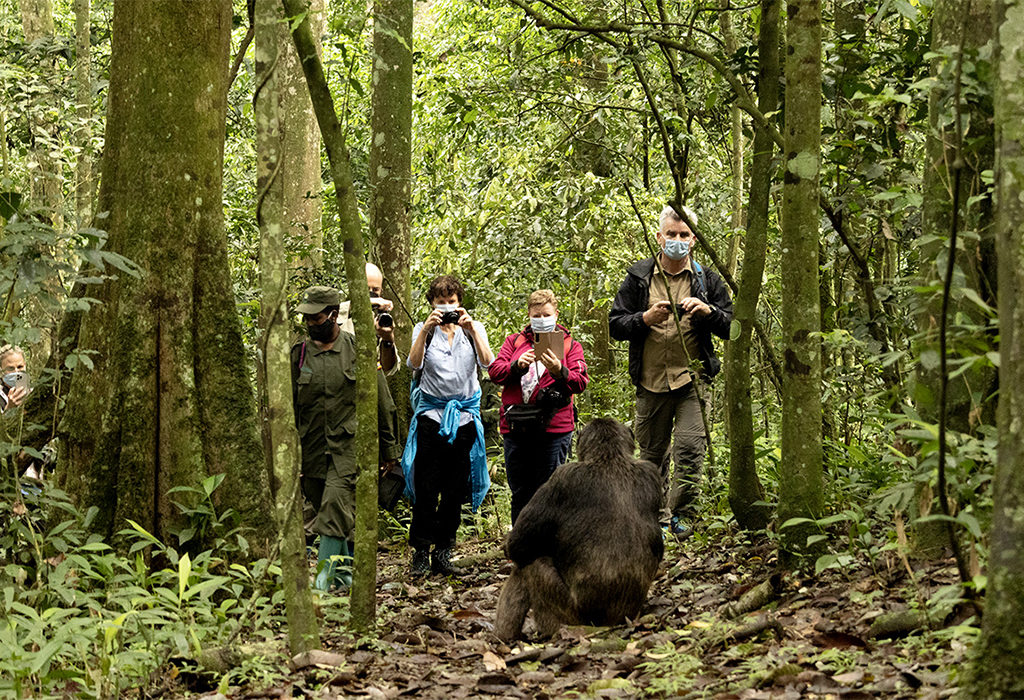
Kibale holds one of the highest concentrations of primates in Africa. Chimpanzee trekking is a morning or afternoon activity with about an hour beside a community already used to people. Chimpanzee habituation is a full-day experience that follows a community still learning to accept humans, giving you 4 hours with the chimps as they wake, feed and move. Kibale sits between Kampala and Queen Elizabeth, so it fits best at the start of the trip, adding one night on the way west.
Mgahinga Gorilla National Park: Golden Monkey Trekking or Habituation

Mgahinga, on the Rwanda and DR Congo border, is home to the rare golden monkey, which lives in bamboo forest at the foot of the Virunga volcanoes. Golden monkey trekking brings you close to playful, fast-moving troops for an hour. Golden monkey habituation extends this into a longer session with a group still being habituated. Mgahinga is close to Lake Bunyonyi, so you can add it between Day 5 and Day 6 with one extra night. It is also a good option for travellers aged 12 and above who are too young for gorilla trekking.
Lake Mburo National Park: Walk with Zebras, Giraffes and Elands

Lake Mburo lies beside the Kampala to Mbarara road, so it suits the return leg on Day 6 with an overnight stay. The park permits nature walks on foot, and you walk in the open with zebras, giraffes, elands and impalas, guided by an armed ranger. Walking at their level is a very different experience from a vehicle game drive.
Murchison Falls National Park: Top of the Falls and Bottom of the Falls
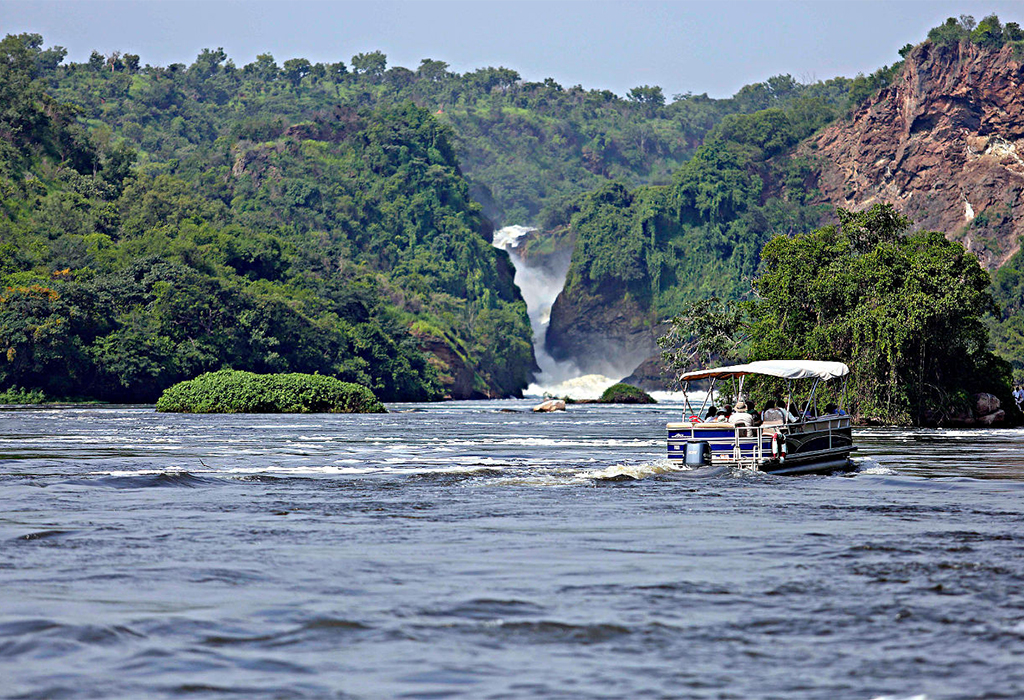
Uganda’s largest park is best added at the start of a longer trip, and it needs two to three extra days. The Nile forces itself through a seven-metre gap and drops about 43 metres in one of the most powerful waterfalls in the world. You can hike to the top of the falls, where spray soaks you in a natural shower, and take a boat cruise to the bottom of the falls, watching hippos, crocodiles, elephants and waterbirds on the way. Game drives north of the Nile add giraffes, lions and buffaloes.
Kidepo Valley National Park: Remote Big Game

Kidepo is Uganda’s most remote park, set among the mountains of Karamoja in the far northeast. It delivers the Big 4 (lion, elephant, buffalo and leopard) plus cheetahs, which are found in Uganda only here, and open landscapes with almost no other vehicles. Cultural visits to the Karamojong and their manyatta villages complete the experience. Add a visit to Ajai Wildlife Reserve in the northwest, and you can build toward a possible Big 5 by including rhinos. Kidepo needs three to four extra days, by road or by a domestic flight.
Getting from Queen Elizabeth to the Gorilla Sectors
Bwindi has four main trekking sectors, and the one you use depends on where your permit is available. Most travelers from Queen Elizabeth go via Ishasha, which breaks the journey and adds the tree-climbing lion drive. The times below are approximate driving times from Ishasha and depend on road conditions, so your planner confirms them for your dates.
| Sector | Approx. drive from Ishasha | Approx. drive to Lake Bunyonyi | Notes |
|---|---|---|---|
| Buhoma (north) | 2–3 hours | 4–5 hours | Most direct from Queen Elizabeth. Best for the Batwa trail, craft shops and forest walks nearby. The longest onward drive to the lake. |
| Ruhija (east) | 3–4 hours | 2–3 hours | Higher, cooler and very scenic, with excellent birding. A good balance for reaching Bunyonyi. |
| Rushaga (south) | 3.5–4.5 hours | 2.5–3.5 hours | Has the most gorilla families, so permits are often easier to find. Suits this route well. |
| Nkuringo (south) | 4–5 hours | 2–3 hours | Steeper terrain and dramatic views. Closer to the lake but a longer drive from Ishasha. |
Recommended routes from Queen Elizabeth:
- Queen Elizabeth → Ishasha → Rushaga or Ruhija is a practical choice for this itinerary. The gorilla sector is close enough to reach on Day 3, and the drive to Lake Bunyonyi on Day 5 is manageable.
- Queen Elizabeth → Ishasha → Buhoma is the shortest trip on Day 3, but Buhoma is the farthest sector from Lake Bunyonyi.
- Queen Elizabeth → Ishasha → Nkuringo suits travelers who want the most scenic trek and the shortest hop to the lake, but the Day 3 drive is the longest.
Which Sector Is Best for Reaching Lake Bunyonyi?
For the easiest onward journey to Lake Bunyonyi, choose Ruhija, Rushaga or Nkuringo. These southern and eastern sectors are much closer to Kabale and the lake than Buhoma, which leaves more of Day 5 for relaxing by the water.
- Ruhija: Best if you enjoy cool highland scenery and birdwatching, with a fairly short transfer to the lake.
- Rushaga: The most flexible choice, with the widest permit availability and a comfortable link between Ishasha and the lake.
- Nkuringo: The closest to the lake, but the trek can be more demanding, so it suits fitter travelers.
- Buhoma: Works if permits are only available there, but expect a much longer Day 5 drive.
Because permits are limited, secure your trekking date first and let it determine the sector and lodge.
Gorilla Trekking: Duration, Difficulty and Preparation
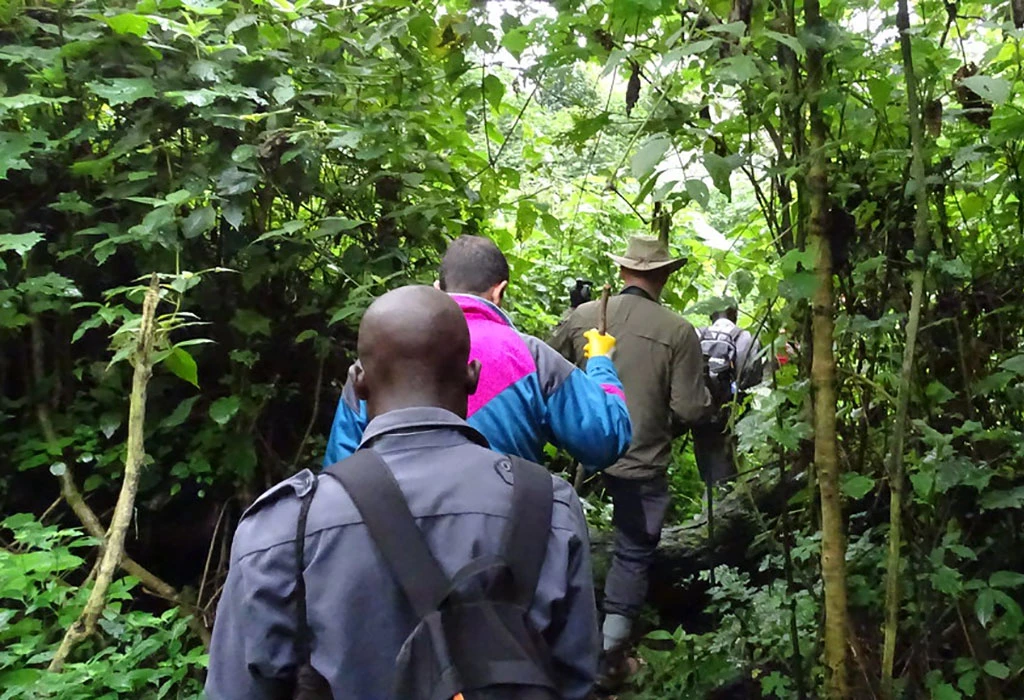
Trekking has no fixed duration because gorillas move freely through the forest. Treks last from about one hour to several hours before the permitted observation time, depending on where your assigned family is, plus terrain, weather and trail conditions. The Uganda Wildlife Authority describes gorilla tracking as requiring moderate fitness.
Trails are steep, muddy and slippery, especially after rain, so expect to walk on uneven ground. If you have concerns about the physical demands, discuss them with your safari planner before you travel. Hiring a porter is strongly recommended, since they carry your daypack and help on difficult sections while supporting local income.
Trekking groups are small, and you follow ranger guidelines on keeping your distance, keeping voices low and staying away from the gorillas if you are unwell. The minimum age for gorilla trekking in Uganda is 15 years.
Wildlife You Will See in Queen Elizabeth National Park

Sightings fall into two groups, so you know what to expect.
You will see these on almost every game drive:
- Uganda kob, buffaloes and warthogs across Queen Elizabeth
- Topi and waterbuck in Ishasha
- Hippos in the Kazinga Channel and the Ntungwe River
- Nile crocodiles along the Kazinga Channel shoreline
- Waterbirds, including pelicans, African fish eagles, kingfishers and egrets
You will see these only on lucky days:
- Tree-climbing lions in Ishasha
- Other lions and leopards in Queen Elizabeth
- Spotted hyenas on evening drives
Why Combine Gorilla Trekking with Lake Bunyonyi?
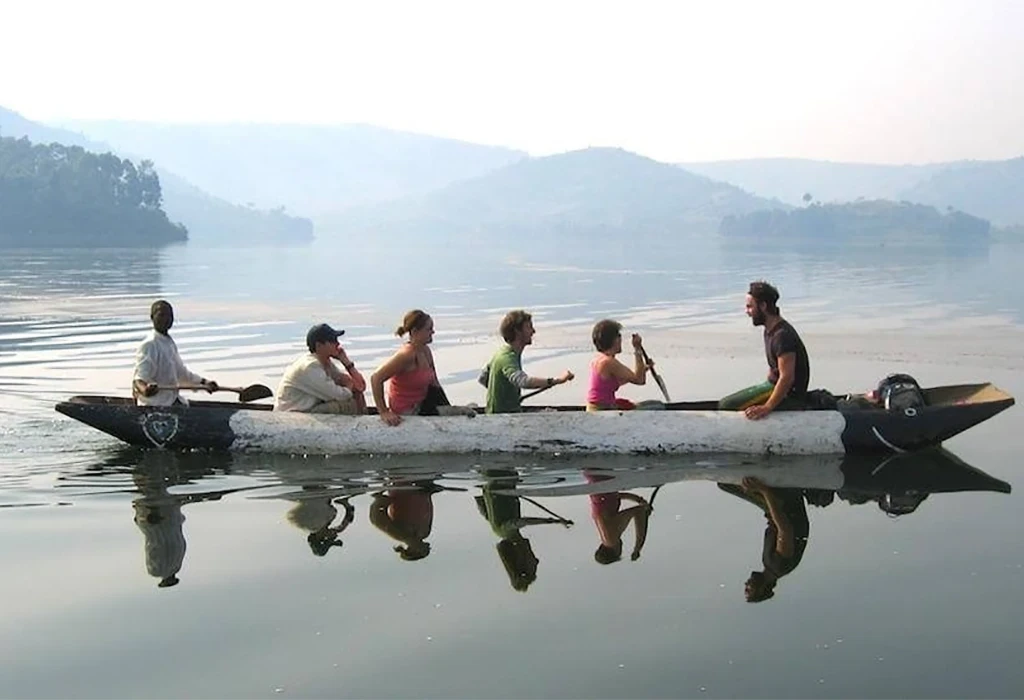
Bwindi and Lake Bunyonyi contrast well. The trek takes you deep into dense rainforest, while the lake offers open scenery, calm water and time to slow down. Activities include canoe rides, island visits, birdwatching and shoreline walks. This makes the trip feel more complete than a gorilla-only safari, with savannah, forest, highlands and lakes in one connected journey.
Best Time for a 6-Day Uganda Safari
Uganda can be visited year-round. Drier periods are generally popular because trails and roads are easier to manage. Wetter months bring lush landscapes and sometimes better value. Gorilla trekking is possible in any season, but always prepare for rain, since Bwindi is a rainforest. Your dates, permit availability and accommodation preferences should guide the final decision.
What to Pack for a 6-Day Uganda Safari
Pack for both savannah game drives and rainforest trekking, and choose neutral, comfortable clothing.
- Lightweight long-sleeved shirts and comfortable trousers
- Waterproof hiking shoes or boots, plus lightweight walking shoes
- Rain jacket or poncho
- Warm fleece or sweater
- Wide-brimmed hat, sunglasses and sunscreen
- Insect repellent
- Lightweight gloves for forest trekking
- Small backpack for the trek and a reusable water bottle
- Camera, spare batteries and binoculars
- Waterproof bags for electronics, since Bwindi is wet and muddy
- Small cash for souvenirs, tips and optional activities
- Personal medication
Choosing Your Starting Point for 6-Day Uganda Safari
- From Entebbe: Practical for travelers arriving at Entebbe International Airport. Your driver-guide picks you up at the airport or your Entebbe accommodation, and the trip ends back in Entebbe. If your flight arrives late, an overnight stay before the safari is more comfortable.
- From Kampala: The itinerary works equally well, with an early morning pickup. The exact location and time are confirmed during planning.
- From Kigali: Kigali offers a shorter overland connection to southwestern Uganda, depending on the gorilla sector. This changes the driving pattern, so the itinerary is adjusted. It also suits travelers combining Rwanda and Uganda.
Is this 6-Day Uganda Safari Suitable for Families?
Yes, for couples, friends, families and private groups, provided everyone meets the gorilla trekking age requirement. Families should consider the physical demands of trekking for younger and older members. The wildlife and lake sections are more relaxed, and pacing and accommodation can be adjusted for your group.
Why Book 6-Day Uganda Safari with Iconic Africa Safaris?
A successful gorilla safari takes more than a permit. The route must match the trekking sector, lodges should suit the permit location, and daily driving times must fit the activities. Iconic Africa Safaris handles permits, accommodation, transport and the coordination between Queen Elizabeth, Ishasha, Bwindi and Lake Bunyonyi, from planning to departure. The result is a private journey built around gorillas, wildlife and relaxation, with no unnecessary destination changes.
Our driver-guides are the trip managers guests trust most. They are trained professionals, some are former park rangers, and all are skilled interpreters of wildlife and culture. They stay with travellers from the first airport pickup to the final wave-off, keeping each day running smoothly and safely.
Frequently Asked Questions
How far in advance should I book my gorilla permit?
Book 4 to 6 months ahead for June to September and December to February, when permits sell out first. April, May and November usually have more availability, though discounted dates are limited. Because lodges and transfers are built around your permit sector, secure the permit first, then confirm accommodation. Last-minute bookings can work, but expect fewer sector and date choices.
How much does a gorilla trekking permit cost?
A standard permit costs $800 per person for foreign non-residents and $700 for foreign residents. Rest-of-Africa citizens pay $500, and East African citizens pay UGX 300,000. The permit covers one hour with the gorillas and funds ranger patrols and community projects. The Uganda Wildlife Authority sets these tariffs and updates them from time to time, so your quotation confirms the rate for your date.
Is there a discounted gorilla permit?
Yes. In April, May and November, foreign non-residents pay $600 and foreign residents $500, a saving of $200 per permit. Discounted permits are tied to fixed dates and cannot be rescheduled once issued, so choose dates you can keep. Rain is heavier in these months and trails are muddier, but availability is better and the forest is lush. Habituation permits are not discounted.
What is the gorilla habituation experience and what does it cost?
The Gorilla Habituation Experience lets you spend up to four hours with a gorilla family still learning to accept humans, instead of one hour. It runs only in Bwindi’s Rushaga sector, with a small number of visitors per day. The permit costs $1,800 for foreign non-residents under the latest tariff, is not discounted in low season, and requires a minimum age of 15.
How do I obtain a gorilla permit?
Permits are issued by the Uganda Wildlife Authority, and most travellers book through a licensed operator such as Iconic Africa Safaris, which checks availability for your dates and sector. You provide passport names and nationalities, pay the permit fee and receive a confirmation. Habituation permits must be booked through a licensed operator. Booking alone leaves you to arrange lodges and transport yourself.
What if my child is under the age limit of 15?
Children under 15 cannot trek gorillas, and rangers check ages at registration. Younger family members can still enjoy game drives, the Kazinga Channel cruise, Lake Bunyonyi canoe rides and Batwa cultural visits. Add Kibale for chimpanzee trekking or Mgahinga for golden monkey trekking, both open from age 12. Those under the age stay at the lodge for alternative optional activities such as nature walks and cultural experience.
Can I change or cancel a gorilla permit?
Rules are set by the Uganda Wildlife Authority and depend on the permit type. Discounted low-season permits are date-specific and cannot be rescheduled. Standard permits are tied to a named traveller and date, and changes or refunds carry conditions and deadlines. Confirm the current policy with Iconic Africa Safaris before paying, and buy travel insurance covering cancellation and illness so you do not lose the cost.
How many people trek with each gorilla family, and for how long?
Each gorilla family receives a maximum of eight visitors per day, which keeps encounters calm and low-impact. Rangers assign you to a family based on fitness and preferences. Once you find the gorillas, you spend one hour observing them. The trek to reach the group varies from about one hour to several hours, depending on where the family spent the night.
What are the rules for photography and behaviour near gorillas?
Stay at least seven metres from the gorillas, keep your voice low and never use flash. Wear a face mask when close to the group, and do not eat or drink near them. If you cough or sneeze, turn away and cover your mouth. Never touch a gorilla, even if a curious youngster approaches. These rules protect gorillas from human disease.
What happens if I am sick on trekking day?
Gorillas catch human illnesses easily, so rangers refuse trekkers who show symptoms such as coughs, colds, flu or stomach illness. Tell your driver-guide and the head ranger early if you feel unwell. Refund rules for illness are strict, which is why travel insurance matters. Wash your hands before the trek, bring personal medication and rest well on Day 3.
Do I need a visa for Uganda?
Most nationalities need a visa. Apply online through the official Uganda e-visa portal before you travel, and carry a printed approval and a passport valid for at least six months. If you also visit Rwanda or Kenya, ask about the East Africa Tourist Visa. Visa fees are not included in the safari price, and requirements vary by nationality, so verify yours.
Which vaccinations and health precautions do I need?
Uganda requires proof of yellow fever vaccination for many arrivals, so carry your certificate. Malaria is present in lowland areas, so ask your doctor about prophylaxis, and keep routine vaccines current. Visit a travel clinic four to six weeks before departure. Bring insect repellent and check current advice from your national travel health authority, since requirements change.
Do I need travel insurance?
Yes, insurance is essential. Choose a policy covering medical treatment, emergency evacuation, trip cancellation and trekking activities, since Bwindi’s trails are steep and remote and the forest is hours from major hospitals. Buy it when you book so cancellation cover starts early. Insurance is not included in the safari price, and your planner can advise on what to look for.
How much should I tip?
Tipping is not mandatory but appreciated. Tip your driver-guide at the end of the trip, and tip trackers, rangers, porters and lodge staff after each activity. Carry small notes in US dollars or Ugandan shillings. Amounts depend on service and group size, and your planner can suggest a fair range before you travel.
What money should I carry?
Carry clean, recent US dollar notes and Ugandan shillings for small purchases, tips and souvenirs. Lodges accept cards, but craft stalls and roadside shops do not. ATMs are found in Kampala, Mbarara and Kabale, but not near Bwindi. The Uganda Wildlife Authority uses cashless payment at park gates, and your safari price already covers scheduled park fees.
Will I have electricity and internet?
Most lodges have electricity, often from solar power or generators, so charge cameras and phones when power is available and bring a power bank. Uganda uses UK-style three-pin plugs (Type G), so pack an adapter. Mobile signal is good near towns but weak in Bwindi, and lodge Wi-Fi is limited. Plan to be offline during the trek.
Is a Uganda safari safe?
Uganda is welcoming, and the southwestern safari circuit is well established. Your private driver-guide handles driving, navigation and local knowledge, and armed rangers accompany gorilla treks and walks for wildlife safety. Follow normal precautions such as securing valuables in towns and avoiding night driving. Check your government’s current travel advice before you go.
Can lodges cater to dietary requirements?
Yes. Tell your planner about vegetarian, vegan, gluten-free, halal or allergy needs when you book, so lodges prepare in advance. Remote areas such as Bwindi and Ishasha work with limited supplies, so early notice matters. Meals feature fresh local produce, and packed lunches are arranged on trekking days.
What if permits are sold out for my dates?
Iconic Africa Safaris checks nearby dates, other sectors and other gorilla families first, since availability differs by sector. Moving your trip by even a few days often opens permits. If your dates are fixed, low-season months have better availability, and Mgahinga adds another option when its resident family is available. Permits sell out at peak times, so book early.
Ready to Book Your 6-Day Uganda Safari with Iconic Africa Safaris?
Iconic Africa Safaris offers three simple, reliable ways to secure your next unforgettable Ugandan adventure today:
- Complete our quick online booking form to start planning your dream safari right away.
- Email our friendly team at info@iconicafricasafaris.com to discuss your travel plans and preferences.
- Tap the green WhatsApp icon in the bottom right corner of your screen to chat or call one of our experts anytime.